A sharp ache in your lead knee during the downswing highlights the real need for proven joint supplements that protect cartilage.




Joint supplements are specialized dietary products designed to support the cartilage, ligaments, and fluid inside your joints. They are not pain-masking drugs like ibuprofen, nor are they instant cures that can grow brand-new cartilage overnight. Instead, they act as nutritional building blocks and mild anti-inflammatory agents to support your body's natural joint maintenance.
For the golfer over 40, these products represent a major area of interest. Many players hope a daily pill can quiet a nagging knee or ease stiff wrists after 18 holes. This guide will look at the real science behind joint supplements. We will examine what the research actually says about turmeric, glucosamine, chondroitin, and collagen.
We will bypass the marketing claims and focus on clinical studies. By looking at real data, you can make an informed choice for your game and your physical longevity.
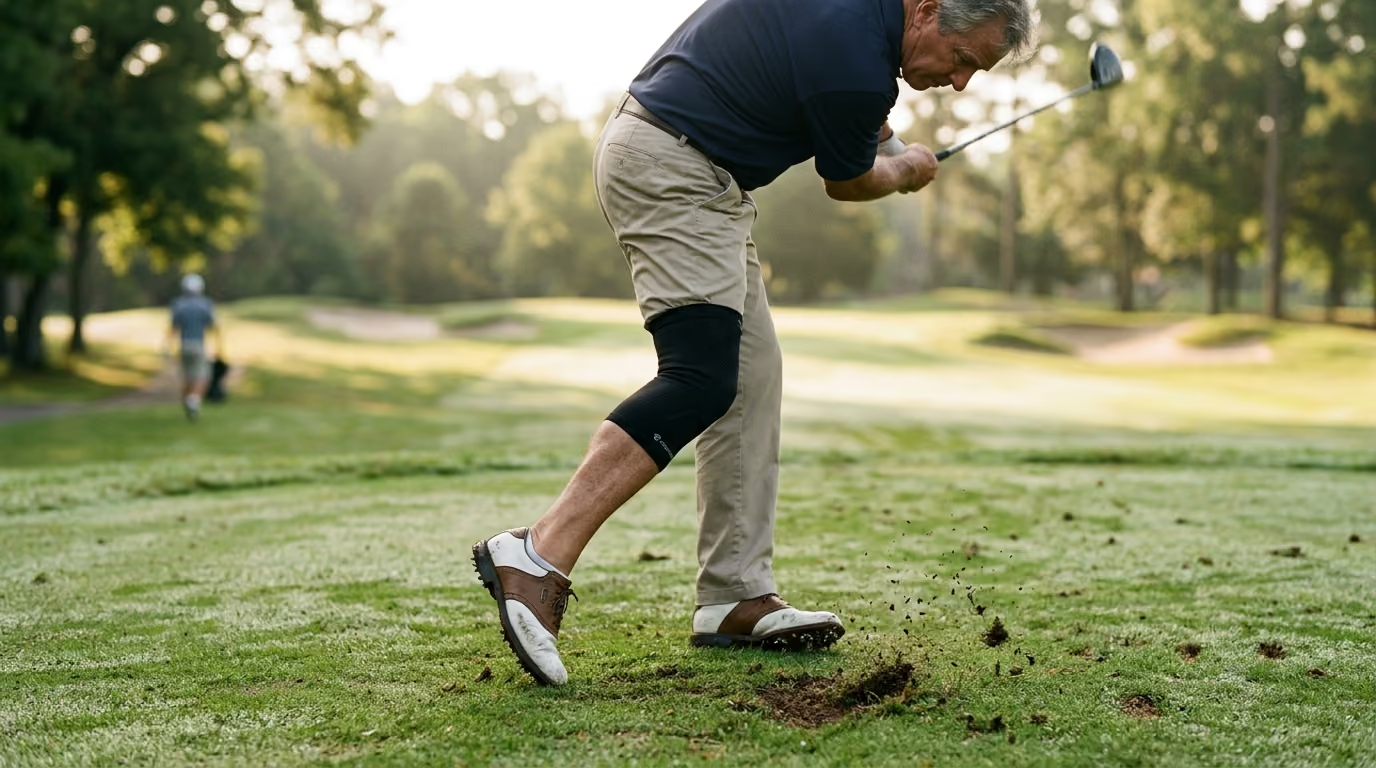
Imagine standing on the 14th tee box during a close weekend match. Your drive needs to carry a wide bunker to find the fairway. You take a full backswing and start your transition. As you shift your weight forward, a sharp, familiar ache flares in your lead knee. Your body instinctively slows down to protect the joint.
You block the ball into the right trees. The shot felt weak because you could not rotate through the ball. On the next tee, you swing even slower. You are no longer thinking about target lines or club selection. You are only thinking about how much your knee will hurt on the walk back to the cart.
This is the classic lead-knee pattern. The lead side of a golfer absorbs the brunt of the swing's rotational forces. If you have osteoarthritis in that front knee, the twisting motion of the downswing can feel like grinding sandpaper.
After the round, a second pattern often emerges. You sit in your car to drive home, and your fingers feel thick, stiff, and swollen. Gripping the steering wheel is uncomfortable. This post-round hand stiffness can last for hours or even days. It makes you question whether you can play another round this week.
The human body operates on a balance of physical forces. During a golf swing, your joints act as shock absorbers and levers. To understand how supplements help, you must first understand the rotational stress of the swing.
The golf swing is highly asymmetrical. Your lead knee, hip, and wrist experience much higher rotational torque than your trail side. Research shows the lead knee absorbs a load of up to four and a half times your body weight during the downswing.
This load is combined with rapid rotation. This creates shear force, which is a sliding friction across the joint surface. Your joint cartilage is a smooth, slippery tissue that prevents bone-from-rubbing-on-bone. The lead-side mechanical stress model explains how this constant sliding wear eventually overwhelms the joint.
Inside your joints, there is a constant battle between cartilage homeostasis and degradation. Think of this as a balance between building up and breaking down. Anabolic processes build new cartilage fibers and joint fluid. Catabolic processes break them down, often driven by mechanical stress and inflammation.
When you play 18 holes, the mechanical stress increases the catabolic enzymes. These enzymes eat away at the protective cartilage matrix. Supplements aim to tilt this balance back toward the anabolic side. They do this by supplying physical building blocks or by calming the catabolic enzymes.
In clinical research, scientists measure joint health using standardized tests. The most common are the WOMAC and Lequesne functional indices. These tests grade your pain, joint stiffness, and physical function. For a golfer, success on these scales translates directly to your capability on the course.
If your WOMAC score improves, you can walk the fairways with less pain. You can bend down to read a putt without knee stiffness. You can maintain your posture through impact. Supplements should be judged by how well they improve these functional scores.
If you feel joint pain during your round, you cannot wait three months for a supplement to work. You need an immediate way to reduce joint stress. The quickest fix is to modify your setup to decrease the rotational torque on your lead knee.
First, flare your lead foot outward. Set your lead foot at a 20 to 30-degree angle toward the target at setup. This simple adjustment opens your lead hip early. It reduces the twisting force on your lead knee during the downswing.
Second, shorten your backswing. Focus entirely on turning your trail hip instead of over-extending your arms. A shorter, more controlled turn reduces the shear forces on your lower back and hips.
Third, allow your lead heel to lift slightly during the backswing. This releases tension on your lead ankle and knee. It allows your pelvis to rotate more freely. These small adjustments can keep you comfortable enough to finish your round safely.
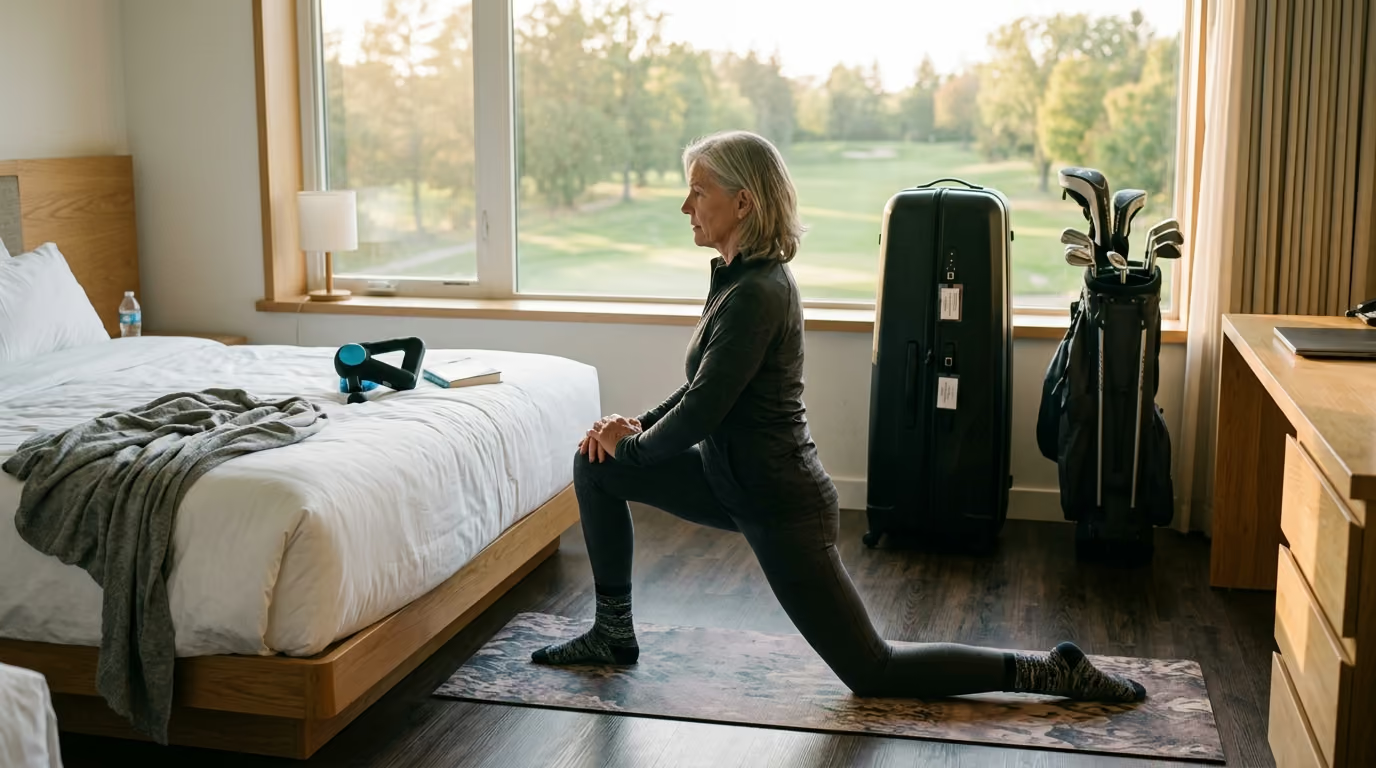
Supplements work best when paired with a consistent mobility and strength routine. You must address the root cause of joint stress, which is often a lack of rotational mobility in adjacent joints. If your hips are stiff, your knees will twist too much to make up for the loss of motion.
To build a sustainable habit, perform this simple joint-prep routine three mornings a week:
First, perform the 90-90 hip switch. Sit on the floor with your knees bent at 90 degrees. Turn your legs so one shin is flat in front of you and the other shin is flat to your side. Slowly rotate your pelvis over your front thigh. Hold for 30 seconds, then switch sides. This movement targets internal and external hip rotation.
Second, practice the quadruped thoracic rotation. Get on your hands and knees. Place one hand behind your head. Slowly rotate your elbow toward the ceiling, keeping your lower back still. Focus entirely on turning your upper back. Perform 10 repetitions on each side. This keeps your mid-back mobile, which protects your lower spine.
Third, establish a daily supplement tracking routine. Place your daily supplements next to your morning coffee or toothbrush. Consistency is the most important factor in supplement efficacy. Keep a simple calendar log where you rate your knee stiffness on a scale of 1 to 10 each morning. This tracker will show you if your routine is working after 12 weeks of consistent use.
The supplement industry is filled with misconceptions. Many golfers waste money and time because they do not understand how these compounds work.
The first mistake is believing the rebuilding myth. No dietary supplement has been proven to rebuild joint cartilage that has worn down to the bone. Once cartilage is gone, it cannot be regrown with a pill. Supplements can only support remaining cartilage, decrease inflammation, and slow down further degradation. Expecting a supplement to reverse severe, bone-on-bone arthritis will lead to disappointment.
The second mistake is ignoring bioavailability, especially with turmeric. Curcumin is the active ingredient in turmeric, but your body cannot absorb it easily. If you take standard turmeric powder, most of it passes straight through your digestive system. It never reaches your bloodstream or your joints. You must look for formulas that contain black pepper extract or use a lipid-based delivery system.
The third mistake is taking joint supplements as a preventive measure when you have no joint issues. Younger golfers often buy expensive glucosamine pills hoping to prevent future arthritis. Research suggests that taking glucosamine without existing joint pain provides very little benefit. Your money is better spent on physical training and proper recovery habits.
Your physical joints are the ultimate link to the golf club. The gear you use can either increase or decrease the mechanical vibration and torque entering your body. Making small equipment adjustments can relieve joint stress.
First, look at your grips. If you have arthritis in your fingers or wrists, thin grips are your enemy. They force you to squeeze the club tightly to keep it from slipping. Switch to midsize or jumbo grips. The thicker diameter allows your hands to stay relaxed, which reduces the joint pressure in your fingers. You can find more advice on protecting your hands in our section on injury prevention strategies.
Second, examine your golf shoes. Stiff, traditional shoes with metal spikes can lock your feet to the turf. This increases the twisting force on your knees and hips. Switch to a modern, spikeless shoe with plenty of midsole cushioning. Spikeless shoes allow for a tiny amount of foot slide during the swing. This small release of tension reduces the rotational load on your joints.
Third, consider your club shafts. Steel shafts transmit high-frequency vibration directly into your wrists, elbows, and shoulders. If you experience joint soreness in your upper body, try switching to graphite shafts. Graphite absorbs vibrations much better than steel. This change alone can prevent post-round soreness in your lead elbow and wrist.
The golf swing is a marvel of athletic movement, but it is also highly repetitive and asymmetrical. When you swing a golf club, you do not distribute forces evenly across your body. Instead, your lead side acts as a brake and a pivot point for a high-velocity rotation.
When you start your downswing, your lead hip must rotate rapidly toward the target. If your hip joints lack adequate movement, your body will seek rotation elsewhere. The joint directly below the hip is the knee. The knee is a hinge joint designed to move forward and backward. It does not tolerate rotation well.
When your stiff hips force your lead knee to twist under a heavy load, the cartilage suffers. This mechanical stress irritates the joint capsule and causes micro-tears in the cartilage matrix. Over time, this leads to chronic inflammation.
The lead wrist also endures unique stress. During the release of the club, the lead wrist must transition from a flexed position to an extended position very quickly. If you hit a shot from a firm lie or strike the ground too hard, the impact shock is transmitted straight up the shaft.
This shock travels through the lead wrist and into the lead elbow. This is why golfers frequently complain of lateral epicondylitis, which is often called golfer’s elbow. Supporting these hard-working joints requires both physical preparation and targeted nutritional support. You can read more about how to keep your joints moving freely in our guide to rotational mobility.
Turmeric is a yellow spice that has been used in traditional medicine for centuries. Its primary active compound is curcumin. In recent years, modern science has taken a close look at how curcumin affects joint pain and inflammation.
At the molecular level, curcumin is a potent anti-inflammatory agent. It works by blocking a molecule called NF-kB. This molecule travels into the nuclei of your cells and turns on genes related to inflammation.
Curcumin also blocks enzymes like COX-2. This is the exact same target that over-the-counter anti-inflammatory drugs like ibuprofen hit. By blocking these pathways, curcumin helps keep post-round joint swelling under control.
[Mechanical Stress / Injury]
│
▼
[NF-kB Activation]
│
▼
[COX-2 Production] ◄─── [Blocked by Curcumin]
│
▼
[Joint Pain & Swelling]
The clinical evidence for turmeric is strong. A notable study published in the journal Arthritis & Rheumatology evaluated 160 people with knee osteoarthritis. The researchers divided the participants into two groups. One group took a high-quality turmeric extract, while the other took a placebo.
After several weeks, the turmeric group showed a massive reduction in joint pain and stiffness. Their physical function scores improved significantly compared to the placebo group.
Another study compared turmeric directly to ibuprofen. This trial involved 367 patients with knee pain. Half of the patients took 1,500 milligrams of turmeric extract daily, while the other half took 1,200 milligrams of ibuprofen.
The results were remarkable. The researchers found that turmeric was just as effective as ibuprofen for pain relief. However, the turmeric group experienced significantly fewer gastrointestinal side effects. Ibuprofen can irritate the stomach lining when taken regularly, but turmeric did not show this downside.
For a golfer, these findings are highly practical. Taking turmeric can help manage post-round soreness without risking stomach pain or ulcers. To get the most benefit, you must make sure your body can absorb the curcumin.
Always look for a supplement that contains black pepper extract, which is also called piperine. Piperine can increase curcumin absorption by up to 2,000 percent. This ensures the active compounds actually reach your bloodstream and travel to your lead knee or wrists. For more tips on recovering after 18 holes, check out our resource page on post-round recovery.
Glucosamine and chondroitin are two of the most popular joint supplements in the world. They are often sold together in a single pill. Glucosamine is an amino sugar that your body uses to produce glycosaminoglycans. These are the molecules that build the "shock absorbers" in your cartilage. Chondroitin is a substance that helps cartilage retain water, keeping it springy and cushioned.
To understand if these supplements work, we must look at the Glucosamine/Chondroitin Arthritis Intervention Trial. This is known as the GAIT study. It was a massive, multi-center clinical trial funded by the National Institutes of Health.
The GAIT study looked at over 1,500 people with knee osteoarthritis. The participants were divided into groups to test glucosamine alone, chondroitin alone, the combination of both, a prescription pain reliever, or a placebo.
The overall results of the GAIT study were mixed. For the average participant with mild knee pain, the supplements did not perform much better than the placebo. However, the researchers did a detailed subgroup analysis of patients with moderate-to-severe joint pain.
In this group of patients with higher pain levels, the combination of glucosamine and chondroitin was highly effective. In fact, 79.2 percent of those patients reported a significant reduction in pain. This was compared to only 54.3 percent in the placebo group.
GAIT Study Response Rates (Moderate-to-Severe Pain Subgroup):
┌─────────────────────────┬─────────┐
│ Glucosamine/Chondroitin │ 79.2% │
├─────────────────────────┼─────────┤
│ Placebo │ 54.3% │
└─────────────────────────┴─────────┘
This research shows that glucosamine and chondroitin are not preventive remedies for healthy joints. Instead, they are best suited for the older golfer who is already dealing with moderate baseline joint pain.
There is also evidence that long-term use of these supplements can preserve your cartilage. Imaging studies show that taking glucosamine and chondroitin consistently for three or more years can slow down the physical thinning of joint cartilage.
Chondroitin has also shown unique benefits for hand osteoarthritis. If you suffer from stiff, painful fingers after a round of golf, chondroitin may help ease that localized stiffness.
Collagen is the most abundant protein in the human body. It acts as the glue that holds your tissues together. There are several types of collagen, but Type II is the primary form found in joint cartilage.
In the past, scientists believed that eating collagen was pointless. They assumed your digestive system would simply break it down into basic amino acids before it could reach your joints. However, modern research has challenged this view.
When you take hydrolyzed Type II collagen, the protein is broken down into small, highly absorbable peptides. These peptides travel through your bloodstream and accumulate in your cartilage.
Once there, they stimulate your chondrocytes. These are the cells responsible for building new cartilage matrix. Collagen also acts as a signal to your immune system to stop attacking and breaking down your existing joint tissues.
A landmark meta-analysis published in the British Journal of Sports Medicine in 2021 looked at the effect of collagen on joint pain. The researchers analyzed data from 1,136 participants across multiple clinical trials.
They found that taking 10 grams of collagen peptides daily resulted in a significant reduction in joint pain. This was measured using the Visual Analog Scale, which is a standard pain rating system.
An updated 2024 meta-analysis looked at 24 clinical trials involving 2,891 participants. This large-scale review confirmed that collagen peptides consistently reduce joint pain and improve physical function.
For golfers, this improved physical function is critical. In these studies, participants taking collagen showed major improvements in the Lequesne Functional Index.
This index measures your ability to walk, bend, and move without joint restriction. Better scores on this index correlate directly with better rotational mobility during your golf swing.
If your hips and spine can rotate through a greater range of motion, your swing will feel smoother and more powerful. You can find more information about building joint strength to support this mobility on our strength and conditioning page.
One of the biggest reasons golfers stop taking joint supplements is impatience. Many players expect their knees or wrists to feel better after a week of use. When they do not feel an immediate change, they throw the bottle away. This is a mistake based on a misunderstanding of joint biology.
Cartilage is an avascular tissue. This means it has no direct blood supply. Unlike muscles, which receive a constant stream of nutrient-rich blood, cartilage receives its nutrients slowly.
It relies on a process called passive diffusion. When you move your joints, the pressure squeezes fluid out of the cartilage. When you release the pressure, the cartilage sucks nutrient-rich fluid back in like a sponge.
Because of this slow nutrient delivery, supplements take time to accumulate in joint tissue. Clinical studies show that joint pain reductions are gradual.
In long-term trials, participants showed a modest reduction in self-perceived pain after three months of daily use. The average pain score reduction at three months was 1.99 on a ten-point scale.
However, when the researchers followed up at six months, the pain reduction had increased to 3.57. The benefits of these supplements build slowly over time.
Timeline of Pain Reduction (Daily Supplement Use):
┌──────────┬────────────────────────────┐
│ Month 1 │ Nutrients begin to build │
├──────────┼────────────────────────────┤
│ Month 3 │ Modest pain relief (1.99) │
├──────────┼────────────────────────────┤
│ Month 6 │ Major pain relief (3.57) │
└──────────┴────────────────────────────┘
When you start a joint supplement routine, you must commit to a six-month trial. Do not judge the product's effectiveness after a few weeks.
To help stay patient, focus on tracking your function rather than your daily pain levels. Keep a record of how many pain-free holes you can play in a row.
Note if you can climb into your golf cart without using your hands for support. These small, functional improvements are the true signs that your supplement routine is working.
While joint supplements are generally very safe, they are not completely without risk. Because they are classified as dietary supplements, they do not undergo the same strict testing as prescription drugs. It is crucial to understand potential interactions before starting a new regimen.
The overall safety profile of glucosamine, chondroitin, and collagen is excellent. In major clinical studies, participants reported no severe adverse events. This makes these supplements a much safer option for long-term use than non-steroidal anti-inflammatory drugs, which are commonly called NSAIDs.
Chronic use of NSAIDs like Advil or Aleve can lead to serious health issues. These include stomach ulcers, kidney strain, and an increased risk of cardiovascular events. Choosing natural joint support can help you avoid these long-term risks.
However, you must be aware of specific interactions. Turmeric, for example, has mild blood-thinning properties. It can slow down blood clotting.
If you are currently taking prescription anticoagulants, which are often called blood thinners, you must use caution. Taking high doses of turmeric alongside these medications can increase your risk of bruising or bleeding.
Always discuss your supplement plans with your primary doctor. This is especially true if you take daily medications for heart health or blood pressure.
Another factor is the source of the supplement. Glucosamine is often harvested from the shells of shellfish like shrimp and crabs. If you have a severe shellfish allergy, taking standard glucosamine can trigger a reaction.
Fortunately, vegetarian glucosamine made from fermented corn is widely available. Always check the label of your supplement to verify the source of the ingredients.
For collagen, look for products sourced from grass-fed bovine or wild-caught marine sources to avoid low-quality fillers. You can search our golf health resources to find more advice on selecting clean, high-quality supplements.
To play pain-free golf as you age, choose joint supplements based on clinical research and commit to a six-month routine of consistent daily dosing.
Liquid collagen is not necessarily more effective than a high-quality powder. The most important factor is whether the collagen is hydrolyzed. Hydrolysis breaks the collagen down into small peptides that your body can easily absorb.
Many liquid collagen products are simply pre-mixed powder and water, which makes them more expensive. Purchasing a high-quality, unflavored hydrolyzed powder is often the most cost-effective choice. You can easily mix the powder into your morning coffee or post-workout shake.
Yes, you can take turmeric and glucosamine together safely. In fact, many sports medicine specialists recommend combining these two ingredients.
Turmeric works as an anti-inflammatory to quiet acute post-round joint soreness. Glucosamine works over the long term to provide the raw materials your joint cartilage needs to maintain its structure.
Taking them together addresses both immediate comfort and long-term joint durability. Always follow the dosage instructions on each product package.
The timing of your joint supplements is much less important than your consistency. What matters most is taking them every single day without skipping doses.
However, some golfers prefer taking turmeric in the evening to help manage overnight joint stiffness. This can help you wake up feeling more mobile.
If glucosamine or collagen causes mild stomach upset, try taking them with a light meal. Find a time of day that fits your schedule and stick to it.
Follow Golfergy for practical insights on performance, mobility, recovery and healthy ageing. Stay connected for new articles, research-led guidance and ideas to help you play better for longer.


Explore practical resources on performance, recovery, mobility and golf longevity.
Read the Blog