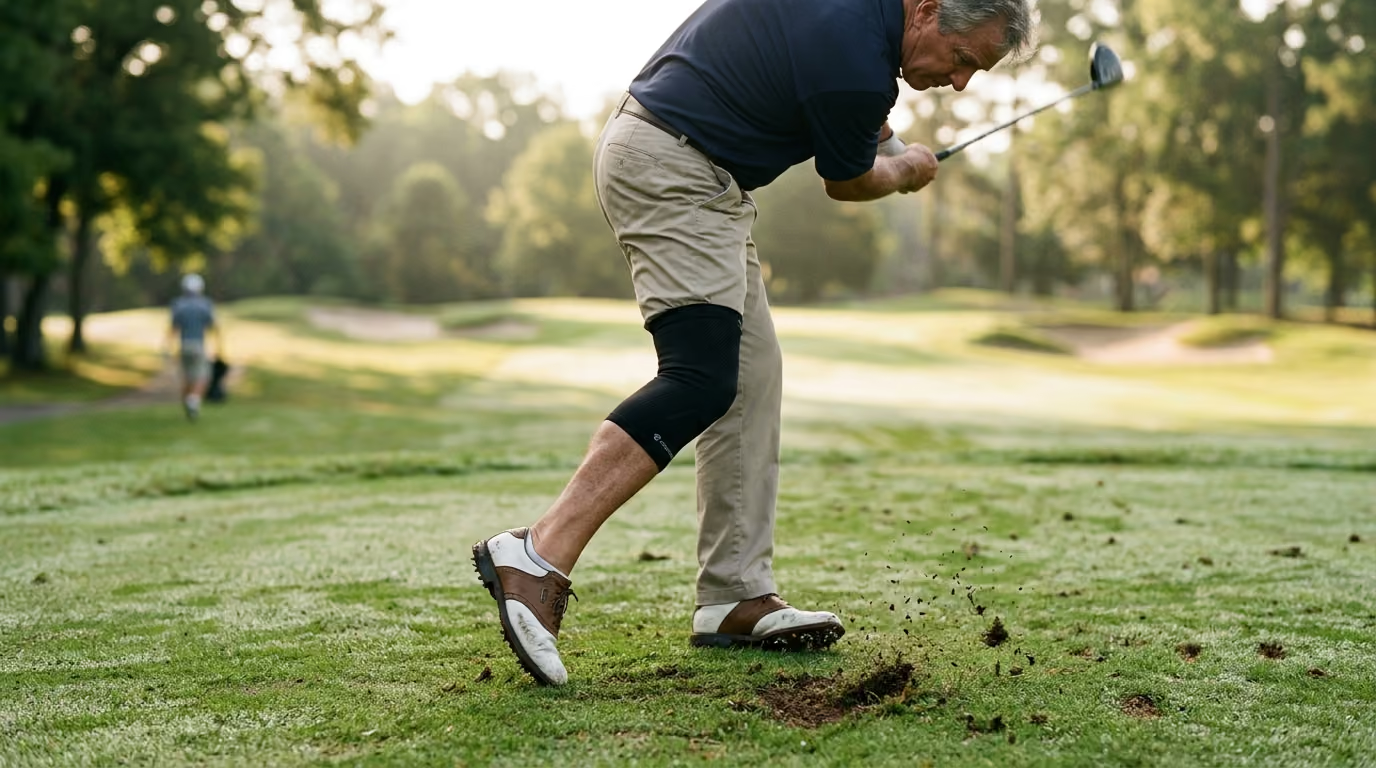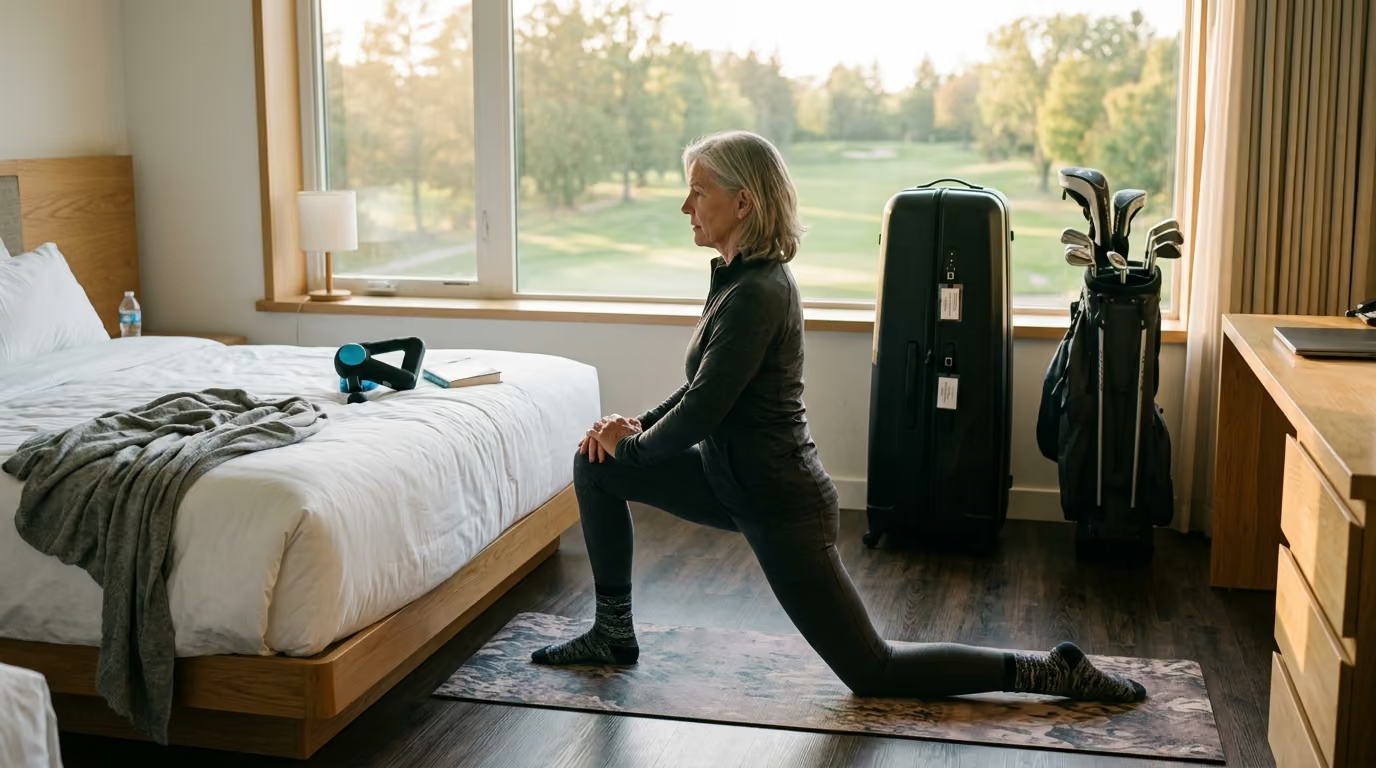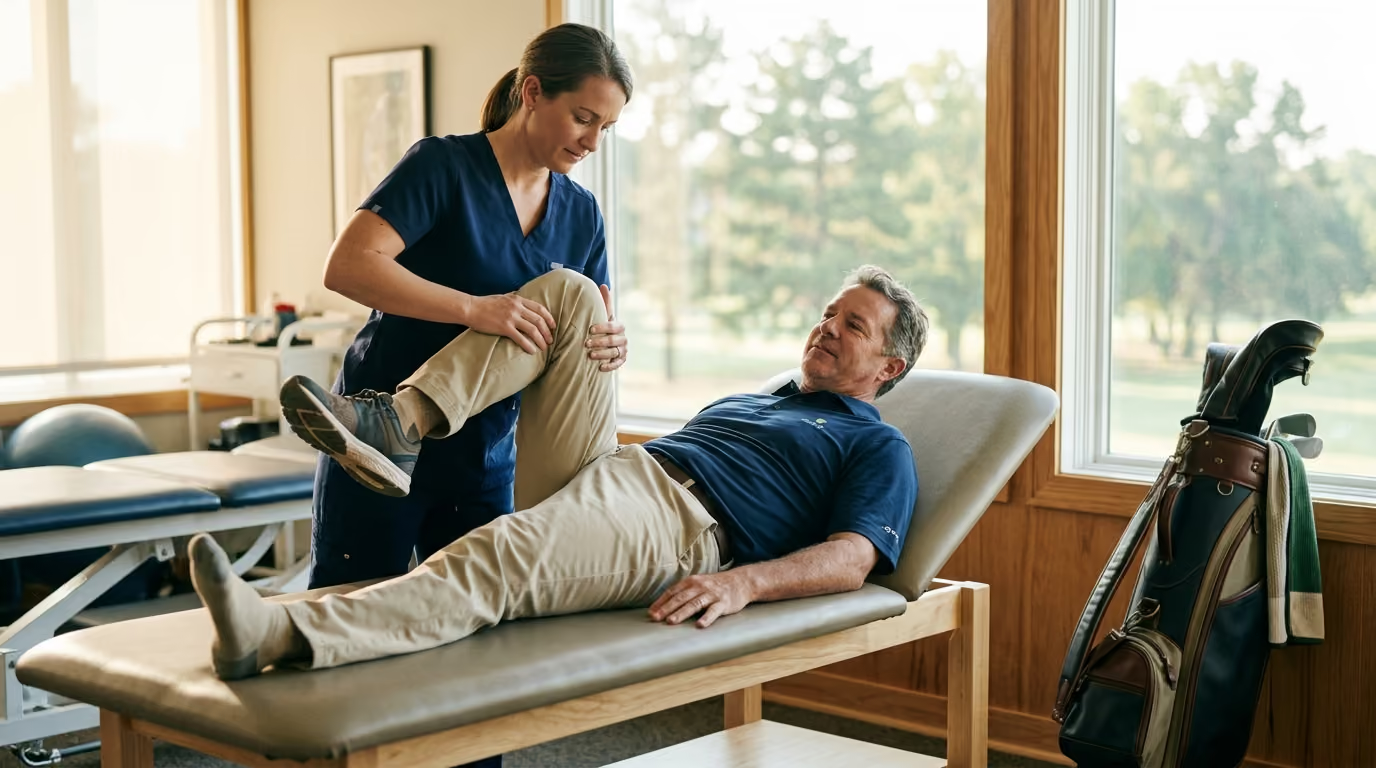

Pain-free swings and better joint stability come from selecting the right compression sleeves, wraps, and braces for your specific golf needs.




Joint support in golf is often misunderstood. Some players think a brace is a magical cure for a torn ligament. Others believe wearing a sleeve is a sign of physical weakness. Neither of these views is accurate. Joint support is simply a tool to manage load and physical stress.
This comprehensive guide defines what bracing is and what it is not. It is not a replacement for medical care. It is not a permanent solution for a structural injury. It is a practical method to protect your body and improve sensory awareness. We will analyze the different levels of support available to golfers.
We will also discuss how to choose the right gear for your needs. This guide covers compression sleeves, adjustable wraps, and mechanical unloader braces. You will learn how these tools affect your swing. You will also see how they help you play pain-free golf for many years to come.
Choosing the right joint support requires understanding the three basic levels of bracing. Each level has a specific design and a unique purpose. Using the wrong level of support can lead to poor results or even further discomfort.
Compression sleeves are very common on the golf course today. You have likely seen many players wearing them on their knees, elbows, or wrists. They are made of lightweight materials like nylon, spandex, or thin neoprene. They slide easily over your arm or leg. They feel snug and warm against your skin.
However, it is important to understand what they do not do. A compression sleeve does not have any rigid parts. It has no metal hinges, plastic strips, or stiff straps. Because of this, it cannot hold a joint in place. It cannot stop a knee from twisting sideways. It does not mechanically stabilize a torn ligament.
Instead, its primary value is sensory. Your skin is packed with tiny nerve endings. These are called cutaneous mechanoreceptors. When you put on a compression sleeve, it presses against these receptors. This gentle pressure sends a continuous stream of signals to your brain.
These signals help your brain understand where your limb is in space. This physical awareness is called proprioception. It is like having an internal map of your body. When your brain has a clear map, it can control your movements more precisely. This is why a simple sleeve can be incredibly useful.
Wraps and straps offer a different type of support. They are designed to apply focused pressure to a specific tendon or area. Unlike sleeves, they are highly adjustable. You can tighten or loosen them to fit your exact comfort level. They are usually made of thicker neoprene or woven elastic with Velcro fasteners.
A classic example is the counterforce elbow strap. This is a thin band that wraps around your forearm. It has a small gel pad or plastic piece inside. When you tighten the strap, this pad presses hard against your muscle. This is not meant to stop joint movement.
Instead, it changes how forces travel through your arm. When you swing a club, the impact with the ball creates strong vibrations. These vibrations travel up your shaft and into your tendons. A counterforce strap dampens these vibrations. It acts like a speed bump for physical stress.
By absorbing this shock, the strap protects the tendon attachment point. This is very helpful for golfers dealing with chronic elbow pain. It allows the irritated tendon to heal even while you continue to play.
Mechanical braces are the most advanced level of joint support. They are rigid or semi-rigid devices. They feature structural components like metal hinges, carbon fiber frames, or hard plastic stays. These braces do not just provide sensory feedback. They physically limit joint movement and alter skeletal alignment.
An unloader knee brace is a perfect example of this technology. It is designed for players suffering from knee osteoarthritis. Osteoarthritis occurs when the protective cartilage inside your joint wears away. This wear and tear usually happens on one side of the knee. For most golfers, it occurs on the inner side, which is called the medial compartment.
When you walk or swing, the bones rub together on this worn side. This causes sharp, grinding pain. An unloader brace uses a clever three-point leverage system. The frame pushes against the outer side of your knee. This action gently forces the joint to tilt.
By tilting the joint, the brace opens up the compressed side. It shifts your body weight to the healthy, outer side of your knee. This mechanical shift dramatically reduces pain. It allows you to walk eighteen holes with much less discomfort.
To get the most out of your joint support, you must understand the science behind it. Bracing affects your body in three main ways. These include improving sensory awareness, maintaining proper posture, and providing constant physical feedback.
Proprioception is often called our sixth sense. It is how you know your arm is raised without looking at it. In golf, this sense is critical for a consistent swing. You must know exactly where the club is at the top of your backswing. You must also know the precise position of your hips and shoulders.
Research shows that this sense declines as we age. It also drops when our muscles get tired. This is why you might hit great shots on the first five holes but struggle on the last five. Your brain is losing its connection to your joint positions. A compression sleeve helps prevent this breakdown.
Studies have examined how knee sleeves affect this physical sense. They found that sleeves improve active tracking accuracy by 28 percent. They also improve angle reproduction accuracy by 23 percent. This means a sleeve helps you repeat your swing mechanics more consistently. It keeps your brain in tune with your body.
This benefit is especially true for players with poor baseline awareness. If your balance is already weak, a sleeve will help you immediately. If you have great balance, the sleeve acts as a safety net. It protects your swing when fatigue begins to set in.
The pelvic-lumbar rhythm is the coordinated movement between your pelvis and your lower back. During the backswing, your pelvis must rotate. Your lower back must remain stable to support this movement. If your pelvis does not rotate enough, your lower back will try to turn instead. This is a major cause of lower back pain.
The lumbar spine is not designed for rotation. It can only turn about ten to fifteen degrees. The thoracic spine, or upper back, is designed for twisting. When the lower back is forced to rotate, it experiences high shear forces. This can lead to disc herniations and muscle strains.
A lumbar belt helps manage this physical relationship. It wraps snugly around your lower torso. Research shows that lumbar corsets decrease extension and rotation angles in the lower back. They keep your spine in a safer, more neutral position. This restriction is very useful during the high-speed phases of your swing.
It prevents you from over-twisting at the top of your backswing. It also protects your spine during the hard impact with the ball. By keeping your lower back stable, the belt forces your hips to do the rotating. This is exactly how the golf swing is designed to work.
The tactile reminder is a very real physical effect. It is a form of biofeedback. When you wear a brace, you feel the material against your skin. If you move your joint into an unsafe position, the brace tightens. This change in tension is a physical signal to your brain.
Your brain receives this signal and reacts instantly. It tells your muscles to contract and stop the movement. This happens without you having to think about it. It is a fast, automatic response. This feedback helps you maintain proper posture throughout your swing.
It is especially helpful for golfers who struggle with bad setup habits. For example, if you tend to hunch your back, a lumbar belt will press against your spine. This pressure reminds you to stand taller. It helps you avoid bad posture before you even start your swing. It is a simple way to build better habits on the course.
Let us look closely at a common course scenario. You are standing on the fourteenth tee box of a long, hot round. You have walked several miles, and your legs are tired. Your lead knee feels a bit soft and unstable. Your lower back has a dull, constant ache.
You address the ball and make your swing. Because your muscles are fatigued, your brain cannot sense your joint positions clearly. Instead of rotating your hips, you slide them toward the target. Your lead knee bows outward to absorb the force. Your lower back arches excessively to make up for the lack of turn.
The result is a terrible shot. The ball slices into the trees. More importantly, you have just put massive stress on your joints. This is how acute injuries happen on the golf course. It is not always from one bad swing. It is often the cumulative effect of fatigue over several hours.
This is the perfect time to use a compression sleeve. Putting a sleeve on your lead knee before the round can prevent this. It supports your joint position sense as your muscles tire. It acts as an insurance policy for your swing mechanics on the back nine.
Elbow pain is one of the most common issues for golfers. It can make carrying your bag or even holding a club difficult. To treat it, you must understand where the damage is and how to support it.
Many golfers assume they have golfer's elbow if they feel pain. However, lateral elbow damage is actually three times more common in golfers than medial damage. Medial epicondylitis affects the inside of the elbow. Lateral epicondylitis affects the outside of the elbow. Both conditions involve micro-tears in the tendons that control your wrist.
These injuries often come from repetitive impact. Hitting fat shots or practicing on hard mats can trigger them. The lead arm is especially vulnerable to lateral pain. The trail arm often experiences medial pain.
A counterforce strap is the best tool for elbow tendon pain. It is a simple band that wraps around your forearm. It does not cover the entire joint like a sleeve. Instead, it applies focused pressure on the muscle belly.
This pressure changes the angle of pull on the tendon. It disperses the forces that travel up your arm when you hit a ball. This reduces the strain on the tendon attachment point. It allows the injured tissue to heal while you play.
To get the best results, you must position the strap correctly. Place the strap about one inch below your pain point. It should sit on the thickest part of your forearm muscle. Tighten it until it feels snug, but do not cut off your blood flow.
You should still be able to make a full fist without pain. If your fingers tingle, the strap is too tight. Wear it during your practice sessions and your full rounds. Combine this with proper injury prevention strategies to protect your arms.
Lower back pain is a major issue for golfers. Research shows that the lower back is the most common site of injury for amateur players. The mechanical demands of the golf swing are unique. You must rotate your torso while bent forward at the hips. This combination creates high shear forces on your spinal discs.
The constant bending and twisting of the golf swing can wear down your spine. Over time, the muscles in your lower back can become fatigued and strained. When these muscles fail to support your spine, the burden shifts to your joints and discs. This is when chronic pain begins to develop.
For many mature golfers, this pain can limit their playing time. It can also reduce their swing speed and overall enjoyment of the game. Managing this pain is crucial for extending your playing years.
A lumbar belt can provide significant relief on the course. It works by increasing pressure inside your abdomen. This pressure acts like a natural cushion for your spine. It helps your core muscles stabilize your lower back. This reduces the work your spinal muscles have to do.
Research confirms that lumbar corsets are highly effective. They decrease lumbar extension and rotation from the point of impact to the end of your swing. This is the exact window when your spine is most vulnerable. By limiting these extreme movements, the belt protects your discs. It keeps your back in a safe, stable position throughout your swing.
However, you must choose the right type of back support. A heavy, rigid medical brace is not suitable for golf. It will block your ability to turn. This can ruin your swing path and cause other joints to overwork. Look for a lightweight, low-profile belt that allows you to turn your hips freely.
A good belt should fit snugly under your golf shirt. It should offer adjustable compression so you can tighten it before a shot. It should also be made of breathable material to keep you cool. This design supports your back while allowing a functional turn.
Knee pain is another common issue for mature golfers. The lead knee experiences intense forces during the downswing. For a right-handed golfer, this is the left knee. As you swing, your body weight shifts rapidly to this leg. At the same time, your knee must rotate to clear your hips.
This combination of compression and rotation can wear down your joint cartilage. Over time, this wear can lead to osteoarthritis. The lead knee takes the brunt of this force. If you do not support it, the pain can alter your swing path. It can also cause you to lose power during impact.
If you have mild pain or stiffness, a simple knee sleeve is a great option. It keeps the joint warm and increases blood flow. This warmth helps lubricate the joint and reduces stiffness during your walk.
A knee sleeve also improves your joint position sense. Research shows that knee sleeves can improve active tracking accuracy by 28 percent. This extra stability can give you more confidence when posting up on your lead leg. It helps you make a cleaner, more consistent turn.
If you have moderate to severe osteoarthritis, a sleeve may not be enough. In this case, you should consider an unloader brace. These are semi-rigid devices with a built-in hinge. They work by physically shifting pressure away from the damaged side of your knee. This mechanical support can significantly reduce bone-on-bone pain as you walk and swing.
Using an unloader brace can help you avoid surgery and keep playing. It is a powerful tool for golfers who love to walk the course. Talk to your doctor to see if an unloader brace is right for you.
Wrist injuries are highly common in golf. Research shows that hand and wrist injuries account for over 50 percent of complaints in professional players. Amateurs also experience high rates of wrist pain. The wrist must absorb the force of impact with the turf. It also undergoes rapid bending and releasing throughout the swing.
The main challenge with wrist support is maintaining your grip. Standard wrist braces are designed to keep the joint completely still. They often feature a rigid metal stay that runs across the palm. This stay makes it impossible to hold the golf club correctly. It ruins your grip pressure and prevents a natural release.
A common source of pinky-side pain is the triangular fibrocartilage complex, or TFCC. This structure is a small shock absorber on the outside of your wrist. It is easily strained by fat shots or heavy rough. This injury causes sharp pain when you release the club. It can also make your wrist feel unstable during the swing. Traditional braces are too bulky to help with this specific issue.
To support your wrist without ruining your grip, you need a minimalist design. A great option is a targeted wrap that leaves your palm free. A minimalist wrap like the WristWidget can support this area. It wraps tightly around the radius and ulna bones of your forearm.
This stabilizes the wrist joint without crossing your palm. Your fingers can move freely, allowing you to maintain a light, natural grip. This is an excellent way to protect your wrists while playing.
Many golfers make simple errors when using joint supports. These mistakes can reduce the effectiveness of the brace. In some cases, they can even lead to new injuries. Understanding these pitfalls is crucial for protecting your body.
The first mistake is believing the myth of muscle atrophy. Some players think that wearing a brace will make their muscles weak. They worry that their body will rely on the brace and stop working. While this can happen with long-term casting, it is not true for active bracing. Using a flexible sleeve or belt during your round can actually keep you stronger.
By reducing your pain, the brace allows you to stay active. It helps you walk more holes and hit more practice balls. This increased activity keeps your muscles engaged and healthy. You should not avoid using a brace during play out of fear of weakness.
The second mistake is using compression when you need structural support. A compression sleeve feels snug and comfortable. However, it has no physical strength to hold a joint together. If you have a torn ligament or a meniscus tear, a sleeve will not protect you. You need a mechanical brace that physically limits joint movement.
Using a sleeve for a structural injury can give you a false sense of security. This can lead to over-exertion and more severe damage. Always match the level of support to the actual condition of your joint.
The third mistake is choosing a brace that is too rigid. If your brace blocks your natural movement, your body will compensate. For example, a stiff back brace might force you to twist your shoulders too much. This extra stress can cause new injuries in other joints.
Always choose the minimum amount of support needed to manage your pain. This keeps your overall movement pattern as natural as possible.
As we cross the age of 40, our bodies undergo natural physiological changes. These changes directly impact how we move on the golf course. The joint structures that felt bulletproof in our twenties become more sensitive. Understanding these changes helps us make better decisions about joint support.
Synovial fluid is the natural lubricant inside our joints. It acts like oil in a car engine, preventing friction between the bones. As we age, our bodies produce less of this fluid. This reduction makes our joints feel stiff, especially in the morning or during cold weather.
Without enough lubrication, the cartilage inside the joint experiences more friction. This friction can lead to inflammation and pain. A compression sleeve can help by trapping body heat. This heat increases blood flow, which stimulates the production of synovial fluid. It is a simple way to keep your joints moving smoothly.
Tendons are the thick bands of tissue that connect muscle to bone. Over time, tendons naturally lose their water content and elasticity. They become stiffer and more brittle. This makes them more susceptible to micro-tears during high-torque movements.
The golf swing is a high-torque movement that puts sudden stress on your tendons. Your wrists and elbows must absorb the force of the club hitting the turf. Stiffer tendons are less able to absorb this shock. This is why elbow and wrist pain become more common as we get older. Using wraps or counterforce straps helps absorb this impact, protecting your fragile tendons.
The natural loss of muscle mass is called sarcopenia. It begins to affect most adults after the age of 40. As muscle mass declines, our joints lose their primary active stabilizers. This forces our ligaments and bones to bear more of the load during a swing.
At the same time, our joint position sense naturally declines. This loss of proprioception makes it harder for the brain to coordinate movements. This is why older golfers often notice a loss of balance or consistency. Bracing helps compensate for these changes by stimulating cutaneous mechanoreceptors. It provides the extra sensory input your brain needs to keep your joints stable.
Many golfers are confused about when to use heat or ice for joint pain. Both therapies are excellent tools, but they do different things. Using the wrong therapy at the wrong time can actually delay your healing. Understanding how they work is a key part of your recovery.
Cold therapy is best used for acute injuries or sudden flare-ups of pain. When you apply ice, it constricts your blood vessels. This reduces blood flow to the area, which helps control swelling and inflammation. Cold also numbs the nerve endings, providing fast pain relief.
If your knee or elbow feels hot and swollen after a round, use ice. Apply a cold pack wrapped in a thin towel for fifteen to twenty minutes. Do not apply ice directly to your skin, as this can cause frostbite. This is a critical step in your immediate post-round recovery.
Heat therapy does the opposite of cold therapy. It dilates your blood vessels, which increases blood flow to the area. This extra blood flow brings oxygen and nutrients to help heal damaged tissues. Heat also relaxes tight muscles and increases tendon flexibility.
If you suffer from chronic stiffness, use heat before you play. Applying a warm compress to your lower back or knees for ten minutes can help. It prepares your joints for the movement of the swing. This is a highly effective way to warm up before heading to the first tee.
You can combine temperature therapy with your bracing routine for better results. For example, you can apply heat to your elbow before your round to loosen the muscles. Then, put on your counterforce strap to protect the tendon during play. After you finish eighteen holes, apply ice to reduce any inflammation.
This combined approach addresses both the mechanical and physiological aspects of joint pain. It helps you manage discomfort before, during, and after your game. This is a highly sustainable habit for golfers over 40. It keeps you on the course without relying solely on pain medication.
While braces are highly useful, you should not rely on them forever if your joint is healing. The goal is always to restore as much natural strength as possible. Transitioning away from a brace must be done carefully. A sudden stop can overload the joint and cause a relapse.
Before you stop wearing a brace, you must assess your pain. You should be able to perform daily activities without any discomfort. Your joint should feel stable during normal movements like walking or climbing stairs. If you still feel sharp pain, you are not ready to remove the brace.
It is also important to consult with a medical professional. They can confirm if your tissues have healed enough to handle the stress of a golf swing. Once you get the green light, you can begin the weaning process. This process should take several weeks.
Do not go cold turkey during a full round of golf. Instead, start by removing the brace during short practice sessions. For example, you can warm up without the brace on the putting green. Then, put it on before you hit full shots on the range.
Gradually increase the amount of time you spend without the support. Try hitting soft wedges without the brace first. If your joint feels stable, progress to short irons. If you feel any aching or weakness, put the brace back on. Listen to your body and move at your own pace.
To safely transition away from a brace, you must build the surrounding muscles. These muscles act as your body's natural braces. Focus on simple, low-impact exercises that target the joint. For the knee, practice bodyweight squats and lunges.
For the elbow, perform gentle wrist curls with a light dumbbell. This helps build strength for golf by targeting the muscles that control the wrist. Pair this strength work with a consistent mobility routine. This double approach ensures your joints are ready to handle the force of your swing.
Your golf equipment has a direct impact on your joint health. If your gear is not set up correctly, it can put extra strain on your body. Making a few simple adjustments can reduce your need for bracing. It is a vital part of protecting your joints for the long term.
Start by checking your golf grips. If your grips are too small, you must squeeze the club tightly to keep it from slipping. This constant squeezing strains the muscles and tendons in your forearms. It is a common cause of both wrist pain and golfer's elbow. Switching to midsize or oversized grips can relieve this tension.
Next, examine your club shafts. Steel shafts are heavy and stiff. They transmit almost all the shock of impact directly into your hands, wrists, and elbows. Graphite shafts are much lighter and absorb these vibrations. Making the switch to graphite can significantly reduce upper-body pain.
Finally, look at your golf shoes. Spiked shoes provide excellent traction, but they can lock your feet into the ground. This locking action forces your knees to absorb all the rotational force of your swing. Spikeless shoes allow for a small amount of foot slip during rotation. This subtle movement can relieve a massive amount of stress on your knees.
Braces are excellent temporary tools, but they do not fix the root cause of pain. To extend your playing years, you must build lasting joint stability. This requires a consistent routine focused on strength and mobility. You can find detailed resources on building a strong body in our golf performance resources section.
Let us look at a simple exercise to improve hip mobility. Stand with your feet shoulder-width apart. Place your hands on your hips. Keep your trail foot firmly planted on the ground.
Slowly rotate your torso backward, focusing on opening your trail hip. Do not let your knee slide outward. Focus entirely on the feeling of rotation in your hip socket. This exercise builds the hip mobility needed to protect your lower back. Perform ten repetitions on each side before your round.
To protect your elbows, you must stretch your forearm muscles. Extend your lead arm straight out in front of you. Point your fingers down toward the ground.
Use your other hand to gently pull your hand back toward your body. You should feel a stretch along the top of your forearm. Hold this position for thirty seconds. Repeat this stretch three times on each arm to prevent elbow pain. This is a critical habit for consistent post-round recovery.
This exercise builds strength in the muscles that support your knee. Loop a resistance band around a sturdy post at knee height. Step inside the loop, placing the band behind your active knee.
Face the post and step back until the band is taut. Keep your heel on the ground and bend your knee slightly. Slowly straighten your knee against the resistance of the band, squeezing your quad muscle. Hold for two seconds, then return to the start. Perform three sets of fifteen repetitions on each leg to build knee stability.
Yes, you can wear a compression sleeve for all eighteen holes. Choose a sleeve made of breathable, moisture-wicking material to prevent skin irritation. It is especially useful on the back nine when your muscles begin to fatigue. If you feel any tingling or numbness, remove the sleeve immediately.
A back brace will only ruin your swing speed if it is too rigid. A stiff medical brace blocks your torso rotation, which reduces your power. A low-profile, flexible lumbar belt can actually help you maintain your speed. It reduces pain and gives you the confidence to swing fully.
Golfer's elbow causes pain on the inner side of your elbow. Tennis elbow causes pain on the outer side. Lateral damage on the outer side is actually more common in golfers. A counterforce strap can help manage both conditions by shifting tendon tension.
Generally, you should not wear a support brace if you are pain-free. Your body needs to move naturally to maintain its strength. However, wearing a light compression sleeve can be useful if you struggle with fatigue. It provides sensory feedback that helps you maintain your golf mobility late in the round.
Choose your joint support based on whether you need sensory awareness or structural alignment, and always pair your brace with a consistent mobility routine to keep your swing strong for years to come.
Follow Golfergy for practical insights on performance, mobility, recovery and healthy ageing. Stay connected for new articles, research-led guidance and ideas to help you play better for longer.


Explore practical resources on performance, recovery, mobility and golf longevity.
Read the Blog