
Most players focus entirely on upper body mechanics, but stable feet and mobile ankles form the true physical foundation for a powerful golf swing.




If you have ever searched online to find out why your feet feel sore after eighteen holes, you are not alone. Many mature golfers wake up the morning after a round with stiff arches. You might feel a sharp pain in your heel when stepping out of bed. This guide provides a clear look at how your feet work during the swing. We want to help you stay on the course for many years to come.
In our experience, foot and ankle health is the most ignored part of golf longevity. The saddest thing I have seen in golf is watching lifelong playing partners slowly drop out of our weekend group. It usually starts with a nagging shoulder or knee issue they ignore until it requires surgery. That pattern is exactly why I became obsessed with golf longevity. We do not have to stop playing as we age, provided we do the right maintenance work between rounds. That is why we focus on physical health as the true foundation of your swing.
Your feet are the only parts of your body that touch the ground during a round. They must manage complex rotational forces while keeping your body balanced. If your feet are weak or stiff, your entire swing suffers. Your knees, hips, and lower back must work harder to make up for the loss of foot control. This guide will show you how to protect your feet and improve your performance. We will focus on practical steps you can take starting today.
We want to help you build a body that can play golf for decades. To do that, we must start at the very bottom. By understanding how your feet interact with the turf, you can prevent common injuries. Let us examine the real physical demands of a round of golf.
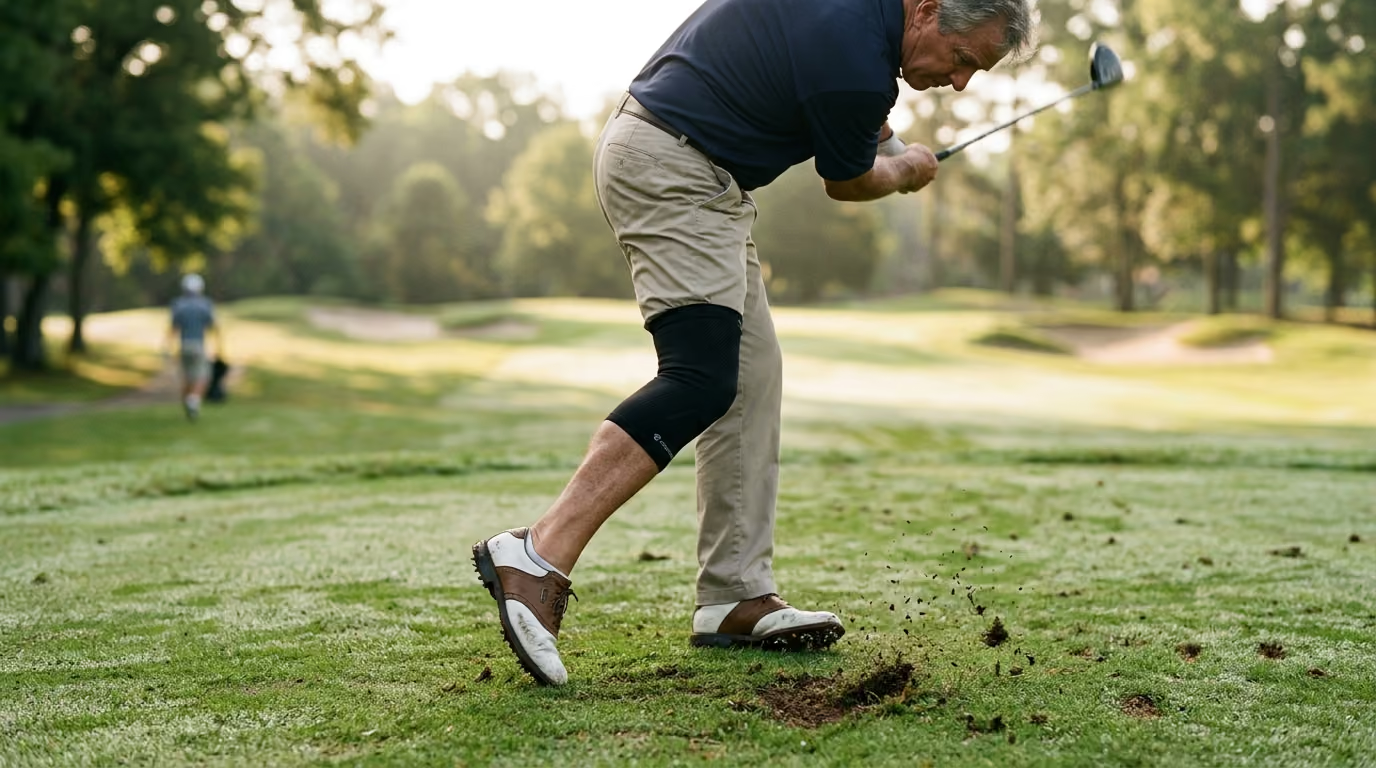
To understand how this works, let us look at a typical afternoon on the golf course. Imagine you are standing on the fourteenth tee box of a long course. You have walked nearly five miles over uneven hills, through thick wet grass, and across deep sand bunkers. Your legs are feeling tired, and your feet are aching inside your shoes. You grip your driver and prepare to hit a long tee shot over a water hazard.
As you start your backswing, your trail foot begins to roll slightly outward. The tired muscles in your ankle can no longer hold a firm edge. When you transition to the downswing, your trail shoe slips on the dry grass. Instead of a strong push off the ground, your foot slides backward. This sudden loss of grip causes your hips to stall. Your hands try to compensate, but you hit the ball thin.
The ball flies low and lands in the right fairway bunker. At the same moment, you feel a sharp pinch in your trail heel. Your lead foot also feels sore from trying to stop your body from falling forward. This is not just a bad swing. It is a sign that your physical foundation has failed under stress.
When your feet tire, your swing path changes. You lose distance because you cannot transfer energy from the turf up to the club head. More importantly, you put your joints at risk. Each slip and slide stresses the small ligaments in your ankles. Over eighteen holes, these micro-traumas add up to serious chronic pain.
To prevent these injuries, we must understand the biomechanics of the feet. The golf swing requires two very different roles for each foot. We call this the lead and trail foot duality. For a right-handed golfer, the lead foot is the left foot. The trail foot is the right foot.
The lead foot acts as an anchor and a brake during the downswing. As you swing down, your body weight shifts rapidly toward the target. Your lead foot must absorb up to 1.5 times your total body weight in ground reaction forces. This force is applied in a fraction of a second. If your lead foot collapses, you cannot stop your body from sliding past the ball.
The trail foot acts as the engine of your swing. It provides the initial push off the turf to start your downswing. This movement creates the rotational power needed for club head speed. The trail foot must remain stable while twisting to drive your hips forward. If your trail foot is weak, your swing will lack power.
We must also look at Ground Reaction Force, or GRF. This is the force the turf pushes back against your body when you press down. Great players shift their weight to the lead side very early. They do this by the time the club shaft is vertical in the downswing. This early shift allows them to utilize GRF for longer drives.
Finally, the golf swing involves three-plane loading. This means your feet experience forces in three directions at once. The first is vertical force, which is the downward pressure into the turf. The second is anterior-posterior force, which is the front to back weight shift. The third is lateral or rotational force, which is the twisting motion of the swing.
Walking only involves front to back movement. The golf swing, however, twists the feet with great speed. This twisting puts twice as much torque on the lead foot as the trail foot. Your feet must be strong enough to handle all three forces at the same time. If they are not, the kinetic chain breaks down.
Joint centration is the starting point of a healthy swing. This means keeping the joints in their optimal physical positions. When your foot is centrated, it creates a stable arch. This stability spirals upward through your entire skeleton. It protects your knees, hips, and spine from abnormal twisting.
If your foot stability breaks down, a negative chain reaction occurs. A collapsing arch causes your lower leg bone to twist inward. This internal tibial rotation forces your knee to buckle. The knee movement then pulls your pelvis into an anterior tilt. This tilt arches your lower back and puts pressure on your spinal discs.
We often see this in golfers with poor ankle mobility. Specifically, a lack of ankle dorsiflexion is a major problem. Dorsiflexion is the ability to pull your toes up toward your shins. The Titleist Performance Institute has done extensive research on this issue. They found that tight ankles are directly linked to early extension.
Early extension happens when your hips move toward the golf ball during the downswing. When this occurs, you lose your posture and your spine straightens too early. This movement is a common cause of blocked shots and slices. Golfers often try to fix this by changing their hand path. The real cause, however, is a lack of ankle movement.
If your ankles cannot bend, your body cannot stay in a deep squat posture. Your hips must push forward to keep you from falling backward. This movement pattern stresses your lower back. Over time, this leads to chronic lower lumbar pain. You cannot fix your back until you fix your ankles.
Athletes with hypermobile joints face even greater risks. A study in the Journal of Science and Medicine in Sport showed that hypermobile athletes have a 26.1 percent ankle injury rate. This is compared to only a 9 percent rate for people with normal joint mobility. Hypermobile golfers need extra structural support. They must focus on building foot strength rather than stretching.
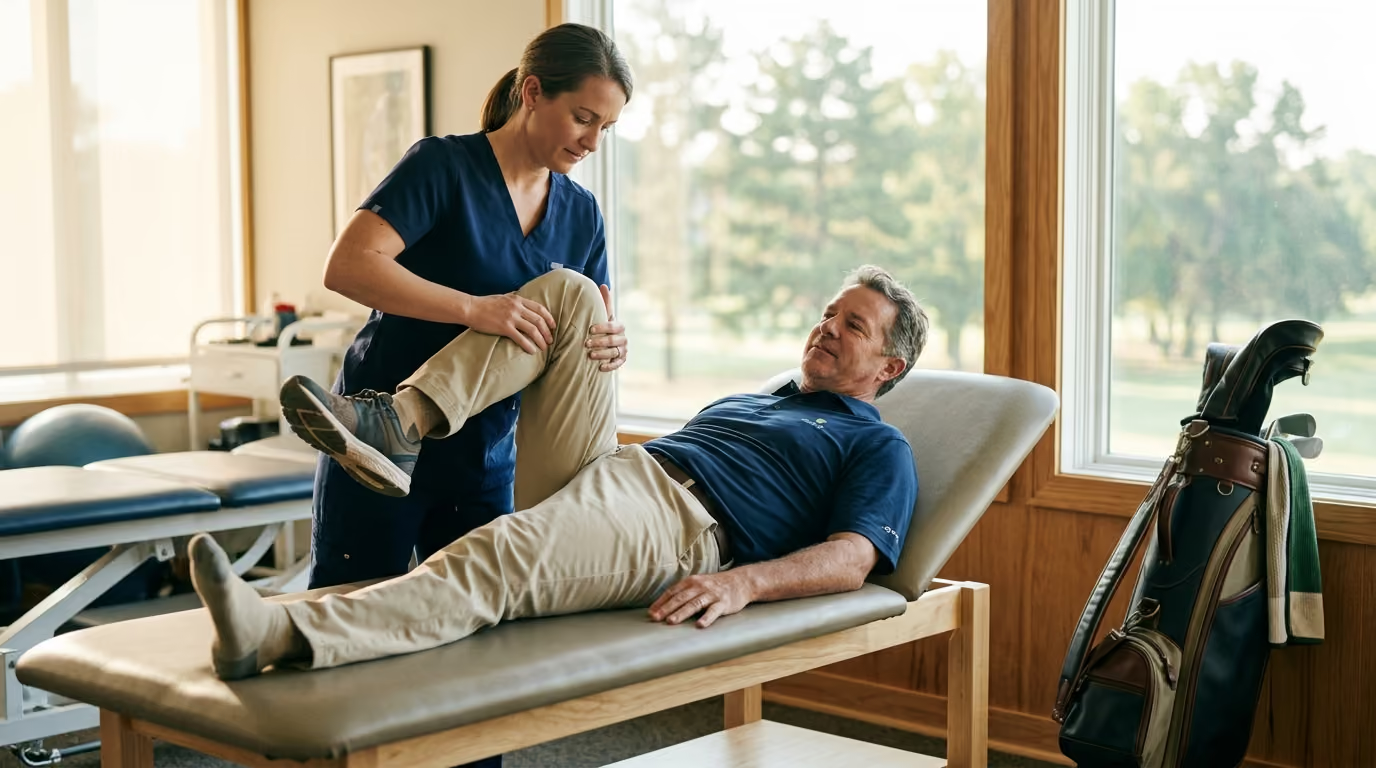
Let us look at the most common injuries golfers experience. The first is plantar fasciitis, which usually affects the lead foot. The plantar fascia is a thick band of tissue on the bottom of your foot. It connects your heel bone to your toes. It acts as a shock absorber for your arch.
During the downswing, your lead foot experiences heavy rotational forces. If your shoe lacks proper support, your arch collapses. This movement stretches the plantar fascia past its normal limit. Over time, tiny tears develop in the tissue. This causes sharp, stabbing heel pain, especially during your first steps in the morning.
The second common injury is Achilles tendinopathy, which often strikes the trail foot. The Achilles tendon connects your calf muscles to your heel bone. During the follow-through, your trail heel lifts off the ground. This motion puts intense tension on the tendon as you rotate. If you wear shoes with flat heels, this tension increases.
This constant pulling causes micro-wear in the tendon fibers. You may feel a dull ache in the back of your ankle after playing. The tendon may also feel stiff and sore when you first stand up. If ignored, this condition can lead to a partial or total tendon tear.
The third pathology is Morton's neuroma. This is a painful condition that affects the nerves between your toes. It most commonly occurs between the third and fourth toes. It is caused by compression of the nerve sheath.
In golf, this happens during the high-pressure push-off phase of the swing. If your golf shoes have a narrow toe box, your toes are squeezed together. The pressure pinches the nerve, causing a burning sensation or a feeling like a pebble is in your shoe. You can avoid this by choosing shoes with a wider front section.
If you feel foot stiffness during a round, do not panic. There is an immediate adjustment you can make on the tee box. We call this the trail foot flare. This simple change can reduce strain on your ankles and lower back.
First, stand in your normal setup position. Take your trail foot and turn the toes outward by ten to fifteen degrees. Do not keep your feet perfectly parallel to each other. Flaring the foot opens up your ankle joint.
Second, perform your normal backswing. You will find that your trail hip can turn much easier. This is because the flared foot reduces the rotational stress on your ankle. It prevents your knee from swaying outward.
Third, focus entirely on turning your trail hip during the backswing. This simple mental cue keeps your weight on the inside of your foot. It prevents the trail foot from rolling onto its outer edge. This adjustment protects your Achilles tendon from excessive twisting.
This quick fix is especially helpful for mature players with limited hip flexibility. It allows you to get a full turn without overloading your joints. You can use this setup on every full swing to keep your feet comfortable. It is a simple way to preserve your energy for the final holes.
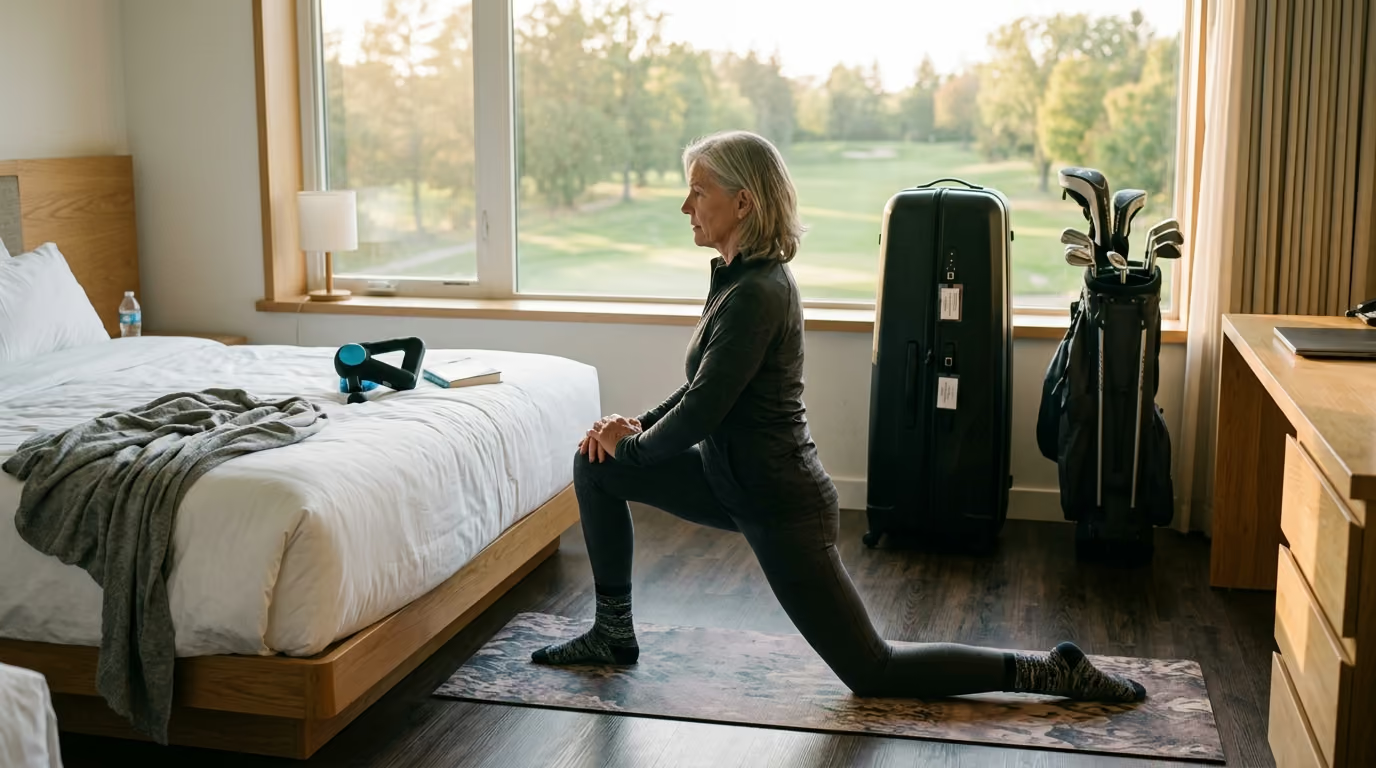
To build lasting stability, you must practice a regular exercise routine. You should perform these movements two to three times per week. They do not require expensive gym equipment. You can do them in your living room or office. These habits are important for long term healthy ageing and joint protection.
Our first exercise is the towel stretch for calf and Achilles mobility. Sit on the floor with your legs straight out in front of you. Loop a towel around the ball of your foot. Gently pull the towel toward your body while keeping your knee straight.
Hold this stretch for thirty seconds, then release. Repeat this three times on each leg. This movement improves your ankle dorsiflexion. It helps prevent early extension during your swing. Focus entirely on pulling your toes straight back, not curving them inward.
Our second exercise is the single-leg balance on a soft surface. Stand on one foot on a folded exercise mat or a thick pillow. Keep your hands on your hips and try to hold your balance for thirty seconds. As you stand, focus entirely on pressing your big toe down into the surface.
This presses your foot into a stable, active arch position. It strengthens the lateral stabilizers of your ankle. Repeat this three times on each foot. This exercise trains your brain to control your balance on uneven lies.
Our third exercise is the short foot movement. Place your foot flat on the floor while sitting in a chair. Without curling your toes, try to pull the ball of your foot toward your heel. This action raises your arch off the ground.
Hold this contraction for five seconds, then relax. Do fifteen repetitions on each foot. This exercise targets the small intrinsic muscles inside your foot. These muscles are vital for keeping your arch from collapsing during the downswing.
Our fourth exercise is the wall ankle mobilization. Stand facing a wall with one foot a few inches away. Keep your heel flat on the floor. Slowly push your knee forward until it touches the wall.
Perform ten repetitions, then move your foot slightly further back. Repeat this on both legs. This exercise improves ankle mobility under a gentle load. It is a key part of injury prevention for your lower body.
Building these habits requires consistency over several weeks. You will slowly feel your ankles become more cooperative during your swings. This is the path to sustainable mobility on the course.
Many golfers make errors when trying to improve their foot health. The first common mistake is believing the "loose ankle" myth. While mobility is good, excessive laxity without control is dangerous. Loose ankles allow your body to sway laterally during the backswing.
Instead of coiling your muscles, you simply slide away from the target. This movement ruins your swing path and reduces your power. You must balance mobility with strength training. Your ankles need to be stable, not just flexible.
The second mistake is using uniform support for both feet. Many players buy off-the-shelf orthotics that are identical for both sides. However, your lead and trail feet perform different jobs. The lead foot needs lateral stability to handle rotational braking forces.
The trail foot needs flexibility to roll onto the big toe during the finish. Using identical, rigid support can hinder your natural swing mechanics. Custom footbeds should account for these distinct movement patterns.
The third mistake is over-stretching a painful Achilles tendon. If your heel is sore, aggressive stretching can make the irritation worse. Tendons do not always respond well to heavy stretching when they are inflamed.
Instead of stretching, focus on gentle isometric holds. Stand on a flat surface and lift your heels slightly off the ground. Hold this position for twenty seconds to build strength without aggravating the tendon. This approach is much safer for mature tissues.
Your choice of footwear has a massive impact on your foot health. Many players prioritize soft cushioning when buying golf shoes. While comfort is nice, too much cushion can reduce your stability. You need a shoe with high torsional rigidity.
Torsional rigidity refers to how much a shoe resists twisting in the middle. If you can easily twist your shoe like a wet rag, it lacks support. Without this rigidity, your midfoot will collapse during the downswing. This lack of support can lead to posterior tibial tendon strain.
We must also consider the debate between spiked and spikeless shoes. Spikeless shoes are comfortable for walking on hard paths. However, they often fail to provide enough traction on wet grass or side-hill lies.
When your shoe slips, your toes must grip the sole of the shoe to keep you steady. This repetitive clawing can cause a condition called turf toe. It can also lead to metatarsalgia, which is pain in the ball of the foot. For wet conditions, spiked shoes offer much better safety.
Your shoe's toe box is another critical feature. Many modern golf shoes are narrow in the front. This design squeezes your metatarsal bones together. It can pinch the nerves and cause Morton's neuroma.
Look for shoes that have a wide, anatomical toe box. This shape allows your toes to splay naturally when you walk and swing. It improves your balance and keeps your feet comfortable.
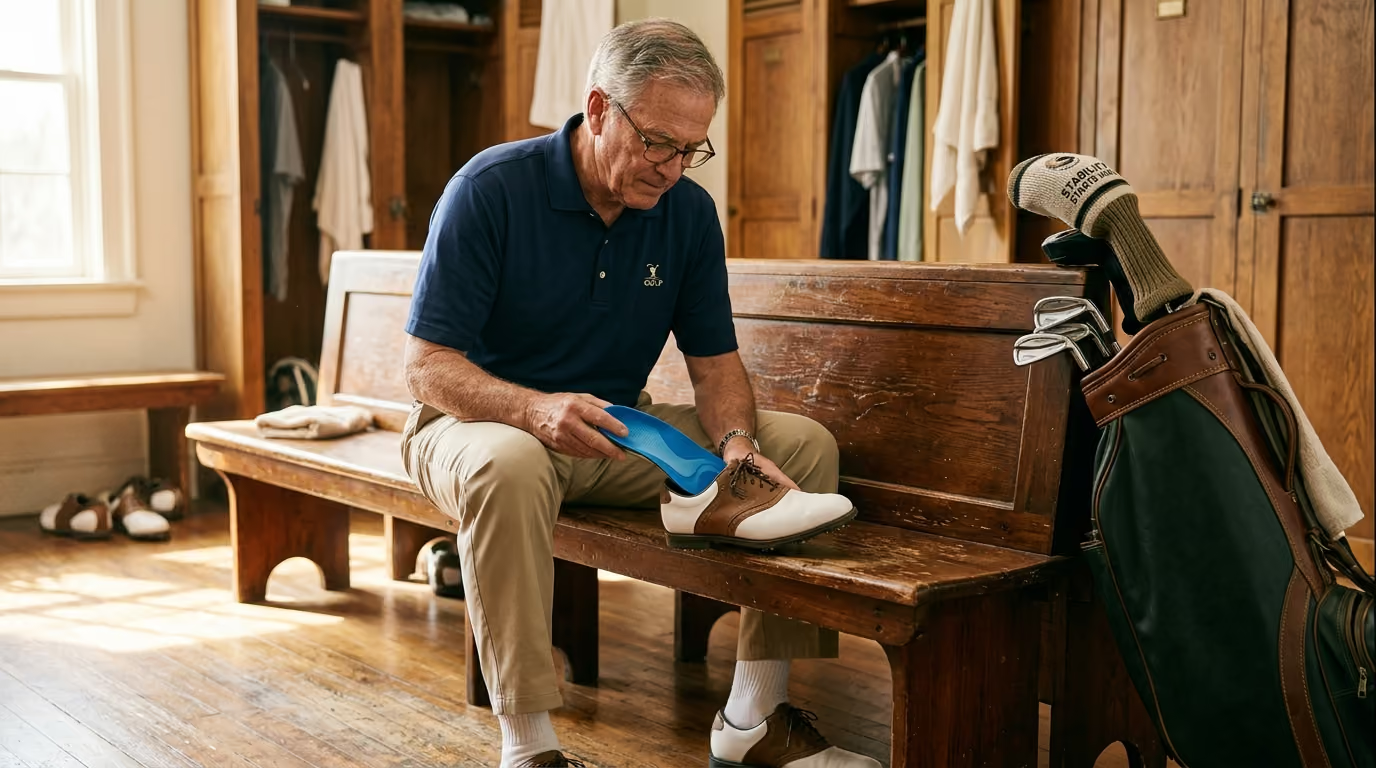
Finally, consider using specialized insoles. Custom orthotics can help distribute your weight evenly across your foot. This reduces the pressure on your plantar fascia. It helps maintain joint centration throughout your swing. Proper orthotics can also accelerate your recovery after a long day of walking.
If you want to read more about how your equipment shapes your movement, check out our resources on Golf Longevity, Performance & Recovery. The right gear is your first line of defense against injury.
A stable swing is built from the dirt up, meaning your feet must provide both the mobility to turn and the strength to hold the ground.
To put these concepts into action, follow this simple checklist this week. These habits will help you maintain your physical base.
Follow Golfergy for practical insights on performance, mobility, recovery and healthy ageing. Stay connected for new articles, research-led guidance and ideas to help you play better for longer.


Explore practical resources on performance, recovery, mobility and golf longevity.
Read the Blog