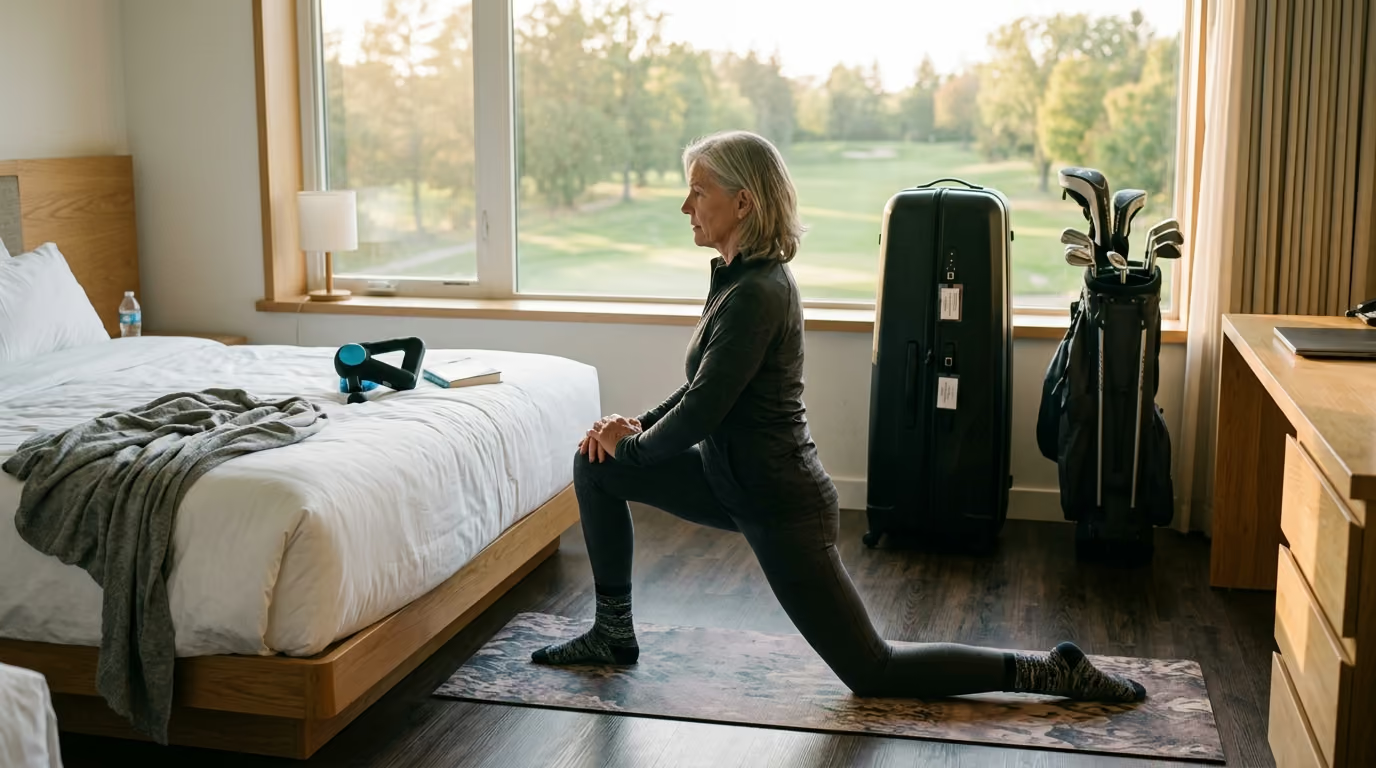
Multi-round golf trips place heavy demands on your body, but proper recovery and energy management help you prevent injuries and maintain swing performance.




You stand on the tenth tee during your second round of the day. The sun is starting to dip. Your lower back feels like a tight band of concrete. Your practice swings feel heavy and slow.
You try to turn your hips, but your body resists. This is a familiar scene for many golfers on a weekend trip. The physical toll of multiple rounds in a short period is high. Many golfers look forward to these trips for months.
They plan the courses, the meals, and the pairings. Yet, they often forget to prepare their bodies. By the third round, swing speeds drop, joints ache, and frustrations rise.
The saddest thing I have seen in golf is watching lifelong playing partners slowly drop out of our weekend group. It usually starts with a nagging shoulder or knee issue they ignore until it requires surgery. That pattern is exactly why I became obsessed with golf longevity. We do not have to stop playing as we age, provided we do the right maintenance work between rounds.
This guide provides a practical blueprint to help you survive and thrive during high-volume golf trips. We will break down the science of fatigue, show you how to manage your energy, and offer a simple recovery protocol. These strategies will help you play better golf and protect your body from overuse.
Walking eighteen holes of golf is a substantial physical effort. Most golfers do not realize the actual distance they cover. On average, a standard eighteen-hole round requires you to walk between four and eight miles. This translates to 11,245 to 16,667 steps.
When you double this for a thirty-six-hole day, you are walking up to sixteen miles. You are taking over thirty-two thousand steps. This volume of movement changes golf from a moderate activity into a true endurance event. Your muscles, joints, and cardiovascular system must work constantly for eight to ten hours.
The stress that builds up in your body is known as accumulative load. Each swing and step adds to this total load. If you do not manage this stress, your performance will decline rapidly. This fatigue shows up in your swing as a loss of power and poor control.
Energy expenditure is another critical factor. A golfer burns between 531 and 2,467 calories during a single eighteen-hole round. If you choose to carry your own golf bag, you will burn approximately 1,200 calories per round. Over a thirty-six-hole day, that total can reach 2,400 to nearly 5,000 calories.
Without proper recovery and nutrition, your body cannot keep up with this demand. This physical deficit leads to injury. Research shows that 82.6 percent of all golf injuries are related to overuse rather than sudden trauma. For amateur golfers, these overuse injuries most frequently target the elbows, the lower back, and the shoulders.
This high rate of overuse issues is why golfers need targeted preparation. If you do not prepare, your body will force you to stop playing. You can learn more about protecting your body by studying injury prevention strategies before your next trip.
The golf swing is not just an arm movement. It is a complex action that relies on your entire body working together. Biomechanists call this system the kinetic chain. The chain starts at your feet, which grip the turf.
Energy then travels up through your legs, into your hips, through your torso, and down your arms to the clubhead. For this chain to work properly, every link must do its job. When you play multiple rounds in a weekend, fatigue begins to weaken specific links.
The first muscles to tire are usually your glutes and your core. These muscles are responsible for stabilizing your pelvis and supporting your lower back. When they stop working, the kinetic chain breaks down. This breakdown forces other parts of your body to compensate.
When the larger muscles in your legs and hips stop firing, your body still tries to create clubhead speed. To do this, it forces smaller, weaker joints to work harder. Your wrists, elbows, and shoulders must work much harder to swing the club. This compensation is the primary cause of golfer's elbow, tennis elbow, and shoulder strain.
To protect these smaller joints, you must focus on your larger muscle groups during the swing. For example, when you feel tired, focus entirely on turning your trail hip. By concentrating on this single, slow movement, you can help keep your pelvis rotating. This prevents your arms from pulling the club down too quickly, which protects your lower back and elbows from sudden, violent forces.
Maintaining this rotational movement is a key part of golf mobility. If you can keep your hips moving, you protect the rest of your body. You can find more detailed movement patterns in our golf performance resources.
When you are in the middle of a round, you cannot do a full workout. You need quick, effective actions to keep your body moving. If you feel your lower back tightening on the tee box, do not ignore it.
A great on-course solution is the standing pelvic tilt. Stand with your feet shoulder-width apart and your knees slightly bent. Place your hands on your hips. Slowly tuck your tailbone under, then arch your lower back.
Repeat this gentle movement ten times. This action helps release tension in your lumbar spine and wakes up your glutes. It takes less than a minute and can be done while waiting for your partners to tee off.
Another common issue is tightness in the upper back, which limits your shoulder turn. To address this, hold a golf club across your shoulders behind your neck. Keep your hips facing forward, and slowly turn your torso from side to side.
Focus on a smooth, controlled motion. Do not force the stretch. Perform ten turns in each direction. This simple movement helps maintain your thoracic rotation, which is vital for maintaining your swing path.
These on-course resets help maintain your mechanical efficiency as the day progresses. They keep your joints lubricated and prevent your muscles from locking up. Making these quick movements a habit will keep your swing feeling fluid even on the thirty-sixth hole.
Many golfers make the mistake of waiting until they are hungry to eat. This is known as the "wait-to-eat" error. By the time your stomach growls, your blood sugar has already dropped.
This drop leads to a loss of physical power, slower reaction times, and poor decision-making on the course. To keep your energy stable, you must feed your body consistently. A great approach is the "Halfway House" nutrition strategy.
Instead of eating a heavy meal at the turn, eat small snacks throughout the entire round. We recommend eating one-third of a performance bar every three holes. This provides a steady stream of carbohydrates without overloading your digestive system.
Your food choices matter. Focus on complex carbohydrates and lean proteins. Good options include nuts, bananas, and whole-grain wraps. Avoid sugary candies or greasy hot dogs at the turn.
These foods cause a rapid spike in blood sugar, followed by a sharp crash. This crash will ruin your back-nine performance. It can also lead to mental fatigue, which causes poor shot selection.
Hydration is equally critical for maintaining performance. A good guideline is to drink 100ml of fluid every ten minutes, or after every single hole. Dehydration reduces the fluid in your joints, making them stiffer.
It also harms your cognitive function, which makes it harder to read greens and choose the right clubs. For high-volume play, plain water is often not enough. You should use an electrolyte mix that contains 0.5 to 0.7 grams of sodium per liter.
This helps your body retain the fluid you drink and prevents muscle cramps. Keep a bottle of water with electrolytes in your cart or bag, and take small sips constantly. This steady hydration keeps your muscles functioning at their best.
The time between your first and second round of the day is critical. This sixty to ninety-minute window determines how your body will feel during the afternoon. If you spend this time sitting in a chair, your joints will stiffen, and your muscles will tighten.
You need an active recovery routine to reset your body. The first phase occurs during the first fifteen minutes after you finish your morning round. Start with a short "walk and flush" session.
Walk at a very slow pace for five minutes to keep your blood circulating. This light movement helps clear metabolic waste from your muscles. Next, consume a high-glycemic snack like white rice or a baked potato.
This quick snack takes advantage of the "glycogen window". This is a forty-five-minute period where your muscles are highly efficient at absorbing carbohydrates. Replacing these stores quickly prevents a back-nine collapse in your second round.
The second phase takes place from fifteen to thirty minutes post-round. This is when you should use self-myofascial release (SMR) with a foam roller or a lacrosse ball. Focus entirely on your thoracic spine and your hip flexors.
To roll your thoracic spine, lie on your back with the roller under your upper back. Support your head with your hands, and slowly roll from your mid-back to your shoulders. This helps maintain the rotation you need for your afternoon swing.
Next, target your hip flexors, which get tight from walking and swinging. Lie face down and place a tennis or lacrosse ball just below your hip bone. Gently sink your weight onto the ball for thirty seconds, then switch sides.
This unloads the tension on your lower back. It helps your hips extend fully during the downswing. This release is crucial for maintaining your clubhead speed.
The final phase occurs from thirty to sixty minutes after your round. Sit in a cool, shaded environment to lower your core temperature. Drink a bottle of water with added electrolytes to replace the fluids lost in the morning.
This is also the time to eat a light meal containing lean protein, such as chicken or fish, and complex carbohydrates like brown rice. This meal prepares your muscles for the next eighteen holes. It provides the building blocks your body needs to rebuild.
Using this structured reset can make a massive difference in your physical longevity. To learn more about these methods, check out our recovery guide section. Taking thirty minutes to reset will save your afternoon round.
Your body does most of its repair work while you sleep. During deep sleep, your brain releases growth hormone, which helps rebuild damaged muscle fibers. If you do not sleep well on a golf trip, your body cannot recover from the accumulative load of the previous day.
This makes you much more susceptible to injury on day two. One of the biggest obstacles to overnight recovery is the "19th Hole" trap. It is common to celebrate a great round with several alcoholic drinks and a heavy, fatty dinner.
However, alcohol severely disrupts your sleep architecture. It prevents you from reaching the deep, restorative phases of sleep. Alcohol also stops your body from replacing muscle glycogen, leaving your muscles empty of fuel for the next morning.
Heavy, fatty meals also disrupt your recovery. When you eat a large steak or fried food close to bedtime, your body must spend energy on digestion rather than muscle repair. This can lead to a higher resting heart rate and poor sleep quality.
Try to finish your last meal at least two hours before you go to bed. Choose lean proteins and vegetables over heavy, processed foods. This choice allows your body to focus entirely on recovery.
To set yourself up for success, practice a strict sleep protocol. Keep your hotel or cabin room cool, ideally between 60 and 67 degrees Fahrenheit (15 to 19 degrees Celsius). A cool room helps lower your core body temperature, which triggers deep sleep.
Avoid blue light from smartphones or televisions for at least one hour before bed. Blue light blocks the production of melatonin, which is the hormone that regulates sleep. Read a book or listen to quiet music instead.
You must also pay attention to your protein intake. To optimize muscle repair, aim to consume 1.6 to 1.8 grams of protein per kilogram of body weight each day. Split this amount across four to five small feedings throughout the day.
A high-quality protein snack before bed can help your muscles rebuild while you sleep. Casein protein, found in cottage cheese or Greek yogurt, is slow-digesting and perfect for overnight recovery. This focus on overnight care is a cornerstone of healthy ageing for golfers.
The first common mistake is performing long, static stretches before you play. Many golfers stand on the first tee and bend over to touch their toes, holding the position for thirty seconds. While this might feel good, research shows that static stretching temporarily reduces muscle power and speed.
It relaxes the muscles too much, making them less reactive. Instead, you should use dynamic movements, like bodyweight squats and gentle torso twists, to wake up your nervous system. These movements prepare your muscles to contract quickly.
The second mistake is insisting on carrying your own golf bag during a high-volume weekend. Many golfers view carrying their bag as a way to get extra exercise. However, carrying a heavy bag adds constant compression to your spine.
It also strains your shoulders and upper back. Studies show that golfers who carry their own bags have twice the incidence of back, shoulder, and ankle injuries compared to those who use a cart or a caddie. If you are playing thirty-six holes, use a pushcart or hire a caddie to protect your spine.
The third mistake is neglecting the warning signs of fatigue. Many golfers believe they can simply push through the pain. When their lower back begins to ache, they swing harder to maintain their distance.
This approach causes the kinetic chain to break down completely, leading to acute muscle strains or long-term joint damage. Listening to your body and adjusting your swing when tired is crucial for long-term health. If you feel tired, swing at eighty percent effort and let the club do the work.
To build the muscular support needed to avoid these compensations, focus on your strength training between trips. A strong body is much more resilient to the physical stress of multiple rounds.
The gear you use can have a major impact on how your body feels after thirty-six holes. Your shoes are your only connection to the ground. They must provide adequate support and cushioning.
If your shoes are worn out, your feet will pronate, which puts extra stress on your knees and hips. Choose shoes with a wide toe box and excellent arch support. Avoid shoes that are too stiff, as they can limit your natural foot movement.
Your club grips are another important piece of the puzzle. If your grips are too small or worn down, you will naturally squeeze the club tighter. This extra grip pressure increases the tension in your forearms, which can lead to golfer's elbow.
Upgrading to slightly oversized or softer grips can help you maintain a lighter grip pressure. This simple change reduces the strain on your hands, wrists, and elbows. It allows you to swing with relaxed arms, which improves your tempo.
If you are playing multiple rounds, reconsider how you transport your clubs. If caddies are not available, use a pushcart instead of carrying your bag. A good three-wheel pushcart allows you to walk the course naturally without putting stress on your spine.
If you must carry, make sure your bag has a dual-strap system. Adjust the straps so the bag sits high on your back, distributing the weight evenly across your shoulders. This positioning prevents you from leaning forward, which strains your lower back.
Finally, consider the role of compression garments. Many golfers wear compression sleeves or socks, hoping to increase their swing speed. However, research suggests that compression clothing has very little impact on active athletic performance.
Instead, its true value is in post-round recovery. Wearing compression socks after your round can help reduce muscle swelling and soreness in your calves and ankles. This makes it easier to stand and walk during your next round.
To find more recommendations on keeping your body fit for the game, visit our golf performance blog. The right gear can help you play more holes with less wear and tear on your joints.
To play thirty-six holes without pain, you must manage your energy and recover actively between rounds.
When to revisit this resource: Re-read this guide one week before your next multi-day golf trip so you can prepare your nutrition, packing list, and physical routine.
With the right preparation and recovery habits, you can protect your body and enjoy your weekend golf trips for many years to come.
Follow Golfergy for practical insights on performance, mobility, recovery and healthy ageing. Stay connected for new articles, research-led guidance and ideas to help you play better for longer.


Explore practical resources on performance, recovery, mobility and golf longevity.
Read the Blog