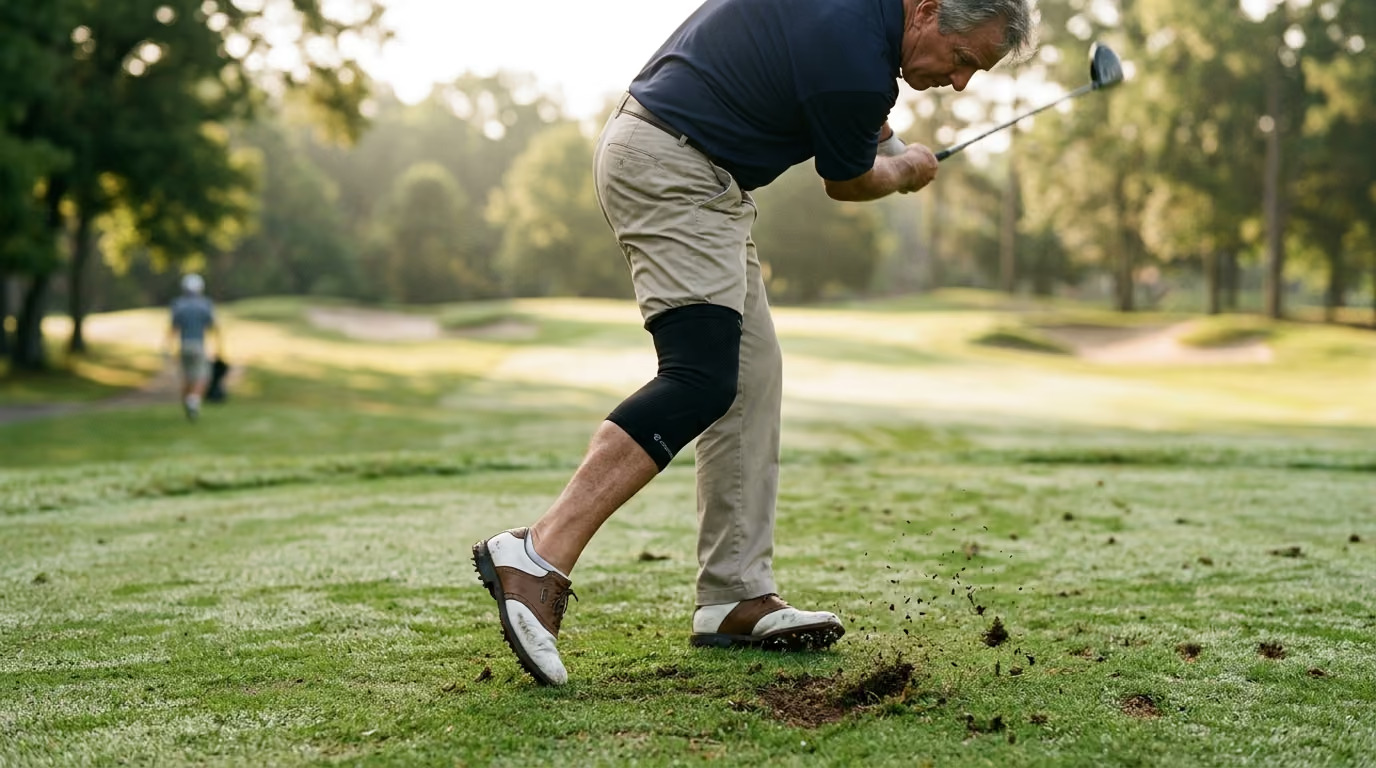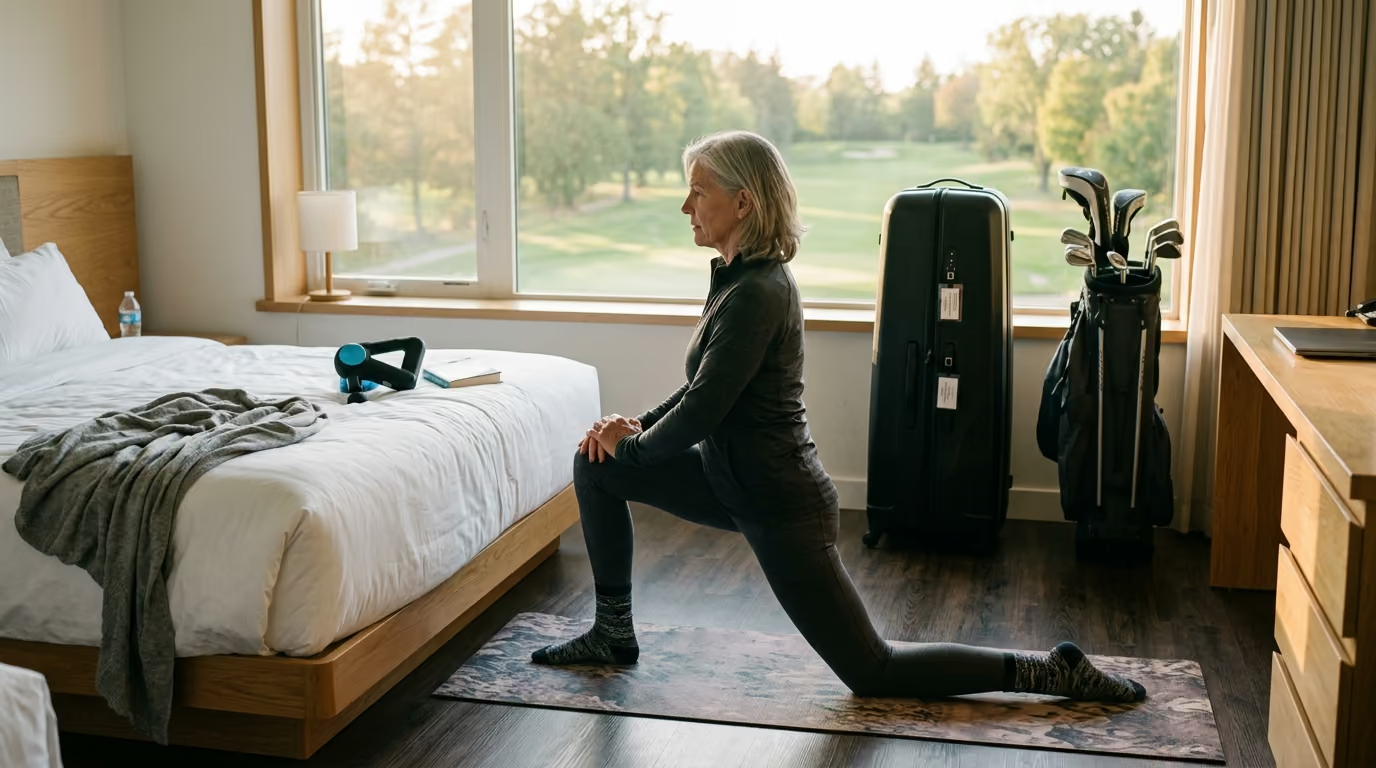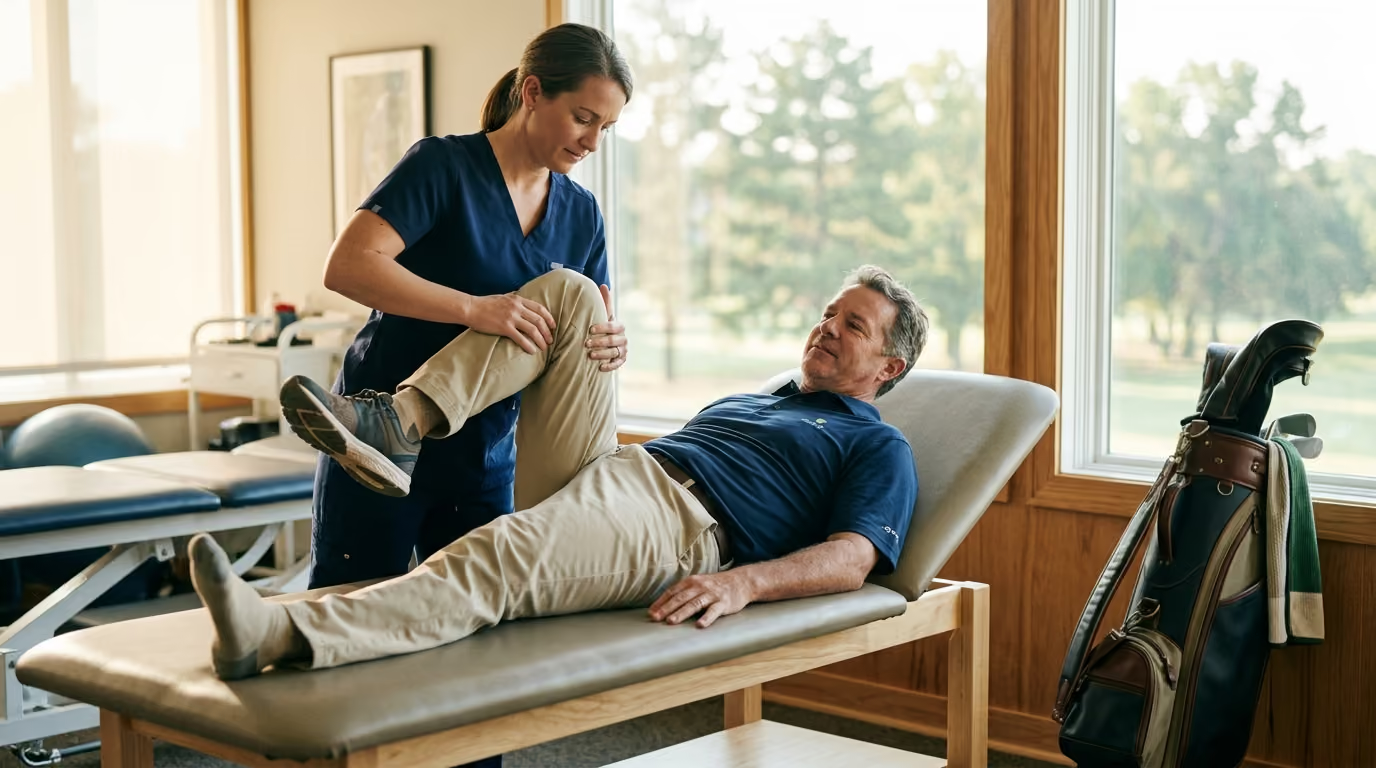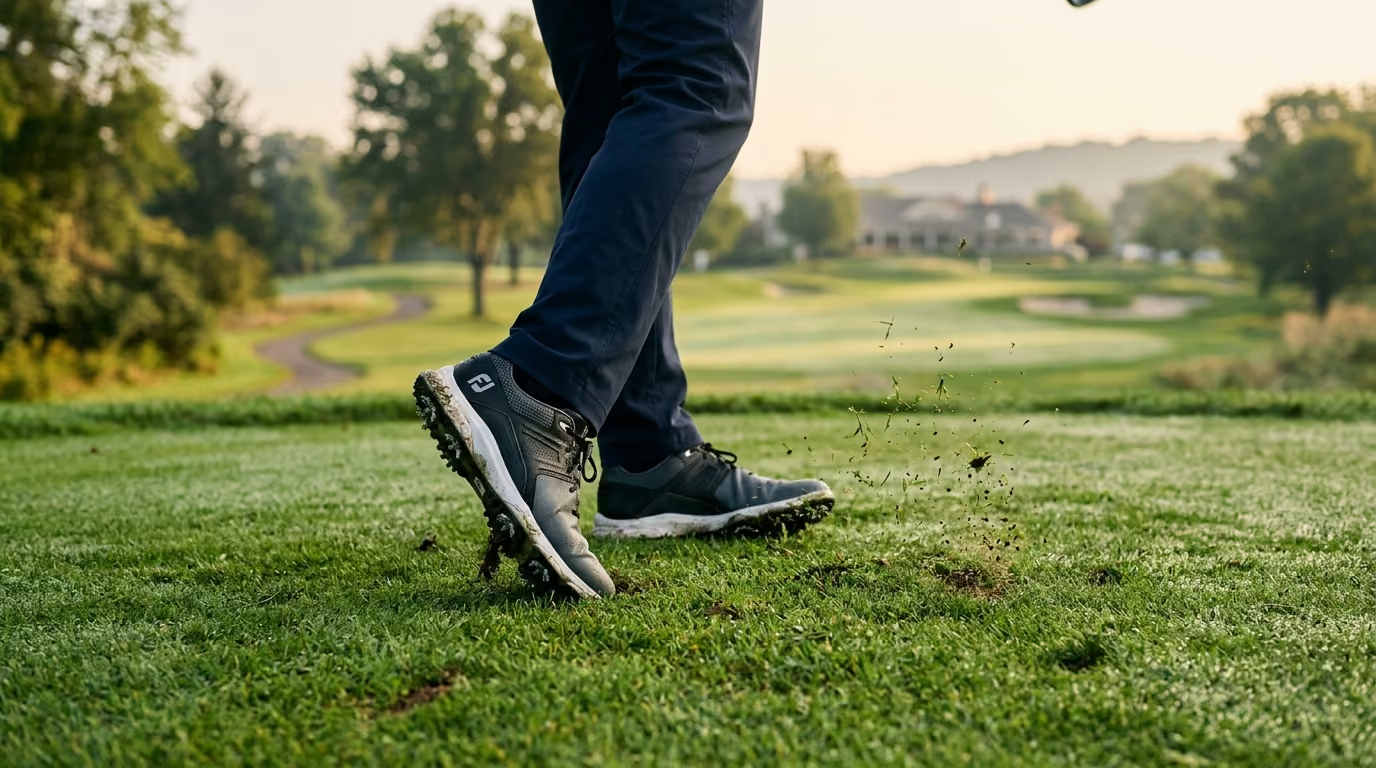

Eighteen holes of golf place intense rotational torque on your feet, making proper shoe support and joint stability essential for long-term swing power.




What is golf grounding, and why should you care about it? Golf grounding is the physical connection between your feet and the turf during a swing. It is not just about picking stylish shoes or preventing skin blisters. It is the precise way your feet manage weight shifts, rotational torque, and gravity during a round. Many experienced players focus entirely on new drivers or swing theories. They ignore the only part of the body that touches the ground.
In our experience, watching lifelong playing partners slowly drop out of our weekend group is the saddest thing. It usually starts with a nagging shoulder or knee issue they ignore until it requires surgery. That pattern is exactly why we became obsessed with golf longevity. We do not have to stop playing as we age, provided we do the right maintenance work between rounds. By looking closely at our feet, we can protect our joints and maintain our swings for decades. We will inspect the biomechanical link between the soles of your feet and your hips. This guide covers footwear design, orthotic research, and practical exercises. It provides the tools you need to build a stable foundation. You can find more of our performance resources by visiting our performance resources.
To understand how your feet protect your knees and hips, you must look at the Joint-by-Joint Theory. This concept, created by physical therapists Gray Cook and Mike Boyle, explains that the human body is a stack of alternating joints. Some joints need to be stable, while others must be highly mobile. If one joint fails to do its job, the joint above or below it must compensate. This compensation creates pain and injury over time.
In this system, your feet must be stable. The ankle joint directly above the foot needs to be highly mobile. Moving up the leg, the knee joint requires stability. Finally, the hip joint must be highly mobile to allow a full turn. When your feet lack stability, the entire chain breaks down. If your foot collapses or moves excessively, your ankle loses its ability to move freely.
The knee is then forced to move sideways to help you turn. The knee is a simple hinge joint designed to move forward and backward. When it is forced to rotate or wobble, the cartilage and ligaments wear down. This friction leads to chronic knee pain and eventual arthritis.
The kinetic chain relies on a process called proximal-to-distal sequencing. Energy begins at the ground when your feet push against the turf. This force transfers sequentially through your legs, hips, trunk, and arms to the club head. If your feet slip or lose connection, this energy transfer is interrupted. You must then pull the club with your upper body, placing massive strain on your lower back.
When your feet are stable, they create a solid anchor for the rest of your body. This anchor allows you to coil your torso against a resistant lower half. This tension is where true swing speed comes from. Without a stable base, you cannot generate this coil. You end up swinging with your arms, which decreases distance and increases the risk of muscle tears.
A stable base also allows for consistent contact. When your feet remain anchored, your spine angle stays constant throughout the swing. This consistency makes it much easier to return the club face to the ball squarely. If your feet slide, your head height changes. You will constantly struggle with fat and thin shots.
Ankle mobility is closely tied to foot stability. If your ankles are stiff, your feet cannot maintain contact with the ground. This stiffness is common in golfers over forty, who often lose joint flexibility. When the ankle cannot bend, the body looks for movement elsewhere. The knee is the closest joint, so it takes the brunt of the force.
During a normal swing, your ankles must bend in three directions. They must flex forward, tilt sideways, and rotate slightly. If they cannot do this, your body will force your knees to bend sideways. This lateral movement puts immense pressure on your medial collateral ligament. Over time, this stress leads to joint wear and meniscus tears.
Stiff ankles also limit your ability to load your trail hip. If you cannot load your hip, you cannot rotate fully during the backswing. You will likely compensate by sliding your hips away from the target. This slide ruins your swing plane and places a heavy shear load on your lower back. Keeping your ankles mobile and your feet stable is crucial for protecting your joints. You can learn more about managing joint health by visiting our page on healthy ageing.
Imagine you are standing on the fourteenth hole. You face a sloping lie in the rough with damp grass underfoot. Your ball sits slightly above your feet, requiring a controlled, balanced swing. You take your stance, but you feel your trail foot sliding slightly in the wet grass. Your ankles feel stiff, and you cannot find a solid grip on the turf.
Sloping lies multiply the forces acting on your feet. When standing on a sidehill lie, your weight is pushed toward your toes or your heels. Your feet must work twice as hard to maintain a stable connection. If your shoes do not have adequate grip, your feet will slide. This slide shifts your entire body mid-swing, leading to a missed shot.
Uphill and downhill lies present similar challenges. On an uphill lie, your trail foot bears the majority of your body weight. On a downhill lie, your lead foot must support your entire weight as you swing down the slope. If your feet cannot adapt to these angles, your knees and hips will twist to compensate. This twisting often leads to immediate joint pain.
The golf swing requires a violent shift of mass in a very short time. During the backswing, 60% to 80% of your body weight transfers to your trail side. This transfer is not just a simple lean. It is a rotational load where your trail hip turns over a stable trail foot. Your trail foot must grip the turf to prevent your hip from swaying outward.
As you begin the downswing, this weight shifts rapidly toward the target. At impact, your weight is moving forward at high speed. By the time you reach your finish, your weight transfers almost entirely to the lead foot. The lead foot must act as a brake to slow down this rotation. It must support up to twice your body weight in vertical force during this phase.
If either foot fails during these shifts, your swing loses all structure. An unstable trail foot causes you to lose power during the takeaway. An unstable lead foot prevents you to post up and clear your hips. This failure forces your upper body to do all the work. The result is a loss of distance and a sore lower back.
Losing your footing during a swing does more than ruin your scorecard. It poses a real danger to your muscles and joints. When a foot slips, your brain senses the fall and panics. It fires your muscles in a chaotic attempt to restore balance. This sudden contraction can easily pull a muscle in your back or groin.
If your lead foot slips during the downswing, your lead knee can hyperextend. This rapid, uncontrolled movement can damage your anterior cruciate ligament. It also places a high rotational force on your lead hip. This force can pinch the soft tissues in the hip joint, causing labral tears. These injuries can sideline you for months or even end your playing years.
Even minor slipping can cause chronic issues over time. If your foot slips just a few millimeters every swing, your body must constantly adjust. This continuous micro-adjustment fatigues your muscles much faster. By the back nine, your legs will feel heavy and your swing will break down. Keeping your feet firmly planted is the secret to staying strong until the eighteenth hole.
You do not have to wait until your next round to improve your stability. There is a simple adjustment you can make right on the tee box. When you address the ball, pay close attention to how your feet feel inside your shoes. Do not let your feet sit passively in your footwear. Instead, actively engage them with the turf.
Try to visualize your foot as a tripod with three points of contact. These points are the center of your heel, the base of your big toe, and the base of your pinky toe. Press all three points firmly into the bottom of your shoe. Do not claw your toes to do this. Keep your toes relaxed and long while pressing the ball of the foot down.
This tripod position creates an instant arch support using your own muscles. It prevents your foot from pronating or rolling inward too early. It also gives your brain better feedback about where your weight is positioned. This simple mental check can make your base feel twice as stable before you even start your swing.
Once you have established your foot tripod, you can engage your arch further. Try to lift your big toe slightly off the sole of your shoe while keeping the ball of your foot down. This movement activates the Windlass mechanism, which naturally raises and stiffens your arch. A stiff arch is a stable arch, ready to support the forces of your swing.
After you feel your arch lift, lower your big toe back down. Keep that tight, strong feeling in the middle of your foot. You should feel a slight tension in your calf and shin muscles. This tension means your lower leg is primed to control your ankle movement. You are now ready to make a balanced swing.
Perform this arch-engagement routine during your pre-shot ritual. It takes only a few seconds but makes a massive difference in your stability. It is especially useful when standing on wet grass or uneven tees. This active engagement keeps your feet from collapsing under pressure.
Now that your base is set, you must control your movement during the swing. Focus entirely on turning your trail hip during the backswing. Do not let your trail ankle roll outward toward the side of your shoe. Keep the inner edge of your trail foot pressed firmly into the turf. This focus prevents swaying and keeps your lower body quiet.
If you let your trail foot roll, your hip will slide away from the target. This slide makes it nearly impossible to return the club to the ball consistently. By keeping the inside of your foot planted, you create a brace. Your trail hip can then rotate deeply, storing energy for the downswing. This rotation is both powerful and safe for your joints.
On the downswing, focus on transferring this pressure to the inside of your lead foot. Do not let your lead foot spin out or slide toward the target. Keep that lead tripod planted as you rotate your hips open. This control protects your lead knee from twisting and gives you a solid wall to swing against.
Building lasting stability requires a consistent routine off the course. Many golfers ignore foot strength, focusing only on larger muscle groups like the thighs or shoulders. However, weak feet make your entire body work harder. You can start by testing your baseline stability with a simple test.
Stand on one foot barefoot with your eyes closed and try to hold your balance. Aim to hold this position for twenty seconds without moving your arms or putting your foot down. If you wobble or lose balance quickly, your feet are not communicating well with your brain. This lack of balance directly impacts your swing.
Research shows that golfers who struggle with this test are more likely to lose their posture during the swing. They tend to slide their hips or stand up early to keep from falling. Improving your balance is the first step toward a consistent swing. You can find more targeted balance routines by checking out our section on mobility.
The short-foot drill is one of the best ways to strengthen the arches of your feet. Stand barefoot on a flat, hard floor with your feet shoulder-width apart. Keep your toes flat and relaxed on the ground throughout the exercise. Do not curl your toes under or grip the floor.
Without moving your toes, try to pull the ball of your foot toward your heel. You should feel the arch of your foot lift and tighten. The foot will actually become slightly shorter as the arch rises. Hold this tight contraction for five seconds, then slowly release. Perform ten repetitions on each foot.
This exercise strengthens the intrinsic muscles of your foot, which are the small muscles that support your arch. These muscles act as natural shock absorbers during your swing. Strengthening them prevents your feet from flattening when you walk the course. It also improves your foot's ability to push against the ground, boosting your swing power.
To support your stable feet, you must build mobile ankles and strong calves. You can perform the single-leg balance reach to target these areas. Stand on your left foot with a slight bend in your knee. Slowly reach your right foot forward, to the side, and backward, tapping the floor lightly with your toe. Perform three sets of five rounds on each leg.
This exercise forces your standing ankle to make constant micro-adjustments to keep you upright. It strengthens the stabilizing tendons around your ankle joint. It also teaches your hip and ankle to work together to maintain balance. This coordination is critical when playing on sloping lies.
You should also practice loaded calf raises to build calf strength and stretch your Achilles tendon. Stand with the balls of your feet on the edge of a step. Slowly lower your heels below the step to feel a deep stretch in your calves. Press up onto your toes as high as possible, holding the top position for one second.
Perform three sets of twelve repetitions, three times per week. This movement improves your ankle's range of motion, which is crucial for a proper weight shift. It also ensures your calves can handle the sudden forces of the downswing. A strong calf muscle protects your heel from injury during long walks. You can find more lower-body exercises by reading our guide on strength.
When golfers experience foot or joint pain, they often make choices that worsen the issue. One common error is believing that more cushion is always better. Thick, pillowy running shoes might feel comfortable when you first slip them on. However, excessive cushioning reduces ground feel and proprioception.
Your brain relies on receptors in your feet to know where your body is in space. When you place a thick layer of soft foam under your feet, you block these signals. Your ankles cannot stabilize your body during high-torque movements because they cannot feel the ground. Your feet will wobble inside the shoe, forcing your knees to work harder to keep you upright.
Highly cushioned shoes also raise your center of gravity. This rise makes you more unstable during the swing, increasing the risk of slipping. Look for shoes with moderate, firm cushioning that allows you to feel the ground. This firmness provides a stable platform for your swing while still protecting your feet from hard surfaces.
Another common mistake is ignoring shoe width when buying golf footwear. Many traditional golf shoes have narrow, tapered toe boxes that squeeze the toes together. This compression prevents natural toe splay, which is necessary for a stable swing base. When your toes are squeezed, they cannot grip the sole of the shoe.
Squeezed toes also lead to a painful nerve condition called Morton's neuroma. This condition causes a burning pain in the ball of the foot, making it painful to walk. It can also cause your big toe to jam into the front of the shoe during the follow-through. This constant jamming results in painful black toenails.
Choose shoes with a wide, anatomical toe box that matches the natural shape of your foot. Your toes should be able to wiggle and spread out inside the shoe. This splay improves your balance by increasing your foot's surface area. It also prevents nerve compression, allowing you to walk eighteen holes without pain.
Many golfers fall into the cheap insert pitfall when trying to cure foot pain. They buy generic, soft foam insoles from the local grocery store to relieve heel pain. These cheap inserts compress quickly under the high forces of a golf swing. They fail to support the arch and can cause your foot to slide inside the shoe.
Soft insoles can actually increase foot fatigue by making your muscles work harder to find stability. They do not address your unique foot structure, such as a high arch or flat feet. If you need support, invest in medical-grade insoles or custom orthotics designed for golf. These devices are firm enough to withstand the forces of your swing.
Using the wrong insert can also change how your shoe fits. A thick insole can push your heel too high, causing it to slip out of the shoe during your swing. It can also crowd your toes, leading to blisters and nerve pain. Always test inserts inside your golf shoes to ensure a proper fit.
Choosing the right golf shoe requires looking at technical specifications rather than brand names. One crucial detail is the heel-to-toe drop of the shoe. This term refers to the height difference between the heel of the shoe and the forefoot. Traditional golf shoes often feature an eight to fifteen-millimeter drop, which tilts your body forward.
This tilt can place extra pressure on the balls of your feet and your knees. In contrast, zero-drop shoes keep your heel and forefoot at the same height, mimicking a barefoot stance. Zero-drop designs promote a neutral spine and help reduce lower back fatigue during long walks. They allow you to stand naturally, which improves your balance and posture.
However, transitioning to zero-drop shoes too quickly can strain your Achilles tendon. Every four-millimeter reduction in drop requires an additional three to five degrees of ankle mobility. If you have stiff ankles, a sudden switch can cause calf strain or heel pain. If you want to switch, do so gradually by wearing them for short walks first.
You must also choose between spiked and spikeless outsoles. Spiked shoes use plastic cleats to offer maximum traction in wet conditions or on hilly courses. This grip prevents your feet from slipping during fast, aggressive swings. Spiked shoes are ideal for golfers who swing fast or play in wet morning dew.
Spikeless shoes use rubber lugs and patterns to grip the turf. They are often more comfortable for walking on hard surfaces and can be worn from the car to the course. If you have joint pain, spikeless shoes can reduce the jarring impact of walking on firm fairways. They allow your feet to move more naturally, which can reduce knee strain.
Your choice should depend on your playing conditions and physical needs. If you play in wet, hilly areas, choose spiked shoes for safety. If you play on flat, dry courses and walk the majority of your rounds, spikeless shoes may be better. Always prioritize traction, as slipping is a major cause of golf injuries. Focus on injury prevention when selecting your footwear.
Finally, match your shoes to your specific arch type. If you have high arches, your feet do not absorb shock well. You need shoes with flexible midsoles and ample cushioning to distribute pressure evenly. Avoid stiff, heavy shoes that prevent your foot from flexing naturally.
If you have flat feet, your arches tend to collapse inward during the swing. This collapse can cause your knees and hips to rotate excessively. Look for shoes with firm heel counters and structured midfoot support to prevent this over-pronation. A firm shoe keeps your foot aligned, which protects your joints.
You can determine your arch type by stepping onto a piece of cardboard with wet feet. A high arch will show only your heel and the ball of your foot. A flat arch will show the entire outline of your foot. Knowing your arch type allows you to buy shoes that support your natural movement.
Peer-reviewed studies offer valuable insights into how orthotics affect a golfer's body. Research published in the Journal of Manipulative and Physiological Therapeutics studied the impact of custom orthotics on golfers. The study showed that custom flexible orthotics significantly improved balance symmetry in players. They also improved proprioception, helping golfers feel more grounded during their swings.
The study also measured fatigue levels during a nine-hole round of golf. Golfers wearing custom orthotics reported much less physical fatigue at the end of the round. When your feet are supported, the muscles in your calves and thighs do not have to work as hard to keep you balanced. This energy saving can prevent swing breakdowns on the back nine.
Custom orthotics can also improve your club head speed. By providing a stable base, they allow for a more efficient transfer of energy from the ground. This improved efficiency can lead to more consistent distance and better accuracy. Supporting your feet is a simple way to improve your performance without changing your swing.
Scientific studies also analyze ground reaction forces during the golf swing. These forces are divided into vertical, side-to-side, and front-to-back forces. When you swing, you push down and sideways against the ground. The ground pushes back with equal force, which is what accelerates the club.
The lead foot generates significantly larger vertical ground reaction forces than the trail foot during the downswing. This intense downward force can place immense stress on the small joints of the lead foot. If your lead foot is unsupported, this force can cause your arch to collapse. This collapse can lead to joint pain in your foot and ankle.
Custom orthotics help distribute these high forces across the entire sole of the foot. This distribution prevents localized pressure points that can lead to joint damage or bone bruising. By absorbing and redirecting these forces, orthotics act as a shield for your knees and hips. They make sure that the energy you generate is used to move the club, not to damage your body.
During the swing, your feet must manage both vertical and lateral loads. Lateral loads are the forces that push you sideways as you transfer your weight. If your shoes do not support these lateral forces, your foot will slide sideways inside the shoe. This slide can cause ankle sprains and reduce your swing power.
Custom orthotics are designed to control this lateral movement. They feature deep heel cups that lock your heel in place, preventing sideways sliding. They also support your arch during the transition from backswing to downswing. This support ensures your foot remains stable as your weight shifts.
By balancing these loads, orthotics help maintain your posture through impact. Your hips can rotate cleanly without sliding or swaying. This stability protects your lower back from twisting forces, reducing soreness after your round. Investing in proper foot support is a wise step for anyone focused on longevity.
Understanding common foot injuries can help you identify warning signs before they ruin your season. The most common issue among golfers is plantar fasciitis, often called golfer's heel. This condition involves inflammation of the thick band of tissue that runs across the bottom of your foot. The repetitive twisting of the golf swing, combined with long walks on uneven turf, strains this tissue.
If you have plantar fasciitis, you will feel a sharp pain in your heel, especially during your first steps in the morning. On the course, this pain can cause you to flinch during your swing. You may avoid shifting weight to your painful foot, which ruins your swing mechanics. This compensation can quickly lead to pain in your opposite knee or hip.
To prevent plantar fasciitis, wear shoes with good arch support and stretch your calves regularly. Avoid walking on hard surfaces barefoot, especially after a round. If you feel heel pain, rest and apply ice to the area. Catching this issue early can prevent it from becoming a chronic problem.
Another common injury is metatarsalgia, which causes pain and inflammation in the ball of the foot. This issue is often triggered by the pressure of pivoting on your front foot during the follow-through. If you slide your weight forward instead of rotating, you place excessive pressure on your metatarsal bones. Wearing shoes with thin soles or narrow toe boxes makes this condition worse.
Metatarsalgia can make it painful to walk the fairways, let alone swing a club. You may find yourself lifting your heel early during the swing to avoid the pain. This early lift ruins your balance and leads to inconsistent shots. It also places extra stress on your calves and ankles.
To treat metatarsalgia, use metatarsal pads to help distribute pressure away from the ball of your foot. Choose shoes with a wide toe box and firm, supportive midsoles. Avoid wearing worn-out shoes that have lost their cushioning in the forefoot. Taking these steps can keep you walking pain-free.
Turf toe is a painful hyperextension of the big toe joint. It can happen during a forceful follow-through when your trail heel lifts high off the ground. It can also occur when you squat deeply to read a putt on firm greens. If your big toe lacks flexibility, this movement strains the joint capsule and surrounding ligaments.
This injury makes it difficult to push off your trail foot during the downswing. You will struggle to transfer your weight forward, leading to a loss of power. You may also find it painful to walk uphill, as this requires your big toe to bend. This restriction can cause you to limp, which alters your entire gait.
To prevent turf toe, make sure your shoes have a supportive, stiff sole in the forefoot. This stiffness prevents the big toe from bending too far back during your swing. You can also perform gentle toe stretches to maintain flexibility in the joint. If you experience pain, rest and consider taping the toe for support.
Morton's neuroma is a nerve irritation that occurs between your third and fourth toes. It causes a burning pain or a feeling like you are standing on a pebble inside your shoe. This condition is almost always caused by wearing narrow shoes that squeeze your metatarsal heads together. The constant pressure pinches the nerve, causing it to swell and become painful.
During a golf swing, this pain can become intense as you pivot and shift your weight. It can force you to cut your swing short or alter your foot position to find relief. This adjustment can cause you to lose balance and miss the ball. It also increases the risk of injuring your ankles or knees.
The best treatment for Morton's neuroma is switching to shoes with a wide toe box. This wider shape allows your metatarsal bones to spread, relieving pressure on the nerve. You can also use orthotics with a metatarsal dome to help lift and separate the bones. If the pain persists, consult a podiatrist for further treatment options.
Your golf swing is only as stable as your connection to the ground, so protecting your feet today is the key to protecting your knees, hips, and back for tomorrow.
Practicing barefoot on dry grass can be a great way to improve your foot strength and balance. It allows you to feel the ground directly, which sharpens your proprioception and helps you understand your weight shift. It also forces the small muscles in your feet to work harder to stabilize your body.
However, do not jump straight into full-speed swings barefoot if you have foot pain. Start with slow, gentle pitches to get used to the feeling. Always make sure the grass is clear of debris or sharp objects before practicing barefoot. If you have flat feet, limit barefoot practice to short sessions to avoid straining your arches.
Yes, changing your footwear based on the weather is a smart way to prevent injuries and maintain performance. On wet, dewy mornings, spiked shoes are highly recommended to prevent slipping on the slick grass. Wet conditions require maximum traction to keep your base stable and protect your joints from sudden slips.
On dry, hot afternoons, a breathable spikeless shoe may be more comfortable and reduce foot fatigue. These shoes allow your feet to stay cool and move more naturally on hard, baked fairways. Having two different pairs of shoes also allows them to dry completely between rounds, which extends their lifespan.
Typically, a golfer who walks should replace their shoes every eighty to one hundred rounds of golf. Over time, the midsoles lose their ability to absorb shock and support your arches. The outsoles will also wear down, reducing the traction that keeps you from slipping.
If you notice your feet or knees are unusually sore after a round, it may be a sign your shoes are worn out. Inspect your shoes regularly for signs of wear, such as worn traction lugs or a creased midsole. Replacing your footwear before it completely breaks down is a simple way to protect your body.
Follow Golfergy for practical insights on performance, mobility, recovery and healthy ageing. Stay connected for new articles, research-led guidance and ideas to help you play better for longer.


Explore practical resources on performance, recovery, mobility and golf longevity.
Read the Blog