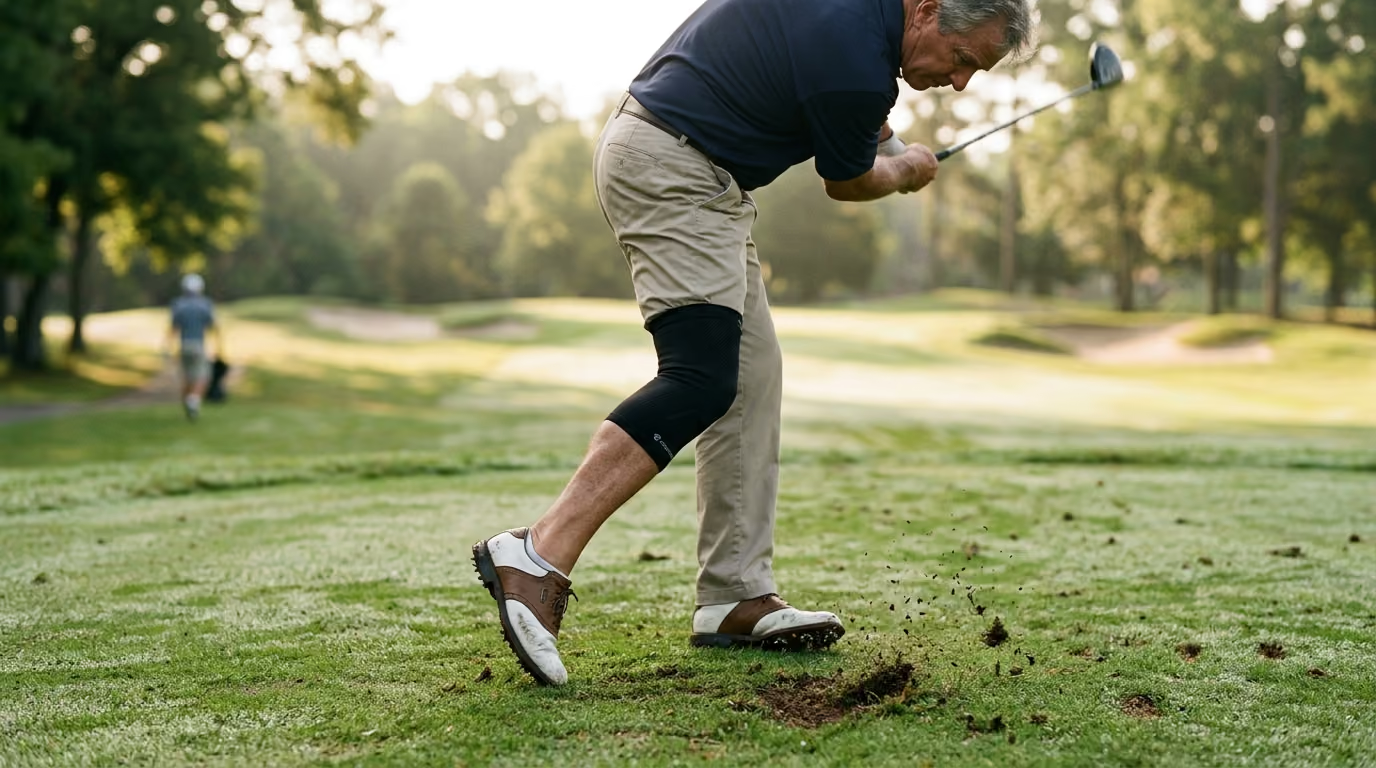

Four hours of fighting poorly fitted golf clubs places thousands of pounds of unnecessary strain directly on your vulnerable joints and tendons.




The equipment-body connection is a direct physical relationship between your golf gear and your joint health. It is not a simple fitting process designed to add five yards to your drive. Instead, it is a shield against the chronic micro-trauma that threatens to end your playing days. This detailed guide examines how club weight, shaft stiffness, grip size, and modern damping materials alter the strain placed on your joints. By aligning your gear with your physical capacity, you can protect your spine, shoulders, wrists, and elbows for decades.
We must look past the marketing promises of extra distance. True performance is built on physical sustainability. When your clubs match your body, you swing with less tension. This reduces the risk of repetitive strain and allows you to play pain-free.
You stand on the tee box of the fourteenth hole. Your lead shoulder is throbbing with a dull ache. Your lower back feels compressed and stiff, making it hard to bend over and tee up your ball. You might blame your age or your lack of stretching before the round. In reality, your body is struggling against the physical properties of the golf clubs in your bag.
Every time you swing, your body must manage the weight and balance of the club. If a club is too heavy, your muscles work overtime to keep it on the correct path. This extra muscle tension places great stress on your tendons and ligaments. Over eighteen holes, this constant strain causes deep fatigue. Your joints begin to take the force that your muscles are too tired to support.
On this fourteenth tee, you try to compensate for your fatigue. You change your stance and grip the club much tighter. Your swing becomes jerky and tense. Instead of a smooth rotation, you rely on brute force to move the heavy club head. This shift increases the risk of acute injury with every swing.
By the time you finish the round, your joints have absorbed thousands of pounds of unnecessary force. Your body has spent four hours fighting your equipment. This constant battle leaves you sore, stiff, and needing days of rest before your next round.
To understand how proper equipment protects you, we must look at how the body compensates for poor fit. Biomechanical compensation occurs when your brain recognizes that a club is difficult to swing. Your nervous system alters your natural movement patterns to get the club face back to the ball. These tiny, subconscious adjustments are the primary source of chronic golf injuries.
For example, if your clubs are too long, you cannot stand in a balanced posture. Your brain senses this imbalance and forces your spine to arch. This poor posture leads to early extension during your downswing. Your hips move toward the ball, and your lower back hyperextends. This movement pattern places immense pressure on your lumbar spine.
According to research published in The Spine Journal, a standard golf swing generates approximately 1,370 pounds of compressive force through an amateur golfer’s lower back. Professional golfers experience nearly 1,700 pounds of force. If your clubs do not fit, your spine absorbs this force in an unnatural, twisted position. Over time, this compression damages your spinal discs and facet joints.
[Club Specification Misfit]
│
▼
[Subconscious Posture Change]
│
▼
[Biomechanical Compensation (e.g., Early Extension)]
│
▼
[Increased Joint Strain (1,370 lbs Lumbar Compression)]
Another critical concept is kinetic shock and vibration transfer. When your club strikes the ball, a massive amount of energy is created. If your shaft is too stiff, it cannot bend and release this energy correctly. The excess force travels straight up the shaft and into your hands. Your wrists and elbows must absorb this sudden shock wave.
Human bones and joints have physical limits. Research in The Engineering of Sport by Erik Ekstrom shows that the average human wrist has a band pass of roughly 50 Hz. Vibrations higher than this frequency cannot travel past the wrist joint. This means the high-frequency shock from a hard strike is concentrated entirely in the small joints of your hand and wrist. Proper club fitting works to match the vibration frequency of your club to your skeletal system, which prevents this concentrated joint destruction.
Using golf shafts that are too stiff or too heavy is a common path to joint injury. Shaft weight dictates how much physical effort you must expend. If the shaft is too heavy, your body fatigue increases rapidly during the back nine. This fatigue compromises your swing mechanics and exposes your joints to excessive wear.
Shaft stiffness, or flex, determines how the club handles impact energy. A shaft that is too stiff acts like a solid steel pipe. When you strike the ball, the shaft does not absorb any vibration. This energy travels directly into your lead arm. This is a primary cause of medial epicondylitis, which is commonly known as golfer's elbow.
Research shows that shaft material changes how your muscles work. Studies in Clinical Journal of Sport Medicine indicate that graphite shafts lead to much lower muscle activity in the lead arm. Specifically, the flexor carpi ulnaris and pronator teres muscles do not have to work as hard during the follow-through. By reducing this muscle activity, graphite shafts serve as an excellent preventative tool for golfer's elbow.
The rate at which a shaft stops vibrating is called its damping ratio. High damping ratios mean vibrations disappear very quickly after impact. NASA Technical Reports contain specialized research on viscoelastic damping materials. In testing, vibrations in specialized wave shafts died out in just 0.6 seconds. In contrast, conventional graphite shafts took 15.7 seconds to stop vibrating.
Shaft Vibration Decay Times:
┌──────────────────────────────────────────┐
│ Wave Shaft: ■ 0.6s │
│ Graphite: ■■■■■■■■■■■■■■■■■ 15.7s │
│ Steel Shafts: ■■■■■■■■■■■■■■■■■■■■ 30.0s+│
└──────────────────────────────────────────┘
Steel shafts have even less damping capability than graphite. Vibrations in steel shafts can last twice as long as those in standard graphite. This means your tendons are subjected to prolonged shaking after every single shot. Over a lifetime of golf, this continuous vibration damages the delicate attachment points of your elbow tendons.
Modern composite materials are changing how we protect our joints. Incorporating Graphene Oxide nanofillers into carbon fiber-reinforced plastic club faces improved vibration damping by 1033 percent. It also improved acoustic damping by 84 percent. These advancements prove that club design is a powerful form of preventative medicine.
If you feel joint pain during your round, you can take immediate action to protect your body. Your first step should be to monitor your grip pressure. When you feel pain, you often squeeze the club tighter. This extra tension locks your wrists and elbows, which allows shock to travel directly into your joints.
To break this cycle, practice the five-second handle release. Before every shot, hold the club in front of you with your normal grip. Squeeze your hands as hard as you can for three seconds. Then, completely relax your hands until you are barely holding the club. This contrast helps your brain reset to a lighter grip pressure.
[Squeeze Grip 100% (3 seconds)] ──► [Release Tension to 20%] ──► [Swing with Loose Forearms]
Next, pay close attention to your lie selection on the course. Avoid hitting full shots from hard-pan dirt, gravel, or tree roots. These surfaces do not allow the club head to slide through the turf. Striking these hard surfaces creates a massive spike in kinetic shock. If your ball sits on a hard surface, choose a safe chip shot instead of a hard swing.
Finally, consider the ball you are playing. Hard, distance-oriented golf balls do not compress easily. This lack of compression transfers more shock back into your club and joints. Switch to a low-compression, soft-feeling golf ball to instantly reduce impact vibrations.
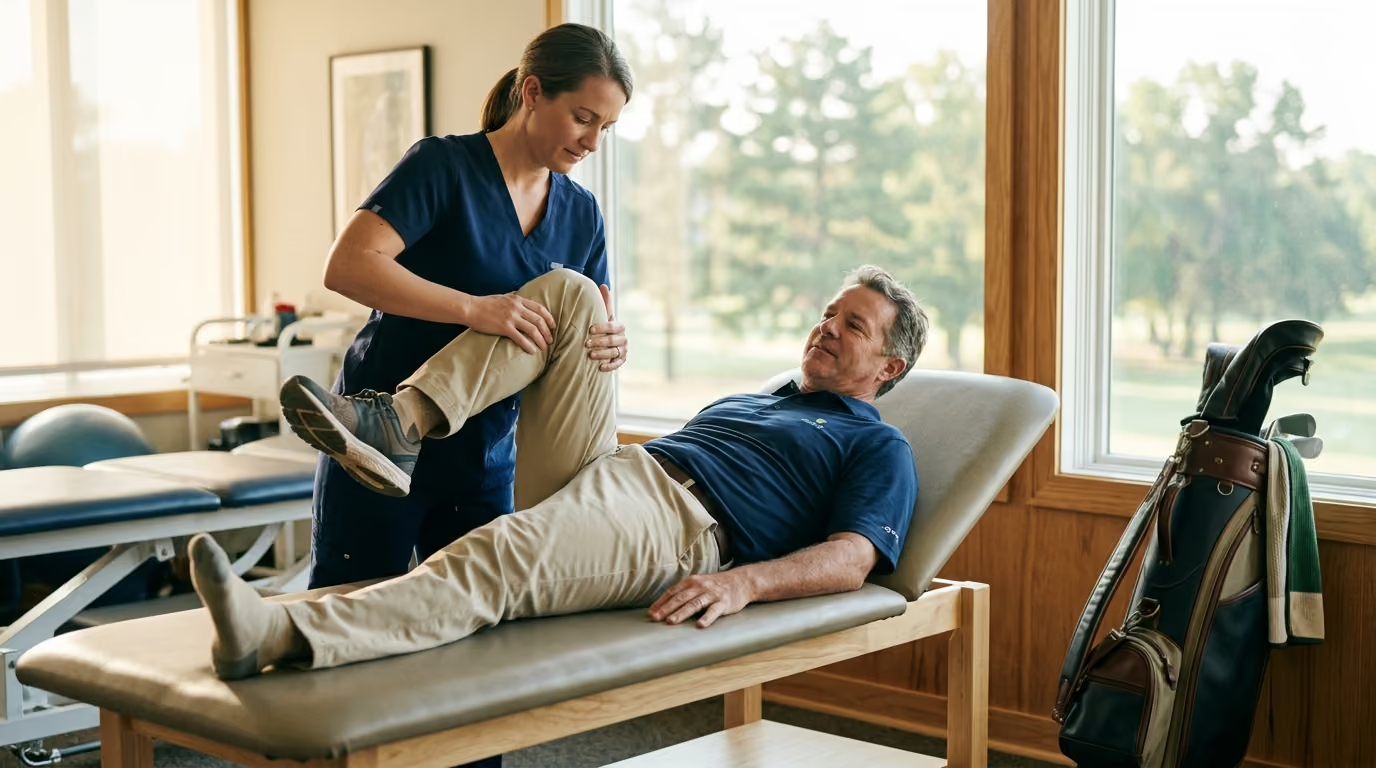
The saddest thing I have seen in golf is watching lifelong playing partners slowly drop out of our weekend group. It usually starts with a nagging shoulder or knee issue they ignore until it requires surgery. That pattern is exactly why I became obsessed with golf longevity. We do not have to stop playing as we age, provided we do the right maintenance work between rounds.
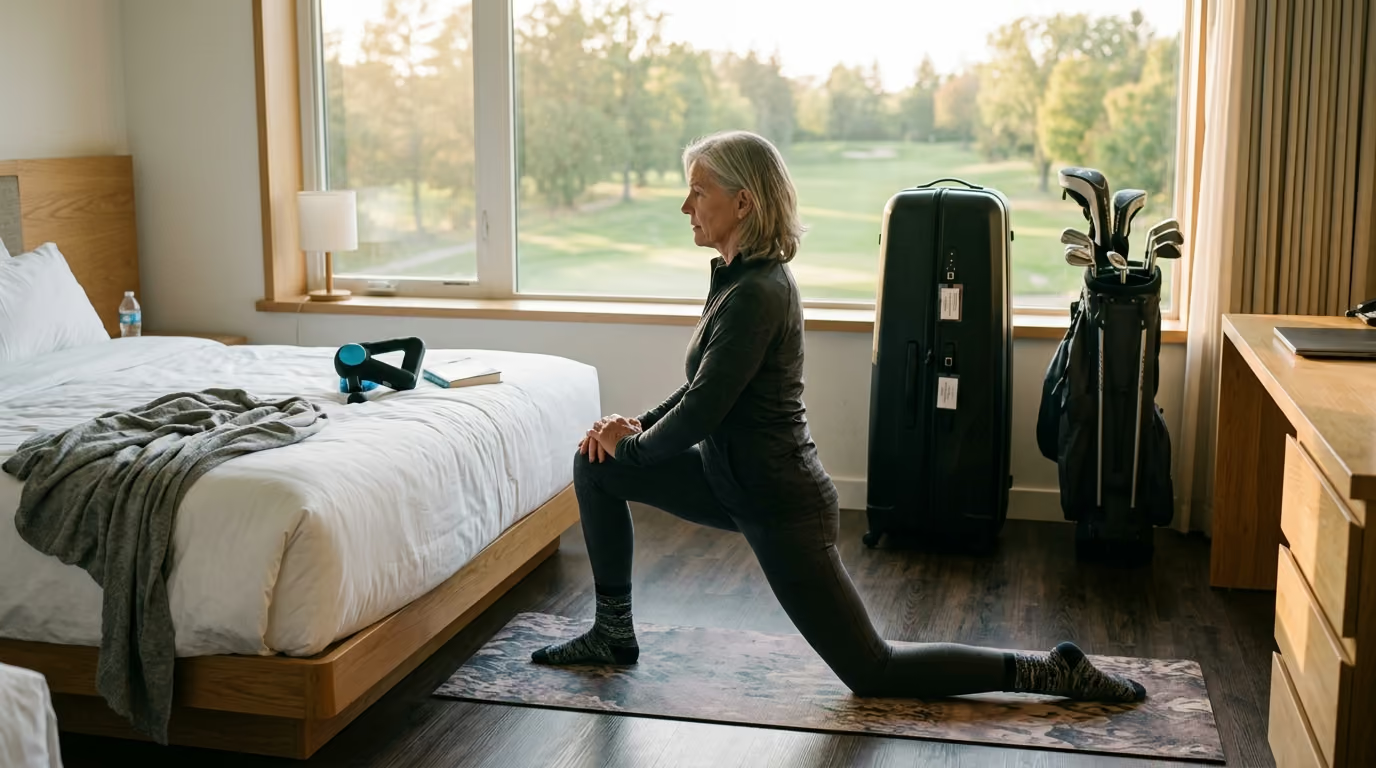
To build a body that can handle golf forces, you need a targeted physical routine. This routine should focus on joint mobility and tendon resilience. We want to prepare your tissues for the rotational forces of the swing. This preparation ensures your muscles absorb the load instead of your joints.
Weekly Longevity Routine Focus:
┌────────────────────────────────────────────────────────┐
│ 1. Thoracic Spine Rotation (Open Book Stretch) │
│ 2. Hip Internal Rotation (90/90 Hip Switches) │
│ 3. Forearm Tendon Loading (Eccentric Wrist Extensions) │
└────────────────────────────────────────────────────────┘
Your primary focus should be on thoracic spine mobility. If your mid-back cannot rotate, your lower back will twist to compensate. This extra twisting leads to spinal wear and tear. You can improve this mobility by using the open-book stretch.
To perform the open-book stretch:
Next, you must address your hip rotation. Your hips must rotate fully to protect your lower back from twisting forces. To improve this, practice the 90/90 hip stretch. Sit on the floor with your front leg bent at ninety degrees in front of you. Bend your back leg at ninety degrees behind you.
Keep your spine tall and slowly press your chest toward your front knee. Hold this stretch for thirty seconds. Then, gently rotate your torso toward your back hip. This target movement improves internal rotation in your trail hip, which is crucial for a safe backswing.
Finally, build strength in your forearm tendons to prevent golfer's elbow. Use eccentric wrist extensions with a light weight. Sit in a chair and rest your forearm on your thigh, holding a three-pound dumbbell. Raise the weight using your healthy hand, then lower it slowly using only your target hand. Take five full seconds to lower the weight. Perform three sets of fifteen repetitions three times per week. This slow loading strengthens the tendons and helps them resist the vibrations of golf impact.
To learn more about tailored fitness programs for golfers, read our articles on golf performance and explore our comprehensive resources section.
Many golfers fall into common traps when selecting new equipment. These mistakes often come from focusing purely on performance numbers instead of physical comfort. Over time, these errors can lead to chronic pain and joint damage.
The most common mistake is attempting to use the same heavy, extra-stiff shafts as elite young professionals. Tour players are highly conditioned athletes with immense core strength. They use stiff, heavy shafts to control their high swing speeds.
When a recreational golfer uses these specifications, their joints suffer. The heavy shaft forces the golfer to swing with maximum effort. This extra effort leads to rapid fatigue and poor body mechanics. Your body cannot absorb the extra force, leading to shoulder and elbow injuries.
Many golfers buy clubs based on static height charts. These charts only measure your arm length and height from the floor. They do not account for how your body actually moves during a swing. This static approach often results in incorrect club length and lie angles.
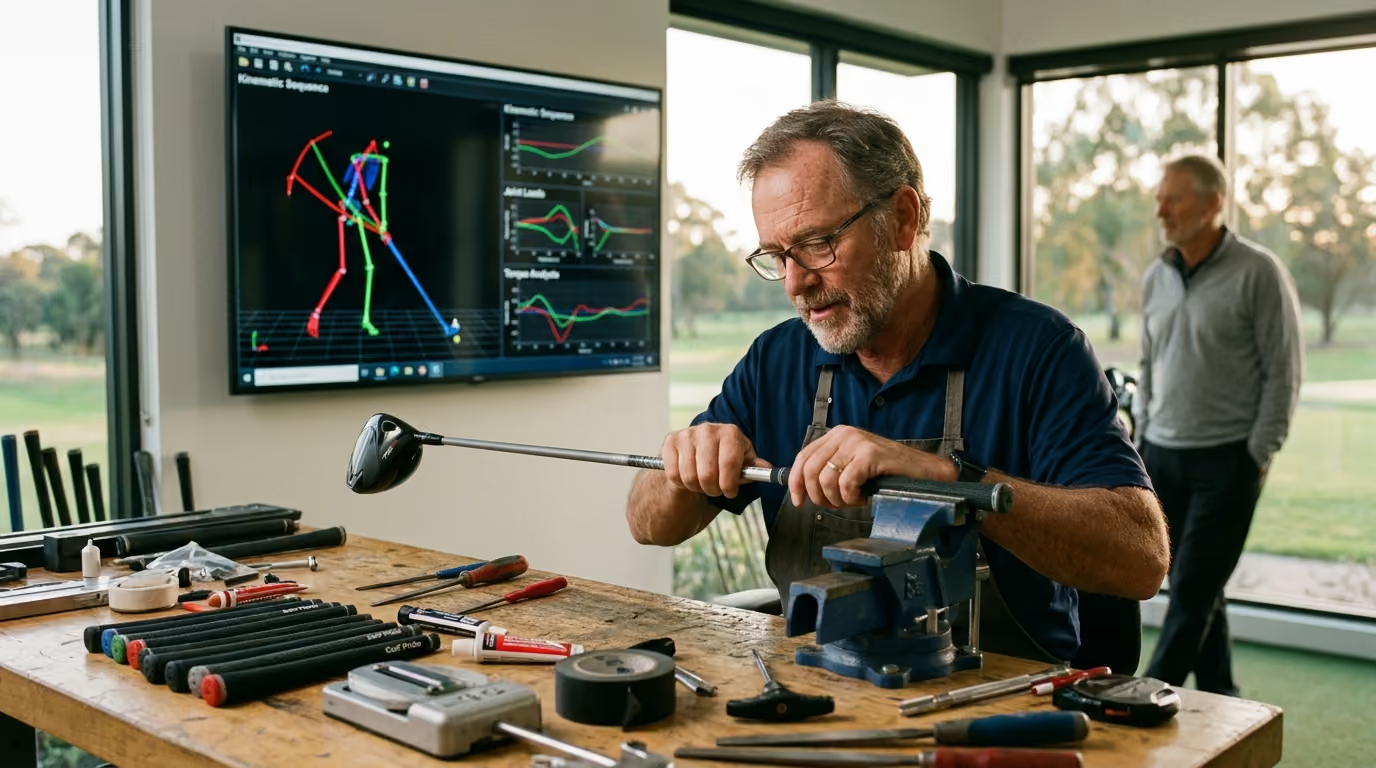
A dynamic fitting is necessary to protect your body. A dynamic fitting analyzes your posture, swing speed, and joint angles at impact. It ensures your spine remains in a neutral position throughout your rotation. This dynamic approach prevents the twisting forces that lead to chronic lower back pain.
Golfers frequently overlook the thickness of their grips. A grip that is too thin forces your hands to squeeze tightly to hold the club. This constant squeezing causes high muscle tension in your forearms. This tension is a direct contributor to tendonitis in the elbows and wrists.
Conversely, a grip that is too thick restricts your hand rotation. This forces your wrists to work much harder to close the club face. This extra wrist work can cause strain in the thumb joints and wrists. Finding the perfect grip size is essential for keeping your forearms relaxed.
Grip Size Strain Comparison:
┌─────────────────────────────────────────────────────────┐
│ Too Thin ──► Squeezing/Death Grip ──► Forearm Tension │
│ Too Thick ──► Restricted Release ──► Wrist Strain │
│ Match ──► Relaxed Muscle Flow ──► Joint Protection │
└─────────────────────────────────────────────────────────┘
By avoiding these three common errors, you can protect your body from unnecessary strain. Your club selection should always prioritize your physical health and long-term comfort.
Adjusting your equipment to fit your physical needs is a highly effective way to prevent injuries. These modifications reduce the stress placed on your body during the swing. By making these changes, you can protect your joints and extend your playing years.
If you experience joint pain in your hands, wrists, or elbows, you should transition to graphite shafts. Graphite is a natural dampening material. It absorbs the high-frequency vibrations that steel shafts transmit directly to your arms.
Modern graphite shafts are not just for slow swing speeds. They are available in various weights and flexes to match any swing. Transitioning to graphite reduces the muscle activity required to hold and swing the club. This change is highly beneficial for golfers managing osteoarthritis or tendonitis. For more on managing joint health as you age, see our section on healthy ageing.
Your grips are your only connection to the golf club. Choosing the right grip size can significantly reduce joint strain. If you suffer from arthritis, consider using midsize or jumbo grips.
These larger grips allow you to hold the club securely without squeezing. They distribute the grip pressure across a wider area of your hand. This reduces the tension in your forearms and protects your wrist joints. Additionally, choose soft, rubber-based grips designed for maximum shock absorption.
Joint Protection Equipment Matrix:
┌──────────────────┬─────────────────────────┬──────────────────────────┐
│ Target Area │ Equipment Adjustment │ Physical Benefit │
├──────────────────┼─────────────────────────┼──────────────────────────┤
│ Wrists & Elbows │ Graphite Shafts │ Dampens high-frequency │
│ │ │ vibration. │
├──────────────────┼─────────────────────────┼──────────────────────────┤
│ Hands & Forearms │ Midsize/Jumbo Grips │ Reduces grip tension, │
│ │ │ relaxes muscles. │
├──────────────────┼─────────────────────────┼──────────────────────────┤
│ Lower Back │ Correct Shaft Length │ Maintains upright, │
│ │ │ neutral spine posture. │
├──────────────────┼─────────────────────────┼──────────────────────────┤
│ Lead Knee/Hip │ Spikeless/Flexible Shoes│ Allows natural rotation, │
│ │ │ reduces joint twisting. │
└──────────────────┴─────────────────────────┴──────────────────────────┘
The length and lie angle of your clubs dictate your posture at address. If your clubs are too short, you must hunch over the ball. This rounded posture strains your neck, shoulders, and lower back.
Having a professional fitter adjust your club length allows you to stand taller. This upright posture reduces the compressive force on your lumbar spine. Adjusting the lie angle ensures the club head sits flat on the ground at impact. This adjustment prevents the club from catching the turf and twisting your wrists.
Your golf shoes play a vital role in protecting your knees and hips. Extremely stiff, spiked shoes lock your feet into the ground. While this provides traction, it forces your knees and hips to absorb all the rotational force of your swing.
Consider switching to spikeless shoes with flexible soles. These shoes allow your feet to move and rotate naturally during the swing. This natural movement reduces the twisting forces placed on your lead knee and hip. This simple change can significantly reduce lower back and knee pain after your round. For more information on physical recovery, read our articles on recovery and injury prevention.
Your golf clubs should serve as tools to protect your body, not weapons that wear down your joints.
Switching to graphite shafts is not a medical cure, but it is a highly effective preventative step. Graphite shafts have a much higher damping ratio than steel shafts. They absorb the high-frequency vibrations that irritate elbow tendons. By reducing this vibration, you allow your tendons to heal and prevent future inflammation.
If your fingers dig deeply into your palms when holding the club, your grips are likely too small. This setup forces you to squeeze the club tightly, causing tension in your forearms. Your golf glove size is a good indicator of your grip needs. If you wear a men's cadet medium or large glove, you should test midsize grips to see if they reduce your grip tension.
Lighter shafts can sometimes reduce stability if they are too light for your swing tempo. However, modern club manufacturers design lightweight shafts with advanced materials that maintain stability. The goal is to find the lightest weight that you can control comfortably. This balance reduces fatigue without sacrificing your accuracy on the course.
You should have your club specifications checked by a professional fitter every two years. As we age, our swing speed, posture, and flexibility naturally change. Clubs that fit you five years ago may now be causing biomechanical compensation. Regular fittings make sure your equipment always supports your current physical abilities.
To learn more about optimizing your physical health for golf, please visit our about page or visit Golfergy to read our latest updates on the blog. If you have specific questions about your equipment or physical routine, feel free to contact our team.
Follow Golfergy for practical insights on performance, mobility, recovery and healthy ageing. Stay connected for new articles, research-led guidance and ideas to help you play better for longer.


Explore practical resources on performance, recovery, mobility and golf longevity.
Read the Blog