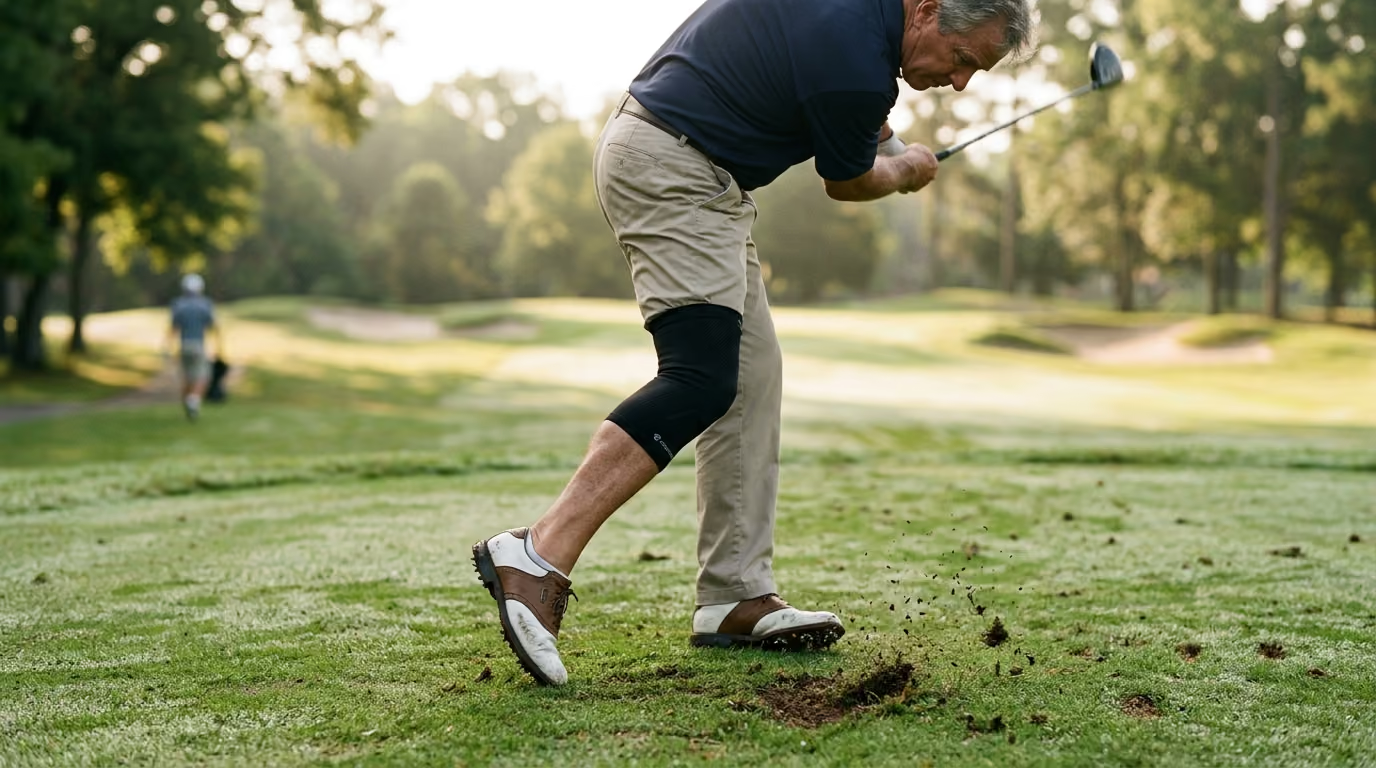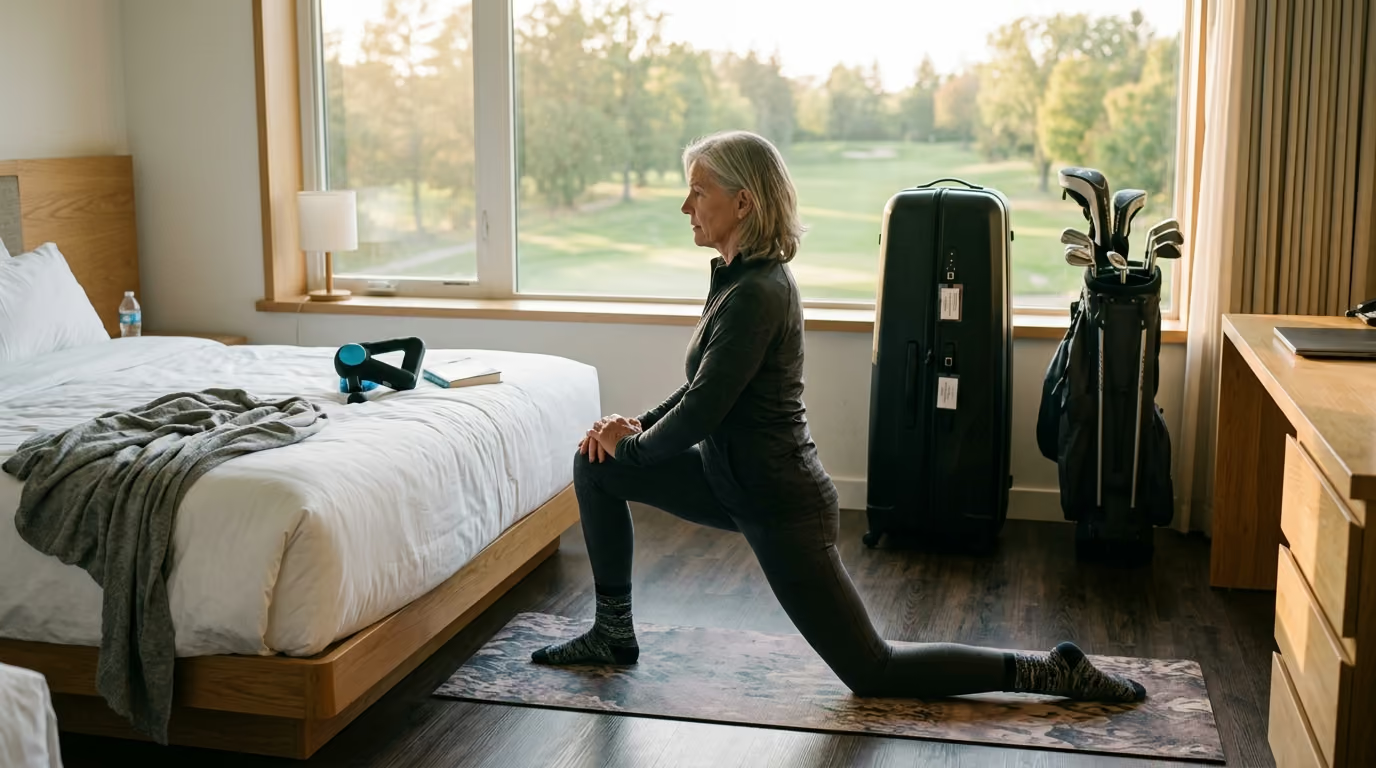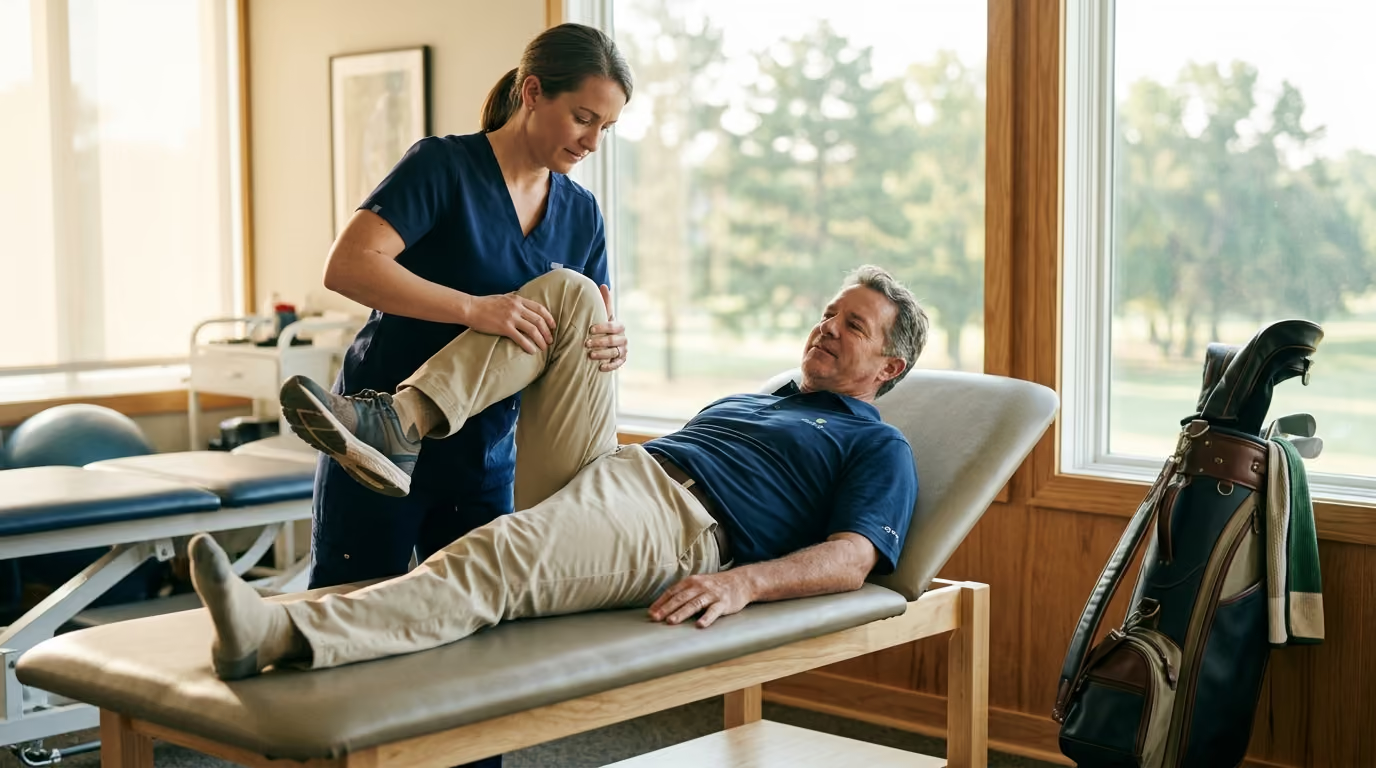
Golf footwear is often chosen for style, but proper biomechanical support actually protects your knees and hips from damaging swing forces.




Golf footwear biomechanics is the study of how your feet interact with the ground during a swing. It is not about style or buying the most expensive spikes on the market. It is the science of how force travels from the grass through your shoes and up your legs.
This guide reviews the connection between your shoes and your joint health. We will look at how the right shoe can shield your knees and hips from injury. You will learn what features to look for and how to test your shoes at home. This resource will help you make smart choices to protect your body for years of comfortable play.
Imagine you are standing on the fourteenth tee box. You have walked nearly five miles over hilly terrain. Your feet are starting to feel hot and tired. You face a tight tee shot that requires a strong swing.
As you start your backswing, you try to turn your hips. Instead of a smooth rotation, you feel a sharp pinch in your trail hip. Your body stops the turn early to avoid the pain. Your swing path changes instantly.
During the downswing, you try to transfer your weight to your lead side. Your lead foot slips slightly on the dry grass. Your lead knee twists inward to stop your momentum. You feel a dull ache under your kneecap as you finish your swing.
This scenario is common for golfers over forty. The pain you feel is not just a sign of aging. It is often the result of a breakdown in your foot support. When your shoes fail to stabilize your feet, your knees and hips must absorb the extra force.
Over a long round, this extra stress adds up. Your muscles tire out, and your joints begin to rub. By the time you reach the clubhouse, your lower body is stiff and sore. This discomfort can linger for days, making it hard to practice or play your next round.
To understand how shoes protect you, we must look at the kinetic chain. The kinetic chain is the idea that your joints work together in a linked system. Movement in your feet directly affects your ankles, knees, hips, and lower back.
During a full swing, your feet push hard against the ground. This action creates ground reaction forces. Research shows these forces can reach 1.5 times your body weight. This pressure is not just vertical. It also includes significant lateral and twisting forces.
Your lead leg and trail leg handle these forces differently. Your lead leg experiences intense internal rotation during the downswing. It must act as a brake to stop your body from sliding forward. Your trail leg experiences high lateral forces as you push off to start your downswing.
When your foot hits the ground, your shoe must manage these forces. If your shoe is too soft or lacks grip, your foot will slide. This slide forces your ankle to roll. Once your ankle rolls, your knee must twist to keep you balanced.
The knee is a hinge joint designed to bend in one direction. It does not tolerate twisting well. This twisting force is called the external knee adduction moment. Doctors use this measurement to predict the risk of inner knee wear. High twisting forces are a major cause of medial knee osteoarthritis.
Your hips also suffer when your feet are unstable. Your hip is a ball and socket joint designed for rotation. If your foot arch collapses during the swing, it stops your hip from turning. This collapse is known as the splat and splay effect.
When your arch collapses, your foot flattens and widens. This movement forces your shin bone to turn inward. This inward turn locks your hip joint. Instead of rotating, your hip is forced to sway sideways.
Swaying puts immense pressure on the outer hip muscles and the lower back. Over time, this movement pattern can cause labral tears or bursitis. Protecting your joints starts with preventing swing-related injuries at the ground level.
If your knees or hips begin to ache during a round, you cannot change your shoes immediately. You can make a quick posture adjustment to reduce joint strain. This change helps your body rotate more freely.
First, flare your feet outward at setup. Turn your lead foot out by about thirty degrees. Turn your trail foot out by about fifteen degrees. This position opens up your hip joints before you even swing.
Second, focus entirely on turning your trail hip. Do not try to keep your trail leg completely rigid. Let your trail hip turn back as far as comfortable. This movement prevents your knee from taking the brunt of the twisting force.
Third, shorten your swing slightly. Focus on a smooth tempo rather than maximum distance. A shorter swing reduces the speed and power of your joint rotation. This adjustment acts as an emergency safety valve for your lower body.
To protect your joints for the long term, you must build strong feet and ankles. Strong feet create a stable platform for your swing. This daily routine targets the key muscles that support your arches and ankles.
The first exercise is the single-leg balance. Stand barefoot on a flat floor near a wall for safety. Lift one foot off the ground and balance on the other. Focus entirely on keeping your foot arch active.
Do not let your ankle wobble or roll inward. Hold this position for thirty seconds. Repeat this three times on each leg. This simple drill strengthens the deep stabilizing muscles of your ankle.
The second exercise is the calf raise with a twist. Stand with your feet flat on the floor, hip-width apart. Slowly raise up onto your toes over a three-second count. At the peak, turn your heels slightly inward.
Lower down slowly to the starting position. Perform two sets of ten repetitions. This movement strengthens the tendon that supports your foot arch. It prevents your arch from collapsing during heavy swing loads.
The third exercise is the seated ankle circle. Sit comfortably on a chair and lift one leg. Slowly draw a circle with your big toe. Make the circle as large as possible without moving your knee.
Perform ten circles clockwise and ten circles counterclockwise. Repeat this on both legs. This exercise improves ankle mobility. Better ankle mobility allows your foot to adapt to uneven lies without twisting your knee.
The fourth exercise is the foot-shortening exercise. Sit with your feet flat on the floor. Without curling your toes, pull the ball of your foot toward your heel. You should feel your arch rise up.
Hold this contraction for five seconds, then release. Perform ten repetitions on each foot. This exercise builds strength in the arch. It is a great way to improve your baseline mobility from the ground up.
Many golfers make critical mistakes when choosing or wearing golf shoes. The most common mistake is thinking that more traction is always better. Golfers often buy heavy spiked shoes to prevent any foot movement.
While spikes prevent slipping, too much traction can lock your foot to the ground. If your foot cannot release, the twisting force of your swing has nowhere to go. It travels straight up into your ankle, knee, and hip. This extra rotation can damage joint cartilage over time.
The second mistake is choosing shoes based only on out-of-the-box softness. Soft, pillow-like shoes feel great when you walk around a store. However, they lack the lateral stiffness required for golf.
During your downswing, your foot pushes outward against the wall of your shoe. A soft shoe will stretch and roll over the sole. This rolling motion causes your knee to slide sideways. A protective shoe must combine cushioning with solid lateral support.
The third mistake is wearing worn-out shoes. Many golfers keep their shoes for several seasons. Over time, the internal foam and plastic supports break down. The shoe may look fine on the outside, but it no longer protects your joints.
A dead shoe allows your foot to collapse into pronation. This collapse triggers the splat and splay effect. Inspect your shoes regularly for signs of wear. If the heel counter feels soft or the sole twists easily, it is time for a new pair.
Your shoes are your main defense against joint pain, but other gear plays a role. Your entire setup can influence how much force your joints must absorb. Even small changes in your equipment can make a difference.
For example, your club grips can affect your physical tension. If your grips are too small or worn, you will squeeze them tighter. This tension travels up your arms and tightens your shoulders.
Stiff shoulders limit your upper body turn. To complete your swing, you will try to twist your hips and knees further. This extra twisting puts unnecessary stress on your lower joints. Confirming your grips are the right size helps keep your swing relaxed.
Your choice of golf bag also impacts your joints. Carrying a heavy bag over eighteen holes adds constant weight to your knees and hips. This extra load increases joint compression with every step.
Using a pushcart or a riding cart reduces this constant stress. It keeps your legs fresher for the swing itself. If you prefer to walk, a lightweight stand bag with dual straps is a better choice.
You should also look into custom orthotics. Many modern golf shoes have thin, flat insoles. Replacing them with a supportive insole can align your feet. This alignment reduces joint stress and helps with recovery after your round.
You can test your current golf shoes at home using four simple steps. This physical test check guarantees your shoes provide adequate support. You do not need any special tools to perform these tests.
First, perform the Twist Test. Hold the shoe by the heel with one hand. Grasp the toe of the shoe with your other hand.
Try to twist the shoe as if you were wringing out a wet towel. A stable golf shoe should resist this twisting motion. If the shoe twists easily in the middle, it will not support your arch during a swing.
Second, perform the Squeeze Test. Find the heel counter, which is the stiff cup at the back of the shoe. Press the sides of the heel counter together with your thumb and fingers.
The heel counter should feel solid and resist collapsing. A strong heel counter keeps your heel bone aligned. If it squeezes flat easily, your heel will slide around during your swing.
Third, perform the Spread Test. Take the insole out of your shoe and place it on the floor. Stand on the insole with your full weight.
Look down at your toes. Your toes should not overhang the sides of the insole. If your toes spill over, the shoe is too narrow. A narrow toe box pinches your foot and ruins your balance.
Fourth, perform the Insole Check. Look at the factory insole you just removed. Check if it has a contoured shape that matches your arch.
If the insole is flat and flimsy, it offers little support. You may need to replace it with a structured aftermarket insole. If you want to research more gear options, explore our golf performance resources to find the right fit.
Golfers with existing joint conditions need to customize their footwear choices. Standard shoes may not address your specific physical needs. Understanding your condition helps you make better decisions.
If you have medial knee osteoarthritis, the cartilage on the inside of your knee is worn. This condition causes pain when your knee arches inward. You need a shoe that shifts your weight away from the painful area.
Look for shoes with stiffer lateral midsoles. This stiffness prevents your foot from rolling outward too much. Some golfers benefit from a slight lateral wedge in their insoles to redistribute the load.
If you have lateral knee osteoarthritis, the outer part of your knee joint is damaged. You need the opposite type of support. Your shoes should help keep your weight centered.
Look for shoes with strong medial arch support. This support prevents your foot from flattening, which keeps your knee from shifting outward. A softer midsole can also help absorb shock on the outer joint.
Golfers with hypermobility have loose ligaments. Their joints can move beyond the normal range. This extra movement can cause the kinetic chain to collapse during a swing.
If you are hypermobile, you must avoid lightweight, flexible golf shoes. Choose structured shoes made of natural leather. These shoes provide a firm cage that keeps your foot from moving excessively.
Choosing golf shoes with the right balance of midfoot stiffness and controlled traction is the most effective way to shield your knees and hips from swing-related joint stress.
Spikeless shoes are often better for golfers with arthritic joints. They allow your foot to pivot slightly on the turf during your swing. This small pivot reduces the twisting force on your knees and hips. Spiked shoes can lock your foot in place, forcing your joints to absorb all the rotation.
You should replace your golf shoes every fifty to eighty rounds. If you walk the course frequently, you may need to replace them sooner. The internal foam and support structures wear out before the outside of the shoe looks bad. If your joints start aching after rounds, your shoes may have lost their support.
Running shoes are not recommended for golf. They are designed for forward motion and have thick, soft midsoles. This design lacks the lateral stability needed for a golf swing. When you swing in running shoes, your feet can roll over the edges, which puts extra stress on your knees.
Most modern golf shoes have removable factory insoles. This design allows you to slide your custom orthotics inside easily. Always take your orthotics with you when shopping for new shoes. This guarantees you get the right size and fit with your custom inserts.
Follow Golfergy for practical insights on performance, mobility, recovery and healthy ageing. Stay connected for new articles, research-led guidance and ideas to help you play better for longer.


Explore practical resources on performance, recovery, mobility and golf longevity.
Read the Blog