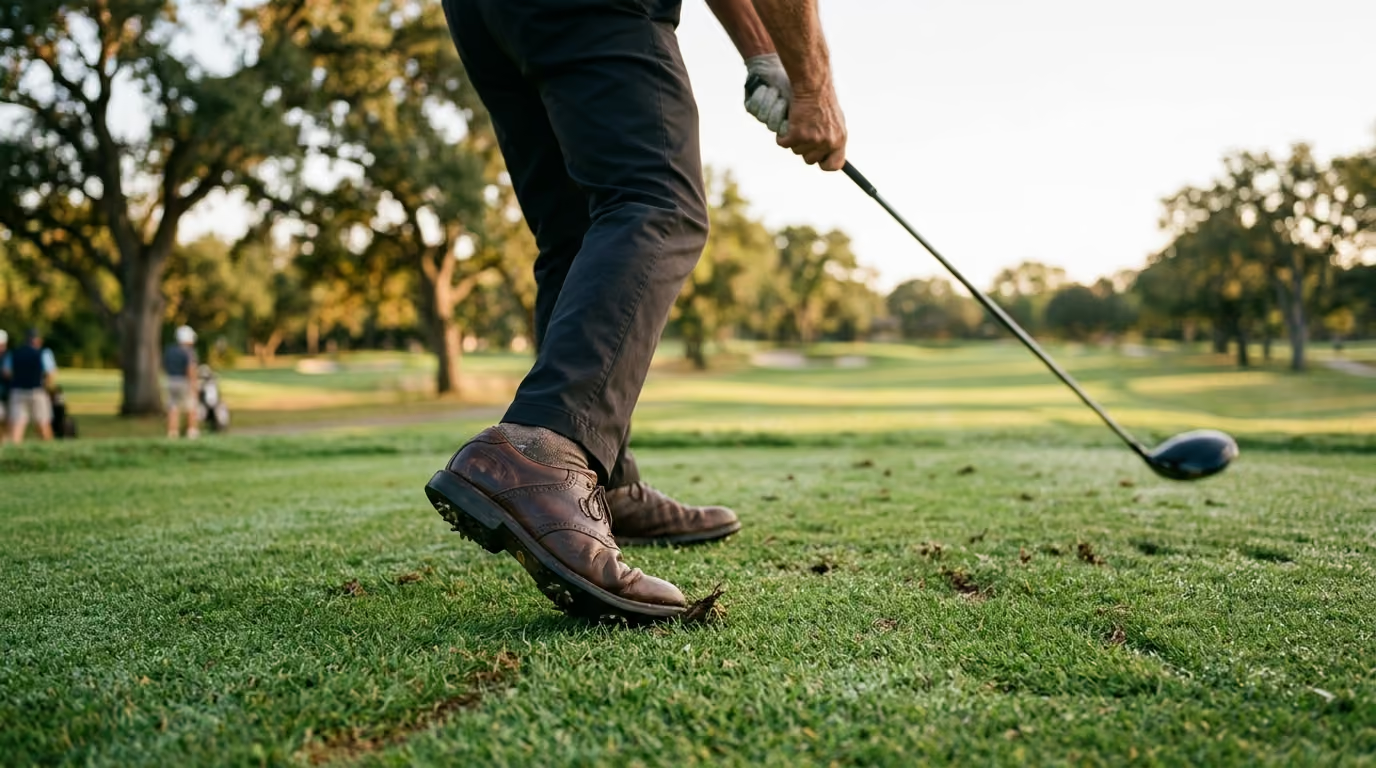

Greater swing speed and rotational power come from proper big toe mobility and solid ground pressure throughout the golf swing.




If you have ever searched the internet for why you are losing swing speed as you age, you have probably found plenty of advice about your hips and shoulders. You might read about core strength, thoracic spine rotation, or wrist hinge. Yet, few sources talk about the foundation of your entire movement. This guide will show you how your feet, especially your big toe and arch, control your swing power and longevity.
You are standing on the fourteenth tee box during a breezy afternoon round. Your legs are feeling heavy. Your lower back has a dull ache from walking the undulating fairways. You try to swing hard to carry a fairway bunker.
During your backswing, your trail foot slips outward. Your lead foot spins toward the target during the downswing. The ball slices into the deep rough. You feel off balance, disconnected, and weak.
This scenario is common for golfers over forty. You might blame your age, your back, or your swing mechanics. The true culprit often lies inside your shoes. Your feet have lost the ability to connect with the ground, stabilize your pelvis, and transfer power up your body.
Your feet are your only contact point with the turf. A golf swing is not just an upper body movement. It is a sequence of forces that start at the ground and travel up through your skeleton. To understand this, we must look at how forces behave between your shoes and the grass.
Ground-reaction force is the pressure the earth pushes back against your feet. When you push down into the ground, the ground pushes back with equal force. This force operates in three different directions.
Vertical force is the upward push that helps you create leverage. Mediolateral force moves side to side along your target line. Anteroposterior force moves forward and backward.
[Ground-Reaction Forces in the Golf Swing]
├── Vertical Force: Upward push from the turf
├── Mediolateral Force: Lateral side-to-side shift
└── Anteroposterior Force: Front-to-back rotation
To create clubhead speed, you must use all three forces. Research shows that vertical force in your lead foot is a major driver of clubhead speed. The horizontal force from your trail foot also helps your pelvis pivot. If your feet cannot grip the ground and stand firm, these forces are lost.
The center of pressure is another key concept. It is the exact point where the net force acts under your feet. This is different from your center of mass. You can keep your body relatively still while shifting your center of pressure rapidly.
Pressure mapping shows how you distribute force across your sole. You might load the heel, the ball of the foot, or the outer border. How you manage this pressure determines the path of your swing.
The big toe is the anchor of the human foot. Specifically, the first metatarsophalangeal joint is the critical pivot point. This is the joint where your big toe meets the ball of your foot.
During the swing, this joint must bend upward. This movement is called dorsiflexion. Bending the big toe upward triggers a tensioning system called the windlass mechanism.
The plantar fascia is a thick band of tissue under your foot. It runs from your heel to the base of your toes. When your big toe bends upward, it winds the plantar fascia around the joint.
[The Windlass Mechanism Sequence]
1. Big toe bends upward (Dorsiflexion)
2. Plantar fascia winds around the joint
3. Medial longitudinal arch rises
4. Foot transforms into a stiff, powerful lever
This winding action shortens the distance between your heel and your toes. It lifts your medial longitudinal arch. This process turns a soft, shock-absorbing foot into a rigid, solid lever.
A rigid lever is vital for transferring power. If your foot remains soft, the force you create is lost in the joint. You want your foot to adapt to the ground first, then stiffen to push off.
We must distinguish between passive and functional mobility. Passive mobility is how much your toe bends when you use your hand to move it. Functional mobility is how much it bends under the weight of your body.
If your big toe is stiff, your foot cannot lock its arch. Research on big toe arthritis, known as hallux rigidus, shows that stiff toes alter how people walk and run. People with this issue roll to the outside of their feet to avoid bending the toe. Golfers do the same thing, which ruins their ability to pivot.
The two feet play entirely different roles during the golf swing. Each foot requires a distinct pressure pattern to function. We must look at them separately to understand how they create power.
Your trail foot acts as your loading platform. During your backswing, you must load the inside of this foot. You do this to avoid swaying away from the target.
If your trail ankle has poor eversion mobility, you cannot load the inside of the foot. You will roll onto the outer edge of your shoe. This causes your pelvis to drift laterally.
The trail big toe helps you transition from the backswing to the downswing. It keeps the medial side of your foot connected to the ground. As you transition, you push off this joint to shift pressure toward the target.
However, you should not push through your trail big toe too late in the swing. Pushing too long can stop your heel from rotating. It can cause you to spin on your toe, which stalls your hip turn.
Your lead foot acts as your brake and your pivot post. As you start the downswing, your pressure must shift rapidly to this side. This shift should happen around the time your lead arm is parallel to the ground.
Once pressure lands on the lead foot, that foot must brake your forward movement. It resists the horizontal slide. This braking force is what allows your hips to clear and rotate.
[Lead Foot Roles]
├── Accept the rapid horizontal shift
├── Brake forward slide to allow hip rotation
├── Drive upward to create vertical power
└── Secure a stable base for the pelvic pivot
The big toe on the lead foot assists in this stability. It must stay anchored to keep the inner column of the foot from lifting. Yet, research shows that too much lead big toe pressure can be a negative factor.
A study from 2025 looked at plantar pressure and energy transfer. It found that high pressure under the lead great toe was negatively associated with transferring energy to the trunk.
This is a vital point because many golfers believe they should squeeze the ground with their lead toe. If you clamp down too hard with that toe, you can block your lead hip from opening. The pressure needs to move toward the lead heel as you rotate.
Many golfers think they need high, rigid arches to play well. Others believe flat feet are a recipe for injury. The reality is more complex. Both types of feet can play great golf if they have functional mobility.
Arch stiffness is the foot's resistance to collapsing under a heavy load. Arch support refers to external devices like orthotics. These two concepts are not the same.
A functional arch needs to behave like a dynamic spring. It must flatten slightly to absorb your body weight as you shift pressure. Then, it must stiffen to help you push off the turf.
[Dynamic Arch Function]
Phase 1: Adaptation (Arch flattens slightly to absorb weight)
└── Phase 2: Stiffening (Windlass engages to resist force)
If your arch is too rigid, it will not absorb force. This can cause pain in your heels, knees, or lower back. If your arch is too weak, it will collapse completely. This collapse drains your swing speed and fatigues your legs.
Research on athletic movement shows that a stiffer arch produces better side-to-side force. A flexible arch is better for absorbing shock on uneven ground. Golfers need a balance of both qualities.
Orthotics can help modify how your feet interact with your shoes. Research shows that custom flexible orthotics can reduce fatigue during a round. A study of experienced players showed they maintained higher swing speeds over nine holes when wearing custom insoles.
This improvement is not because the insoles gave them extra muscle power. The insoles reduced the physical fatigue of walking. They kept the feet aligned, which protected the golfers from losing speed late in the day.
If you want to focus on overall physical longevity, managing foot fatigue is crucial. You can learn more about these concepts by reading about principles of healthy ageing. Keeping your feet strong is a major part of staying active as you grow older.
When foot mechanics go wrong, they cause predictable swing faults. You can often trace your ball flight errors back to your toes. Here are five common case patterns seen in golfers over forty.
This golfer struggles to turn their hips in the backswing. Instead, their entire body drifts away from the target. They lose power because they cannot create a solid pivot.
When we look at their feet, their trail ankle is stiff. They cannot evert their foot to keep the sole flat. As they turn, their weight spills over the outer edge of their trail shoe.
The big toe loses contact with the sole. Because the toe is floating, the windlass mechanism never engages. The trail leg becomes an unstable post, and the player sways to survive the movement.
This golfer looks good at the top of the swing, but their downswing is erratic. When they shift their weight, their lead foot slips. The toes of their lead foot spin open toward the target before impact.
Their lead foot cannot brake their forward movement. They lack lateral control because they cannot keep the first metatarsal head anchored.
To compensate, they roll onto the outside of their ankle. Their pelvis stall, their hands flip at the ball, and they hit weak fades. They need to train the lead foot to plant and hold.
This player has physical wear in their big toe joint. They suffer from hallux rigidus, which limits how far the toe can bend. They feel a sharp pinch when they try to walk or swing.
To avoid this pain, their body finds a detour. They lift their trail heel very early in the downswing. Or, they turn their trail foot outward at setup to avoid bending the joint.
[Rigid Toe Detours]
├── Early trail heel lift in the downswing
├── Flaring the trail foot outward at setup
└── Shifting weight to the outer edge of the foot
These adjustments reduce the pain but ruin their balance. They cannot transfer energy because they are constantly protecting the joint. This issue requires specific shoes or orthotics to keep them playing without pain.
This golfer plays beautiful golf for the first seven holes. Their drives are long, and their iron shots are crisp. By the twelfth hole, they begin to hit fat and thin shots.
By the sixteenth hole, they have lost fifteen yards of distance. Their feet feel sore, and their arches are burning.
Their feet lack the endurance to support their body weight. As their muscles tire, their arches collapse. Their posture sags, and their swing path changes because their foundation has crumbled.
This player has been told to push hard through their lead big toe. They focus entirely on squeezing their shoe with their left toe during the downswing.
This action traps their weight on the inside of their lead foot. They cannot clear their lead hip because their foot is locked in place.
Their lead knee takes the stress, and they finish their swing with a bent spine. They do not realize that the lead toe must release its grip to allow rotation. They have taken a good cue and overused it.
To prevent these issues from causing chronic pain, you must use smart injury prevention strategies. Your feet are your first line of defense against joint wear in your knees and lower back.
You do not need expensive laboratory equipment to check your foot mechanics. You can perform a simple check at home with no tools. Follow these four steps to see if your feet are holding back your golf swing.
Sit in a chair with your feet flat on the floor. Try to lift only your big toe while keeping your other four toes pressed down.
[Big Toe Lift Test]
Sit with feet flat:
├── Lift ONLY the big toe (Check control)
└── Lift other four toes while keeping big toe down
Next, try the reverse. Keep your big toe pressed down while lifting the other four toes. This tests your motor control and coordination.
Now, stand up and try the same test. It is often much harder when your body weight is on your feet. If you cannot lift your big toe, your brain has lost touch with these muscles.
Sit down and cross one leg over your knee. Hold your heel with one hand to stabilize your foot. Use your other hand to pull your big toe back toward your shin.
Look at the angle of the bend. Your big toe should bend backward at least forty degrees.
If the joint feels locked or painful, you have restricted mobility. If the toe bends easily but feels stiff when you stand, you have a functional control issue.
While standing, have someone look at your foot from the inside. Lift your big toe upward by hand.
Observe what happens to your arch. Does your arch rise when you pull your toe up? Do you feel the thick band of tissue under your foot tighten?
If your arch does not rise, your windlass mechanism is not functioning. Your foot will struggle to stiffen when you push off during your swing.
Take your favorite pair of golf shoes and turn them over. Look at the wear patterns on the soles.
[Shoe Wear Analysis]
Normal Wear:
└── Even wear across the ball of the foot and heel
Outer Edge Wear:
└── Indicates swaying or lack of eversion
Excessive Inside Wear:
└── Indicates collapsed arches or lack of control
Are the cleats worn down evenly? Or is the outer edge of your trail shoe completely bald while the inner edge looks brand new?
Uneven wear shows where your pressure is escaping. If you see heavy wear only on the outer edge, you are likely rolling your foot and swaying. If the inner edge is crushed, your arch is likely collapsing.
If you find limits in these tests, you can benefit from improving your joint mobility. Better mobility in your feet and ankles can unlock a much smoother turn.
You can rebuild your feet with targeted exercises. These movements do not require heavy gym equipment. They focus on restoring control, flexibility, and strength to your foundation.
This exercise retrains your brain to control your foot muscles. It builds the coordination needed to plant your big toe during the swing.
If your other toes will not move, you can use your fingers to hold them down at first. This helps your brain learn the movement.
This movement builds strength in the small muscles that support your arch. It teaches your foot to stiffen without clawing your toes.
[Short Foot Exercise]
* Pull the ball of your foot toward your heel
* Keep toes completely flat (Do not curl them)
* Let the arch rise naturally
Once you can do this seated, try it while standing. This exercise is the best way to build a supportive, active arch.
Stiff calf muscles pull on your heel and flatten your arch. Stretching them helps maintain your foot's natural shape.
Make sure your back foot is pointing straight ahead. If it turns outward, you lose the stretch.
This exercise helps you load the inside of your trail foot without swaying.
Focus entirely on turning your trail hip while keeping your foot connected to the ground. This helps integrate your new ankle movement into your swing.
For more routines to build lower body power, check out our guide on lower body strength training. Strengthening your legs and feet is a great investment for your game.
Your shoes can either support your foot mechanics or destroy them. Many modern golf shoes prioritize style over function. As a mature golfer, you must choose your footwear with care.
Most dress-style golf shoes have a narrow, pointed toe box. This design squishes your toes together.
When your big toe is pushed toward your second toe, it cannot bend upward. It cannot engage the windlass mechanism. This makes your foot unstable before you even start your swing.
Look for shoes with a wide, anatomical toe box. Your toes should have room to splay out. This wide base is what gives you balance.
[Toe Box Comparison]
Narrow Toe Box (Avoid):
└── Squishes toes, blocks big toe bend, disables windlass
Wide Toe Box (Recommended):
└── Allows toes to splay, enables natural arch stiffening
Research shows that spiked shoes produce higher peak pressure and torque than spikeless shoes. Metal or heavy plastic spikes grip the turf tightly.
This extra grip can help you transfer force if your feet are strong. But if you have stiff joints, that extra traction can cause issues.
If your foot cannot twist, that rotational force will travel up your leg. It can stress your knees, hips, and lower back. If you have joint pain, a flexible, spikeless shoe may be more comfortable.
A golf shoe needs a balance of flexibility and stiffness. The front of the shoe must bend easily to allow your toes to flex.
The middle of the shoe, under your arch, should be stiff. This prevents your foot from twisting in ways it should not.
Before you buy a shoe, try to bend it. It should bend easily at the ball of the foot. If it is stiff as a board from heel to toe, it will restrict your big toe and ruin your power transfer.
If you have sore feet after walking eighteen holes, you should consider athletic recovery techniques. Giving your feet time to heal is just as important as training them.
To help you get started this week, here is a quick checklist. These steps will help you implement what you have learned.
The big toe and the arch are not just passive parts of your body. They are the foundation of your golf swing. By restoring their mobility and strength, you can play pain-free golf for decades to travel.
Your feet must provide a mobile, adaptable connection to the turf before they can act as a rigid lever to transfer swing power.
Follow Golfergy for practical insights on performance, mobility, recovery and healthy ageing. Stay connected for new articles, research-led guidance and ideas to help you play better for longer.


Explore practical resources on performance, recovery, mobility and golf longevity.
Read the Blog


