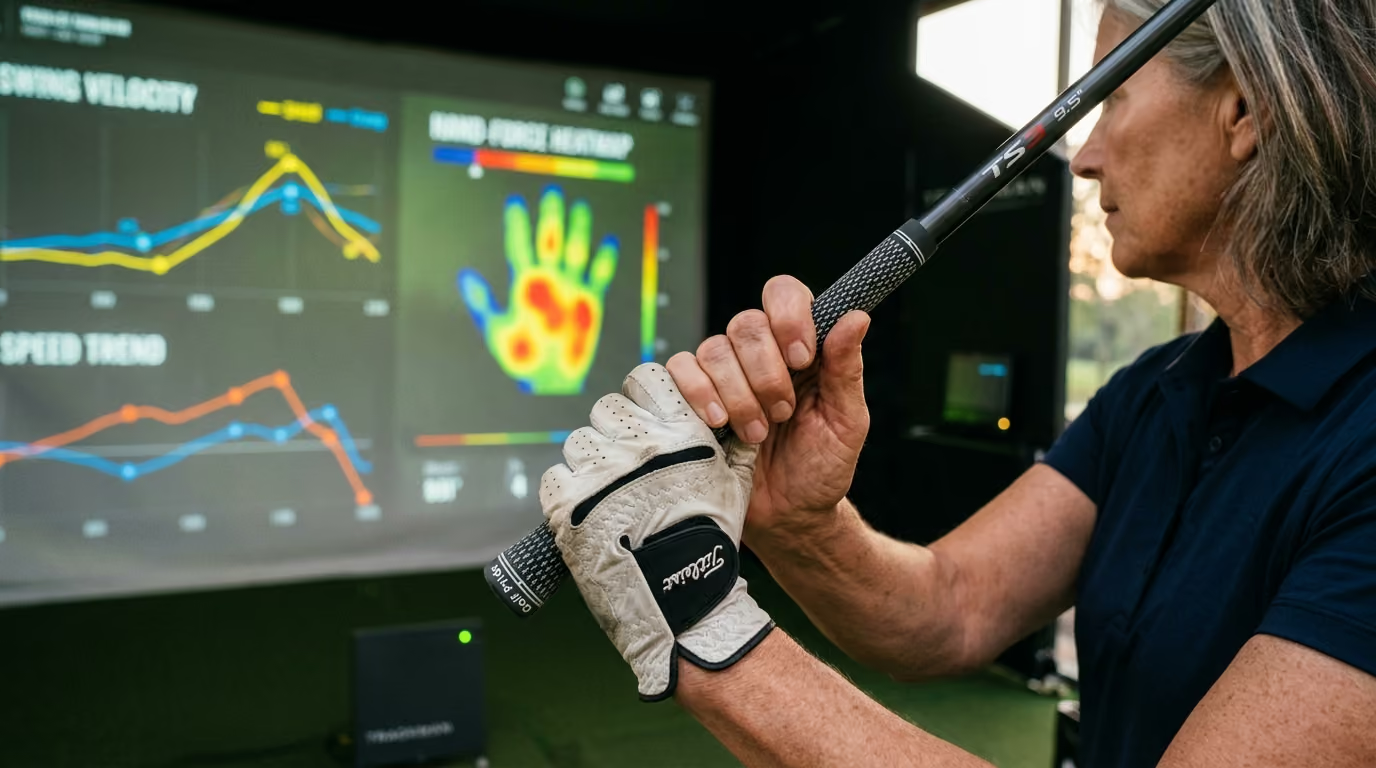

Two essential mobility benchmarks for hips and shoulders dictate your ability to create powerful downswing lag without forcing your hands forward.




Many golfers believe that swing lag is a secret move you must force with your hands. They spend hours trying to hold the angle between the lead forearm and the club shaft. This is not what lag is. Lag is actually the natural result of a well-sequenced body.
True lag is the physical proof of efficient energy movement through your body. It is not a static position you can hold by freezing your muscles. It is a dynamic reaction. This article explains the exact physical needs your body has to create lag. We will look at the real benchmarks for your joints, the physical limits that cause casting, and how to fix them for good.
Imagine you are standing on the fairway of a long par four. You have one hundred and fifty yards left to the green. The wind is slightly against you. You know a clean strike with a seven-iron will get you there.
You take your setup and swing back. As soon as you start your downswing, your arms take over. You feel your hands push outward toward the ball. The club releases early, far before it reaches the hitting zone.
The clubhead strikes the turf two inches behind the ball. The shot ends up short and right of your target. Your lead wrist cupped at impact, causing a weak, high curve. You tried to force the club down, but your body felt blocked.
This is the frustrating reality of casting. Your playing partners might tell you to keep your hands ahead of the ball. You try to pull the grip down on the next hole, but the ball goes lower and further right. Your body simply cannot hold the angle because of a physical block.
Lag is the natural delay of the clubhead during the downswing. It happens when your lower body moves toward the target while your upper body stays coiled. This separation pulls your arms and hands along, leaving the heavy clubhead behind. Biomechanical research shows that lag is the maintenance of radial deviation, which is the wrist hinge toward your thumb.
When you start the downswing, your feet push into the ground. This ground force turns your pelvis first. Your torso is still turning back or holding its turn, which is known as the X-Factor stretch. Studies from the Journal of Strength and Conditioning Research show a very high correlation between this stretch and clubhead speed.
The hands are pulled into a lagged position without you trying to force them. As your lead arm reaches about thirty degrees below a flat horizontal line, the stored energy releases. This timing is critical. If your body segments do not fire in order, the energy path breaks.
To keep the club from flying open during this pull, elite players use lead wrist flexion. This is a slight bowing of the wrist. If you bow your wrist, you control the clubface. This control lets you hold the lag deep into the downswing without fear of a slice.
Your body must have specific ranges of motion to allow this sequence to happen. If a joint is locked, another part of your body must compensate. This is why building consistent hip and shoulder mobility helps your swing shape.
Your middle back must turn independently from your lower back. The physical benchmark for the seated trunk rotation test is greater than forty-five degrees of turn. If your middle back is stiff, your shoulders and hips will turn together. You cannot create the separation needed to pull the hands into a lagged position.
According to data from the Titleist Performance Institute, every single PGA Tour professional tested had at least forty degrees of middle back turn. By comparison, over ten percent of recreational players failed this test. When your middle back is locked, your swing will rely on your arms.
Your lead hip must be able to turn inward as you shift your weight. The target benchmark is forty-five to sixty degrees of internal rotation. As you start the downswing, your lead hip must accept your weight and clear out of the way.
If your hip is tight, your pelvis stops turning. When your lower body stops, your hands must throw the club to finish the swing. This is a major cause of the scoop at impact.
Your hips must be able to turn more than sixty degrees. This rotation needs to happen without your pelvis sliding sideways. If your hips slide toward the target instead of turning, you lose your physical leverage.
A stable pelvic turn is the foundation of the downswing. It allows you to build the rotational power that pulls the clubhead.
Your lead wrist needs a minimum of five to ten degrees of upward hinge past neutral. This hinge must happen without your wrist bending backward or cupping. If your wrist lacks this pure lateral mobility, you cannot create the angle. Your body will find other ways to lift the club, usually by bending your elbows.
When your body cannot meet these benchmarks, it protects itself. This is a survival reaction by your nervous system.
If you try to twist your spine past its safe limit, your brain stops the turn. It sends a message to fire your arms early to generate speed. Biomechanists call this the protective release. Your brain chooses to throw the club early rather than risk hurting your back.
Another cause of casting is an open clubface. If your lead wrist cups at the top, the face points to the sky. Your brain knows that if you hold lag with an open face, you will miss the ball entirely.
To prevent this, your brain forces your hands to scoop. This action helps to square the clubface before impact. You cannot fix lag without fixing your clubface angle first.
Weakness in your glutes and core also plays a major role. Your lower body is the engine of the swing. If the engine is weak, your upper body must pull the heavy load. This forces your shoulders and arms to tense up and push the club out.
Finally, excessive grip pressure will destroy your lag. When you squeeze the grip too hard, your forearm muscles lock. The club cannot hinge naturally. Centrifugal force will then force the club to release early during the downswing.
You cannot build permanent mobility during a round, but you can change your feel. Here is a simple drill to try during your next game. It will help you feel the natural delay of the clubhead.
First, take your normal grip on a mid-iron. Slide your trail hand down so it touches the steel shaft just below the grip. This is a split-hand grip.
Next, take some slow, partial practice swings. Focus entirely on turning your trail hip toward the target to start the downswing. Keep your hands completely relaxed as you do this.
You will feel the split grip pull your hands into a sharp angle. Your trail arm will tuck naturally against your side. This sensation shows you how the lower body creates the lag angle.
When you return to your normal grip, keep your pressure light. Imagine your grip tension is a three out of ten. This light pressure lets your wrists react to the weight of the clubhead.
To make lag a permanent part of your swing, you must address the physical limits. Doing these movements regularly will build the necessary range of motion. If you want to read more about physical prep, check out our golf performance blog for guidance.
This movement improves your middle back rotation while keeping your lower back safe.
This exercise targets internal rotation in your lead hip.
This movement builds active rotation in your thoracic spine.
This exercise builds the core strength needed to stabilize your pelvis.
This drill teaches your body how to clear the lead side.
Integrating these exercises into your weekly routine can prevent common swing issues. In fact, a critical piece of golf injury prevention is ensuring your joints have the mobility to handle the forces of the swing.
Most players try to fix their lag by copying what they see on television. This often leads to movements that actually make casting worse.
Many golfers think the first move in the downswing is to pull the hands toward their pockets. This move steepens the shaft. It forces the club to cut across the target line.
Your brain will notice this steep path and panic. To avoid digging the club deep into the turf, your hands will cast early anyway. The pull-down move actually guarantees a scoop.
Some players try to freeze their wrists in a bent position. This creates immense muscle tension in your forearms.
When your forearm muscles lock, your body cannot transfer speed. The swing becomes stiff and slow. True lag is dynamic and soft, not rigid.
If you try to hold lag with an open clubface, you will slice the ball. Your brain knows this and will always override your efforts.
You must learn to square the clubface early in the downswing. Once the face is square, your brain will let you hold the angle longer.
Your gear can either help or hinder your physical efforts to create lag. If your equipment is wrong, your body will work harder than necessary.
If your grips are too small, your fingers must squeeze tighter to hold the club. This tension travels up your forearms and locks your wrists.
Conversely, grips that are too thick can limit your natural wrist hinge. You should use a grip size that allows a secure hold with light pressure.
A shaft that is too stiff for your swing speed will feel like a steel pipe. You will not feel the shaft bend or load at the transition.
This lack of feel often causes golfers to force the swing with their hands. A shaft with the correct flex will bend naturally, which helps you feel the clubhead delay.
To turn your hips, your feet must grip the turf. If your shoes are slipping, your brain will limit your pelvic turn to keep you balanced.
Good traction is required to use ground forces. We discuss this dynamic of rotational strength training and ground connection on our site to help you build solid power.
Yes. Older golfers can absolutely create lag. You do not need the extreme flexibility of a young professional to swing efficiently. Focus on improving your hip and middle back mobility. Even small gains in these areas will help your sequence.
You can film your swing from the side. Look at your lead wrist at the moment of impact. If your lead wrist is bent backward like a cup, you are scooping. If your lead wrist is flat or bowed, you are holding your lag. Another sign is a lack of divots with your irons.
Not necessarily. Lag is not about holding the club with brute strength. It is about timing and flexibility. Strong wrists can help with control, but stiff wrists will actually cause you to cast the club. Focus on mobility and sequencing first.
If you perform your mobility drills three times a week, you should feel a difference in four to six weeks. Your body will begin to move more freely. You will notice a crisper impact and more distance without swinging harder.
True lag is not a hand movement you force, but rather the natural reward of a mobile middle back, flexible hips, and a sequenced turn.
Follow Golfergy for practical insights on performance, mobility, recovery and healthy ageing. Stay connected for new articles, research-led guidance and ideas to help you play better for longer.


Explore practical resources on performance, recovery, mobility and golf longevity.
Read the Blog