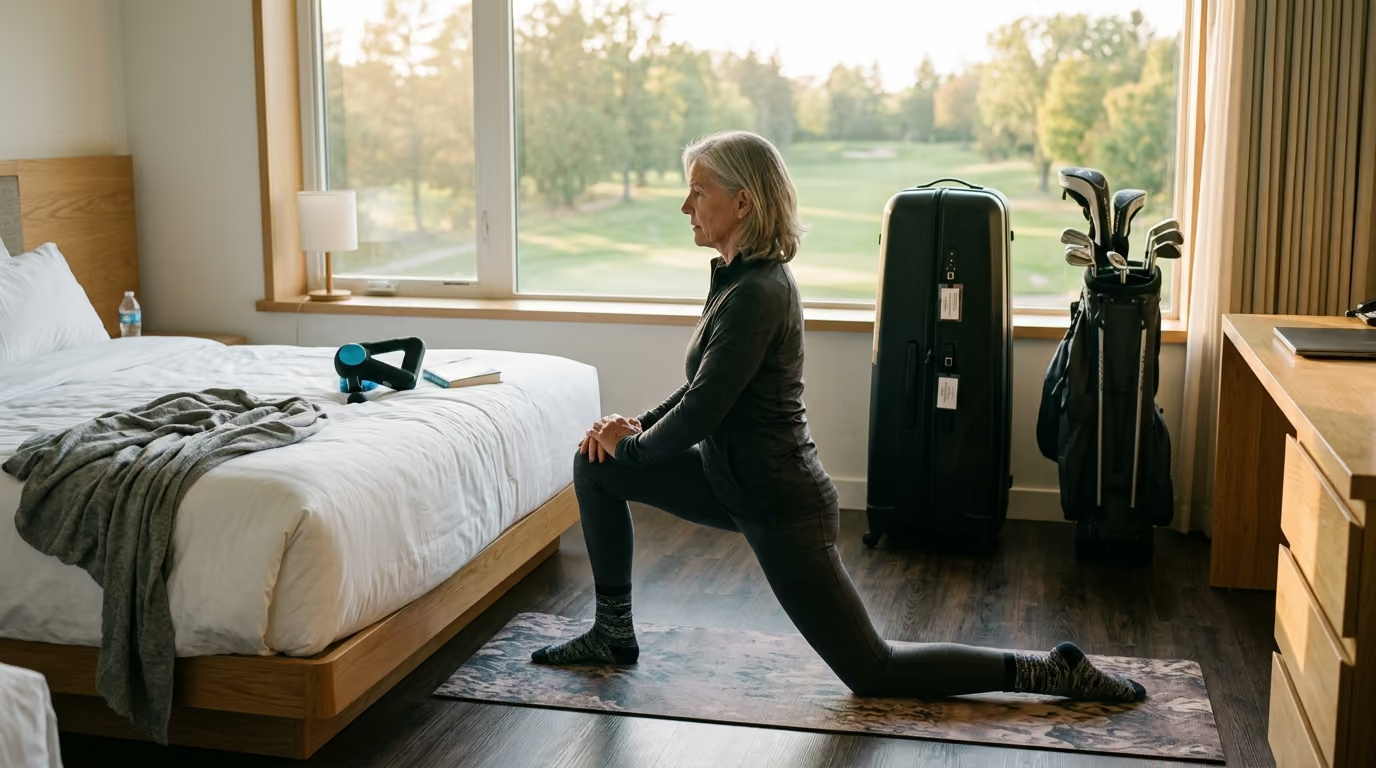
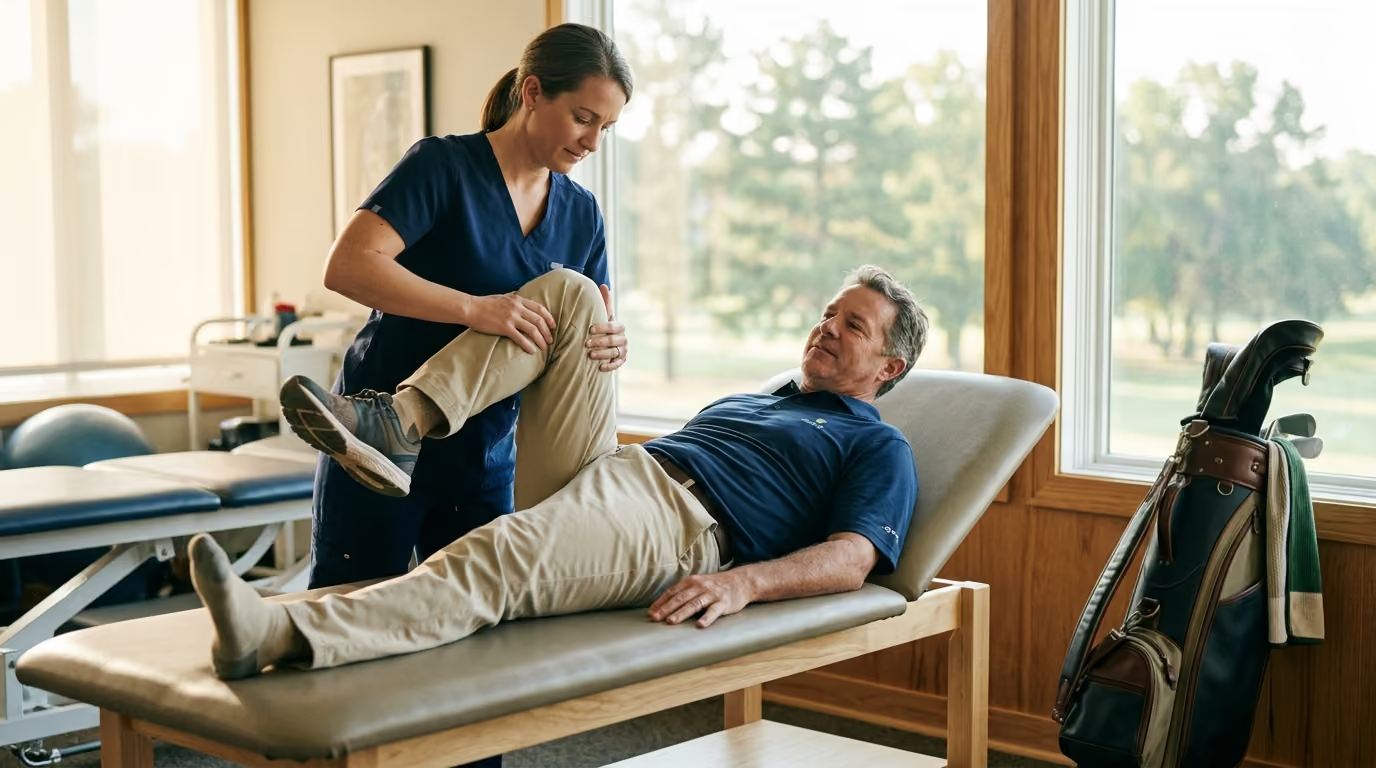
Aging golfers can protect their spinal joints and maintain clean ball striking by adopting simple mechanical adjustments tailored to limited mobility.




An age-proof golf swing is not a surrender to physical decline. It is a smart coordination of joint angles and body rotation. This method is not about chasing the flexible look of a young tour professional. Instead, it is a practical blueprint to protect your joints while keeping your shots clean.
Many mature golfers believe they must accept pain to keep playing. This is simply a misconception. By making specific mechanical changes, you can continue to enjoy the game without injuring your body. This guide provides a complete resource to help you modify your swing.
We will look at scientific research regarding joint health and swing adjustments. We will discuss how to manage back pain and hip issues. You will learn how to make small changes that produce big improvements in your comfort on the course. You can read more about keeping your body healthy on our healthy ageing page.
Imagine standing on the fourteenth tee of a long par-four. Your round started exceptionally well. Your body felt great during the first nine holes. Now, your lower back feels like a tight band of cold iron.
A dull ache spreads across your waist every time you try to turn your shoulders. You address the ball and try to make your normal backswing. Your hips resist the movement. Your swing cuts short because of this stiffness.
Your hands try to make up for this lack of turn by lifting the club too steeply. You swing down with a chopping motion. This motion sends the ball deep into the right trees. This moment is where physical limitations turn into poor performance and joint strain.
When your hips and mid-back lose their flexibility, your body seeks rotation elsewhere. The lower back is forced to twist and bend to complete the swing. By the time you reach the back nine, your muscles are too tired to protect your joints. This muscle fatigue ruins your swing path and your timing.
You finish your round feeling sore and frustrated. This common scenario shows why trying to force a rigid swing model on a tight body is dangerous. We need to look at how your spine actually moves to resolve this issue. By understanding the biomechanics, you can avoid this pain completely.
To swing a golf club without pain, you must understand your spinal anatomy. Your spine is divided into distinct sections. Each section has a specific job. The thoracic spine, or your mid-back, is built for turning.
The lumbar spine, or your lower back, is built for stability and can only rotate a few degrees. When your mid-back becomes stiff, your body forces your lower back to twist. This creates high levels of pressure on your spinal discs. Research shows that a shortened swing reduces vertebral compression forces significantly.
Compression forces drop from 7.6 N to 7.0 N when you shrink your swing by forty-five degrees. This change reduces the strain on your back muscles by up to seventeen percent. The difference in rotation between your shoulders and your hips is known as the X-Factor. Many players try to force this separation at the top of the backswing.
Biomechanics research shows that the X-Factor Stretch is actually more important. This stretch is the quick increase in separation that happens during the transition. It occurs right as your downswing starts. For golfers with limited flexibility, forcing a massive shoulder turn at the top of the swing is dangerous.
It puts your lumbar spine in a vulnerable position. Focusing on a smooth transition allows you to generate clubhead speed without twisting your spine too far. You can read more about how to move efficiently on our golf performance section.
You do not have to wait weeks to feel better on the golf course. You can make three simple adjustments during your next round to relieve joint pain. First, focus entirely on turning your trail hip during your backswing. Do not try to keep your trail knee locked or completely straight.
Let your hip rotate freely toward the target behind you. Second, narrow your stance so your feet are closer together. A wide stance is great for young players with fast swings. However, it locks up your pelvis as you age.
Bringing your feet slightly inside shoulder-width allows your hips to turn much easier. This simple change releases tension in your lower back. Third, flare both of your feet outward by about twenty to thirty degrees. This setup presets your hips in an open position.
This open position reduces the amount of internal rotation your hips must perform. You will find that you can turn back and through with much less effort. These quick fixes do not require hours of practice. You can apply them on the very next hole to protect your joints.
To flare your feet correctly, look down at your shoes at address. Turn your lead foot outward so it points toward your target at a thirty-degree angle. Turn your trail foot outward by about twenty degrees. This simple visual cue guarantees your joints are ready to turn.
To make lasting changes, you need a regular habit that improves your mobility. The most effective exercise for a tight golf swing is the Open Books drill. This movement targets your thoracic spine and opens up your chest. It helps you build the rotational range you need for a smooth swing.
To do this drill, lie on your left side on a comfortable mat. Bend both of your knees to ninety degrees to keep your lower back stable. Extend both arms straight out in front of your chest and press your palms together. Slowly lift your right arm up and over your body.
Follow your hand with your eyes as you rotate. Rotate your upper body until your right shoulder gets close to the floor. Hold this position for two deep breaths. Slowly return to the starting position and repeat ten times on each side.
Perform this drill every morning to keep your spine moving well. You can find more movements like this on our golf mobility page. Daily mobility work is the foundation of a healthy swing.
When I developed medial epicondylitis, commonly known as golfer's elbow, I thought I needed complete rest. Six weeks off the course did nothing to help. I finally learned that active recovery with a flexbar was the actual solution. It taught me that treating golf injuries requires loading the tissue properly, not just sitting on the couch and hoping for the best.
Apply this active recovery mindset to your spine and hips. Do not sit on the couch and wait for your flexibility to return on its own. Spend five minutes every day moving your joints through their comfortable ranges of motion. This consistent movement builds the physical resilience you need to play golf pain-free.
The first big mistake is believing that a wider stance is always better. Many golfers think a wide base gives them more power and stability. In reality, a wide stance locks your hip joints and stops them from turning. This forces your lower back to bend and twist, which leads to pain.
A lateral slide is highly destructive to your swing. It changes your low point, which leads to fat and thin shots. It also puts a heavy load on your lead knee and lower back. Narrowing your stance is the easiest way to cure this destructive slide.
The second mistake is trying to make a full ninety-degree shoulder turn. Golfers often watch young players on television and try to copy their long backswings. If your joints are tight, trying to reach this angle causes your spine to tilt toward the target. This dangerous tilt puts extreme pressure on your lower spine.
The third mistake is keeping your lead heel pinned to the ground. Many modern swing tips tell you to keep your lead foot completely flat. For a golfer with limited mobility, this advice is a recipe for knee and hip strain. Letting your lead heel lift naturally during the backswing is a classic way to get more turn.
Avoid these errors by paying close attention to how your body feels. If a movement causes a pinch or an ache, stop doing it. Modify your swing mechanics to fit your body instead of forcing your joints. This mindful approach prevents injury and keeps you playing longer.
Your golf gear has a major impact on how much physical stress you feel during a round. If you struggle with joint pain, look closely at your club shafts. Heavy, steel shafts send harsh vibrations into your hands and elbows. Switching to lightweight graphite shafts can absorb this shock and keep your joints safe.
Your grips also play an important role in how your hands and wrists feel. Small grips require you to squeeze the club very tightly to keep it secure. This grip pressure creates tension that travels up your arms and into your shoulders. Midsize or jumbo grips allow you to hold the club with much lighter pressure.
You should also check your golf shoes. Shoes with long, rigid spikes can lock your feet too firmly into the grass. This lack of movement puts extra twisting strain on your knees and hips. Choose spikeless shoes or shoes with flexible soles to let your feet move during your swing.
These small equipment changes can make your rounds much more comfortable. For more information on how to protect your body, check out our injury prevention resources. The right equipment should support your body and make the game easier to play.
Many mature golfers wonder if they can play golf safely after joint surgery. Research shows that golf is a safe activity after a total hip replacement. Studies in The American Journal of Sports Medicine confirm that the swing does not cause excessive wear on hip implants. However, you must adjust your mechanics to keep the joint safe.
To protect a hip replacement, you must avoid extreme internal rotation on your lead leg. Flaring your lead foot outward at setup is the best way to do this. This position keeps your hip joint in a safe range of motion during your follow-through. It allows you to turn through the ball without putting harmful twisting force on your implant.
A total knee replacement requires a more careful approach because the knee is a hinge joint. It does not tolerate twisting forces well. To protect a new knee, avoid making a large lateral slide toward the target during your downswing. Focus on a clean, rotational turn around your lead leg instead of shifting your weight aggressively.
Always get approval from your surgeon before you return to the golf course. Once you have permission, focus on smooth pacing and moderate swing speeds. This careful approach will help you enjoy your new joints and play golf without pain. You can read more about joint health in our recovery section.
A solid, age-proof swing starts with how you set up to the golf ball. Your stance width should always match your level of flexibility. Keep your feet closer together, roughly shoulder-width apart for your woods and narrower for your irons. This narrower stance makes it much easier to rotate your hips without straining your lower back.
You should also adjust where you place the ball in your stance. Try moving the ball forward by about half an inch to a full inch. This forward position helps you make clean contact when you have a limited lateral shift. It allows you to hit the ball with a shallow, joint-friendly path.
Standing slightly taller at address is another helpful setup change. Bending too much at your waist puts immediate tension on your lower back muscles. An upright posture relieves this stress and allows your shoulders to turn on a flatter, easier plane. Keep your spine straight and your knees only slightly bent.
Finally, allow your trail foot to step forward toward the target after impact. This movement is called the step-through finish. It relieves pressure on your lead side. It lets your entire body face the target naturally without holding a rigid, twisted finish position.
Golfers with spinal stenosis or spinal fusion face unique challenges on the course. Spinal stenosis is a narrowing of the spaces within your spine, which can pinch your nerves. Spinal fusion locks two or more vertebrae together, which naturally reduces your range of motion. Both conditions require you to avoid extreme bending and twisting.
If you have these spinal conditions, you must avoid lateral sway and deep backward bending. A sway sideways puts uneven pressure on your spinal discs. Bending backward during your finish can pinch the nerves in your lower back. Focus on staying centered over the ball and maintaining a tall, upright posture throughout your swing.
Using longer clubs, such as longer irons or woods, can also help your posture. These clubs allow you to stand taller at address, which reduces the bend in your lower back. You should also turn your lead foot outward by thirty degrees. This foot adjustment minimizes the twisting force on your spine as you swing through.
These modifications will help you protect your spine while still generating decent clubhead speed. You can find more helpful advice on managing back pain on our resources page. Remember to prioritize joint safety over a long, beautiful swing finish.
Many golfers fear that a shorter backswing will ruin their distance. However, biomechanical studies show that a shorter swing only causes a minor drop in clubhead speed. You can make up for this loss by focusing on swing efficiency. The key is to improve your wrist release and ball striking.
Your wrists are a powerful source of leverage in the golf swing. Many restricted golfers keep their wrists too stiff, which limits their speed. Focus on letting your wrists hinge naturally on your backswing. As you swing down, let your wrists release fully through the ball to create effortless power.
Consistent ball striking is another way to maintain your distance. When you hit the ball in the center of the clubface, you transfer energy much more efficiently. A slower, centered swing often hits the ball farther than a fast, off-center strike. Focus on balance and solid contact rather than raw swing speed.
You can also gain distance by optimizing your launch conditions. Use a driver with more loft to help get the ball in the air with less speed. This higher launch angle, combined with low spin, can add yards to your drives. These technical adjustments allow you to maintain your distance without straining your body.
When your mobility is limited, trying to hit the ball with raw force is dangerous. Forcing your muscles to contract too hard creates tension throughout your body. This tension acts like a brake, slowing down your swing and limiting your movement. It also increases your risk of muscle strains and joint injuries.
Rhythmic pacing allows you to use the natural momentum of the club to generate speed. By keeping your arms and shoulders relaxed, you allow the club to swing on a wider path. This relaxed state improves your clubhead speed while protecting your joints from sudden, violent movements.
To improve your tempo, practice swinging with a steady, mental count. Say "one" as you start your backswing, "two" as you reach the transition, and "three" at impact. This rhythmic count keeps your swing smooth and prevents you from rushing. It helps you build a consistent, repeatable motion.
This steady pacing also improves your consistency and accuracy on the course. When you do not rely on raw power, your swing path becomes much more predictable. You will find that you strike the ball cleaner and hit more fairways. To learn more about building a healthy, lasting game, read our blog page.
A proper warm-up is the best way to prevent joint pain and stiffness on the course. Walking straight from your car to the first tee is a major mistake. A cold, stiff muscle is much more likely to pull or tear during a fast golf swing. Spending just ten minutes warming up can save you from weeks of pain.
Start your warm-up with five minutes of light walking around the parking lot or clubhouse. This gentle walking gets your heart rate up and increases blood flow to your muscles. Once you feel warm, perform a series of active movements to loosen your joints.
Avoid holding static stretches before you play, as this can temporarily weaken your muscles. Instead, use active movements like gentle torso twists, shoulder rolls, and hip circles. These active movements prepare your joints for the specific twisting motions of the golf swing. They help restore your full range of motion before you strike a ball.
Finally, make a few slow practice swings with a short iron. Start with small, half-swings and gradually work up to your full swing. Focus on keeping your movement smooth and your body relaxed. This gradual warm-up prepares your body and mind for a great, pain-free round of golf.
Your wrists absorb a significant amount of shock when the club strikes the turf. If you have joint stiffness or arthritis, this impact can cause immediate discomfort. Protecting your wrists requires both a clean technique and proper joint alignment. You must avoid casting the club or scooping the ball.
Casting occurs when you release your wrists too early in the downswing. This movement causes the club to hit the ground before the ball, creating a harsh shock. To prevent this, focus on maintaining a light grip and a smooth transition. Let the clubhead lag naturally behind your hands until impact.
You should also keep your wrists aligned correctly at setup. Keep your lead wrist relatively flat and your trail wrist slightly bent. This alignment prevents your wrists from rolling excessively through impact. It keeps your lead wrist stable and absorbs the force of the strike safely.
Practicing on natural turf instead of hard artificial mats is another great way to protect your wrists. Hard mats do not give under impact, which sends all of the shock directly into your joints. If you must use a driving range with mats, look for high-quality, padded options. These small changes will protect your wrists and hands from chronic pain.
Your physical performance on the course is directly linked to your hydration and nutrition levels. Dehydration causes your muscles to lose their elasticity, which increases joint stiffness. When you do not drink enough water, your risk of muscle cramps and fatigue rises significantly. This fatigue leads to poor swing mechanics and increased injury risk.
Drink at least sixteen ounces of water before you arrive at the course. During your round, sip water or an electrolyte drink on every tee box. Do not wait until you feel thirsty to start drinking. Keeping your body hydrated guarantees your joints stay lubricated and your muscles remain flexible.
Your nutrition also plays a vital role in your recovery and endurance. Eating a heavy meal before you play can make you feel sluggish and slow. Instead, choose a light meal that contains lean protein and complex carbohydrates. Good options include oatmeal with fruit, eggs with whole-wheat toast, or a chicken salad.
Bring healthy snacks to eat during your round to keep your energy levels steady. Handfuls of almonds, bananas, or protein bars are excellent choices. These small snacks prevent blood sugar crashes and keep your muscles fueled. By nourishing your body properly, you can maintain your physical performance through all eighteen holes.
Modify your setup by flaring your feet and narrowing your stance to protect your joints and keep your swing pain-free.
Yes, you can play golf with a fused spine, but you must modify your swing to protect your joints. Stand taller at address and flare your feet outward to reduce the twisting force on your back. Avoid making a long backswing and let your trail foot step through after impact to relieve spinal pressure.
Lifting your lead heel is highly recommended for golfers with limited flexibility. It allows your hips to turn more freely, which reduces the rotational stress on your lower back. This classic swing adjustment is a safe and effective way to maintain your swing length without pain.
If you feel a pinching sensation in your hips or tension in your lower back during your swing, your stance may be too wide. A wide stance locks your pelvis and prevents proper rotation. Try narrowing your stance until your feet are slightly inside shoulder-width to see if your movement improves.
You do not need to stop playing golf because of mild arthritis. Switch to larger, oversized grips on your clubs to reduce the amount of grip pressure you need. Lightweight graphite shafts will also help by absorbing the harsh vibrations that can aggravate joint pain in your hands.
Follow Golfergy for practical insights on performance, mobility, recovery and healthy ageing. Stay connected for new articles, research-led guidance and ideas to help you play better for longer.


Explore practical resources on performance, recovery, mobility and golf longevity.
Read the Blog