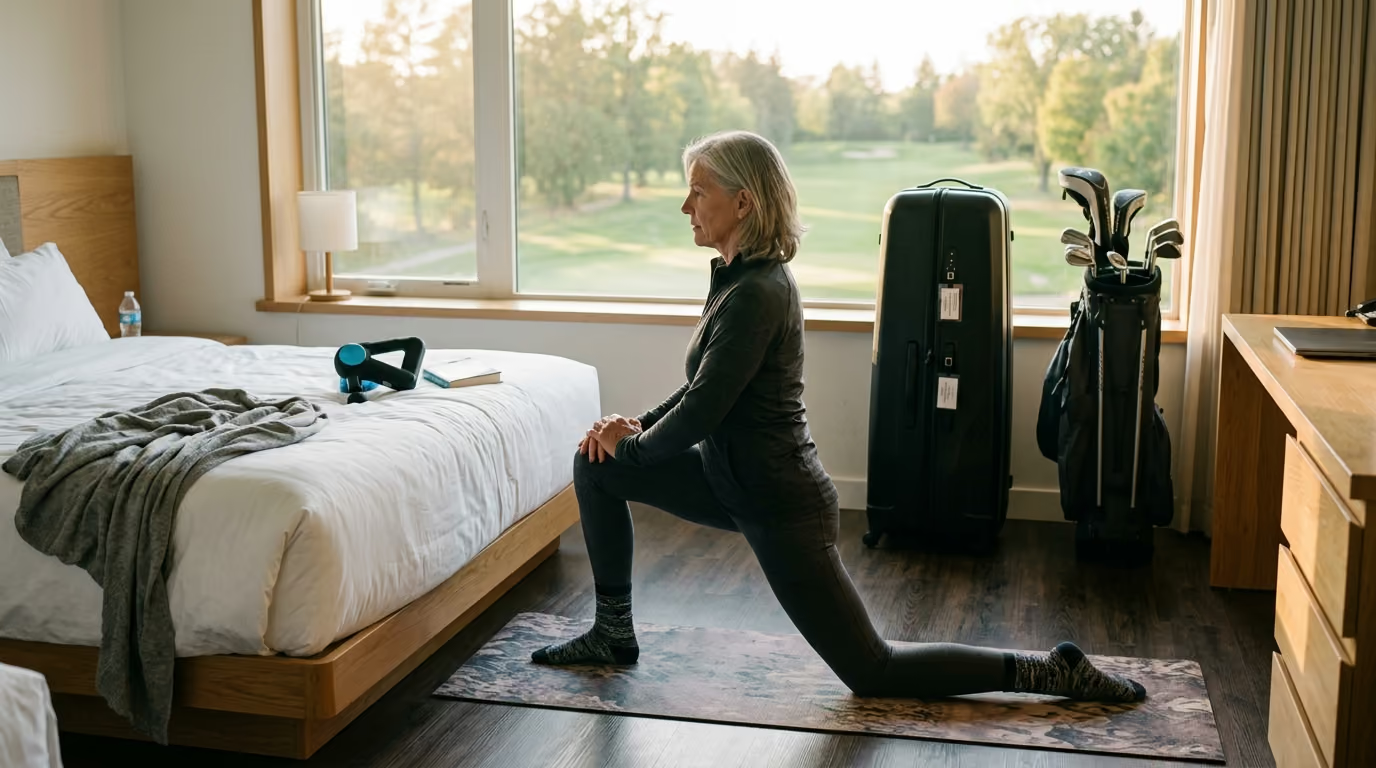
A dedicated pre-round mobility routine warms up your key joints and muscles so you can prevent injury and swing freely from the first tee.




A pre-round mobility framework is a structured sequence of active movements designed to prepare your muscles and joints for the physical demands of the golf swing. It is not a intense workout that leaves you tired before you play. It is also not a series of long, static stretches where you hold a single position for several minutes. Instead, this framework uses targeted movements to increase your core body temperature. It activates key muscle groups and lubricates your joints so you can swing freely from your very first shot.
Many golfers over forty make the mistake of using their first few holes as a physical warm-up. This often leads to poor golf shots, stiff muscles, and a higher risk of injury. A proper pre-round routine prepares your body before you ever step onto the first tee. By dedicating fifteen minutes to a specific sequence, you can protect your back, increase your distance, and play pain-free golf for many years.
You arrive at the golf course thirty minutes before your tee time. You pay your green fees, grab your gear, and walk straight to the first tee box. The weather is cool, and your muscles feel tight from the drive to the course. You pull your driver out of your bag, take two quick practice swings, and tee up your ball.
You take a full backswing and try to hit a powerful drive down the fairway. Instead of a smooth swing, you feel a sharp pinch in your lower back. Your hips do not rotate, your shoulders stop turning early, and the ball slices deep into the right trees. You spend the next four holes trying to stretch your back while walking down the fairway.
This common scenario is not caused by a bad swing path or a poor golf club. It is the direct result of a cold, stiff body trying to perform a high-speed rotational movement. Your body is not ready to turn at ninety miles per hour without preparation. When your joints are stiff, your swing is restricted, which forces other parts of your body to overcompensate.
This physical limitation often leads to early fatigue on the back nine. It can also cause chronic pain that keeps you off the golf course for weeks. Preparing your body with a structured sequence helps you avoid these first-tee struggles. It allows you to find your natural tempo and rhythm immediately.
To understand why a warm-up is necessary, you must look at how the human body ages. After the age of forty, your muscles naturally begin to lose mass and strength. This process is called sarcopenia, and it affects your power and stability. At the same time, the connective tissues around your joints lose their elasticity.
The synovial fluid that lubricates your joints also decreases as you get older. This reduction in fluid leads to the morning stiffness that many mature golfers feel. Without a physical warm-up, your joints remain dry and tight during your initial swings.
The golf swing relies on a physical concept called the mobility-stability cross-pattern. This concept shows that your body functions as a stack of alternating joints. Your ankles must be mobile, your knees must be stable, and your hips must be highly mobile. Above your hips, your lower back must be stable, while your mid-back must be highly mobile.
According to research from the Titleist Performance Institute, a standard golf swing requires sixty degrees of internal hip rotation. It also requires at least forty-five degrees of rotation in your thoracic spine, which is your mid-back. If your hips and mid-back are tight, your body will look for rotation elsewhere. It usually forces your lower back to twist to complete your backswing.
Your lower back is designed for stability, not rotation. Forcing your lower back to turn causes micro-tears in the muscles and spinal discs. This is the primary cause of golf-related lower back pain in older players. You can learn more about protecting your joints by reading our articles on injury prevention.
Scientific studies prove that dynamic movement is far better than static stretching before active sports. Research published in the Journal of Strength and Conditioning Research shows that static stretching can reduce your clubhead speed by over four percent. It can also decrease your overall driving accuracy by thirty-one percent because it relaxes your muscles too much.
A dynamic warm-up increases your driving distance by over two percent by improving muscle coordination. Using active movements prepares your nervous system to fire your muscles quickly and powerfully.
The RAMP framework is a highly structured method used by physical therapists and sports scientists. It organizes your warm-up into four distinct phases that build upon each other. This systematic approach prepares your body for the physical demands of golf without causing fatigue.
The first phase is the Thermal phase, which lasts from minute zero to minute three. The goal of this phase is to raise your core body temperature and increase blood flow to your muscles. It gently wakes up your cardiovascular system and starts the flow of synovial fluid in your joints.
The second phase is the Mobility phase, which takes place from minute four to minute nine. This phase focuses on unlocking the three most critical areas for golfers. These areas are your hips, your mid-back, and your shoulders. You perform active movements that take these joints through their full range of motion.
The third phase is the Activation phase, which lasts from minute ten to minute twelve. This phase focuses on waking up the muscles that stabilize your body during the swing. You will target your glutes, your abdominal muscles, and your shoulder blade stabilizers. Activating these muscles helps prevent injury by securing your posture.
The fourth phase is the Potentiation phase, which takes place from minute thirteen to minute fifteen. This final phase bridges the gap between your warm-up and your actual golf swing. You use a golf club to perform movements that gradually increase in speed. This prepares your brain and muscles for the explosive forces of the first tee shot. You can read about building long-term physical durability on our performance page.
This section provides the exact exercises you need for the fifteen-minute framework. Perform each movement slowly and control your breathing throughout the routine. Focus on one small movement at a time to get the best results.
Begin your warm-up with three simple movements to raise your body temperature. You do not need any equipment for these exercises.
First, perform Deep Diaphragmatic Breathing. Stand tall with your feet shoulder-width apart and place your hands on your lower ribs. Inhale deeply through your nose for four seconds. Focus entirely on expanding your lower rib cage outward in all directions. Exhale slowly through your mouth for six seconds while relaxing your shoulders down. Repeat this breathing pattern for one minute to calm your nervous system and oxygenate your muscles.
Second, perform slow High Knees in Place. Stand with your feet together and raise your posture. Lift your left knee toward your chest until your thigh is parallel to the ground. Lower your left foot slowly to the floor. Now, lift your right knee in the same controlled manner. Continue alternating legs for one minute to increase blood flow to your lower body.
Third, perform Shoulder and Hip Circles. Stand on your right leg and hold onto a golf cart or wall for balance. Lift your left foot slightly off the ground. Focus entirely on circling your left hip outward in a smooth, circular motion. Perform five circles outward, then five circles inward. Switch to your right leg and repeat the process, then roll your shoulders backward ten times to loosen your upper body.
This phase unlocks your joints to allow for a full turn. These movements target the exact rotational demands of the golf swing.
First, perform the Half-Kneeling Hip Flexor Stretch with Rotation. Find a soft patch of grass and step your right foot forward into a lunge. Lower your left knee to the ground so you are kneeling. Keep your torso upright and tuck your pelvis slightly. Focus entirely on turning your trail hip forward until you feel a gentle stretch in the front of your left thigh. Extend your arms in front of you, then slowly rotate your torso to the right. Return to the center, repeat this five times, and then switch sides. This movement is excellent for golfers who sit at a desk before playing, which you can read about on our mobility page.
Second, perform the Archer Twist to open your mid-back. Stand with your feet shoulder-width apart and bend your knees slightly. Extend both arms straight out in front of your chest with your palms touching. Keep your hips facing forward and do not let them turn. Draw your left hand back along your right arm like you are pulling a bowstring. Focus entirely on sliding your shoulder blade backward as your chest opens to the left. Hold this open position for two seconds, return to the start, and complete eight repetitions on each side.
Third, perform Lateral Hip Openers to prepare your body for weight transfer. Stand with a very wide stance, with your feet wider than shoulder-width. Keep your toes pointing forward and place your hands on your hips. Shift your weight over to your right leg by bending your right knee while keeping your left leg perfectly straight. Focus entirely on pushing your weight into your right heel. Hold for two seconds, return to the center, and shift your weight to your left side. Repeat this side-to-side movement ten times.
Now you must turn on the muscles that support your spine. This phase uses your body weight to build stability.
First, perform Standing Glute Squeezes to activate your hip extensors. Stand with your feet hip-width apart and place your hands on your lower back. Shift your weight onto your left leg. Tap your right toe on the ground slightly behind you. Focus entirely on squeezing your right glute muscle as hard as you can for three seconds. Relax the muscle, repeat this ten times, and then switch to your left glute. Activating these muscles helps prevent your lower back from taking the brunt of your swing forces, which is key for strength.
Second, perform the Standing Core Lock. Stand in your standard golf posture with your knees slightly bent. Cross your arms over your chest and hold your shoulders. Take a deep breath in, then exhale all the air from your lungs. Focus entirely on pulling your belly button toward your spine to brace your midsection. Hold this core contraction for ten seconds while breathing shallowly. Complete three rounds of this ten-second hold to prepare your midsection for swing rotation.
The final phase uses your golf club to transition into actual swing movements. Start slowly and build speed gradually.
First, perform Slow-Motion Swings with your mid-iron. Hold the club across your shoulders and assume your golf posture. Turn your shoulders back slowly to complete a mock backswing. Focus entirely on feeling your lead foot plant firmly into the ground. Turn your hips forward to complete a slow downswing. Complete five of these slow-motion swings to establish your balance.
Second, perform Graduated Speed Swings. Hold the club normally and take your stance. Swing the club back and through at fifty percent of your maximum speed. Repeat this three times, focusing on your rhythm. Increase your speed to seventy-five percent for three more swings. Finally, perform three swings at ninety percent speed. Focus entirely on releasing your hips on the follow-through to finish in a balanced stance.
Even with a good warm-up, slow play can cause your muscles to cool down during a round. If you find yourself waiting on a tee box for ten minutes, your body will start to stiffen. You can use two quick movements to keep your joints loose without leaving the tee box.
The first movement is the Golf Cart Hip Opener. Stand facing the side of your golf cart or a sturdy bench. Place your right foot up on the cart step or bumper. Keep your left foot on the ground with your toes pointing straight ahead. Lean forward slightly from your hips while keeping your back straight. Focus entirely on hinging your hips backward until you feel a deep stretch in your glutes. Hold this position for fifteen seconds, then switch legs to keep your hips active.
The second movement is the Standing Torso Turn. Stand tall and place your driver behind your back. Loop your elbows around the shaft of the club to hold it flat against your lower back. Keep your feet wide and your knees slightly bent. Focus entirely on turning your rib cage from side to side while keeping your hips completely still. This movement separates your upper body from your lower body, which keeps your thoracic spine loose. Perform ten smooth turns on each tee box where play is slow to preserve your swing range.
Many golfers try to prepare for their rounds using outdated or harmful habits. Recognizing these mistakes can protect your body from unnecessary strain.
The first mistake is the Range Rat Fallacy. This occurs when a golfer arrives at the course and immediately hits fifty balls with their driver. They believe that hitting ball after ball is a proper physical warm-up. In reality, hitting balls with cold muscles only reinforces restricted movement patterns. It forces your body to compensate for its stiffness, which often leads to swing flaws and early muscle strain. You should always perform your physical mobility routine before you swing a golf club.
The second mistake is performing Static Toe Touches. Many players bend over at the waist and hold their toes to stretch their hamstrings. This static stretch can irritate your sciatic nerve and place high pressure on your spinal discs. It also temporarily reduces the spring-like quality of your tendons, which decreases your swing power. Replace all static stretches with active, dynamic movements that keep your body moving.
The third mistake is Ignoring Hip Rotation during practice turns. Golfers often stand on the tee and swing two heavy clubs at once. As they swing, they keep their feet glued to the ground and twist their backs violently. This practice places massive torsional stress on your lower back. If you swing a club to warm up, always let your trail heel lift off the ground. Focus entirely on rotating through your hips to protect your spine from excessive twisting.
Your physical movement is highly influenced by the gear you wear and use. Making smart equipment choices can support your mobility and reduce physical fatigue during your round.
First, look closely at your golf shoes. Traditional metal or heavy plastic spikes lock your feet firmly into the turf. While this provides traction, it also prevents your feet from rotating naturally during the swing. This lack of foot movement increases the torque and twisting forces on your knees and hips. Spikeless golf shoes allow for a small amount of natural foot rotation, which protects your joints. If you have stiff hips, switching to spikeless shoes can make your swing feel much smoother.
Second, evaluate your golf grips. If you suffer from arthritis or hand stiffness, you may be gripping your clubs too tightly. A tight grip causes tension to travel up your forearms into your shoulders and neck. This tension restricts your shoulder turn and shortens your swing. Installing midsize or jumbo grips on your clubs can help. Larger grips allow you to hold the club securely with less hand pressure, which relaxes your upper body.
Third, consider how you transport your clubs. Carrying a heavy bag over eighteen holes causes spinal compression and muscular fatigue. This extra strain makes it very difficult to maintain your posture and mobility on the back nine. Using a push cart or riding in a motorized cart preserves your energy. It keeps your spine tall and allows your muscles to stay loose throughout the entire round. You can read more about recovery and physical maintenance on our recovery page.
Rotational forces can place high stress on artificial joints. If you have joint replacements, you should focus on controlled, stable movements rather than deep stretches. Always wear flexible, spikeless shoes to allow your feet to slide slightly, which reduces joint torque. Replace deep lunges with gentle step-downs to build stabilizing strength around the joint. Focus entirely on turning your torso within a comfortable, pain-free range of motion.
Golfers with spinal conditions must prioritize segmental mobility above and below the affected area. If your lower back is fused, do not try to force twisting movements in your spine. Instead, focus your entire warm-up on improving the mobility of your hips and ankles. Unlocking your hips allows you to turn your whole body as a single unit during the swing. This prevents your fused spine from absorbing the rotational forces of your swing.
Yes, cold weather reduces the elasticity of your muscles and slows down joint lubrication. When the temperature drops below fifty degrees, you should double the length of your Thermal phase. Spend at least six minutes walking briskly or performing high knees before you begin your mobility movements. This extra time ensures that your core temperature rises enough to make your connective tissues pliable.
You can perform the first three phases of this framework in your living room before you leave. However, the positive physical changes from a warm-up begin to fade after twenty minutes of sitting. If your drive to the golf course is longer than fifteen minutes, your muscles will cool down. If you warm up at home, perform a quick three-minute version of the Thermal phase when you arrive at the course to reactivate your body.
The secret to a long, pain-free playing career is consistent, active physical preparation before every single round you play.
Follow Golfergy for practical insights on performance, mobility, recovery and healthy ageing. Stay connected for new articles, research-led guidance and ideas to help you play better for longer.


Explore practical resources on performance, recovery, mobility and golf longevity.
Read the Blog