Better swing mechanics seem like the fastest way to lower scores, but deep nightly sleep actually drives the physical recovery and focus you need.




Many golfers spend hours on the driving range trying to fix a slice. They buy expensive drivers and try new training aids to gain a few extra yards. Yet, they often overlook the most powerful performance booster available. That booster is high-quality sleep.
If you have ever searched for ways to fix a stiff golf swing in the morning, the answer might not be a new stretching routine. The real solution often lies in how you slept the night before. Sleep is not just passive rest for the brain and body. For golfers over the age of forty, sleep is the absolute foundation of physical recovery, joint mobility, and mental focus.
Arthur stood on the first tee, his hands gripping his driver with white knuckles, feeling the morning chill in his lower back. He had spent the previous evening searching his phone for ways to warm up a stiff back. The search results promised quick stretches, but his body refused to cooperate. His tee shot started right, sliced further into the trees, and left him with a difficult recovery shot.
Arthur was fifty-four years old and played golf twice a week. He had slept barely five hours the night before because of a late dinner and some pre-round anxiety. As he walked down the fairway, his lower back felt like a tight board. His hips refused to turn, forcing him to swing almost entirely with his arms. By the fourth hole, he had already carded two double bogeys.
On the green, his struggles continued. He stood over a eight-foot par putt but could not gauge the speed of the grass. His depth perception felt slightly off, making the cup look smaller than usual. He struck the putt too hard, sending the ball three feet past the hole. The ensuing comeback putt missed on the high side, leading to a frustrating three-putt.
Arthur felt his frustration turn into anger. He could not shake off the bad holes, carrying his irritation to the next tee. His focus was gone, his muscles were tense, and his swing felt completely out of rhythm. Like many recreational golfers, Arthur blamed his swing mechanics. In reality, his issues started long before he arrived at the course. His poor play was the direct result of sleep deprivation.
To understand why Arthur struggled, we must look at how the human body restores itself during the night. Sleep is divided into distinct stages that repeat in cycles. Each stage plays a specific role in keeping a golfer healthy, mobile, and sharp. For mature players, two of these stages are critical for longevity on the course.
The first critical stage is Deep Sleep, also known as Slow-Wave Sleep. During this phase, the brain releases a large surge of Growth Hormone. This hormone is the body's primary tool for physical repair. It acts like a construction crew, rebuilding tissues and healing micro-tears in the muscles.
[Awake] ──> [Light Sleep] ──> [Deep Sleep (Muscle Repair)] ──> [REM Sleep (Mental Focus)]
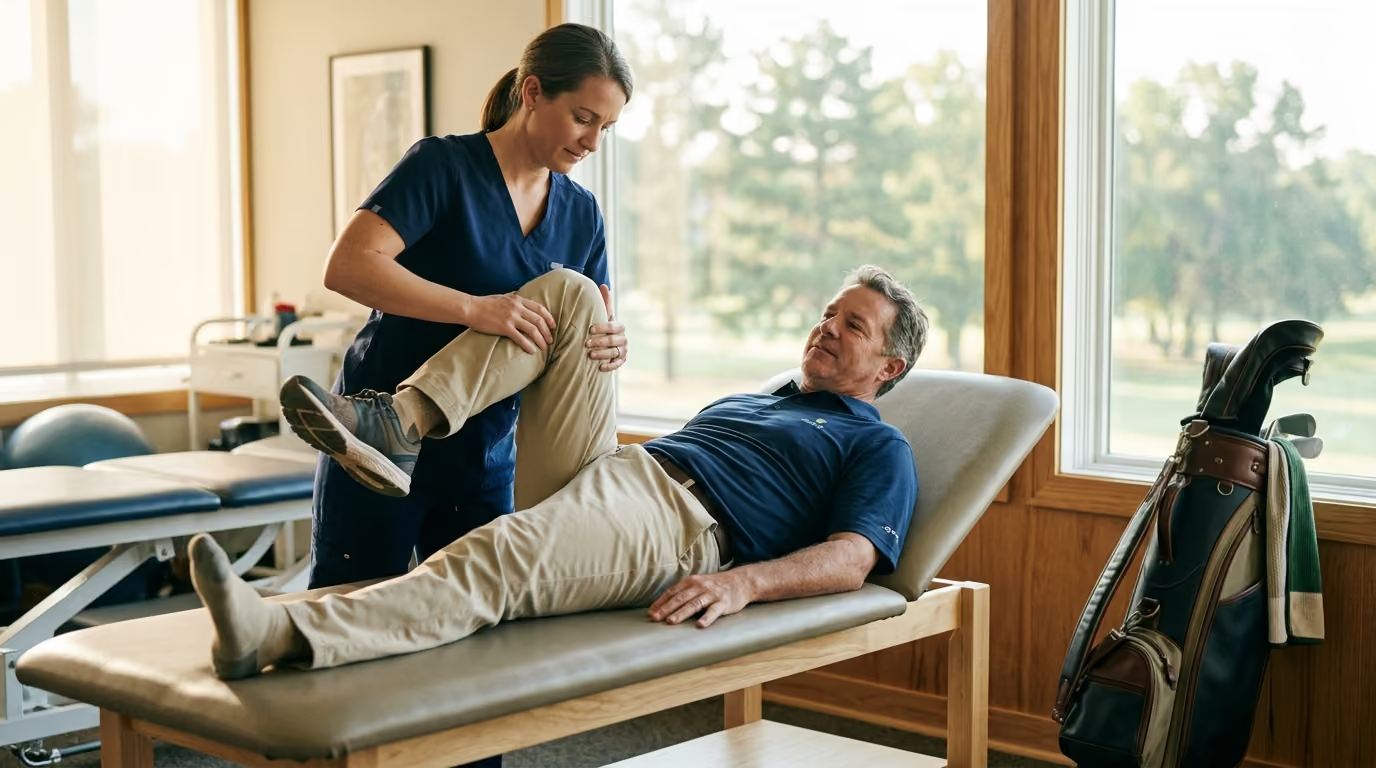
The golf swing is a high-torque movement that places intense stress on the body. It forces the obliques, glutes, and lower back muscles to stretch and contract rapidly. Deep sleep is when the body repairs this damage, helping you avoid chronic pain. Without enough deep sleep, your muscles remain tight, which increases your risk of injury. Utilizing proper athletic recovery protocols is essential to keep your body moving freely.
The second critical stage is REM sleep, which stands for Rapid Eye Movement. REM sleep is where the brain processes mental information and consolidates motor memory. When you practice a swing change or learn how a specific green breaks, your brain stores that information during REM sleep. It essentially replays the physical movements you practiced during the day.
This consolidation process cements the muscle memory into your nervous system. If you cut your sleep short, you interrupt this mental filing process. You will find it much harder to repeat a new swing change on the course. This lack of mental restoration makes preventing golf injuries much more difficult because your coordination declines.
When you do not get enough sleep, your golf game suffers in very specific ways. These are not minor changes in feeling. They are measurable, physical deficits that alter your swing mechanics and your score.
One of the most immediate effects of sleep deprivation is an increase in muscle tension. Research shows that sleep loss is linked to a twelve to eighteen percent increase in average grip pressure. When you are tired, your sympathetic nervous system is highly active, putting your body in a mild fight-or-flight state.
This systemic tension causes you to squeeze the golf club much too tightly. High grip pressure prevents your forearms from rotating naturally during the swing. It locks up your wrists, which stops the club head from releasing at impact. Consequently, you will likely block the ball to the right or hook it wildly to the left.
Sleep loss also damages your fine motor skills and your spatial awareness. Research published in the Journal of Sleep Research shows that sleep restriction significantly hurts putting performance. Specifically, tired golfers struggle with lateral displacement and distance misalignment.
Tired Brain ──> Poor Depth Perception ──> Inaccurate Putt Speed & Poor Alignment
Lateral displacement means you cannot aim the face of your putter accurately at your target. Distance misalignment means your touch and speed control are compromised. A sleep-deprived brain cannot accurately judge depth or distance. This is why tired golfers often leave putts short or blow them past the hole. The study noted that morning-type players suffer the most when their sleep is cut short for early tee times.
A tired brain is highly emotional and reactive. Research from UC Berkeley shows that sleep-deprived individuals experience a sixty percent increase in amygdala reactivity. The amygdala is the area of the brain responsible for processing fear, anger, and stress.
On the golf course, this means you lose the ability to handle bad breaks. If you hit a ball into a bunker, a well-rested brain can accept the mistake and focus on the next shot. A tired brain will react with anger, frustration, and anxiety. This emotional spike floods your body with cortisol, which further tightens your muscles and ruins your tempo.
Many golfers use a common method to help themselves sleep before a round. They will drink a couple of beers or a glass of whiskey in the evening. They believe this alcohol helps them relax and fall asleep faster. This is one of the most common mistakes in athletic recovery.
Alcohol does not produce natural sleep. Instead, it sedates the brain, which is a process of knocking out brain cells rather than resting them. Natural sleep requires complex hormonal and neurological transitions. Alcohol disrupts these transitions entirely.
Even one or two drinks can reduce your REM sleep significantly. It can also suppress your deep sleep to near zero in the first half of the night. While you might be unconscious, your body is not recovering. Your liver is busy processing the alcohol, which keeps your core temperature high and your heart rate elevated.
We can measure this lack of recovery using modern wearable technology. Two key metrics tell us exactly how recovered a golfer is. These are Resting Heart Rate and Heart Rate Variability.
Alcohol Consumption ──> High Resting Heart Rate ──> Low Heart Rate Variability ──> Poor Recovery Score
Resting Heart Rate is the number of times your heart beats per minute while at rest. A lower resting heart rate means your heart is strong and efficient. Heart Rate Variability, or HRV, is the variation in time between each consecutive heartbeat. A higher HRV indicates that your nervous system is balanced, relaxed, and ready to perform.
When you drink alcohol or sleep poorly, your Resting Heart Rate rises and your HRV drops. This balance is critical for emotional control and technical precision. Data from PGA Tour athletes showed that every ten-point increase in recovery score led to an average of half a stroke fewer per round. Over a four-day tournament, that equals a two-stroke difference. Focus on these metrics to start seeing golf performance improvements on your scorecard.
If you find yourself on the first tee after a poor night of sleep, you need an immediate plan. You cannot rebuild lost sleep in a few minutes, but you can manage the physical deficits. Use this three-step protocol to salvage your round.
First, adjust your warm-up routine to address your stiff muscles. Do not rush to the driving range and start swinging hard. Spend ten minutes doing gentle, dynamic movements like arm circles, torso twists, and slow bodyweight squats. This helps lubricate your joints and increases blood flow to your tight muscles.
Second, simplify your swing thoughts. A tired brain cannot process complex mechanical instructions. Instead of worrying about your wrist angle or your shoulder turn, focus on one small movement. Focus entirely on turning your trail hip.
This simple cue allows your body to rotate without overwhelming your mind. It encourages a natural turn and prevents you from swinging with just your arms.
Third, adjust your nutritional strategy during the round. Avoid the temptation to drink multiple cups of coffee or energy drinks. This will only increase your muscle tension and worsen your grip pressure. Instead, drink plenty of water and eat small, balanced snacks like nuts or fruit every four holes to keep your energy stable.
To play your best golf consistently, you need a long-term sleep strategy. This is especially true for golfers over forty who want to protect their joints and maintain their distance. A good routine focuses on building sustainable habits.
Many people think that getting eight hours of sleep is all that matters. However, research shows that sleep consistency is actually more important for performance. Sleep consistency means going to bed and waking up at the same time every day.
This consistency trains your body's internal circadian clock. When your schedule is consistent, your body knows when to release cortisol to wake you up. It also knows when to release melatonin to help you fall asleep. This rhythm ensures that you spend more time in deep sleep and REM sleep.
If you have a multi-day golf tournament or a trip coming up, you can use a technique called sleep extension. This involves increasing your daily sleep duration in the weeks leading up to the event. For example, you might increase your sleep from seven hours to nine hours.
[Normal Sleep: 7 Hours] ──> [Extension Period: 9 Hours (3 Weeks)] ──> [Result: +9% Motor Skill, +15% Speed]
Research from Stanford University on varsity athletes demonstrated that sleep extension has massive benefits. After three weeks of extending sleep, athletes improved their fine motor skills by nine percent. Their reaction times also improved by fifteen percent. By banking sleep ahead of time, you build a buffer against the fatigue of travel and early tee times. Focus on these habits to support your joint mobility routines and keep your swing fluid.
Many golfers try to improve their sleep but make critical mistakes. These errors can ruin your recovery even if you spend eight hours in bed.
The most common mistake is cutting sleep short to make an early morning tee time. If you normally wake up at 7:00 AM, waking up at 5:00 AM for a 7:15 AM round causes problems. This sudden shift triggers sleep inertia, which is that groggy feeling that lasts for hours.
To avoid this trap, do not wake up hours earlier than normal unless you went to bed early. If you must play early, try taking a twenty to thirty-minute nap in the afternoon. The best time for a nap is between 1:00 PM and 3:00 PM. This short rest restores your focus without interfering with your sleep that night.
Many golfers rely on caffeine to get through a round, especially on the back nine. They will buy an energy drink or a cup of coffee at the turn. This is a major mistake because of how caffeine behaves in your body.
Caffeine Intake: 2:00 PM ──(5-6 Hour Half-Life)──> 25% Active in System: Midnight
Caffeine has a half-life of five to six hours. This means that if you drink a coffee at 2:00 PM, one-quarter of that caffeine is still active in your system at midnight. It blocks your adenosine receptors, which are the chemicals that make you feel sleepy. To protect your sleep quality, set a strict caffeine cutoff at 12:00 PM or 2:00 PM.
Using your phone, tablet, or television in the hour before bed is another common pitfall. These screens emit a high amount of blue light. This specific wavelength of light mimics morning sunlight.
When this light hits your eyes, it tricks your brain into thinking it is daytime. Your brain stops producing melatonin, which is the hormone that signals sleep. This delays your entry into deep sleep, leaving you feeling tired the next morning. Try reading a physical book or listening to quiet music before bed instead.
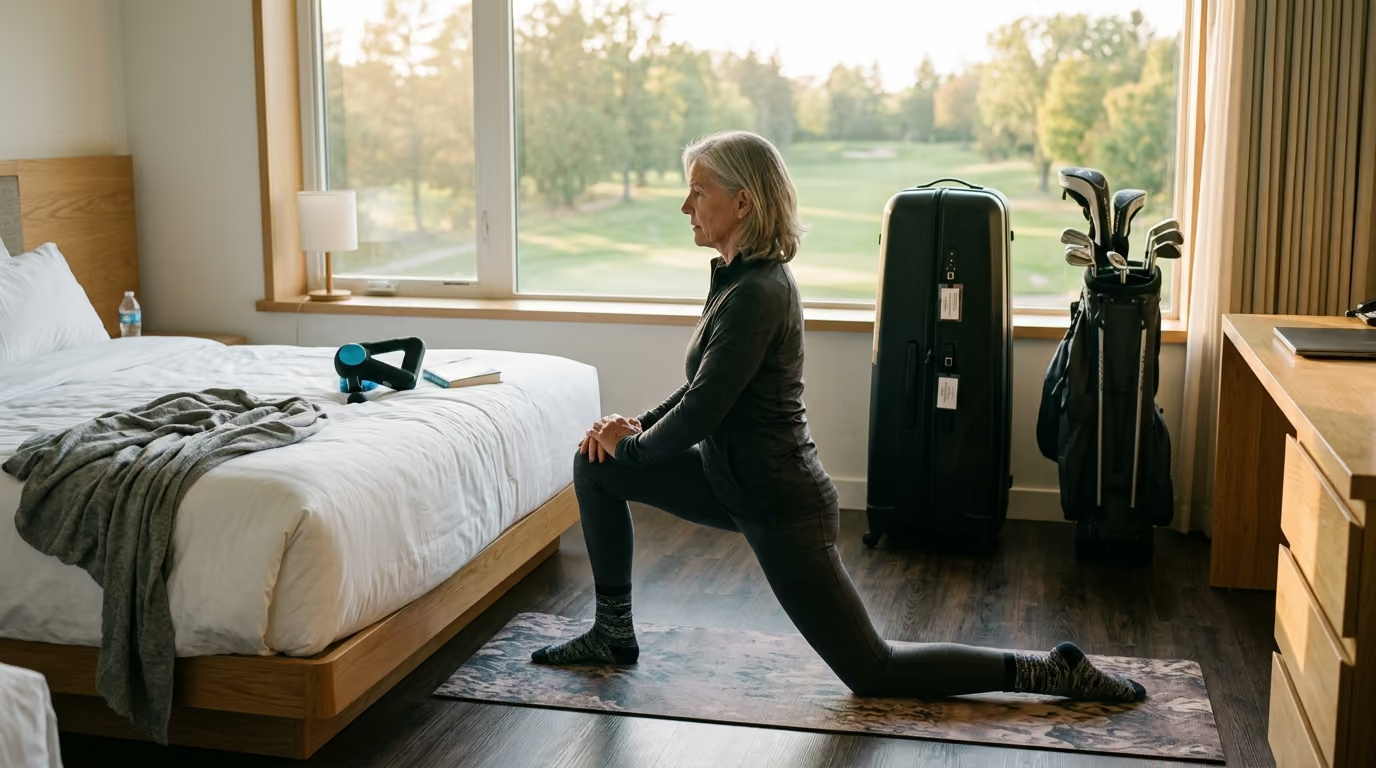
Playing golf on a trip is highly enjoyable, but hotel rooms present major challenges to your recovery. Different beds, noisy hallways, and poor climate control can ruin your sleep. Use this checklist to set up a sleep-friendly environment in any hotel.
First, set the room temperature between sixty-five and sixty-eight degrees Fahrenheit. Your body must drop its core temperature to fall asleep and stay asleep. A warm hotel room will keep you awake and reduce your deep sleep.
Second, eliminate all light leaks. Hotel curtains often have a gap in the middle that lets in bright light from the parking lot. Bring a few bulldog clips or chip clips to pin the curtains shut.
Hotel Room Setup Checklist:
Place a rolled-up towel at the base of the entry door to block light from the hallway. You can also use black electrical tape to cover blinking lights on the television or air conditioner.
Third, use sound engineering to block out noise. Hotel hallways are full of slamming doors, loud talkers, and elevator dings. Use a portable fan or download a white noise app on your phone to mask these sounds.
Fourth, use circadian anchoring to keep your body clock on track. Wake up at your normal time, even on travel days. Go outside and get fifteen minutes of natural sunlight in your eyes as soon as possible. This light exposure sets your brain's clock and helps you feel alert.
If you are traveling across multiple time zones, start shifting your schedule early. Move your bedtime and wake time by fifteen to thirty minutes each day before you leave. If you are traveling across more than three time zones, allow one full day of adjustment for every hour of time zone difference.
Using these travel strategies along with your favorite golf longevity resources will keep you competitive on any golf trip. Do not let hotel beds affect your physical preparation. You might also consider bringing your own pillow from home to keep your neck and shoulder alignment consistent.
Your sleep quality dictates your swing quality, your emotional control, and your physical longevity on the golf course.
To implement these changes and see results on the scorecard, follow this weekly checklist.
Follow Golfergy for practical insights on performance, mobility, recovery and healthy ageing. Stay connected for new articles, research-led guidance and ideas to help you play better for longer.


Explore practical resources on performance, recovery, mobility and golf longevity.
Read the Blog