
Golfers often blame aging for lost swing power, but poor sleep architecture is usually the true driver of fatigue and physical breakdown.




Many golfers spend thousands of dollars on new clubs and swing coaches. They practice on the range for hours and buy the latest training aids. Yet, they often overlook the most powerful performance builder available. This builder is completely free and requires no physical effort. It is high-quality sleep.
Many players over forty view sleep as simple downtime. They believe that physical decline is just a natural part of ageing. However, poor sleep architecture is often the real culprit behind lost distance, poor focus, and chronic joint pain. To maintain your game, you must look at how your body repairs itself at night.
In our experience, neglecting sleep is the single largest barrier to athletic longevity. This comprehensive guide analyzes how sleep cycles repair physical tissues and maintain your focus on the course. We will examine the science of sleep and provide practical steps to protect your body.
Consider a typical Saturday afternoon round of golf. You have played solid golf for the first fourteen holes. Your swing felt smooth, and your drives found the fairway. Suddenly, as you stand on the fifteenth tee, something shifts. Your swing starts to feel heavy and slow.
Your lower back feels stiff when you try to turn. You try to compensate for this stiffness by swinging harder with your arms. Consequently, your tee shot slices deep into the right trees. This is the beginning of the late-round collapse.
On the green, your physical struggles continue. You face a simple five-foot putt for par. You line it up carefully, but your hands feel slightly unsteady. Your stroke is sudden and jerky. The ball misses the cup on the low side.
This is not a sudden loss of golf skill. It is the physiological consequence of an empty physical tank. Your nervous system is failing to coordinate your muscles. Your joints are stiff because they did not receive adequate repair the night before.
Along with physical stiffness, your decision-making starts to suffer. You find it hard to calculate the wind speed. You struggle to choose the right club for an approach shot over water. Your brain feels slow and tired.
This mental fatigue is directly tied to your sleep history. When you lack rest, your brain cannot focus on complex tasks. You make poor strategic choices that add strokes to your card. This scenario happens to thousands of mature golfers every single weekend.
Sleep is not a flat state of unconsciousness. It is a highly active process divided into predictable blocks. Each night, your brain moves through repeating cycles that last ninety to one hundred and twenty minutes. These cycles are made of non-rapid eye movement sleep and rapid eye movement sleep.
The balance of these phases changes as the night progresses. The first half of your night is dominated by deep NREM sleep. The second half of your night contains mostly REM sleep. Both phases are vital for different aspects of your golf game.
Deep NREM sleep, specifically stage three, is the primary window for physical recovery. During this stage, your body directs blood flow away from the brain. It sends this oxygen-rich blood directly to your muscles and joints. This phase helps repair the micro-tears in your muscle fibers from your last round.
Without enough stage three sleep, your muscles remain sore and weak. Your body cannot rebuild the tissues that you stressed during your swing. This leads to chronic fatigue and a higher risk of injury. Mature golfers must protect this deep sleep window.
Conversely, REM sleep is where your brain processes motor patterns. When you practice a new swing change during the day, your brain stores those movements during REM sleep. It converts short-term physical actions into long-term muscle memory.
If you cut your sleep short, you lose this critical window. You will find it much harder to repeat your swing changes the next day. Your brain simply did not have time to cement the movement patterns. This makes your practice sessions much less effective.
Many golfers sleep for eight hours but still wake up tired. This happens because their sleep cycles are fragmented. Waking up during the night interrupts the natural flow of NREM and REM states. Your body must start the cycle over again.
This fragmentation prevents you from spending enough time in deep stage three sleep. You lose the physical repair benefits of a full night of rest. Managing your sleep environment is key to preventing these interruptions.
For golfers over forty, joint health is a major priority. Many players spend money on compression boots, massage guns, and joint supplements. However, these tools cannot match the natural healing power of your body. The ultimate source of tissue repair is human growth hormone.
Your body secretes up to seventy percent of its daily growth hormone in a single massive pulse. This pulse occurs during your first cycle of deep slow-wave sleep. This hormone is vital for collagen synthesis, tendon remodeling, and bone health.
Without this nocturnal hormone pulse, your tendons become brittle. Your recovery from round to round slows down significantly. In our experience, no external recovery tool can compensate for a missed growth hormone pulse. You must allow your body to produce this hormone naturally.
When I developed medial epicondylitis, commonly known as golfer's elbow, I thought I needed complete rest. Six weeks off the course did nothing to help. I finally learned that active recovery with a flexbar was the actual solution. It taught me that treating golf injuries requires loading the tissue properly, not just sitting on the couch and hoping for the best.
However, that proper loading is useless if your body lacks the chemical building blocks to rebuild. Without deep sleep, your body cannot synthesize the collagen needed to repair those elbow tendons. You remain stuck in a cycle of chronic inflammation and pain.
This is why sleep is the ultimate tool for injury prevention. It provides the hormonal environment needed to heal. If you want to protect your elbows, shoulders, and knees, you must prioritize slow-wave sleep.
Deep sleep also allows your glymphatic system to clean your brain. This system washes away cellular waste products that build up during the day. This cleansing process only happens when you are in deep sleep.
Without this waste removal, you wake up with mental fog. Your reaction times slow down. Your ability to read greens and judge distances decreases.
Your body operates in one of two major states. The first is the anabolic state, which focuses on growth and repair. The second is the catabolic state, which focuses on energy breakdown and stress. Sleep quality determines which state dominates your biology.
When you get enough sleep, anabolic hormones like testosterone remain high. These hormones keep your muscles strong and your joints flexible. They help you maintain your physical strength over years of play.
If you restrict your sleep, the balance shifts dramatically. Your body enters a catabolic state. Cortisol, which is the primary stress hormone, rises rapidly. High cortisol levels break down muscle tissue and promote systemic inflammation.
This inflammatory state makes you highly vulnerable to overuse injuries. Common golf injuries like lower back strains and tendonitis thrive in a catabolic environment. Your body cannot keep up with the physical demands of the game when cortisol is constantly high.
The data on sleep restriction and injury is clear. Research from the British Journal of Sports Medicine shows that athletes sleeping fewer than eight hours face a higher risk of injury. Specifically, their injury risk is one point seven times higher than those who sleep more.
This risk escalates dramatically if you sleep only six hours. At that level, your risk of injury is four point two times higher. For a mature golfer, these numbers are too high to ignore. Protecting your sleep is the best way to stay on the course.
In a catabolic state, your body struggles with muscle protein synthesis. This is the process where your body repairs and builds new muscle tissue. When this process is impaired, you lose muscle mass and power.
This loss of muscle directly reduces your clubhead speed. You will notice a steady drop in your driving distance. No swing change can fix a loss of power caused by muscle breakdown.
Many golfers believe they can get by on six hours of sleep. They feel awake after a cup of coffee and head to the course. However, research shows that motor precision degrades long before you feel sleepy.
Sleep restriction to six hours or fewer can lower your motor precision by fifteen to twenty-five percent. This loss of coordination is highly visible on the putting green. Your hands make tiny errors that ruin your stroke.
A study published in the Journal of Perceptual and Motor Skills examined this exact issue. Researchers looked at golfers who slept only four to five hours. The players showed significant drops in putting accuracy.
They consistently misjudged the distance to the target. Their hands made micro-adjustments that pushed the ball off line. This happens because sleep deprivation slows down your central nervous system.
Your eyes struggle to read the subtle breaks in the green. Your brain cannot coordinate the small muscles in your hands and wrists. You lose the soft touch needed for delicate chip shots.
No amount of practice can fix this specific issue. In fact, research shows that extending your sleep improves precision skills more effectively than extra practice. If you want to drop shots from your scorecard, start by spending more time in bed.
Sleep loss also impairs your pre-shot routine. You become distracted by noise or other players. You forget to check the wind or the slope of the fairway.
This lack of focus leads to simple mistakes. You might choose the wrong club or hit a hurried shot. These mental errors are directly caused by a tired brain.
Your body has an internal clock known as the circadian rhythm. This clock controls your blood pressure, body temperature, and alertness throughout the day. It also affects your physical flexibility and coordination.
Understanding your circadian rhythm helps you plan your golf schedule. You can choose tee times that match your body's natural peaks. This allows you to play better and feel more comfortable.
Most mature golfers prefer early morning tee times. They like to get on the course before the crowds. However, six thirty in the morning is often the worst time for physical performance.
At this hour, your core temperature is at its lowest. Your blood pressure is rising sharply, and your coordination is still offline. Golfers often mistake being awake for being alert. Your cognitive peak and mind-body connection do not peak until around ten in the morning.
On the other hand, you can get a natural boost by playing in the late afternoon. Research shows that muscles and joints are up to twenty percent more flexible between three and six in the evening. Your lung capacity is nearly eighteen percent higher at five in the evening than in the morning.
If you struggle with stiffness, an afternoon round might be your best option. You will move easier and swing faster. You will also experience less lower back pain during the round.
Your specific sleep type, or chronotype, also plays a role. Morning-type golfers are highly sensitive to sleep loss during afternoon rounds. Their performance drops quickly as the day goes on.
If you are a morning person, you must be careful with late tee times. Make sure you rest before your round. This helps you maintain your coordination through the final holes.
If you did not sleep well last night, you can still protect your game today. You must adjust your strategy on the course. First, simplify your swing thoughts. Do not try to manage multiple technical adjustments when your brain is tired.
Instead, focus entirely on one small movement. For example, focus entirely on turning your trail hip during your backswing. This simple focus prevents your mind from getting overwhelmed. It helps you maintain a smooth rhythm.
Second, manage your physical energy. Walk at a steady, relaxed pace between shots. Avoid sudden movements that can strain cold, stiff muscles.
Take deep, slow breaths to keep your heart rate stable. This helps combat the physical stress caused by sleep loss. It also keeps your nervous system calm and controlled.
Drink plenty of water throughout the round. Dehydration makes the physical effects of sleep loss much worse. It increases joint stiffness and slows down your reaction times.
Eat small, healthy snacks every four holes. Choose foods like nuts, fruit, or beef jerky. These snacks provide steady energy without causing a sugar crash.
Manage your exposure to bright light on the course. Wear polarized sunglasses to reduce eye strain. Eye fatigue directly impacts your depth perception and balance.
Use a wide-brimmed hat to keep the sun out of your eyes. This simple step reduces the mental fatigue caused by bright sunlight. It helps you stay focused on your targets.
To secure deep sleep, you need a consistent evening routine. This habit prepares your nervous system for rest and protects your long-term Golf Longevity, Performance & Recovery. Start by managing your light exposure.
Turn off bright overhead lights two hours before bed. Use warm, dim lamps instead. Bright blue light from phones and televisions tricks your brain into thinking it is daytime. This delays the release of melatonin, which is the hormone that starts your sleep cycle.
Optimize your bedroom environment. Keep your room cool, ideally between sixty and sixty-seven degrees. A cool room helps lower your core body temperature, which is necessary for deep sleep.
Use blackout curtains to keep the room completely dark. If you travel for golf, pack a high-quality eye mask. This simple tool guarantees darkness in unfamiliar hotel rooms.
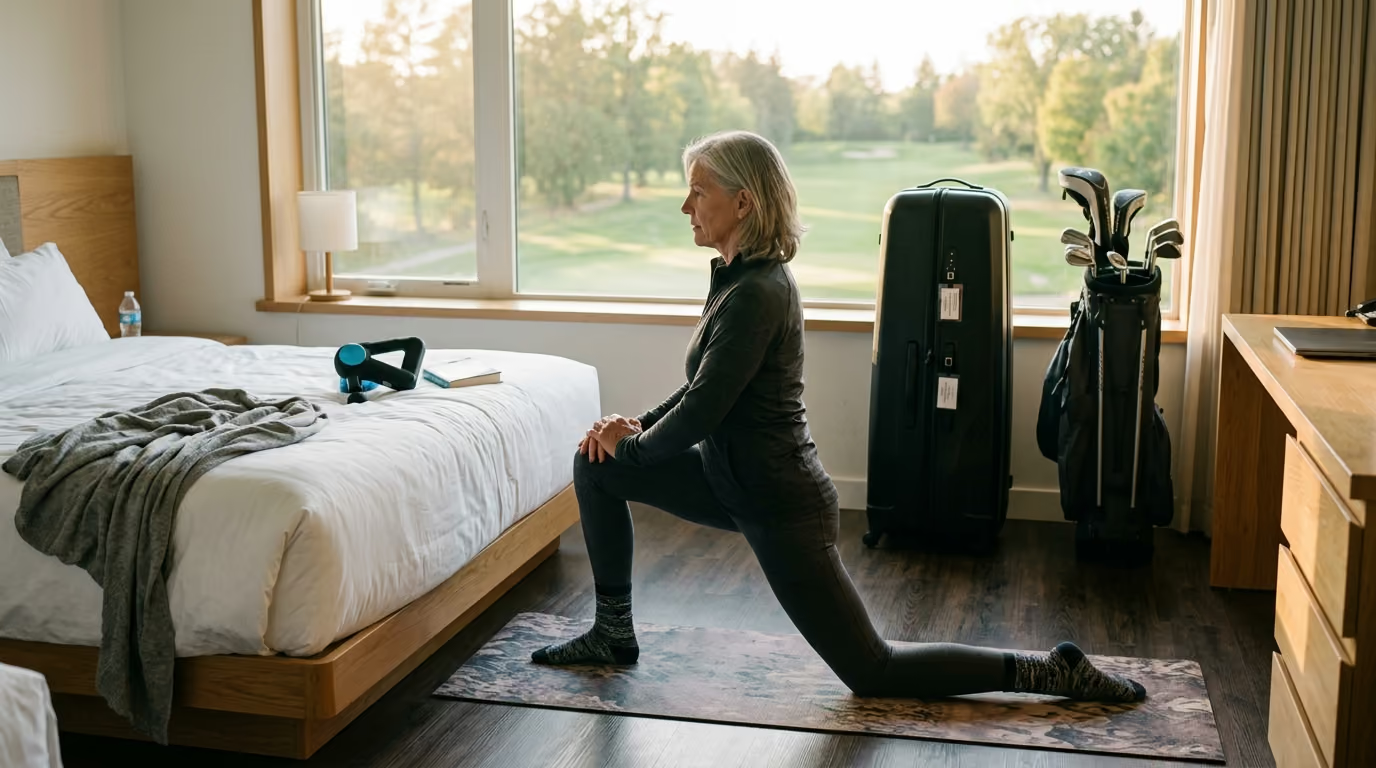
Establish a simple physical wind-down habit. Spend ten minutes doing gentle stretches. Focus on relaxing your hips, shoulders, and lower back.
These movements maintain your mobility and release physical tension. Hold each stretch for thirty seconds without bouncing. This light movement signals to your nervous system that it is safe to rest.
Go to bed and wake up at the same time every day. This consistency trains your internal clock. It makes it easier to fall asleep and wake up naturally.
Even on weekends, try to stick to your schedule. This habit prevents the physical shock of changing your sleep patterns. It keeps your recovery systems running smoothly.
Many golfers fall into common traps when trying to manage their sleep. The first trap is the weekend catch-up myth. Many players believe they can sleep five hours during the week and catch up on Saturday and Sunday.
Research shows this does not work. A study on sleep restriction simulated a busy week followed by a full weekend of sleep. The participants' pain tolerance dropped during the week.
Even after a long weekend of rest, their pain tolerance did not recover. The reduced tolerance and increased muscle soreness persisted. You cannot store sleep like money in a bank. You need consistent rest every single night.
The second trap is using alcohol as a sleep aid. Many golfers enjoy a few beers or a glass of whiskey before bed. They believe it helps them fall asleep faster.
While alcohol does act as a sedative, it ruins your sleep quality. It fragments your sleep architecture and blocks REM sleep. You will wake up feeling tired and stiff, even if you spent eight hours in bed.
Your muscles will not repair properly. Avoid alcohol for at least three hours before you go to sleep. This is crucial for protecting your joints and muscles.
The third trap is rushing to early tee times without preparation. Golfers often wake up, drink coffee, and drive straight to the course. This habits increases the risk of injury.
Your body needs time to warm up, especially after sleep loss. Arrive early to perform a dynamic warm-up. This helps raise your core temperature and lubricate your joints.
When traveling for golf, players often try to push through exhaustion. This practice stresses your nervous system and increases injury risk. Instead, use strategic light exposure to reset your clock.
Our Golf Performance, Recovery & Longevity Blog regularly covers travel strategies for golfers. If you travel east, seek bright light in the morning. If you travel west, seek bright light in the evening. This simple tool helps your circadian rhythm adapt quickly.
Your physical sleep environment deserves careful attention. A poor mattress can ruin your recovery and cause morning stiffness. If you wake up with a sore lower back, your bed may be too soft.
A mattress that is too soft does not support your hips. This causes your spine to bend unnaturally for hours. For golfers, a medium-firm mattress is usually best. It supports your spine while relieving pressure on your shoulders and hips.
Your pillow is also critical. It must keep your neck in a neutral position. If your pillow is too thick, it forces your head forward.
This strains your upper back and shoulders. You will find it harder to rotate your neck during your swing. If you travel, consider bringing your own pillow to guarantee consistent neck support wherever you play.
Keep track of your room humidity. Dry air can irritate your airway and disrupt your sleep. A small humidifier can improve your breathing and sleep quality.
These small equipment changes make a major difference in your physical recovery. They help you wake up ready for the first tee. They are just as important as the clubs in your bag.
To play your best golf and protect your joints, you must treat sleep as an active part of your training program.
Follow Golfergy for practical insights on performance, mobility, recovery and healthy ageing. Stay connected for new articles, research-led guidance and ideas to help you play better for longer.


Explore practical resources on performance, recovery, mobility and golf longevity.
Read the Blog