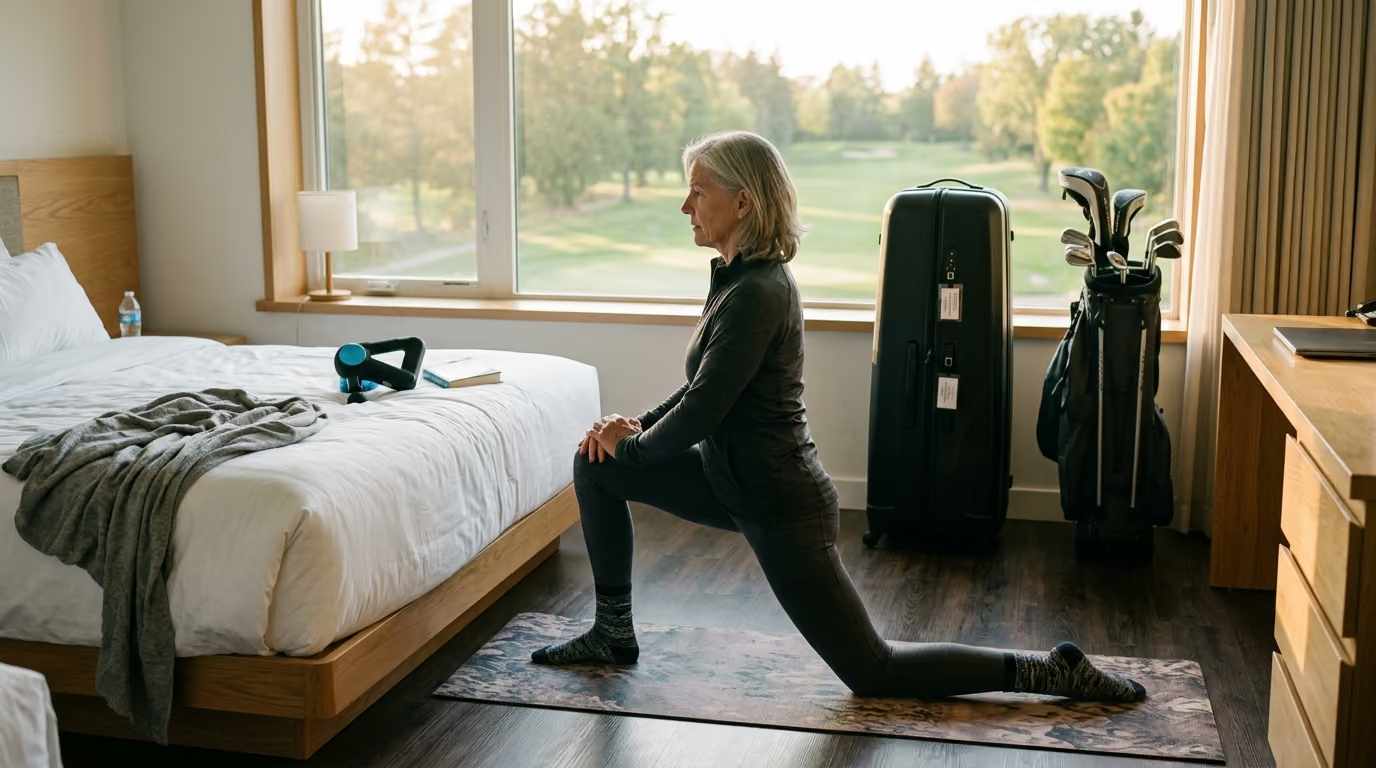

Forty years of age is often when golfers begin losing upper body control because weakened scapular muscles disrupt normal swing mechanics.




Have you ever searched online for "why does my shoulder hurt after playing golf"? Maybe you have wondered why your ball striking becomes highly inconsistent after the tenth hole. You are not alone in asking these questions. Many players over forty struggle with a loss of swing control and nagging upper body discomfort.
The true culprit is rarely a lack of talent or a bad club. Instead, the problem often lies in a pair of flat bones on your upper back. These bones are your shoulder blades, known scientifically as the scapulae.
Without proper control of these bones, your entire swing loses its foundation. This detailed guide will show you how to stabilize your shoulder blades. By doing so, you can protect your body and hit the ball with greater consistency.
To understand how your upper body moves, think of your shoulder blades as the foundation of your swing. Experts from the Titleist Performance Institute refer to this area as the foundation of the house. If the foundation moves, the entire structure becomes highly unstable.
In a healthy golf swing, your shoulder blades must slide smoothly over your rib cage. This connection is known as the scapulo-thoracic power link. It allows you to transfer energy from your legs and core up to your hands and the golf club.
A key muscle in this link is the serratus anterior, which runs along the side of your ribs. It holds your shoulder blade flat against your back. In sports science, researchers call this the boxer's muscle.
When this muscle weakens, your shoulder blade lifts away from your ribs. Medical professionals call this condition scapular dyskinesis, or scapular winging. This lack of control makes it hard to turn your shoulders smoothly during your backswing.
The serratus anterior is active throughout every single phase of your golf swing. It works during the takeaway, the transition, and the follow-through. It is especially important for keeping the shoulder blade flat during high-speed movements.
If this muscle fails, your rotator cuff muscles must work much harder. The rotator cuff is a group of small muscles that keep your arm bone in its socket. They are not designed to stabilize the entire shoulder girdle on their own.
When they are forced to do this extra work, they quickly become overloaded. This overload leads to chronic inflammation and small tears in the tendons. Research published in the Journal of Electromyography and Kinesiology shows how muscle activity changes when the serratus anterior is weak.
Without a strong serratus anterior, the entire shoulder joint loses its center of rotation. This shift changes your swing mechanics and places unwanted stress on your joints. Over time, this stress leads to wear and tear that can shorten your playing years.
The saddest thing I have seen in golf is watching lifelong playing partners slowly drop out of our weekend group. It usually starts with a nagging shoulder or knee issue they ignore until it requires surgery. That pattern is exactly why I became obsessed with golf longevity. We do not have to stop playing as we age, provided we do the right maintenance work between rounds. Proper care of your shoulder blades is a massive part of this maintenance.
When your serratus anterior does not work well, your body looks for other muscles to do the job. The upper trapezius and levator scapulae muscles in your neck and upper back take over. This reaction is called the trapezius takeover.
These small neck muscles are not built to handle the heavy load of a golf swing. They quickly become tight and sore, leading to painful muscle knots. If you feel a deep ache in your upper back after a round, this compensation is the likely cause.
Over time, an unstable shoulder blade tilts forward and down. This movement narrows the space inside your shoulder joint. It pinches your rotator cuff tendons, which leads to painful impingement and can even cause tears. Check our resource on injury prevention to understand how these joint patterns develop.
This pinching is known as subacromial impingement. It is one of the most common causes of shoulder pain in golfers over forty. The pain often radiates from the side of the shoulder down into the arm.
It can make simple tasks like lifting a milk carton or reaching for a seatbelt painful. On the course, it prevents you from reaching a full backswing. Your body tries to avoid the pain by shortening your swing, which reduces your clubhead speed.
This creates a cycle of frustration and pain. You swing shorter to avoid pain, but you lose distance on your shots. Then, you swing harder with your arms to regain that distance, which irritates the shoulder even more.
Breaking this cycle requires a focus on muscle balance. We must strengthen the muscles that pull the shoulder blade back and down. This opens up the shoulder joint and relieves the pressure on your tendons.
Let us look at a common situation on the course. You are standing on the tee of the par-four fourteenth hole. Your back feels a bit stiff, and your shoulders feel heavy. You decide to swing a little harder to make up for your tired body.
As you reach the top of your backswing, your trail shoulder blade fails to stabilize. It slips out of position, forcing your arms to lift too high. You feel a sharp pinch in your shoulder, but you continue your downswing anyway.
Because your shoulder blade is loose, you cannot maintain a steady swing circle. Your club strikes the turf two inches behind the golf ball. The ball trickles into the fairway bunker, and a dull ache begins to spread across your upper back.
This scenario is a classic example of fatigue causing a breakdown in your upper body. When your muscles tire, your body loses its mechanical alignment. This makes consistent golf difficult on the back nine.
This breakdown often begins much earlier in the round. By the seventh or eighth hole, your posture might start to sag. You might slouch more as you walk between shots.
This slouched posture places the shoulder blades in a rounded position. In this position, the serratus anterior cannot contract effectively. It is already stretched to its limit before you even start your swing.
As a result, your body must rely on momentum and speed to move the club. This increases the risk of injury with every swing you make. It also makes your ball flight highly unpredictable.
By the time you reach the final holes, your swing is completely different from how it started. Your timing is off, and your joints are taking a beating. Understanding this fatigue pattern is the first step toward preventing it.
Weakness in this area leads directly to several common swing errors. The first and most famous error is the chicken wing. This happens when your lead shoulder cannot rotate properly through the hitting zone.
To make space for the club, your lead elbow flares out wide. This move drains your power and puts massive stress on your elbow joint. It can even lead to painful conditions like golfer's elbow.
Another common issue is the flying elbow during your backswing. This occurs when your trail shoulder blade cannot anchor itself. Your trail elbow drifts away from your body, causing the club to point in the wrong direction at the top.
Finally, unstable shoulder blades make it hard to control the low point of your swing. The distance from your collarbone to the club head changes constantly. You will hit some shots fat and others thin, leading to frustration on the scorecard. Working on your mobility can help you keep this swing radius steady.
The lead-side shoulder has a specific job during the follow-through. It must slow down your arms after you hit the ball. This is known as lead-side deceleration.
The lead serratus anterior works eccentrically to perform this task. This means it must lengthen while under tension to control the arm. If this muscle is weak, your shoulder joint will launch forward.
This sudden forward movement pulls on the labrum and joint capsule. This can cause micro-trauma to the joint over time. It also makes it very hard to finish your swing in balance.
You might find yourself taking a step forward after your swing to stay upright. This is a sign that your upper body did not decelerate the club properly. A stable shoulder blade allows you to finish your swing in a tall, balanced stance.
You can easily test your shoulder blade stability at home. The Titleist Performance Institute uses a specific test called the 90/90 screen. This test helps separate joint stiffness from a lack of muscle stability.
First, stand tall and hold your arm out to the side at shoulder height. Bend your elbow to a ninety-degree angle and rotate your hand backward. If you can do this easily, your joint mobility is good.
Now, get into your golf posture and try the same movement. If your hand cannot rotate as far back in this posture, your shoulder blade is failing to support the joint. The angle of your torso is exposing a hidden weakness in your back.
Next, try a wall push-up to check for winging. Stand facing a wall and place your hands flat against it. Slowly push your body away by moving only your shoulder blades.
Ask someone to watch your back or take a video of yourself. If the inner edges of your shoulder blades stick out like wings, your serratus anterior is weak. This pattern is common in desk workers who sit with rounded shoulders all day.
Another test is the quadruped reach. Get on your hands and knees on the floor. Keep your spine neutral and lift your right arm straight forward.
Watch your left shoulder blade to see if it moves. If it drifts toward your spine or wings upward, it lacks stability. This indicates that your shoulder cannot support your body weight without shifting.
Repeat the test on the other side to compare your shoulders. Many golfers have a major difference between their lead and trail shoulders. This imbalance is often a result of years of one-way golf swings.
Identifying these weaknesses allows you to target them in your training. You can focus your energy on the specific shoulder that needs the most help. This targeted approach saves time and produces better results.
If you feel your shoulders getting tired during a round, do not panic. You can use a simple physical cue to stabilize your shoulder blades before your next shot. This quick exercise will help reset your upper back muscles.
Stand behind your ball and let your arms hang loose. Focus entirely on sliding your shoulder blades down toward your back pockets. Do not squeeze them together hard, as this can lock up your chest.
Instead, think of gently pulling them down your rib cage. Hold this position for three seconds while taking a deep breath. This small movement wakes up the serratus anterior and relieves tension in your neck.
Take your setup posture while keeping that gentle downward feeling. Swing at eighty percent speed to let the muscles work correctly. This simple shift can save your ball striking for the final holes.
You can also use your walk between holes to rest your shoulders. Avoid walking with your head down and your shoulders rounded. This posture places a constant strain on your upper back muscles.
Instead, walk with your chest up and your palms facing forward. This position naturally rotates your shoulders outward and opens your chest. It takes the pressure off your neck and allows your muscles to recover.
If you are waiting on the tee, perform a few light arm circles. Keep your hands low and focus on moving your shoulder blades. This keeps the synovial fluid moving in the joints, which keeps them lubricated.
These small habits require very little effort, but they make a big difference over four hours. They help prevent the buildup of tension that leads to poor swings. You will arrive at the final tee feeling much fresher.
To fix the root cause of the problem, you need a regular exercise routine. This routine focuses on building strength and control in your serratus anterior and lower traps. You can perform these movements three times a week at home. Proper strength training is a great way to keep playing golf for years.
The first exercise is the wall slide. Stand with your back flat against a wall, keeping your heels a few inches away. Place your elbows and wrists against the wall at shoulder height.
Slowly slide your arms upward while keeping your elbows in contact with the wall. Focus entirely on pushing your elbows slightly forward away from your chest. Lower them slowly and repeat this movement ten times.
The second movement is the scapular push-up on your knees. Start on all fours with your hands under your shoulders. Keep your arms straight throughout the entire exercise.
Lower your chest toward the floor by letting your shoulder blades pinch together. Then, push your chest away from the floor by spreading your shoulder blades wide. Do not let your lower back sag during this movement. Perform three sets of twelve repetitions to build endurance.
The third exercise is the band pull-apart with a focus on downward rotation. Hold a light resistance band in front of your chest with both hands. Keep your shoulders down away from your ears.
Pull the band apart by moving your hands out to the sides. Focus entirely on sliding your shoulder blades down and back. Hold the wide position for two seconds, then return to the start. Do fifteen repetitions of this exercise.
These movements will build the muscular endurance your shoulders need. Over time, your body will maintain its posture with less effort. You will notice less fatigue during your rounds and a faster recovery time between days on the course.
You should also include a thoracic spine stretch in your routine. A stiff upper back forces your shoulder blades to move too much. To perform this, lie on your side with your knees bent at ninety degrees.
Reach your top arm forward, then slowly sweep it open like a book. Keep your knees glued to the floor and watch your hand with your eyes. This opens up your rib cage and allows your shoulders to rest in a better position.
Perform eight sweeps on each side before your strength exercises. This combination of mobility and stability is highly effective. It addresses both the joints and the muscles that support them.
Many golfers make simple mistakes when trying to improve their upper body strength. The first mistake is trying to stretch a shoulder that needs strength. If you have plenty of motion while standing, you do not need more stretching.
Stretching an already loose joint can make your shoulder blade more unstable. Focus on strengthening the muscles that hold the joint in place. This will give your arms a secure base to swing from.
Another common error is the advice to keep your head down. When you try to keep your head still, you lock your neck and upper back. This prevents your shoulder blades from moving naturally on your ribs.
This restriction forces your arms to break down, leading to the chicken wing swing. Instead, allow your head to rotate naturally with your torso. This freedom lets your upper back muscles function without extra strain.
The third pitfall is the obsession with pulling the club back. Many golfers try to start their backswing by pulling their trail shoulder blade back too hard. This move pulls the club off plane and leads to an over-the-top swing.
Instead, focus entirely on turning your trail hip to start the movement. Let your shoulder blades follow the turn of your rib cage naturally. This prevents the muscles from locking up early in the swing.
Finally, do not lift heavy weights with poor form. If you perform shoulder presses with rounded shoulders, you make the problem worse. Your body will use the dominant upper trapezius muscles to lift the weight.
This reinforces the exact compensation pattern you are trying to break. Always prioritize quality of movement over the amount of weight. Use light bands or bodyweight until you can control your shoulder blades perfectly.
If you feel your neck muscles tensing up, stop the exercise. This is a sign that your body is compensating. Lower the weight or reduce the range of motion until you can feel the correct muscles working.
Your golf equipment can also affect how your shoulders and back move. For instance, using grips that are too small can cause problems. Tight grips make you squeeze the club too hard with your hands.
This tension travels up your arms into your shoulders and neck. It prevents your shoulder blades from sliding smoothly. Switching to midsize or jumbo grips can help you relax your hands and free up your shoulders.
How you carry your clubs matters as well. Carrying a heavy bag on one shoulder puts strain on your upper back. This habit can create muscle imbalances that worsen scapular winging.
We recommend using a push cart or a lightweight stand bag with dual straps. Dual straps distribute the weight evenly across both shoulders. This protects your neck muscles and keeps you fresh for the back nine.
Your golf shoes also play a role in your upper body posture. Shoes with worn-out heels can tilt your pelvis backward. This tilt can lead to a rounded lower back and hunched shoulders.
Make sure your shoes provide good support and traction. This stable base helps you maintain posture from your feet to your neck. It makes it easier for your shoulder blades to stay in the correct position.
You should also check the weight of your golf shafts. Shafts that are too heavy can fatigue your shoulders quickly. This is especially true for older golfers who may have lost some muscle mass.
Lightweight graphite shafts can reduce the overall weight of your clubs. This reduction in weight lowers the physical demand on your upper back. It allows you to maintain your swing mechanics throughout the entire round.
Talk to a professional club fitter about your shaft options. They can help you find a weight that matches your strength level. This small change can protect your joints and improve your swing speed.
To keep your shoulders healthy and your swing consistent, you need a plan. Here is a simple checklist you can apply this week before you tee off.
By taking these small steps, you will protect your shoulders and improve your ball striking. You can learn more about maintaining your body as you age by reading our articles on healthy ageing.
A stable shoulder blade is the true foundation of a powerful, pain-free golf swing.
Follow Golfergy for practical insights on performance, mobility, recovery and healthy ageing. Stay connected for new articles, research-led guidance and ideas to help you play better for longer.


Explore practical resources on performance, recovery, mobility and golf longevity.
Read the Blog