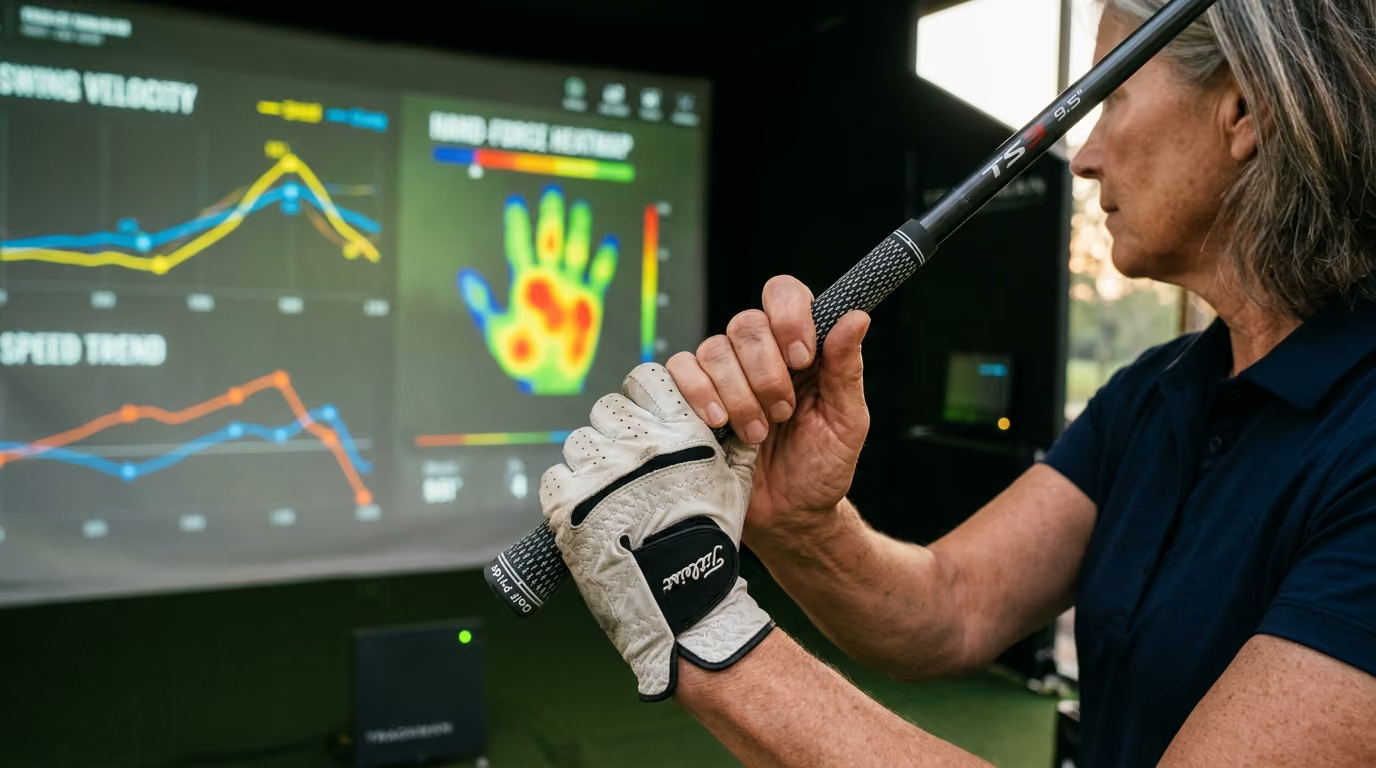

Pain-free golf rounds and lasting joint health are achievable through smart swing modifications, protective gear choices, and proper movement habits.




Many golfers believe that joint pain means it is time to pack away the clubs. They think resting the body is the only way to save their joints. This is actually backward. Sitting on the couch can make joint stiffness much worse. Low impact movement keeps your joints moving well.
It keeps the lubricating fluid flowing inside your cartilage. This guide is a deep look at how you can keep playing golf for many years. We will look at how to protect your hands and your spine while maintaining a powerful swing. You do not have to give up the game you love.
We need to look beyond quick fixes and short term pain relief. Managing arthritis while playing high level golf requires a strategic shift. You must move from power based swing mechanics to joint protection frameworks. This article will show you the exact physical habits, swing changes, and gear choices you need. By focusing on joint safety, you can extend your playing years and enjoy the game pain free.
Let us look at a common situation on the course. You are standing on the fifteenth tee. It is a long par four with a narrow fairway. Your hands are already aching from the previous fourteen holes. Your lower back feels tight and stiff.
You grip the driver a little tighter because your fingers feel weak. This tight grip makes your forearms tense. You swing the club and make contact with the ball. A sharp sting shoots up your shaft. It goes straight into your wrists and elbows.
Your lower back spasms as you finish your swing. You watch your ball slice into the right rough. This is not how you want to spend your afternoon.
Fatigue often sets in on the back nine. When your muscles get tired, joint friction increases. Your muscles can no longer absorb the shock of impact. This forces your joints to take the brunt of the force.
For golfers with arthritis, this is when damage happens. The cartilage in your hands and spine experiences heavy loading. You might feel a dull ache that grows into a sharp pain. This pain alters your movement.
When your joints hurt, you begin to fear hitting the ground. You worry about hitting a fat shot because of the painful shock. This fear causes you to pull up during the swing.
You might lift your head or stand up too early. This changes your swing plane. It often leads to thin shots or even worse fat shots. This cycle of fear and bad movement can ruin your round and harm your body.
As your hands grow tired, your grip strength drops. You might feel like the club is slipping out of your hands at the top of the swing. To prevent this, you squeeze the handle with extreme force.
This tight squeeze inflames the small joints in your fingers. It also locks up your wrists. This makes it impossible to release the club naturally.
To protect your joints, you must understand how your body moves. Osteoarthritis is very common among recreational golfers. Research shows that about 17.9 percent of golfers have been treated for this joint condition. The good news is that golf is highly beneficial for people with arthritis.
Research shows that golfers with osteoarthritis report lower psychological distress. They also have better general health compared to non golfers with the same condition. You do not need to quit. You just need to swing smarter.
The human body operates on a joint by joint system. This framework was developed by sports performance experts to explain movement. Some joints need to be highly mobile, while other joints must be stable.
Your hips and your thoracic spine need to be mobile. Your lumbar spine and your knees must stay stable. If your hips get stiff from arthritis, they cannot turn.
Your body still needs to turn to swing the club. It forces your stable lower back to twist instead. The lower back is not built to rotate. This extra twisting causes rapid wear on your spinal discs. It leads to degenerative disc disease.
In the modern golf swing, the body is put under heavy stress. The lumbar spine experiences forces up to eight times your body weight. This is because of two key concepts: the X-Factor and the Crunch Factor.
The X-Factor is the difference between your hip turn and your shoulder turn. A larger gap creates more power, but it twists your spine like a wet towel.
The Crunch Factor is even worse for arthritic backs. This is the combination of bending to the side while rotating at high speed during the downswing. This movement crushes the small facet joints in your lower back. It can cause severe pain and joint damage over time.
Many golfers wonder if they should walk or ride. A study by the Shirley Ryan AbilityLab looked at golfers with knee osteoarthritis. The study compared players who walked the course to those who rode in carts.
The walkers spent 72.2 percent of their round in moderate to vigorous activity. The cart riders only spent 32.6 percent of their round in active movement.
The researchers tested blood markers for cartilage stress and inflammation. They found no significant difference between the two groups. This means walking does not cause more cartilage damage than riding.
Walkers reported a minor pain increase of 2.1 points on a scale. Cart riders reported a 1.5 point increase. This tiny difference is not important for your health. Walking actually keeps your joints warm and lubricated throughout the round.
You do not need to copy the swings of young professional players. They have hypermobile bodies that can handle high stress. You need an efficient swing that protects your joints. Making a few small adjustments can save your lower back and hips.
To reduce the stress on your lower back, start with your feet. At address, flare both of your toes outward. Turn them out by about 20 degrees.
This simple change opens up your hip joints. It makes it much easier to turn your hips during the swing. You will not have to force your lower back to twist. Focus entirely on turning your trail hip during the backswing to make this movement clean.
The modern golf swing keeps the lead heel glued to the ground. This looks athletic, but it is terrible for arthritic joints. Instead, use a classic swing style.
Let your lead heel lift off the ground during your backswing. This allows your hips to turn fully. It reduces the twist on your lower back.
It also lowers the harmful crunch factor. Many great players of the past used this movement to play golf into their eighties.
Do not try to swing the club all the way behind your head. Stop your backswing when your lead arm is parallel to the ground. This is the three o'clock position.
Shortening your swing reduces the compression on your spine. It also helps you stay in balance. You will find that you still hit the ball far. This is because you will hit the sweet spot more often.
A deep bend at the waist places heavy pressure on your lumbar spine. To protect your lower back, stand slightly closer to the ball. Keep your spine in a neutral, comfortable posture.
Do not slouch or arch your back too much. A taller posture reduces the load on your spine during the entire swing. It also makes it easier to turn your shoulders.
Your golf equipment can act as a shield for your joints. The right gear absorbs the shock of impact before it reaches your body. This is especially important for hand, wrist, and shoulder arthritis.
Steel shafts are very stiff. They transmit almost all of the vibration from the ball straight into your hands. Graphite shafts are different.
They are made of carbon fibers that naturally absorb shock. Changing to lightweight graphite shafts can reduce the sting of impact. This is one of the best steps for golf injury prevention you can take.
Small grips force you to close your hands tightly. This places high pressure on your finger joints. Switch to oversized or jumbo grips.
These larger grips do not require your fingers to close as far. You can hold the club securely with much less effort. This reduces the muscle tension in your hands and forearms.
It keeps your finger joints calm and pain free. You can also try a ten finger grip to spread the pressure evenly across both hands.
Traditional long irons have thin soles. They tend to dig into the turf. When an iron digs into the ground, it stops suddenly.
This sends a massive shock wave up the shaft. Replace your three, four, and five irons with hybrid clubs. Hybrids have wide, flat soles.
They slide smoothly across the grass instead of digging. This prevents the sudden jarring that hurts your wrists and spine.
Traditional Long Irons vs. Hybrid Clubs:
Hard, distance-oriented golf balls feel like rocks at impact. They require a lot of force to compress. Switch to a low compression golf ball.
These softer balls compress easily. They feel much softer when you hit them. This reduction in force protects your hand joints on every shot.
Many golfers walk straight from their car to the first tee. They take a couple of hard practice swings and hit their drive. This is highly damaging to arthritic joints. Cold joints have less lubricating fluid, which makes them stiff and prone to injury. You must warm up your body before you swing a club.
When you arrive at the course, do not go straight to the range. Spend five minutes walking around the parking lot or clubhouse.
This gentle movement raises your core body temperature. It pumps blood to your muscles. It also starts the flow of synovial fluid in your joints. This fluid acts like oil in an engine.
Do not perform static stretches where you hold a position. Dynamic stretching is much safer for warming up. Stand with your feet wide apart.
Hold a golf club across your shoulders. Slowly turn your torso from side to side.
Focus entirely on turning your trail hip as you rotate back. Move gently and do not force the range of motion. Do this for ten repetitions on each side.
Your hands need special attention before you play. Hold your arms out in front of you. Open and close your fists slowly twenty times.
Then, make gentle circles with your wrists. This increases blood flow to the small joints in your fingers. It prepares them for the pressure of gripping the club.
Hold onto a golf cart or a heavy club for balance. Swing one leg forward and backward gently.
Let the movement come from your hip joint. Do this ten times, then switch legs. This opens up the hip joints. It makes it easier to turn during your swing.
To keep playing golf for years, you must care for your body at home. A simple daily routine can improve your range of motion. This routine should focus on hip mobility and thoracic spine flexibility. Working on these areas will support healthy ageing on the golf course and protect your spine.
This exercise targets your thoracic spine. Lay on your left side on a comfortable mat. Bend your knees at a ninety degree angle.
Extend both arms out in front of you, touching your palms together. Slowly lift your right arm up and open it to the right side.
Try to touch your right shoulder to the floor behind you. Keep your knees glued together on the ground. Hold this position for three deep breaths, then return to the start. Do ten repetitions on each side.
This movement helps loosen tight hip joints. Lay on your back with your knees bent and feet flat on the floor.
Place your feet wider than your hips. Slowly let both knees fall to the left side toward the floor.
Keep your upper back flat on the ground. Bring your knees back to the center, then let them fall to the right.
This gentle twisting lubricates the hip sockets. Repeat this movement fifteen times. Focus entirely on turning your trail hip down as you move.
The Daily Mobility Routine:
Strong glutes are vital for a healthy lower back. You can do this exercise on the floor or standing against a wall.
If you are on the floor, lie on your back with your knees bent. Squeeze your buttocks and lift your hips until your body is in a straight line.
Do not arch your lower back. Hold for two seconds, then lower down. Perform three sets of twelve repetitions to build localized strength for golf swings.
Get on your hands and knees on a soft mat. Place your hands under your shoulders and knees under your hips.
Slowly arch your back toward the ceiling, letting your head drop. This is the cat position.
Then, slowly let your belly sink toward the floor while looking forward. This is the cow position. Move slowly between these two shapes ten times. This gently stretches the muscles along your entire spine.
Many golfers make mistakes when trying to manage their joint pain. These mistakes can cause more inflammation and slow down your recovery. Knowing what to avoid is just as important as knowing what to do.
Many players try to stretch their stiff muscles by holding a deep stretch. They might pull their arm across their chest and hold it.
This is a mistake when your muscles are cold. It can place excessive strain on stiff, arthritic joints.
It can even cause micro-tears in your muscle fibers. Always use dynamic movements to warm up before you play. Save static stretching for after your round.
When golfers feel joint pain, they often grip the club harder. They do this because they feel insecure about their grip strength.
This tight grip causes massive tension in the forearms. It prevents the wrists from releasing naturally.
It also increases the shock of impact on your fingers. Keep your grip pressure light. Use oversized grips and gloves to help you hold the club with less effort.
It is natural to want to sit still when your joints hurt. Complete rest is often the worst thing for arthritis.
When you stop moving, your joints lose their lubrication. They become even stiffer and more painful.
Unless you have a severe injury, try to keep moving. Gentle walking and light golf mobility exercises will help you heal faster. They keep the joints warm and active.
Many golfers try to play through sharp pain. They take pain relievers and ignore the warnings from their body.
This can lead to more joint damage. If a movement hurts, stop and adjust your technique.
Listen to your body to prevent long term injuries. It is better to take a break than to cause permanent damage to your cartilage.
What you do after your round is just as important as what you do before. A good recovery plan helps reduce inflammation. It prepares your body for your next day on the course.
If your hands or back feel hot and swollen after playing, use ice. Apply an ice pack wrapped in a thin towel to the painful area.
Leave it on for fifteen minutes. This cold therapy reduces blood flow to the joint.
It helps lower inflammation and numbs the pain. Do not apply ice directly to your skin.
Post-Round Recovery Choices:
If your muscles feel stiff and tired, use heat. A warm bath or a heating pad can help relax tight muscles.
Heat increases blood flow to the area. This brings fresh oxygen and nutrients to your tissues.
It helps your muscles recover from the effort of the swing. Soak in a warm bath for twenty minutes after your round.
After playing, your muscles are warm and flexible. This is the perfect time for static stretching.
Sit on a chair and gently pull your fingers back toward your wrist. Hold this stretch for twenty seconds to release your forearms.
You can also do a gentle hamstring stretch. This helps relax your lower back. Gentle stretching is highly important for your post-round recovery routines.
Your cartilage is made mostly of water. When you get dehydrated, your cartilage can lose its cushioning ability.
Drink plenty of water before, during, and after your round. This keeps your joints hydrated and working smoothly.
Avoid sugary drinks and alcohol, which can increase inflammation in your body. Carry a water bottle in your bag and drink on every tee box.
Adjusting your swing mechanics and your equipment can protect your joints and keep you on the course.
By making these simple changes, you can continue to play the game you love without pain. Focus on joint protection, move your body daily, and enjoy many more years of golf.
Follow Golfergy for practical insights on performance, mobility, recovery and healthy ageing. Stay connected for new articles, research-led guidance and ideas to help you play better for longer.


Explore practical resources on performance, recovery, mobility and golf longevity.
Read the Blog