
Pain-free walking across eighteen holes becomes achievable through targeted swing adjustments and active foot recovery strategies designed specifically for golfers.




Many golfers believe that total rest is the only way to heal a painful heel. They step away from the game for weeks, waiting for the burning sensation in their foot to vanish. This approach often backfires because complete inactivity weakens the muscles of the foot. When these golfers finally return to the course, the pain returns almost immediately.
A better approach focuses on active recovery and smart mechanical adjustments. Walking eighteen holes is excellent for your cardiovascular health. You do not have to give up the game to heal your feet.
By understanding how your feet interact with the turf, you can protect your tissues while continuing to play. This guide provides a practical system to manage heel pain. It is designed specifically for walkers who want to keep playing golf for many years.
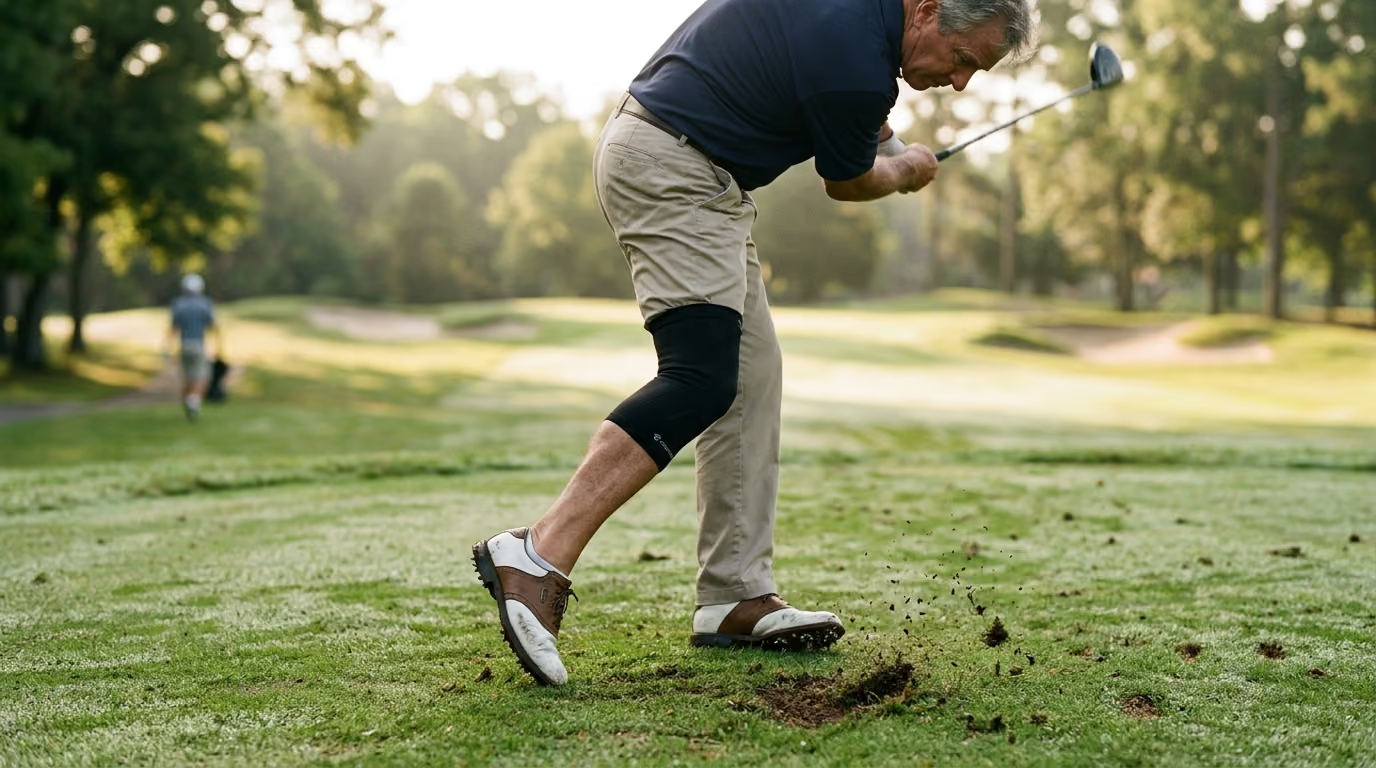
Imagine you are standing on the tee box of the fourteenth hole. You have walked nearly four miles over undulating fairways. The afternoon sun is starting to dip, and you are putting together a solid round. As you transition into your downswing, you shift your weight quickly onto your front foot.
Suddenly, a sharp pain shoots through the bottom of your front heel. It feels like stepping on a nail. You lose your balance and block your drive into the right rough. Walking to your ball becomes a slow chore.
You try to walk on the outside edge of your shoe to avoid the pain. This shift changes your gait and puts strain on your knee and lower back. By the time you reach the green, you are no longer focused on your putt. You are only thinking about the painful walk back to the clubhouse.
This scenario is common for golfers who carry or push their bags. The front foot bears the brunt of these forces during every single swing. If your tissues are already irritated, the repetitive motion of walking makes the problem worse.
Plantar fasciitis is not just a simple walking injury. In golf, it is a biomechanical stress injury caused by intense rotational forces. Your feet act as the sole connection between your body and the ground.
According to biomechanical studies from Zen Golf Studio, the swing generates massive forces. Your feet must absorb forces equal to 1.0 to 1.5 times your body weight during the downswing. These forces happen quickly and require excellent stability.
The front foot and back foot experience different forces during the swing. The front foot is especially vulnerable to injury. During the backswing, your front foot rolls slightly outward.
As you start the downswing, your front foot must plant firmly. During the follow-through, your front foot rolls inward very quickly. This movement is called rapid pronation.
This rapid rolling stretches the thick band of tissue under your foot. This tissue is the plantar fascia. If your ankle is tight, your foot must roll inward even more to compensate. This extra movement puts extreme tension on the tissue.
Walking eighteen holes adds up to a long distance. A typical round requires eight thousand to ten thousand steps. This distance covers five to seven miles of walking on uneven ground.
For a healthy foot, this distance is a great workout. For an inflamed plantar fascia, this distance represents thousands of repetitive impacts. The tissue never gets a chance to recover.
This combination of swing rotation and long-distance walking creates a difficult situation. The swing irritates the tissue, and the walking keeps it inflamed. Understanding this connection is the first step toward finding a lasting solution.
If you feel heel pain during a round, you do not have to walk off the course immediately. There are simple steps you can take to manage the discomfort on the fairway. These adjustments can help you finish your round safely.
A simple setup change can take pressure off your front foot. At address, turn your front toe outward by about twenty to thirty degrees. This adjustment is called flaring your foot.
Flaring your foot reduces the amount of rotation your ankle must perform. It allows your hips to turn more easily through impact. This change reduces the twisting force on your plantar fascia.
During the swing, try to shift your focus away from your lead foot. Focus entirely on turning your trail hip during the backswing. This movement helps you load your back leg more effectively.
By loading your back side, you reduce the sudden force on your front foot during transition. A smoother transition means less stress on the bottom of your front foot. It also helps you maintain a steady tempo.
If you have athletic tape in your bag, you can apply a simple support strip. Sit down and pull your toes up toward your shin. Apply a strip of tape starting from the ball of your foot.
Run the tape straight down the arch and wrap it firmly around your heel. This tape acts as a physical bridge for your arch. It mimics the function of the plantar fascia and reduces the stretch on the tissue.
To fix heel pain permanently, you must build stronger feet. The plantar fascia is supported by small muscles inside the foot. Strengthening these muscles allows them to absorb more force during your swing.
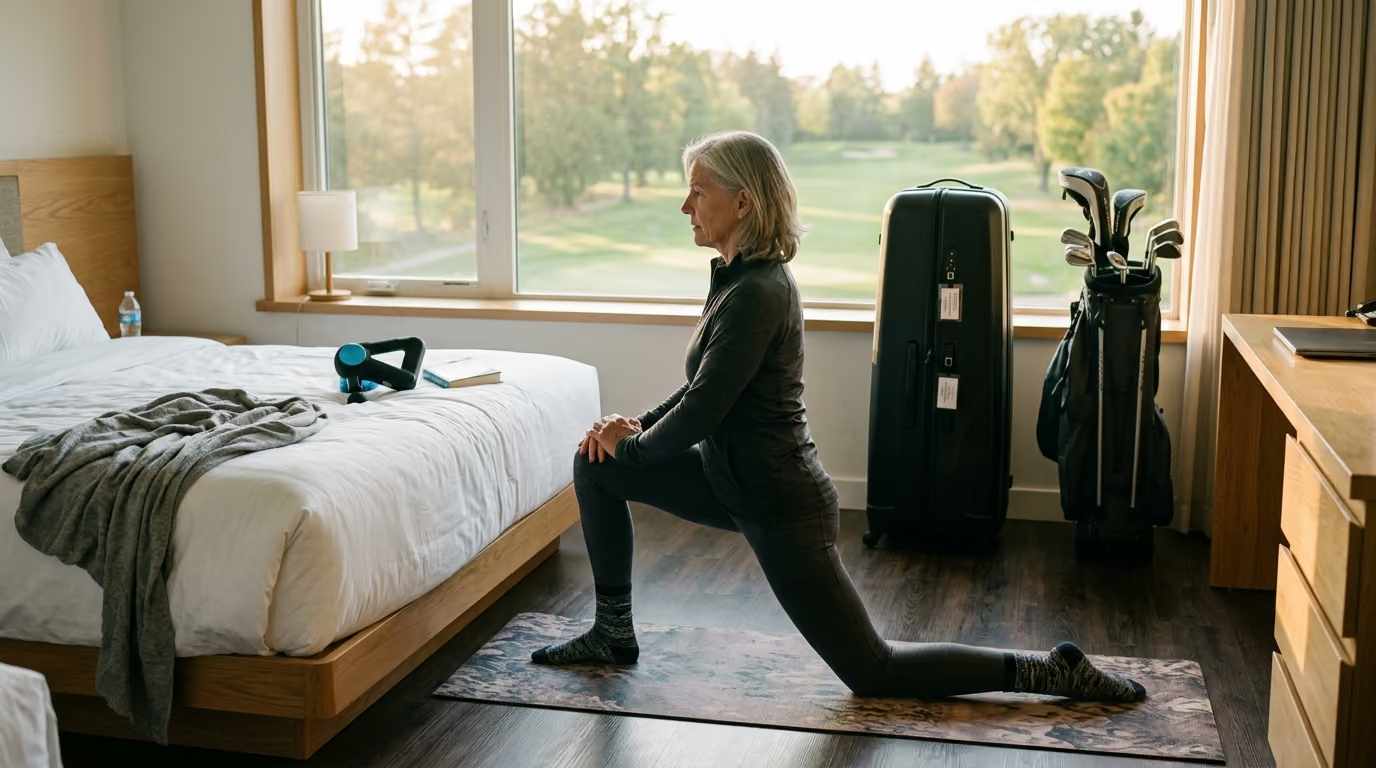
You can perform this routine at home with minimal equipment. Consistency is key to seeing lasting improvements. Focus on performing each movement slowly and with control.
Perform this stretch before you get out of bed in the morning. Sit on the edge of your bed and cross your painful foot over your knee. Grab your big toe with your hand.
Pull the big toe back toward your shin until you feel a stretch in your arch. Hold this stretch for thirty seconds. Repeat this movement three times before standing up. This stretch prepares the tissue for your first steps of the day.
This exercise helps build tolerance in the foot. Stand barefoot on a flat, carpeted surface. Lift your heels slightly off the ground so you are standing on the balls of your feet.
Take slow, deliberate steps backward. As you step back, focus on rolling your weight through your big toe. Walk backward for two minutes. This movement strengthens the muscles that support your arch.
Stand on the edge of a step with your heels hanging off the back. Keep your knees straight. Hold onto a wall or railing for balance.
Slowly raise your heels as high as possible over two seconds. Pause at the top for one second. Lower your heels back down over a count of three seconds. Perform three sets of ten repetitions.
Heel Raise Tempo:
This slow lowering phase is highly effective for building tendon strength. Research shows that eccentric training helps repair damaged tissues. It prepares your feet for the impacts of walking on the course.
Stand barefoot on your painful leg with your knee slightly bent. Hold a light kettlebell or dumbbell in one hand. Lift your other foot off the ground.
Pass the weight back and forth from hand to hand in front of your body. As the weight shifts, your foot must work to keep you balanced. Perform this balance exercise for one minute.
Focus on keeping your big toe pressed firmly into the floor. This movement builds strength in the small muscles of your foot. It also improves your overall balance on the golf course.
To prevent injury and support this routine, you can read about building lower body strength on our site. Building strength in your hips and calves can take pressure off your feet.
Many golfers make mistakes when trying to treat their heel pain. These mistakes can delay healing and make the injury worse. Avoiding these errors will help you get back to pain-free walking much faster.
As discussed, stopping all activity is rarely helpful for plantar fasciitis. When you rest completely, the tissue heals in a tight, shortened position. The moment you take a long walk, the tissue stretches and tears again.
Instead of resting, focus on active recovery. Keep walking short distances on flat ground. Continue with your daily stretching and strengthening exercises to keep the tissue flexible.
Golfers often focus entirely on the heel because that is where it hurts. However, the big toe is the primary lever of your golf swing. It must bend easily to allow your foot to function correctly.
If your big toe cannot bend backward, your foot must find another way to move. This compensation forces your arch to collapse and strains your plantar fascia. Make sure to include big toe stretches in your daily routine.
It is tempting to buy the softest, most cushioned shoes you can find. Many golfers believe that more cushion equals less pain. This is a common misunderstanding.
Very soft shoes often lack structural support. When your foot lands, the soft foam allows your arch to collapse inward. This movement stretches the plantar fascia and increases your pain. You need a shoe that combines cushioning with structural stability.
Your choice of golf shoes has a direct impact on your foot health. A good shoe acts as a stable foundation for your swing. It should protect your foot from the twisting forces of the turf.
When shopping for new shoes, look for specific features. These details can help prevent long-term strain on your feet.
Avoid zero-drop shoes or minimalist footwear. These shoes place your heel and toes on the same level. This flat position increases the tension on your calf muscles and your plantar fascia.
Look for a shoe with a heel drop of ten to twelve millimeters. This slight elevation lifts your heel and reduces the pull on your arch. It makes walking much more comfortable.
Traditional spikes can create localized pressure points under your foot. If a spike is located directly under your sore heel, it can cause pain with every step. Spikeless shoes are often a better choice.
Many spikeless shoes feature a flat sole with many small traction points. This design distributes your weight evenly across the entire foot. It prevents high-pressure spots that can irritate your fascia.
The back portion of your shoe is called the heel counter. This part of the shoe must be rigid to stabilize your heel. You can test this easily in the store.
Squeeze the back of the shoe with your thumb and fingers. If the heel counter collapses easily, the shoe does not offer enough support. A stiff heel counter keeps your heel from rolling during your swing.
Always check if the stock insoles can be removed. Many factory insoles are thin and offer little support. You may need to replace them with high-quality orthotics.
Brands like PowerStep offer insoles designed specifically for active use. These inserts provide a rigid arch support that protects your plantar fascia. Being able to swap insoles is an important feature for long-term comfort.
Several shoe models are popular among golfers with heel pain. These options offer a good balance of support and comfort.
Choosing the right gear is important for preventing long-term strain on your body. Take your time when testing new footwear to find the best fit.
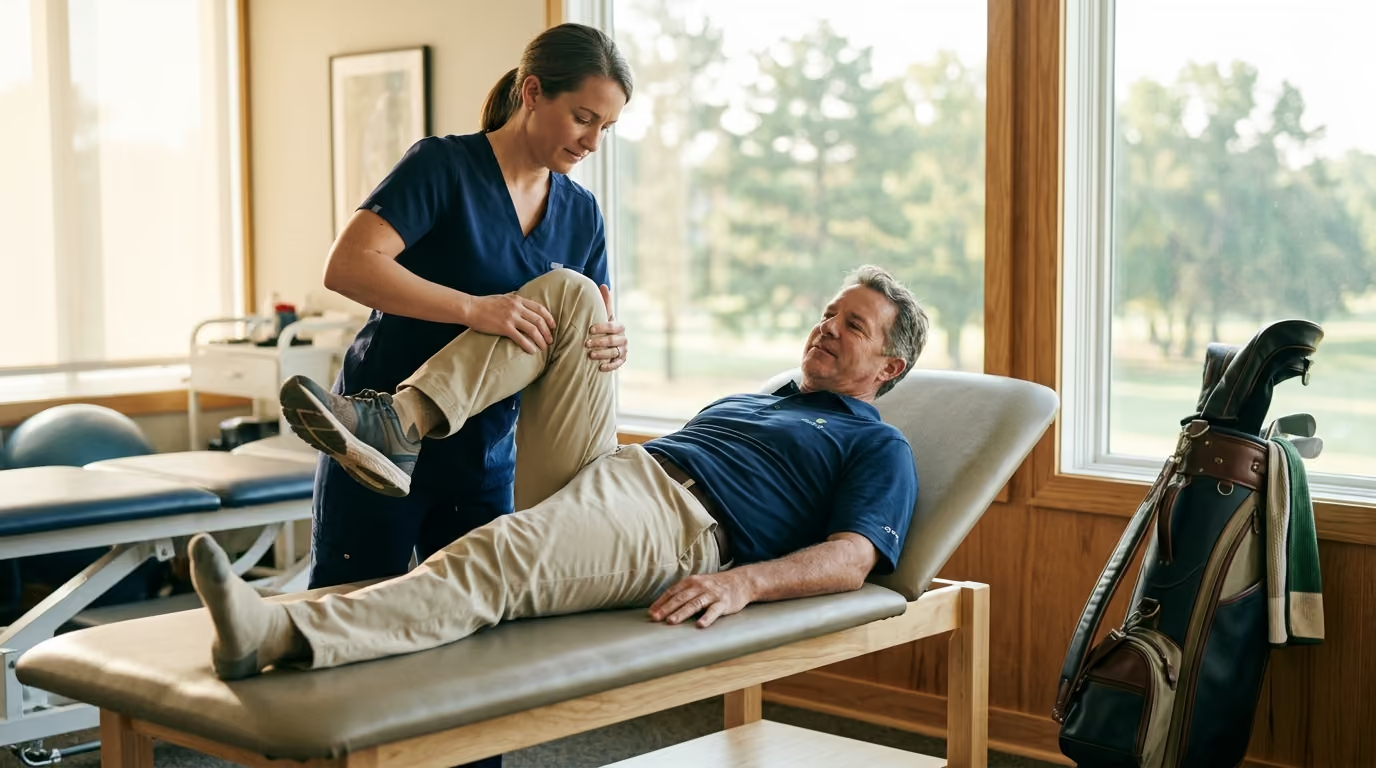
If your heel pain does not improve with stretching and new shoes, you may need professional help. Medical treatments for plantar fasciitis follow a predictable path. It is helpful to understand these options before you visit a doctor.
The first phase focuses on reducing pain and inflammation. Doctors typically recommend conservative treatments during this time. These treatments are easy to perform at home.
You should focus on icing your heel after your rounds. Perform your big toe stretches daily. You can also use athletic tape to support your arch when walking. Most golfers see improvement during this initial phase.
If your pain persists after a month, you may need to move to the next phase. This phase addresses chronic tissue changes. Your doctor may recommend custom orthotics during this time.
Another option is Extracorporeal Shockwave Therapy. This treatment uses sound waves to stimulate healing in the damaged tissue. It is a non-invasive procedure that can help break up scar tissue in the heel.
For stubborn cases, doctors may recommend advanced therapies. These options are used when conservative treatments have failed. They aim to jump-start the body's natural healing process.
Platelet-Rich Plasma injections are one common option. This treatment uses your own blood cells to promote healing in the fascia. Dry needling is another choice that can help release tight muscle knots in your calves.
Surgery is rarely needed for plantar fasciitis. It is only considered after six months of consistent treatment has failed. The most common procedure is called endoscopic plantar fascia release.
During this surgery, a doctor cuts a portion of the fascia to release tension. This procedure requires a recovery period and time away from the golf course. It should only be considered after trying all other options.
To learn more about managing long-term health, check out our recovery guides on our main blog. Keeping your body healthy allows you to play the game you love for decades.
How you move on the course matters just as much as the shoes you wear. Making minor changes to your walking style can reduce the strain on your feet. These habits are especially helpful on hilly courses.
Walking straight up a steep hill puts a massive stretch on your calves and arches. This movement can easily irritate a healing plantar fascia. When facing a steep incline, try to walk at an angle.
Zig-zagging up a hill reduces the steepness of your climb. It allows your foot to land flatter on the turf. This simple path adjustment protects your heels from excessive stretching.
It is easy to rush when you are playing quickly or trying to keep up with a group. Rushing often leads to taking longer steps. A longer stride causes you to land heavily on your heels.
Instead, focus on taking shorter, more frequent steps. Keep your pace steady and smooth. This walking style reduces the impact force on your heels with every step.
When walking across a side-hill, one foot is forced to roll inward while the other rolls outward. This uneven loading can strain your arches. If you must walk on a slope, try to stay on the flattest part of the path.
If you must walk on a slope, swap sides occasionally. This change prevents one foot from absorbing all the twisting force. It helps balance the stress across both legs.
To keep your body moving fluidly, you can read about improving your rotational flexibility on our site. Mobile hips and ankles reduce the demands placed on your feet during the swing.
Your feet are the foundation of your golf swing and your mobility. Taking care of them is key to enjoying the game as you age. With the right strategies, you can walk the fairways without pain.
Do not let heel pain keep you in the golf cart when you would rather be walking the fairways. By taking small, consistent actions to strengthen your feet and choose the right shoes, you can protect your mobility. Your body will thank you, and your scorecard will show the difference.
Follow Golfergy for practical insights on performance, mobility, recovery and healthy ageing. Stay connected for new articles, research-led guidance and ideas to help you play better for longer.


Explore practical resources on performance, recovery, mobility and golf longevity.
Read the Blog