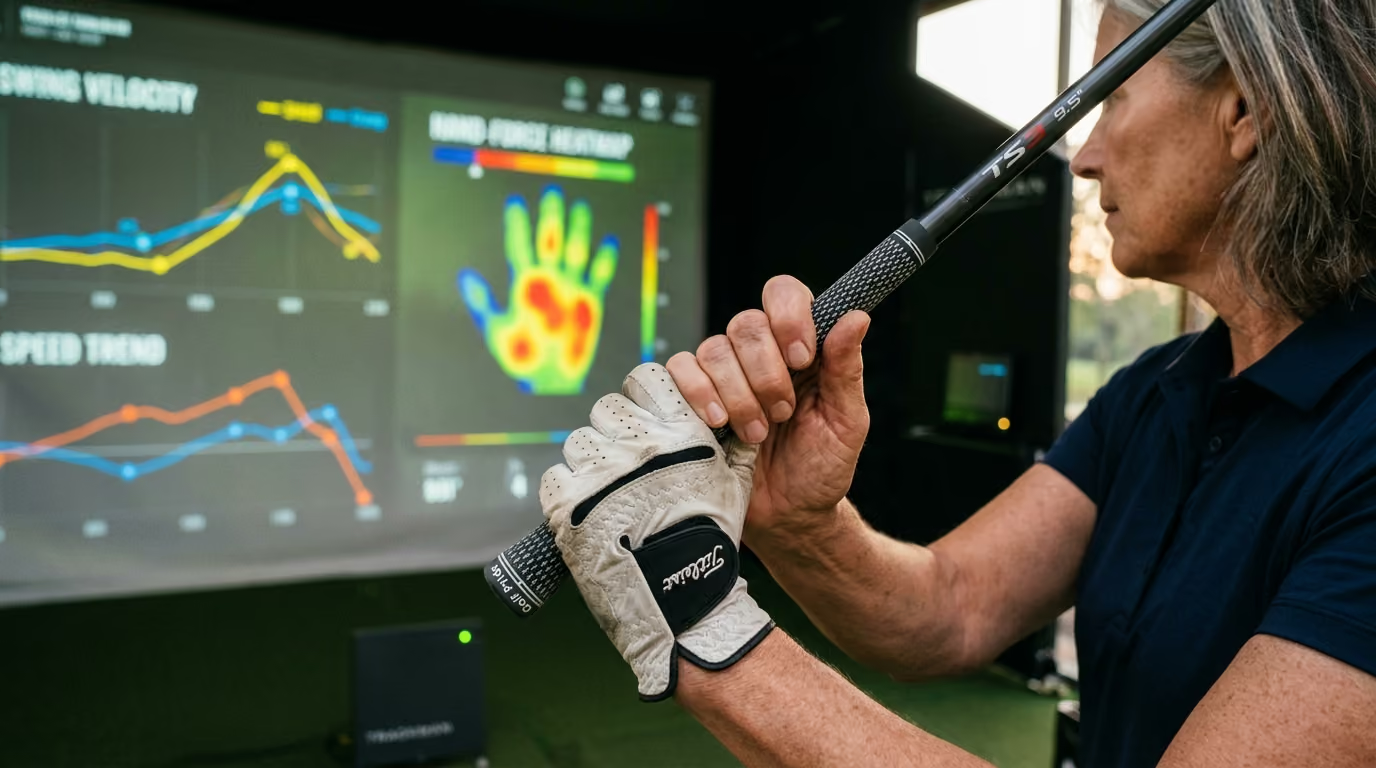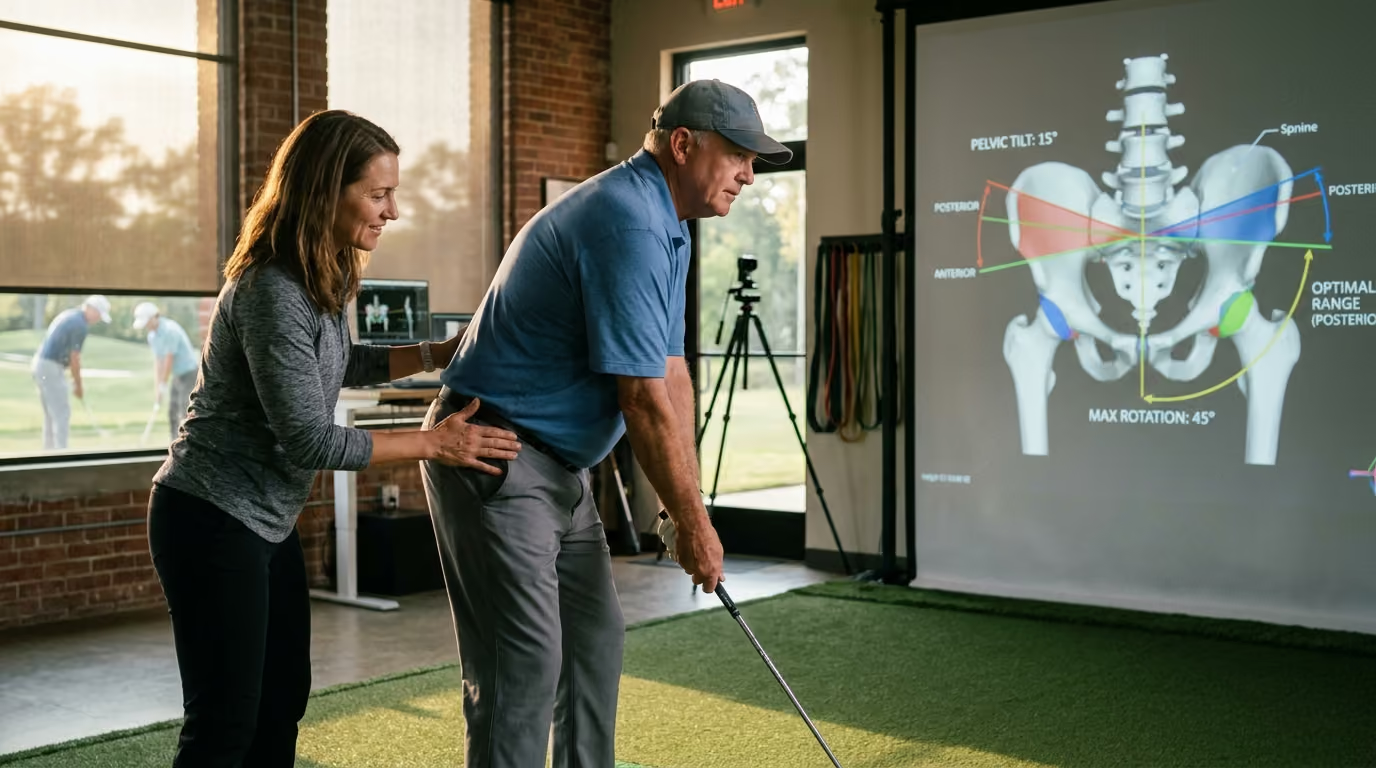

Ten degrees of anterior pelvic tilt triples lower back injury risk in golfers and reduces driving distance by twelve percent.




The fourteenth hole is a long par four with a narrow fairway. You have played well so far, but you are starting to feel tired. Your lower back feels stiff and tight as you pull your driver from the bag. You stand over your ball and try to make a smooth, powerful swing.
Your hips feel like they are stuck in wet cement, refusing to turn. You cannot rotate your body back, so you lift the club with your arms. On the downswing, your hips slide forward instead of turning. You hit a weak block that slices into the right trees.
This frustrates you because you feel fit and have practiced your swing. The issue is likely not your swing path or your club. It is the alignment of your pelvis at address and during your movement. Your pelvis is the foundation of your entire swing.
If it cannot tilt or rotate correctly, your body must find another way to move. This compensation leads to inconsistent shots and physical pain. Learning to manage your pelvic position is a vital step toward protecting your body and keeping your swing consistent. To explore more about keeping your body in peak shape as you age, you can read about healthy ageing on our website.
Anterior pelvic tilt is a very common posture. In this position, your pelvis tilts forward. Imagine your pelvis is a bowl full of water. When you tilt forward, water spills out of the front.
This forward tilt arches your lower back. In golf, we call this setup position the S-Posture. It is often caused by a condition called Lower Cross Syndrome. This syndrome develops from sitting for too many hours.
When you sit, your hip flexor muscles become very tight. At the same time, your glutes and stomach muscles become weak. The tight muscles pull the front of your pelvis down. The weak muscles cannot pull the back of your pelvis up.
This creates a permanent arch in your lower back. This arch changes how your spine handles the forces of your swing. Research from the International Journal of Exercise Science shows the danger of this position. Golfers with ten degrees or more of anterior pelvic tilt have a three-fold increase in lower back injury risk.
The arching forces your lower joints to absorb too much pressure. It increases the load on your L4 and L5 vertebrae by twenty-five percent. This pressure leads to disc wear and muscle spasms. Your swing performance also suffers from this posture.
Golfers with significant anterior pelvic tilt see a twelve percent reduction in driving distance. This happens because the arch in your back breaks the kinetic chain. You cannot transfer energy from the ground up to your club. Your swing speed drops because your body cannot stay stable.
When your lower spine is arched, it is physically locked. You cannot rotate your hips fully in this position. You will likely slide your hips sideways to try to find power. This slide leads to inconsistent contact and a major loss of control.
Posterior pelvic tilt is the opposite movement. In this position, your pelvis tilts backward. The water in your pelvic bowl spills out of the back. This movement tucks your tailbone under your body.
In the golf swing, this tilt creates the C-Posture. This posture is marked by a rounded upper back and slumped shoulders. It is very common in older golfers who have stiff chests. When your upper spine cannot straighten, your pelvis tilts back to keep you balanced.
This posture creates a strange situation for your hips. Research shows that hip internal rotation actually increases to thirty-seven degrees in this position. Neutral posture allows thirty-two degrees of rotation. This increase might make posterior pelvic tilt seem useful.
However, this setup creates a major mobility paradox. Your hips can turn more, but your upper spine is locked. You cannot turn your chest when your upper back is rounded. Your brain must find a way to make room for the club to swing.
To make room, your hips thrust toward the golf ball during the downswing. This movement is called early extension. Your body stands up straight at impact. This makes it very difficult to hit the ball cleanly.
You will often hit shots off the heel of the club. Or, you will hit the ground before the ball. This posture can be improved with targeted physical training. To find routines that help build your body for golf, check out our section on strength.
We must examine the anatomy of the hip joint. The hip is a ball and socket joint. The socket is called the acetabulum. The ball is the top of your thigh bone, or femur.
The angle of your pelvis directly changes how these bones fit together. When your pelvis tilts forward in anterior pelvic tilt, the socket shifts. The top of the socket covers more of the thigh bone. This physical shift limits how much the bone can rotate.
Research shows that hip internal rotation drops to twenty-six degrees in this position. In contrast, a neutral pelvis allows thirty-two degrees of rotation. When you try to turn, the bones literally hit each other. This physical block stops your rotation.
Your body must find another way to turn. There is a strong relationship between your lower spine and your hip movements. Biomechanical studies show a correlation of 0.81 between these two areas. This is called lumbopelvic coupling.
When your hips cannot turn, your lower spine tries to turn instead. Your lower spine is built for bending, not rotating. Forcing it to rotate causes immense stress on your joints. It also irritates the sacroiliac joints in your pelvis.
Over time, this leads to chronic lower back pain and stiffness. Protecting these joints is key to keeping you on the course. For more information on preventing these types of pain, explore our articles on injury prevention.
Our bodies are naturally asymmetrical. Our internal organs are placed differently on each side. We have a large liver on the right side. We have a larger diaphragm muscle on the right side as well.
This natural design causes many people to stand with their weight on their right leg. This position is called the Left Anterior Interior Chain pattern. It is often referred to as the Left AIC pattern. In this pattern, the left side of the pelvis tilts forward and turns to the right.
This shift changes how your hip joints function. Your left hip becomes locked in an internally rotated position. When you swing a golf club, this asymmetry causes problems. It is very hard to shift your weight to your left leg during the downswing.
You cannot rotate over your left thigh bone. Instead of rotating, your body will slide toward the target. This slide prevents you from hitting the ball cleanly. You may hit thin shots or pull the ball to the left.
Correcting this pattern is a great way to improve your swing. It allows your left hip to move freely. You can read more about how we help golfers with these movements on our about page.
By learning to align your pelvis, you can move past these natural asymmetries. Your hips will turn equally in both directions. This balance will make your swing much more consistent.
You do not need to do complex exercises during a round of golf. You need simple adjustments you can make on the tee box. These quick tips will help you find a neutral pelvic position before you swing.
Let us look at a simple drill you can do with your golf club. Place the club shaft across your hips. Hold the club in place with your hands. Now, tilt your pelvis forward as far as possible.
This movement arches your lower back. Next, tilt your pelvis backward as far as possible. This movement tucks your tailbone under. Now, move your pelvis to the middle point between these two extremes.
This is your neutral pelvic position. Your lower back should feel flat. Your abdominal muscles should feel slightly active. This position supports your spine.
It allows your hips to rotate without locking your joints. When you start your swing, focus entirely on turning your trail hip. If you are right-handed, this is your right hip. Do not think about your arms or your shoulders.
Simply turn that single hip joint backward. This simple focus keeps your pelvis in a neutral tilt. It stops you from sliding your hips. It also prevents you from arching your back too much.
You will find it much easier to make a full turn. If you want to read more tips for playing better golf, visit our blog.
To fix your pelvic tilt permanently, you must build new physical habits. You need a simple routine to stretch tight muscles and strengthen weak ones. This routine targets the root causes of poor pelvic alignment.
Perform these exercises three times per week. You do not need any special gym equipment. You can do them in your living room. Over time, they will help you maintain your posture during the swing.
Lie flat on your back near a wall. Place your feet flat on the wall. Your knees and hips should be bent at ninety-degree angles. Place a small ball or a rolled towel between your knees.
Squeeze the ball gently. Slowly lift your tailbone off the floor. Keep your lower back flat against the ground. Do not lift your lower back, only your tailbone.
Inhale slowly through your nose for five seconds. Exhale fully through your mouth for five seconds. Feel your stomach muscles engage as you breathe out. Hold this position for five breath cycles.
This exercise teaches your pelvis to tilt backward. It helps release tension in your lower back. It also strengthens your deep core muscles. These muscles are key for stabilizing your spine.
Stand with your back against a flat wall. Place your heels about six inches away from the wall. Bend your knees slightly. Your head, upper back, and tailbone should touch the wall.
Notice the space between your lower back and the wall. Use your stomach muscles to flatten your lower back against the wall. Hold this flat position for three seconds.
Next, arch your lower back to make the space larger. Hold this arched position for three seconds. Slowly move between these two positions. Complete fifteen repetitions.
This drill improves your control of your pelvis. It teaches you how to move your pelvis without moving your chest. This coordination is very important for a consistent swing.
Kneel on your right knee. Place your left foot flat on the floor in front of you. Your left knee should be bent at ninety degrees. Use a cushion under your right knee.
Tuck your tailbone under your body. This movement tilts your pelvis backward. You should feel a stretch in the front of your right hip. Do not lean forward to get the stretch.
Keep your body upright. Hold this stretch for thirty seconds. Breathe slowly and deeply. Repeat three times, then switch to the other leg.
This stretch targets the tight hip flexors that cause S-Posture. By lengthening these muscles, you allow your pelvis to sit in a neutral position. This reduces the arch in your lower back.
Lie on your back with your knees bent. Place your feet flat on the floor, hip-width apart. Keep your arms relaxed at your sides. Flatten your lower back against the floor.
Squeeze your glutes firmly. Lift your hips toward the ceiling. Keep your lower back flat as you lift. Do not let your back arch at the top.
Hold this top position for two seconds. Slowly lower your hips back to the floor. Complete three sets of ten repetitions.
This exercise strengthens your glutes. Strong glutes help hold your pelvis in a neutral position. They also provide the power you need for a strong swing. You can read more about improving your hip flexibility in our section on mobility.
Many golfers make mistakes when trying to improve their posture. The most common error is the tailbone out advice. Golfers are often told to avoid rounding their back. To do this, they stick their butt out as far as possible.
This movement immediately forces the body into an S-Posture. It locks the lower spine before the swing even starts. You cannot turn your hips from this locked position. This makes your swing shorter and less powerful.
Another common mistake is trying to turn the upper body by bending more at the waist. Golfers with a C-Posture often feel they cannot rotate. They bend lower to get closer to the ball. This extra bend actually restricts the upper spine even more.
The third mistake is ignoring the mobility paradox. Some golfers choose to stay in a posterior tilt because their hips turn easily. They do not realize that this posture ruins their upper body rotation. This choice leads to early extension and poor contact.
To avoid these errors, focus on finding a neutral pelvis. Do not try to force extreme positions. A natural, supported posture is always best for your swing. If you want to check out more resources on physical health and golf performance, visit Golfergy.
Your golf equipment can also affect your pelvic alignment. Your shoes are one of the most important factors. Many traditional golf shoes have a high heel. This design pushes your weight forward onto your toes.
This forward shift can trigger an anterior pelvic tilt. It forces your lower back to arch to keep you balanced. Flat shoes or shoes with a minimal heel drop are often a better choice. They allow your weight to stay centered over your feet.
Your grip size can also have an effect. If your grips are too small, you may squeeze the club too tightly. This tension travels up your arms and into your shoulders. Tension in your upper body makes it very hard to maintain a good posture.
Finally, look at how you position your feet. Keeping your feet perfectly straight limits your hip rotation. Flaring your feet outward by fifteen to thirty degrees reduces the stress on your hip joints. This small change helps you turn without tilting your pelvis incorrectly.
Mastering your pelvic tilt is the key to rotating safely and maintaining your posture throughout the swing.
When to revisit this resource: Re-read this guide if you start noticing lower back stiffness after nine holes, or if you find yourself early extending and hitting thin shots.
Keeping your pelvis neutral is a simple habit that will protect your spine and keep you playing golf for many years.
Follow Golfergy for practical insights on performance, mobility, recovery and healthy ageing. Stay connected for new articles, research-led guidance and ideas to help you play better for longer.


Explore practical resources on performance, recovery, mobility and golf longevity.
Read the Blog