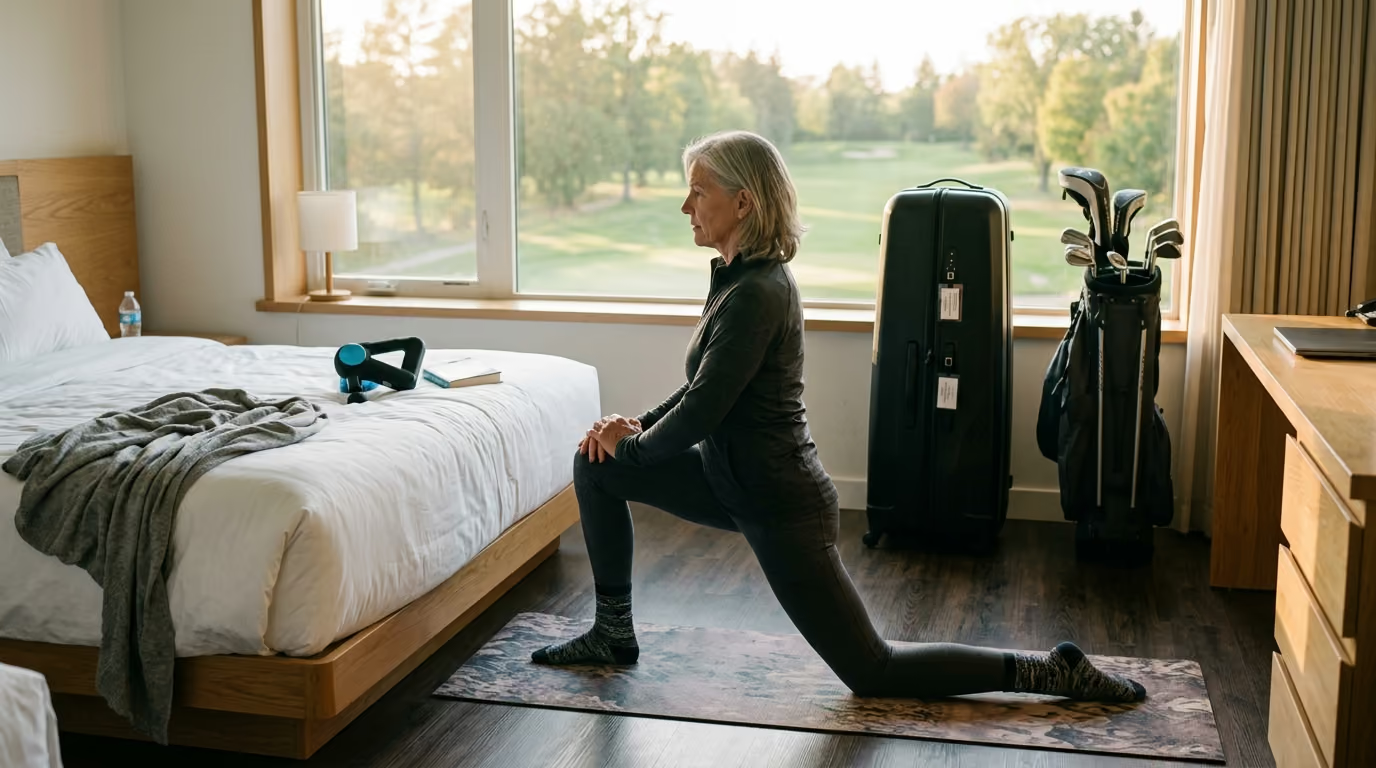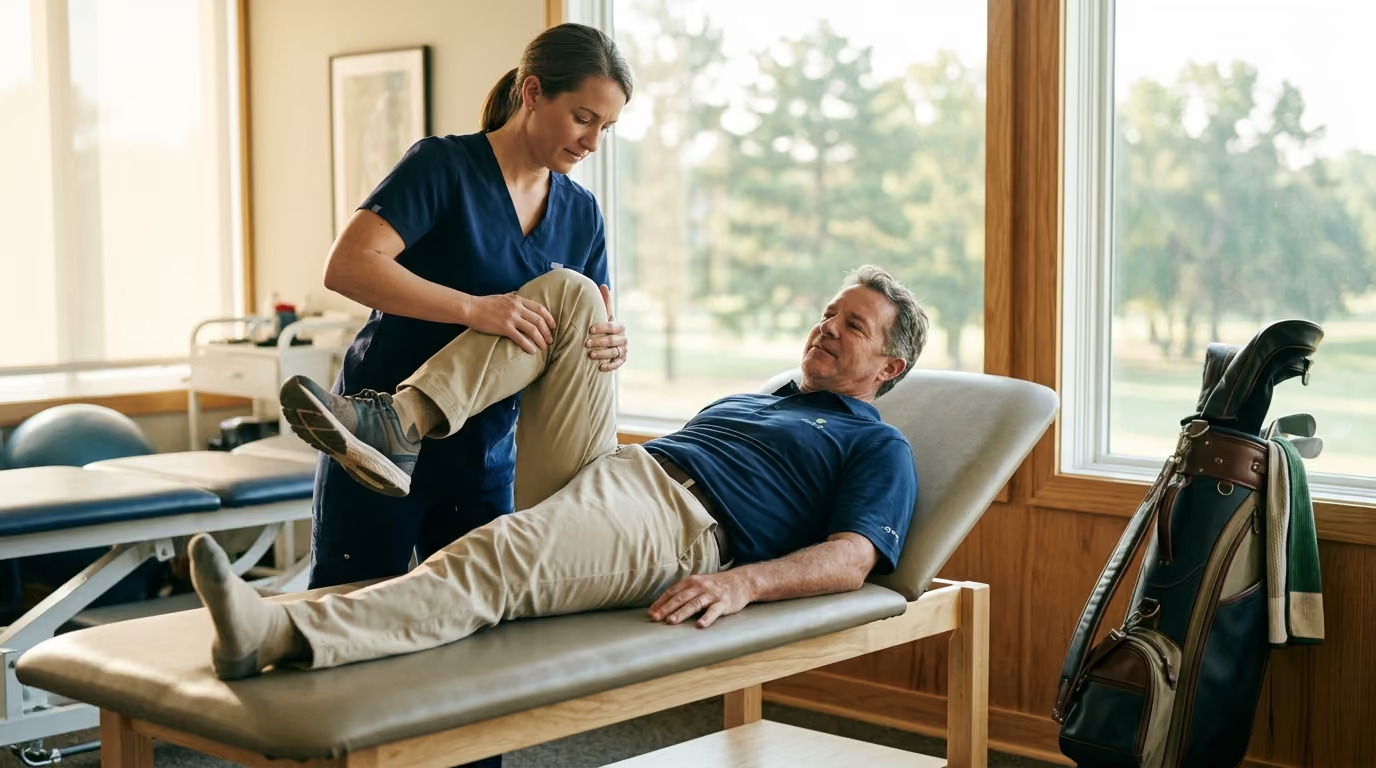

Long-term playability on the golf course comes from protecting your joints with smart biomechanical adjustments and consistent daily habits.




How can I stop my lower back from hurting while playing golf? If you have typed this query into a search engine, you are not alone. Many recreational golfers face persistent physical discomfort as they age. Pain can ruin a good day on the fairways, and it can also make you want to walk away from the game entirely.
You do not have to give up the sport you love. Managing discomfort on the course is not about finding a magic cure. It is about building a practical strategy to protect your joints and keep your swing smooth.
This guide provides a clear framework to help you manage chronic pain. We will look at biomechanics, simple swing adjustments, and smart habits to keep you playing for years. With the right approach, you can maintain your performance without sacrificing your physical health.
The morning air is cold as you arrive at the first tee box. You skip the warm-up because you are running late. The first nine holes go well, but the pace of play begins to slow down. By the time you reach the tenth tee, you have been sitting in the cart for twenty minutes.
Your lower back feels stiff as you step up to your ball. You take a hard swing with your driver. Midway through your downswing, a sharp pinch shoots across your lower back. Your body reacts by stopping the rotation, and your ball slices deep into the trees.
For the rest of the round, you are just trying to survive. Every swing feels tentative and uncomfortable. You finish the day with a high score and a sore back. This common scenario shows how a lack of preparation can lead to a long recovery time.
This type of sudden stiffness often triggers a cycle of compensation. When your lower back hurts, you stop turning your hips. This forces your shoulders and wrists to do all the work. By the eighteenth hole, your entire body is exhausted and sore.
To stop this cycle, we must understand how the body moves during a swing. The Titleist Performance Institute uses a concept called the joint-by-joint approach. This framework views the body as a stack of alternating mobile and stable joints.
The ankles need to be mobile to help you balance on uneven turf. The knees must be stable to support the rotation of your upper body. The hips need deep mobility to turn back and through. The lower back, or lumbar spine, must remain stable to protect your nervous system.
[Joint-by-Joint Alternation]
Thoracic Spine -> Mobile (Needs rotation)
Lumbar Spine -> Stable (Needs protection)
Hips -> Mobile (Needs rotation)
Knees -> Stable (Needs protection)
Problems start when a mobile joint becomes stiff. If your hips cannot turn because of tight muscles, your body must find that rotation elsewhere. The nearest joint is your lower back. Your lumbar spine is only designed to rotate about fifteen degrees.
When you force your lower back to twist, you place massive stress on the spinal discs. Over time, this leads to chronic irritation and pain. Research from Mass General Brigham shows that repetitive twisting under load is a primary cause of golf-related spine injuries. To protect your back, you must make sure your hips and mid-back are doing the rotating.
Lower back pain is the most common issue for recreational players. According to studies published on PubMed, lower back problems make up 18% to 54% of all documented golf injuries. This issue affects older players more frequently. Male players over the age of 60 are the most likely group to seek medical care for golf-related pain.
If you feel your body tightening up during a round, do not wait for the pain to get worse. You can use simple movements on the course to keep your joints loose. These techniques take less than two minutes and can be done while waiting to hit.
This movement helps lubricate your hip joints and lower back. Stand with your feet shoulder-width apart. Place your hands on the bony parts of your hips.
Move your pelvis in a slow, controlled circle. Focus entirely on turning your trail hip through its full range of motion. Do ten slow circles in one direction, then switch to the other side. This simple movement keeps the joint fluid moving in your lower back.
If your back or shoulder starts to flare up, do not try to hit full shots. Instead, shorten your swing to protect your body. Imagine your lead arm is the hand of a clock.
During your backswing, stop when your lead arm points straight at three o'clock. This is parallel to the ground. Swing through with the same controlled, shorter motion.
You will lose some distance, but you will reduce the stress on your joints. You can compensate by taking one or two extra clubs. This adjustment allows you to finish your round without causing more damage.
Stand with your feet wide and hold your driver across your shoulders. Keep your hips facing forward. Slowly turn your shoulders from side to side.
Do not force the movement past a comfortable limit. This twist helps keep your thoracic spine mobile during slow rounds. It prevents the muscles in your mid-back from seizing up.
You do not need a perfect, textbook swing to play good golf. In fact, trying to copy a professional swing can sometimes cause injury. Making small mechanical adjustments can reduce the physical demands on your body.
Many golf instructors teach players to keep their feet square to the target line. This position can restrict your hip turn if you have tight joints. To make turning easier, flare both feet outward by 20 to 30 degrees at address.
Standard Address: [ | ] [ | ] (Feet parallel)
Flared Address: [ / ] [ \ ] (Feet angled outward 20-30 degrees)
This angle opens up your hip sockets. It allows your pelvis to turn more freely on your backswing and downswing. This simple change reduces the twisting force on your knees and lower back.
Modern golf swings often emphasize keeping the lead heel pinned to the ground. This technique creates a lot of torque, but it puts great pressure on the lumbar spine. Instead, let your lead heel rise naturally as you complete your backswing.
This is how classic players like Jack Nicklaus swung the club. Lifting the heel allows your hips to rotate fully. It takes the pressure off your lower back and makes the backswing feel much easier.
When you set up to the ball, maintain a soft bend in your trail knee. As you swing back, let that knee straighten slightly but do not lock it. Locking the trail knee can block your hip rotation.
Keeping a slight bend allows your pelvis to tilt and turn naturally. This creates a more comfortable path for your hands and arms. It also prevents your body from swaying away from the target.
A violent transition at the top of the swing is a major source of joint pain. To prevent this, focus on a smooth, rhythmic tempo. Aim for a three-to-one backswing-to-downswing ratio.
Your backswing should take three times longer than your downswing. This smooth pace prevents sudden, jerking motions. It allows your muscles to decelerate the club safely after impact.
When dealing with chronic pain, the old advice was to rest until the pain went away. Sports science now shows that complete rest can actually make the problem worse. Muscles weaken and joints stiffen when they are not used.
Instead of resting completely, use a system called progressive loading. This means slowly increasing the amount of work your body does over time. The goal is to build your tissue tolerance so your body can handle the demands of the swing.
If you are recovering from a flare-up or returning to golf after a joint replacement, follow a careful return-to-play plan. The Hospital for Special Surgery recommends a stepwise progression to protect your joints.
[Return-to-Play Progression]
Step 1: Putting and Green-Side Chipping
Step 2: Half-Swing Pitch Shots with Wedges
Step 3: Full Swings with Short Irons
Step 4: Driver and Longer Woods
Step 5: Play Nine Holes with a Cart
Start with putting and green-side chipping. If you can do this without pain, move to half-swing pitch shots. Next, progress to full swings with your short irons.
Only move to your driver and longer woods after you can swing your irons comfortably. Finally, try playing nine holes while using a golf cart. This gradual buildup gives your muscles and tendons time to adapt.
To help you manage this process, you can find detailed guidance in our helpful golf training guides. These resources are designed to help you build physical resilience safely.
If you have had a hip or knee replacement, extra caution is needed. Avoid internal rotation of your surgical hip during the early stages of recovery. Make sure you can walk 10,000 steps on flat ground before you try to play a full round of golf. Use a cart to reduce fatigue during your first few months back on the course.
To support this physical recovery, check out our articles on recovery after a round. Proper recovery habits help your body rebuild stronger after every session on the range.
When golfers hurt, they often look for the fastest way to get back on the course. Some of these quick fixes can cause long-term damage to your health.
Taking anti-inflammatory drugs like ibuprofen or naproxen before every round is a common mistake. These drugs can mask pain, which might cause you to swing too hard and injure yourself further.
[The NSAID Masking Cycle]
Take Pain Medication -> Mask Pain Signals -> Swing Too Aggressively -> Cause Deeper Tissue Damage
Using these medications frequently can also cause stomach ulcers and kidney damage. Research shows that non-steroidal anti-inflammatory drugs can even slow down your body's natural tissue repair process. Inflammation is the first step in healing, and blocking it completely can delay recovery.
Many golfers believe that staying on the couch for weeks is the best way to heal a sore back. While a day or two of rest can help after an acute injury, prolonged rest makes muscles weak.
Your core and hip muscles need to stay strong to support your spine. If you stop moving, these muscles will shrink and lose their tone. This leaves your joints with even less support when you finally return to the course.
Icing a sore elbow is helpful for temporary relief, but it will not fix the underlying problem. If your elbow hurts, it is often because your wrist mechanics are poor or your shoulders are stiff.
Symptom: Sore Elbow <--- Actual Cause: Stiff Shoulders or Poor Wrist Mechanics
If you do not fix the root cause, the pain will return every time you play. You must look at how your entire body moves to find lasting relief. For more information on identifying these patterns, read our articles on preventing golf injuries.
Your equipment has a major impact on how your body feels after eighteen holes. Small changes to your gear can reduce the impact forces transmitted to your joints.
If you have arthritis in your hands or wrists, holding a thin golf grip can be painful. You have to squeeze the club tightly to keep it from slipping. This tension travels up your arms and can cause elbow pain.
Switching to midsize or jumbo grips can make a significant difference. Thicker grips allow you to hold the club with less hand pressure. This relaxes the muscles in your forearms and reduces joint stress.
The shoes you wear can affect your lower back and knees. Heavy golf shoes with stiff soles and metal spikes lock your feet into the ground. This restriction forces your knees and hips to absorb all the twisting force of your swing.
Look for lightweight, spikeless golf shoes with good cushioning. Spikeless shoes allow for a tiny amount of natural foot slip during the swing. This small slip acts as a safety valve for your knees and lower back.
Stiff steel shafts are heavy and transfer a lot of vibration to your hands, elbows, and shoulders. If you suffer from joint pain, consider switching to graphite shafts. Graphite is much better at absorbing high-frequency vibrations than steel.
Steel Shafts -> Heavy, transfers high-frequency vibration to joints
Graphite Shafts -> Lightweight, dampens shock and protects joints
You should also look at the flex of your shafts. Using a shaft that is too stiff forces you to swing harder to get the ball airborne. Moving to a regular or senior flex allows the club to do more of the work, reducing physical strain.
Carrying a heavy golf bag for four hours puts constant pressure on your spine and shoulders. This weight compresses your spinal discs and tires out your core muscles.
Use a pushcart or ride in a motorized golf cart instead. A pushcart keeps your spine in a neutral position as you walk. This simple change preserves your energy so you can maintain good swing form on the back nine.
To read more about maintaining your physical condition as you age, explore our articles on golf mobility training. These routines are tailored to keep your joints moving freely.
To start managing your pain and protecting your joints, try this simple checklist this week:
For more insights on keeping your body healthy for the game, visit our homepage on long-term golf performance.
Protecting your joints by allowing your hips to rotate freely is the single most important adjustment you can make to keep playing golf without pain.
Follow Golfergy for practical insights on performance, mobility, recovery and healthy ageing. Stay connected for new articles, research-led guidance and ideas to help you play better for longer.


Explore practical resources on performance, recovery, mobility and golf longevity.
Read the Blog