Proper hydration protects your synovial fluid and prevents joint stiffness so you can maintain a full range of motion during your golf swing.




Have you ever searched the internet for answers to lower back stiffness after fourteen holes? You might have wondered why your golf shots get shorter on the back nine of a hot summer round. Many mature players assume a fading swing is a mechanical issue or a natural sign of aging. This guide offers a definitive answer to why your joints stiffen up during hot summer rounds and how you can prevent it.
Many golfers over forty spend hours practicing their swing path and wrist angles to cure a late-round fade. They do not realize that the real culprit is a drop in joint fluid. When your body loses water, your joints lose their cushion. This physical limitation makes it impossible to turn your hips and shoulders correctly. By learning how hydration affects your joint biomechanics, you can protect your body and play better golf.
It is a Saturday afternoon in July. The temperature has crossed eighty-five degrees. You are standing on the fourteenth tee. Your scorecard looks decent so far, but you feel a dull ache in your lower back. Your hips feel tight.
You attempt to make a full backswing, but your body resists. You slide your hips instead of turning them. The ball flares out to the right into the rough. You blame your swing path or your tempo.
In reality, your joints are running dry. You have walked over four miles. You have swung a heavy club dozens of times. You have sweated out a significant portion of your body mass.
Your joints lack the fluid they need to move freely. This is not a swing flaw. It is a physical limitation caused by a lack of water and minerals. Your body is trying to protect itself by tightening the muscles around your dry joints.
When you lose fluid, your swing loses its range of motion. This leads to a shortened swing and a loss of clubhead speed. You begin to compensate by using your arms more, which leads to inconsistent contact. This classic pattern is driven by a cumulative fluid debt. To prevent this breakdown, we must look at how water acts as a lubricant inside your body.
Think of your joints as precision machinery. The surfaces where your bones meet are covered in slippery cartilage. To keep these surfaces from grinding together, your body produces synovial fluid. This fluid is not like regular machine oil.
Synovial fluid is a special substance that changes its thickness based on how fast you move. When you stand still, the fluid is thick. When you swing a club quickly, the fluid becomes thin and slippery. This unique property helps protect your joints from sudden, high-speed impacts.
During the downswing, your joint surfaces experience heavy forces. A hydrated joint keeps a thick layer of fluid between the bones. This fluid acts as an elastic buffer. It prevents the bones from rubbing against each other during high-velocity rotation.
If you are dehydrated, this fluid loses its special properties. It becomes thin and fails to resist pressure. The high forces of the downswing squeeze the fluid out of the joint space. Your cartilage surfaces now rub directly against each other.
This friction causes heat and inflammation. Over time, it wears down your cartilage and leads to joint pain. Keeping your body hydrated helps maintain the thickness of this natural lubricant. This is a critical step in injury prevention for your knees, hips, and shoulders.
Unlike other tissues, joint cartilage has no direct blood supply. It relies entirely on joint movement and fluid pressure to receive nutrients. When you move a hydrated joint, you pump fresh fluid and nutrients into the cartilage. When you are dehydrated, this pumping action fails. This leaves your joints dry, stiff, and vulnerable to wear.
Your spine consists of bony vertebrae separated by soft discs. These discs are your body's shock absorbers. The center of each disc is called the nucleus pulposus. This center is made of roughly eighty percent water.
This water creates pressure inside the disc. This pressure keeps the disc plump and bouncy. It allows the disc to support the weight of your upper body. It also keeps your spine flexible so you can bend and twist.
A golf swing creates massive forces on your spine. Research shows a full swing can produce up to seven thousand five hundred newtons of compression force. This is comparable to the force a football lineman feels when hitting a blocking sled. If your discs are hydrated, they absorb this force easily.
If you are dehydrated, your discs lose height and elasticity. They become thin and stiff. The bones of your spine press closer together. This significantly reduces their ability to absorb the compressive forces of your swing.
When your discs lose their cushion, the joints of your spine press together. This can pinch the nerves that exit your spinal cord. This nerve irritation leads to sharp lower back pain and stiffness. It can also cause muscle spasms as your body tries to stabilize the spine.
Maintaining spinal disc height is vital for golfers over forty. It is a major component of healthy ageing and long-term spinal health. Fully hydrated discs protect your back from the repetitive trauma of the golf swing. They help you maintain your height and posture throughout the entire round.
To hit the ball far, you must turn your shoulders more than your hips. This difference in rotation is known as the X-Factor. While this movement creates clubhead speed, it also places immense twisting stress on your lower back. This twisting is combined with lateral bending.
Lateral bending is the side-bend that occurs during the downswing. Biomechanists call this combination of high-speed twisting and side-bending the crunch factor. It is highly damaging to the spine. To execute this movement safely, focus entirely on turning your trail hip.
If you do not turn your trail hip, your lower back must twist too much. The lower back is not designed for significant rotation. It is designed for stability. The crunch factor pinches the rear and side of your spinal discs.
When your discs are hydrated, they can handle this pinch because they are elastic. If they are dehydrated, the dry fibers of the disc can tear. This leads to painful disc bulges or herniations. It also causes the muscles on the trailing side of your back to spasm.
Using your hips correctly reduces this stress. Focusing on your trail hip turn allows your pelvis to rotate freely. This reduces the amount of twist needed in your lower spine. However, your hips must have proper mobility to perform this turn.
If your hip joints are dry and stiff, they will not turn. This forces your lower back to twist even more to complete the swing. This combination of dry joints and poor hip rotation is a recipe for back pain. Keeping your body hydrated helps both your hips and your spine move safely.
If you feel your back tightening up on the twelfth hole, you cannot instantly rehydrate your discs. However, you can take immediate action to manage the stress. Your goal is to increase joint fluid and reduce spinal pressure.
First, drink six to ten ounces of water mixed with electrolytes. Do not drink plain water. Your body needs the sodium to draw the water into your cells and joints. This help keep the remaining fluid in your body balanced.
Second, perform a quick spinal decompression stretch. Find a sturdy golf cart roof or a high handrail. Hold onto it with both hands. Walk your feet back and let your hips hang heavy.
Hold this position for thirty seconds while breathing deeply. This gentle traction helps draw fluid back into your spinal discs. It creates space between your vertebrae and relieves pinched nerves. It is a safe way to restore some of your spine's natural cushion.
For the rest of the round, shorten your backswing. Focus on a smoother transition. Focus entirely on turning your trail hip on the backswing. This reduces the twist in your lower back and protects your dry spinal discs.
Do not try to swing harder to make up for the shorter swing. Let the club do the work. This adjusted swing path helps you finish the round without causing further damage. It keeps your joints safe until you can fully rehydrate after the round.
Preventing joint pain requires a daily routine. This routine keeps your body hydrated and your joints moving. It starts long before you arrive at the golf course. It also involves specific movements to prepare your spine.
A few years ago, I noticed my swing falling apart around the fourteenth hole. My lower back would tighten up, and I started compensating with my arms. I spent months thinking it was a swing flaw. It was not until I started a daily evening hip mobility routine that I realized my glutes were just turning off from fatigue. Fixing that one physical limitation brought my back nine scores down drastically.
This experience taught us the value of a consistent routine. It highlighted how physical limitations, rather than swing flaws, often cause back nine struggles. To build your own routine, start with a pre-loading strategy.
You must drink fluids hours before your tee time. Drink twenty ounces of water two hours before you play. Add a high-quality electrolyte mix to this water. This allows your digestive system to absorb the liquid.
This pre-loading fills your muscle tissues and spinal discs with fluid. It prepares your joints for the high forces of the swing. If you wait until you are on the first tee to drink, you are starting the round in a fluid deficit. Your body will spend the first hour trying to absorb the water rather than using it to lubricate your joints.
Spinal discs naturally hydrate and expand overnight while you lie flat. A golfer playing a seven AM round starts with maximum disc height but high stiffness. Conversely, an afternoon golfer has more flexible but compressed discs due to gravity. This makes pre-loading fluids critical for afternoon players to maintain that cushion.
Morning players should focus on gentle movement to warm up their stiff discs. Afternoon players should focus on hydration to restore lost disc height. Understanding this variance helps you tailor your preparation. It allows you to protect your spine regardless of your tee time.
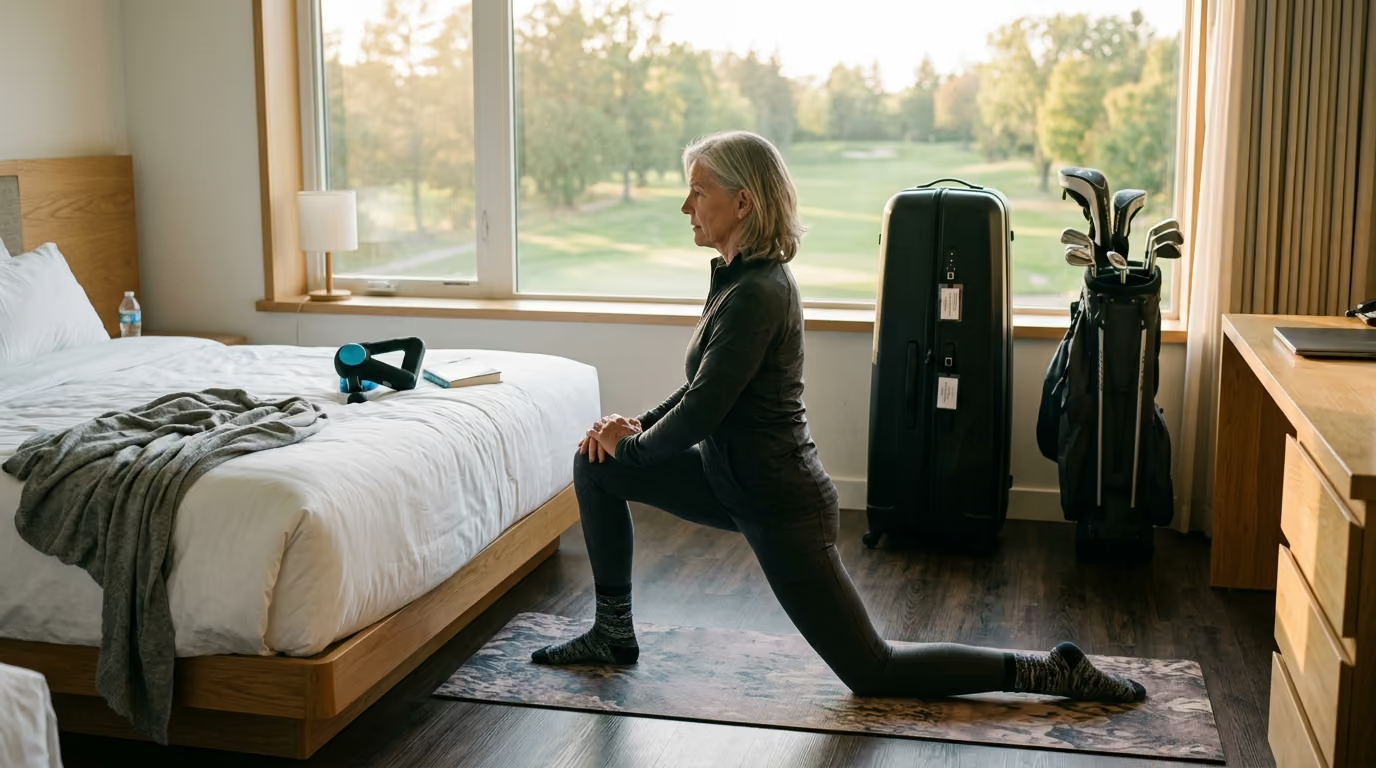
Every evening, spend ten minutes on hip and spine mobility. Lie on your back and pull your knees to your chest. Gently rock side to side to massage your lower back. Follow this with a gentle hip flexor stretch.
This routine helps your spinal discs expand while you sleep. It keeps your hip joints loose and ready for your next round. Consistent evening mobility work improves your overall movement quality. It is a great way to build joint strength and resilience.
Before you hit your first tee shot, perform a ten-minute warm-up. This is not just for your muscles. It acts as a pump for your joints. Swing a club slowly without hitting a ball.
Focus entirely on turning your trail hip. This slow movement pumps synovial fluid into your joint spaces. Research shows a dynamic warm-up reduces injury risk by sixty percent. It prepares your joints and muscles for the explosive forces of the golf swing.
Many golfers make common mistakes when trying to stay hydrated. These mistakes can actually worsen joint pain and fatigue. Understanding these errors helps you make better choices on the course.
Many golfers believe drinking plain water is enough. This is a mistake. Sweating removes both water and vital salts from your body. These salts are called electrolytes.
If you only drink plain water, you dilute your blood sodium levels. This condition is called hyponatremia. It causes your cells to swell and impairs nerve function. It leads to headaches, extreme fatigue, and severe muscle cramps.
To prevent this, you must include sodium and potassium in your drinks. Electrolytes help your body retain the fluid you consume. They allow the water to enter your cells and joints rather than running straight through your system. Choose an electrolyte mix with at least three hundred milligrams of sodium per serving.
Do not wait until you feel thirsty to drink. Thirst is a delayed signal from your brain. By the time you feel thirsty, you have already lost two percent of your body mass. This level of dehydration impairs your athletic performance.
It slows your reaction times and affects your green reading. It also reduces your spinal disc cushion. You must drink on a set schedule regardless of how thirsty you feel. This keeps your fluid levels stable throughout the round.
Many golfers believe muscle cramps are caused solely by dehydration. Recent sports science shows a different cause. Muscle cramps are often caused by neuromuscular fatigue. This is when your nervous system becomes tired from repetitive movements.
However, dehydration accelerates this fatigue. If your muscles lack water and sodium, they tire much faster. This leads to the painful spasms that ruin your back nine. Keeping your joints lubricated reduces the muscular effort required to swing, which helps prevent fatigue and cramps.
Your equipment and gear choices can impact your hydration levels. By choosing the right gear, you can reduce fluid loss and protect your joints.
Your feet contain many small joints. These joints need to stay cool and dry. Heavy, waterproof leather shoes trap heat. This increases your core body temperature and sweat rates.
Choose lightweight, breathable golf shoes for summer rounds. This helps regulate your body temperature and reduces fluid loss. It also keeps the joints in your feet moving freely, which improves your balance and power transfer.
Carrying a heavy golf bag places constant pressure on your spine. If you walk and carry, your spinal discs compress much faster. This reduces your spinal cushion and increases back pain.
Consider using a pushcart or riding in a motorized cart on hot days. This relieves your spine of extra weight and preserves your spinal disc height. It allows you to save your energy and fluid levels for your swing. If you prefer to walk, a pushcart is a great option to protect your back.
When you are dehydrated, your hands sweat more to cool your body. Slippery grips cause you to squeeze the club harder. This extra tension travels up your arms into your shoulders and neck.
It restricts your rotational mobility and increases the stress on your joints. Use corded grips or high-traction wraps in the summer. These grips allow you to maintain a light grip pressure even when your hands are sweaty. This keeps your upper body relaxed and fluid.
To keep your swing fluid and protect your spine, you must hydrate your joints before you reach the first tee.
Here is a checklist of steps you can take this week to protect your joints and improve your hydration.
Follow Golfergy for practical insights on performance, mobility, recovery and healthy ageing. Stay connected for new articles, research-led guidance and ideas to help you play better for longer.


Explore practical resources on performance, recovery, mobility and golf longevity.
Read the Blog