
Three simple hip mobility adjustments can prevent painful compensation patterns that wear down your knees and lower back over the golf season.




Most golfers believe that stretching the lower back is the key to preventing stiffness on the course. We buy expensive massage guns and spend minutes twisting our spines before teeing off. This common practice is actually backward. The lumbar spine is built to remain stable, not to twist. When we try to force rotation from our lower back, we invite chronic pain and injury. True power and safety come from a completely different joint system. To protect your body, you must look at your hips.
The saddest thing I have seen in golf is watching lifelong playing partners slowly drop out of our weekend group. It usually starts with a nagging shoulder or knee issue they ignore until it requires surgery. That pattern is exactly why I became obsessed with golf longevity. We do not have to stop playing as we age, provided we do the right maintenance work between rounds.
This deep look into hip mechanics will show you how to protect your spine. We will look at why rotation is lost and how you can reclaim it without complex gym setups. Let's look at what actually happens on the course when your hips stop moving.
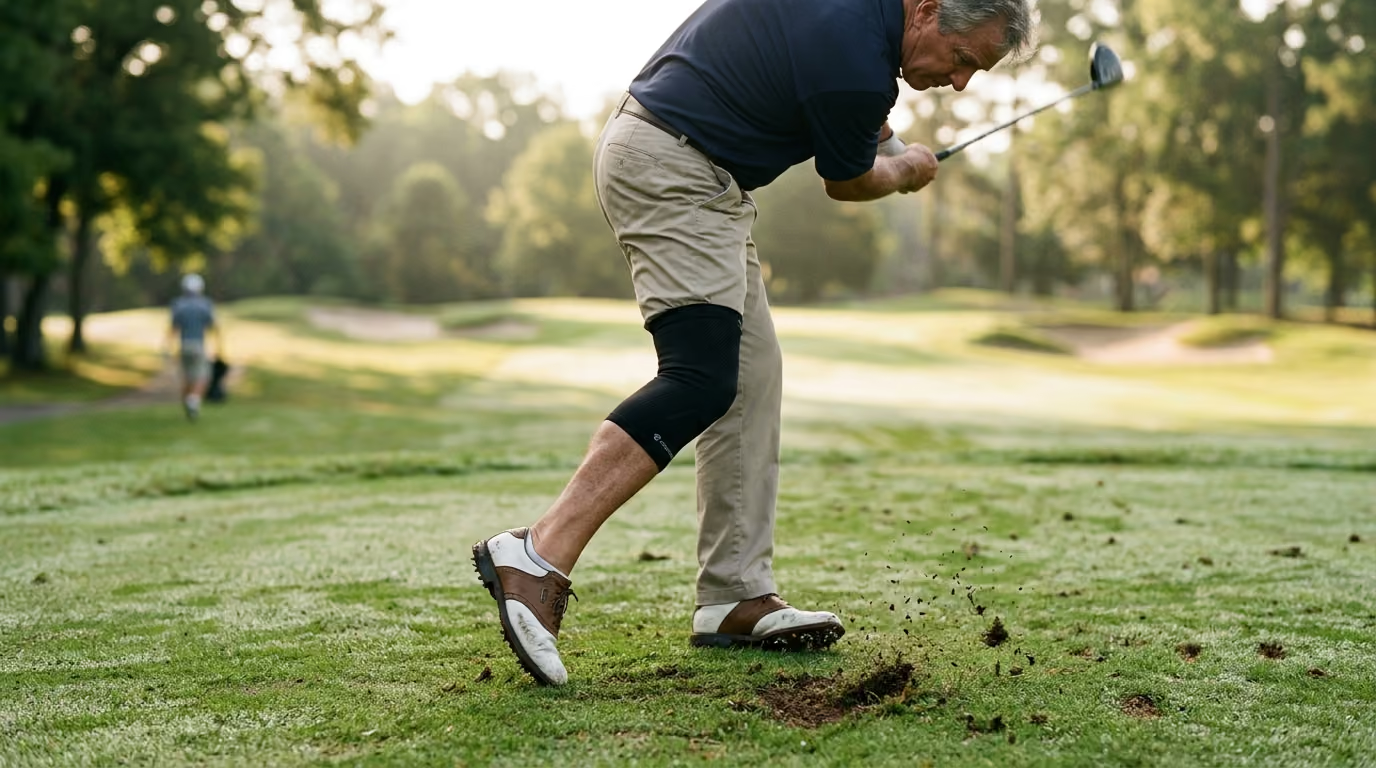
Let's look at a common scene on the fourteenth hole. You have played a decent round, but your lower back begins to feel like a tight band of concrete. You stand over your tee shot with a driver in hand. As you start your backswing, you notice that your right hip feels completely blocked. You cannot seem to turn your belt buckle away from the target. Because your hip will not turn, your brain forces your torso to tilt instead.
This physical block changes your swing shape. You might lift your arms too high to compensate. Your lead heel may lift off the ground in an effort to get the club back. When you transition into the downswing, you cannot clear your lead side. Instead of rotating around a stable front leg, your body slides laterally toward the target. Your arms cast the club, leading to a weak slice that lands short and right.
As you finish the swing, a sharp pinch flares in your lower back. You walk off the tee box rubbing your hip crease. This is not a swing path issue that can be solved with a lesson. Your body is simply running out of room to move. Your brain is trying to find a path of least resistance. In our experience, this is the exact moment where injuries start to build.
Think about how your body feels during the first three holes of the morning. You feel fresh, loose, and capable of a full turn. Your drives carry the corner of the dogleg. By the thirteenth hole, however, you notice your stance widening. Your feet flare outward in a subconscious attempt to find stability. Your lead knee begins to feel sore from the lateral sliding motion.
This sliding motion happens because your lead hip is acting like a brick wall. When you swing down, your pelvis needs to open up to the target. If the lead hip cannot turn inward, the pelvis cannot clear. The knee joint then takes the brunt of the twisting force. Over time, this shearing force can wear down the meniscus. It also strains the ligaments that support the knee joint.
Your lower back also suffers during this process. When the hips stop rotating, the spine must twist to finish the swing. The facet joints in your lower back are not designed for this high-speed twisting. They begin to rub together, causing inflammation. This is why you feel that deep, dull ache on the drive home. It is your spine paying the price for your hips' lack of mobility.
The hip is a ball and socket joint designed to move in three dimensions. In the golf swing, the most critical motion is internal rotation. During the backswing, your trail hip must rotate inward over your leg. This allows your pelvis to turn smoothly while keeping your trail foot planted. If your trail hip cannot rotate inward, your pelvis will sway to the side. This lateral sway destroys your power and ruins your contact.
During the downswing, the demands change. Your lead hip must accept a high amount of rotational force as you finish. The lead hip experiences much higher rotational speeds than the trail hip. According to a study in the Aspetar Sports Medicine Journal, amateur golfers have a high rate of lower back and knee injuries. These injuries often happen because the lead hip cannot handle this sudden turning speed. When the lead hip stops rotating, that energy must go somewhere else.
Your knee and your lower back are the closest joints to your hips. The lumbar spine is designed for stability and only has about five to fifteen degrees of total rotation. Your hip is designed to move through a wide, circular arc. If your hips are stiff, your body forces your lower back to twist. This twisting grinds the small joints in your spine. Over time, this mechanical compensation leads to disc problems and chronic muscle spasms.
There is also a common posture pattern that makes this worse. Specialists at the Postural Restoration Institute call this the Left AIC pattern. This pattern describes a natural human tendency to stand with the pelvis twisted slightly to the right. This tilt locks the left hip out of its proper socket position. Because of this, many golfers start the swing with their lead hip already blocked. This asymmetry makes it very difficult to clear the left side on the downswing.
Let's break down the joint-by-joint approach to movement. This framework was popularized by physical therapists Gray Cook and Mike Boyle. It states that our bodies function as an alternating chain of stable and mobile joints. Your foot needs to be stable. Your ankle needs to be mobile. Your knee must be stable. Your hip must be highly mobile.
When one link in this chain fails, the next joint up or down must change its job. If your ankle is stiff, your knee must move more than it should. If your hip is stiff, your knee and your lower back must become mobile. This is a recipe for joint wear and tear. Your body is forced to use joints for tasks they were never designed to perform. Protecting your hips keeps the rest of the chain operating in harmony.
Before you try to fix your movement, you need to know where you stand. Professional players often have more than forty-five degrees of hip rotation on both sides. This number comes from testing data by the Titleist Performance Institute. Most recreational golfers have far less, and the two sides are rarely equal. You can easily test your own hips at home with a simple chair.
Sit tall on a firm chair with your knees bent at ninety degrees. Keep your thighs parallel to the floor and do not let your knees move apart. Slowly swing your right foot outward while keeping your knees together. The distance your foot moves shows your internal rotation. Have a partner take a picture from the front to see the angle. Repeat the exact same test with your left leg.
Compare the movement of both legs. You may find that your right leg moves out easily, but your left leg barely moves at all. Research published in the Journal of Sports Science and Medicine shows that asymmetry is a major predictor of injury. Having one stiff hip is more dangerous than having two moderately tight hips. This difference causes uneven loading on your joints during the swing.
If your lead hip is highly restricted, you will likely experience early extension. This term describes your pelvis moving closer to the ball during the downswing. Golfers often view this as a bad swing habit that needs a mental fix. In reality, it is a physical escape hatch. Your body moves your pelvis forward because it cannot turn it. Testing your movement helps you target the specific side that needs work.
You can also perform a standing test to check your active hip control. Stand on your right leg and lift your left knee to hip height. Try to rotate your pelvis around your standing leg without losing your balance. If you wobble or feel a pinch in the front of your hip, your active control is weak. This shows that your brain does not feel secure in this position. It will restrict your range of motion during the swing to protect you.
Understanding these limits is the first step toward better mobility. If you find a major difference between your left and right sides, do not ignore it. This asymmetry is a clear warning sign that your body is compensating. By identifying these restrictions, you can tailor your off-course training to address the root cause. This targeted approach is the key to lasting comfort on the course.
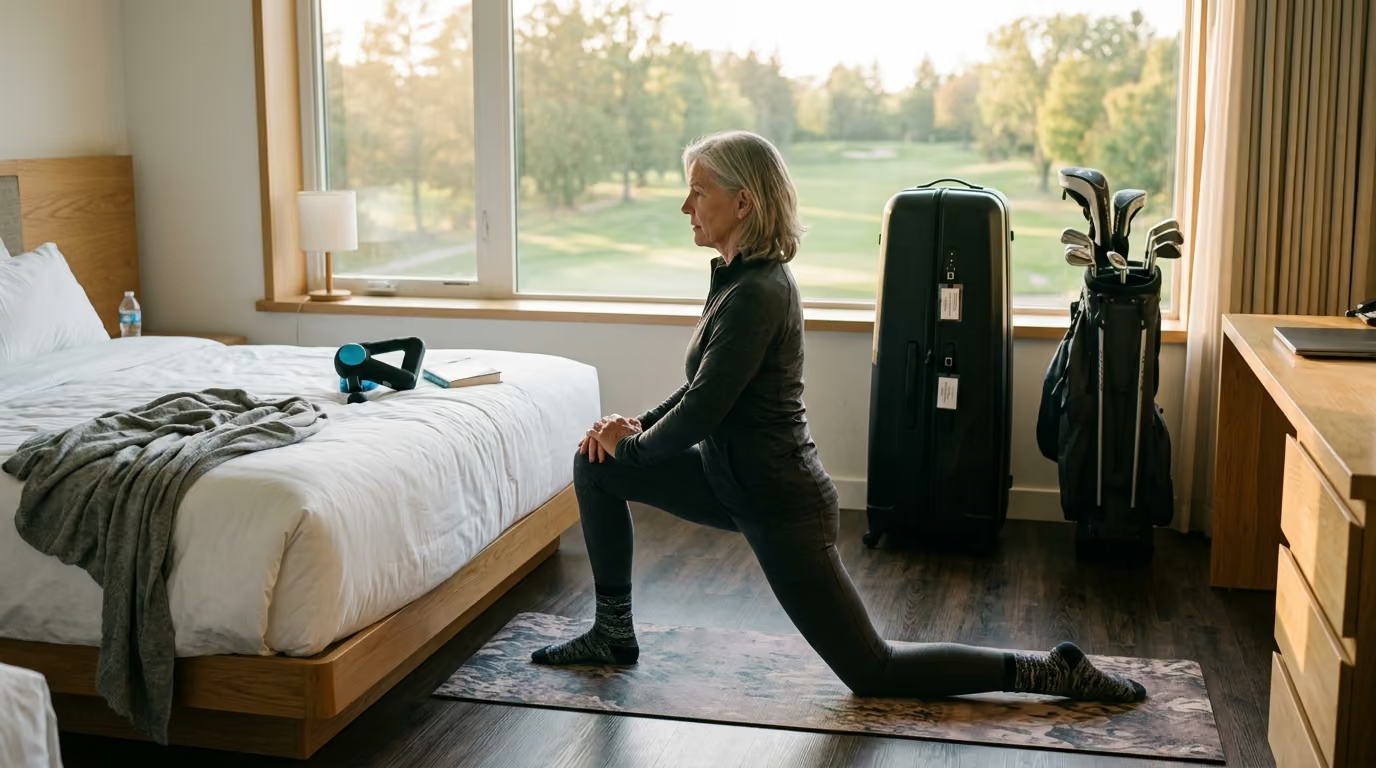
If you feel your hips locking up during a round, do not panic. You can use a simple tool to release the tension before your next shot. Take the grip end of your driver or a middle iron. Locate the soft tissue crease at the front of your hip pocket. This area contains a muscle called the Tensor Fasciae Latae, or TFL. This muscle often gets highly active and tight when the hip joint is restricted.
Gently press the rubber grip of your club into this soft area. Move the grip in small circles while standing on one leg. You may feel a deep, dull ache in that spot. Keep breathing deeply and let the muscle soften under the pressure. Spend about thirty seconds on each side before you step up to the ball. This simple release can reduce the pinching sensation in your hip crease.
Next, stand with your feet wider than shoulder-width apart. Focus entirely on turning your trail hip while keeping your foot flat. Let your belt buckle rotate toward your back leg without letting your knee slide. Hold this position for five seconds to feel the glute muscle engage. This quick sequence helps wake up the hip joint and reminds your brain how to turn. It is a simple way to protect your lower back when you are far from home.
You can also use a golf cart to perform a quick hamstring and hip stretch. Stand facing the side of the cart. Place your heel on the floorboard of the cart with your leg straight. Keep your spine long and hinge forward from your hips. You will feel a stretch through the back of your leg and into your glute. This stretch helps reduce pelvic tilt, which can block hip rotation.
These quick fixes are not a replacement for a regular routine. They are simply tools to help you get through eighteen holes without pain. They help calm your nervous system when it begins to feel threatened. By reducing muscle tension, you allow your body to access its natural range of motion. Use these drills on the back nine to keep your swing fluid and your back safe.
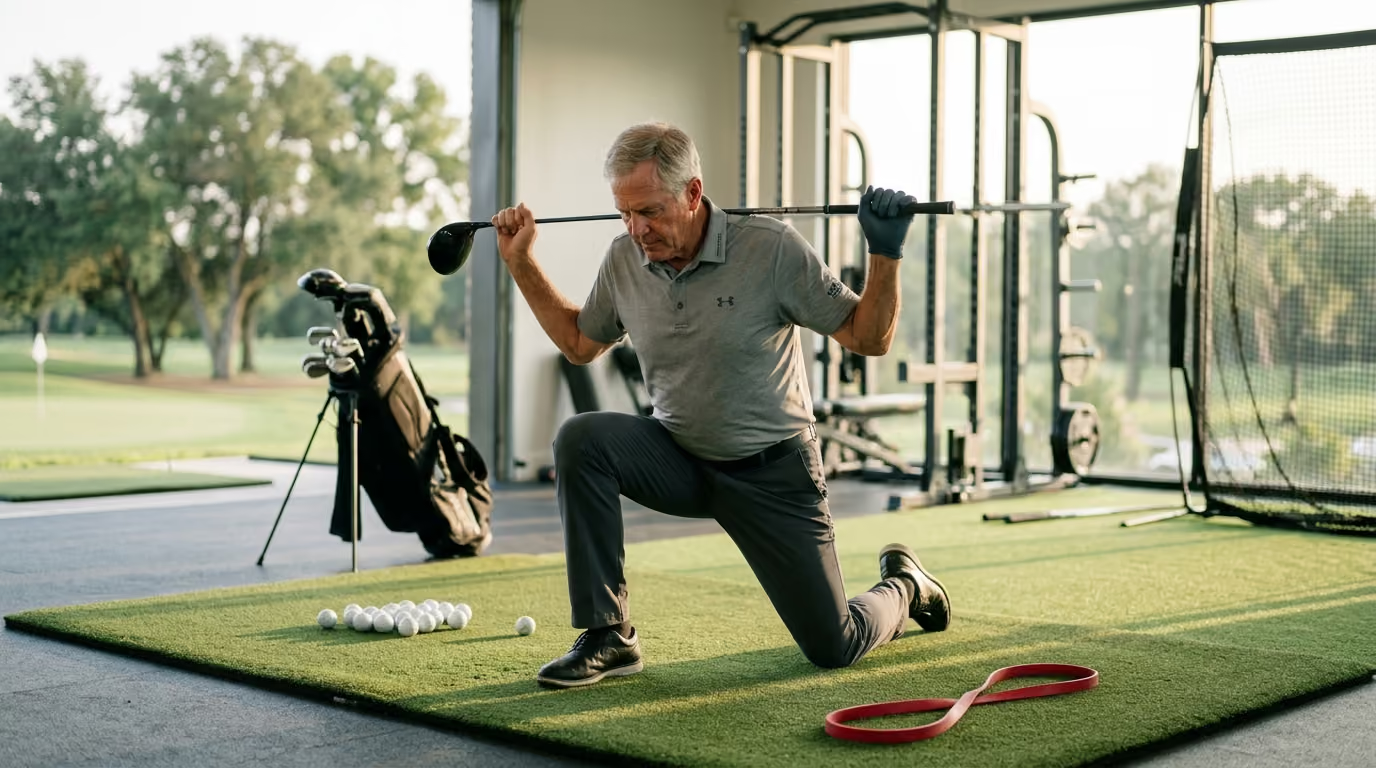
To create lasting change, you need a structured daily routine. This routine does not require heavy weights or hours of your time. It uses small, controlled movements to open the joint space. We recommend performing these movements every morning or before you head to the range. This consistency helps build new neural pathways for better movement. This is the foundation of a solid plan for healthy ageing.
Let's look at the core exercises that will help you rebuild your hip rotation. Each of these drills targets a specific aspect of hip function.
Let's look at how to set up the 90/90 position. Sit on a comfortable mat on the floor. Place your lead leg in front of you with the knee bent at ninety degrees. Your lead thigh should point straight ahead, and your shin should be parallel to your chest. Place your trail leg behind you, also bent at ninety degrees. Your torso should face your front shin. Keep your spine tall and slowly lean forward from your hips.
You will feel a deep stretch in your front glute. Hold this position for thirty seconds while breathing calmly. Next, slowly rotate your torso toward your back leg. Keep both knees anchored to the floor as long as possible. Transition your weight across your pelvis until your legs have swapped positions. Your back leg is now your front leg. Repeat this slow transition five times in each direction.
Focus entirely on keeping your spine straight during this movement. Do not let your lower back round as you rotate. This exercise works on both internal and external rotation at the same time. It mimics the transition of your hips during the golf swing. By mastering this movement on the floor, you teach your body to rotate safely.
If getting on the floor is difficult, you can do this variation. Sit tall on a sturdy office chair or bench. Place your right ankle across your left knee to form a figure-four shape. Gently rest your hand on your right knee. Avoid pushing down hard on the joint.
Hinge forward from your pelvis while keeping your chest lifted. Do not let your lower back round as you lean. You should feel a stretch deep in your right hip. Hold this position for forty seconds. Switch legs and repeat the process on the left side.
This stretch targets the deep rotators of the hip, including the piriformis muscle. When these muscles are tight, they pull the pelvis into an asymmetric position. This asymmetry can block your rotation and lead to sciatic nerve irritation. Performing this stretch daily is an easy way to maintain your joint space. It is particularly useful for those who spend long hours sitting at a desk.
CARs stands for Controlled Articular Rotations. Stand next to a wall or a golf cart for balance. Lift your outer knee toward your chest. Keep your ankle relaxed. Slowly open your knee out to the side as wide as possible.
Now, rotate your thigh bone inward. Your foot should lift up toward the sky while your knee stays high. Slowly circle your leg backward until your knees are aligned again. Reverse the circle by kicking your leg back and opening it wide. Perform three slow circles on each side.
This movement helps coat the joint with synovial fluid. This fluid acts as a natural lubricant for your cartilage. It also stimulates the mechanoreceptors in your joint capsule, which send feedback to your brain. This feedback tells your brain that the joint is safe to move. It is a vital tool for improving your active control.
Hold a light dumbbell or a kettlebell at your chest. Stand with your golf stance width. Lower yourself into a shallow squat. As you stand up, focus entirely on turning your trail hip.
Rotate your torso and pelvis toward your trail leg while keeping your foot flat. Return to the center and lower into another shallow squat. As you rise, rotate your body toward your lead side. This exercise builds strength in your gluteus medius and maximus. Strong glutes help stabilize your pelvis during high-speed swings.
This drill bridges the gap between passive flexibility and active strength. It teaches your muscles to produce force while rotating. This is exactly what is required during the downswing. By adding a small amount of weight, you challenge your core to stay stable. This stability is what protects your lower back from rotational stress.
Lie on your side on a yoga mat. Place a lacrosse ball or tennis ball just below your hip bone. This targets the TFL muscle we discussed earlier. Let your body weight press into the ball.
If the pressure is too intense, lean slightly away from the ball. Gently roll your hip back and forth over the ball. Spend two minutes on each side. This release reduces the pinching sensation many golfers feel in the front of their hips.
This release is an excellent way to prepare your body for stretching. By relaxing the tight TFL muscle, you allow the hip joint to sit deeper in its socket. This deeper position improves your range of motion immediately. It is a simple tool that can make your other exercises much more effective. Incorporate this release into your evening routine for the best results.
Many golfers attempt to fix their hip stiffness with the wrong exercises. One common error is focusing solely on static stretching. Holding a passive stretch for minutes can feel good. However, it does not build the active strength needed to control the joint. If you cannot control a range of motion, your brain will lock the joint during a swing. You must combine stretching with active rotation work.
Another mistake is trying to force rotation through a painful joint. If you feel a sharp pinch in the front of your hip, stop immediately. A pinch usually means your thigh bone is hitting the edge of the socket. Forcing this movement can damage the labrum, which is the cartilage ring in the joint. Instead of pushing harder, back off the angle or focus on releasing the back of the hip first.
Many players also try to increase their turn by letting their knees cave inward. When your knees cave, you lose the stable base of your swing. This movement does not improve hip mobility. It simply shifts the stress down to your knee joints. Focus on keeping your feet connected to the ground during your exercises. Let the movement happen purely inside the hip socket.
Finally, avoid aggressive foam rolling directly on your IT band. The Iliotibial band is a thick, fibrous band of connective tissue. It cannot be stretched or rolled out like a muscle. Rolling it directly often just causes pain and inflammation. Instead, focus on rolling the muscles that attach to it, such as the glutes and the TFL. This approach is much more effective and far less painful.
In our experience, these mistakes are very common among self-taught golfers. They read about a stretch online and apply it without understanding the biomechanics. This can lead to further imbalances and injury. By focusing on controlled, pain-free movements, you protect your body from unnecessary wear. This is the key to a long and healthy playing career. For more advice on avoiding these pitfalls, look at our injury prevention guide.
Your equipment choices can have a major impact on your hip movement. Let's look first at your golf shoes. Super-stiff shoes with long, metal spikes lock your feet to the turf. While this provides traction, it prevents your ankles from moving. If your ankles cannot move, your hips must work much harder to rotate. This can lead to increased stress on your knees and lower back.
For golfers over forty, we often recommend flexible, spikeless shoes. These shoes allow your feet to naturally roll and adapt to the ground. This slight foot movement relieves some of the rotational stress on your knees and hips. It allows for a more natural pivot during the swing. You may lose a tiny bit of traction, but the joint-saving benefits are well worth it.
Your belt tension and clothing also play a role. Tight, restrictive pants can limit your hip hinge. Look for golf trousers with built-in stretch panels. This small change allows your pelvis to tilt and turn without resistance. Your clothing should never feel like a straitjacket when you set up to the ball. It should support, not hinder, your body's natural movement.
Finally, check your grip size. If your grips are too small, you may squeeze the club too hard. Excess tension in your hands travels up your arms and into your shoulders. This tension can cause your torso to freeze, forcing your lower body to overcompensate. Choosing the correct grip size helps keep your upper body relaxed. This relaxation allows for a smoother, more coordinated turn from the ground up.
We also recommend looking at your driver shaft flex. If your shaft is too stiff, you may feel the need to swing harder to load it. This extra effort often leads to muscle tension and loss of posture. A softer shaft allows the club to do more of the work. This reduction in effort can make it easier to maintain your hip rotation throughout the swing. Speak to a professional fitter to find the right setup for your body.
Building mobility is not a one-time project. It is a continuous practice that keeps you on the course for years. In our experience, consistency is far more important than intensity. Doing five minutes of hip work daily is better than a one-hour session once a week. This regular input keeps your joint fluid moving and your muscles active.
Keep track of your progress by re-testing your hips every month. You should notice that your chair test becomes easier. On the course, you will feel less fatigue in your lower back. You might also notice that your ball flight becomes more consistent. These small improvements are signs that your body is moving more efficiently.
If you want to read more about golf performance and recovery, check out our golf performance resources. We have a wide range of articles on healthy ageing and injury prevention designed specifically for the mature player. Our goal is to help you maintain your swing speed without sacrificing your joints. Visit our about page to learn more about our approach.
Remember that your body is your most important piece of golf equipment. You can buy the most expensive driver on the market, but it will not help if your hips are locked. Investing a few minutes each day in your physical health will pay huge dividends on the scorecard. More importantly, it will allow you to enjoy this great game with your friends for decades to come.
Our team has spent years studying the relationship between golf performance and hip mobility. We have seen players in their seventies regain twenty yards of carry distance simply by freeing up their hips. It is never too late to start this work. The human body is remarkably adaptable, even as we age. By giving your joints the attention they deserve, you can write a new chapter in your golfing life.
To play your best golf for the next twenty years, focus entirely on turning your hips instead of twisting your lower back.
Follow Golfergy for practical insights on performance, mobility, recovery and healthy ageing. Stay connected for new articles, research-led guidance and ideas to help you play better for longer.


Explore practical resources on performance, recovery, mobility and golf longevity.
Read the Blog