Ice packs seem like the obvious choice for post-round soreness, but strategic heat application often delivers better long-term joint mobility for senior golfers.




For decades, the standard response to physical soreness has been to reach for an ice pack. If your back ached after eighteen holes, you iced it. If your shoulder throbbed, you frozen it. This approach seems simple, but modern sports science suggests it is incomplete. For the senior golfer, relying solely on cold therapy can actually delay your body from healing.
Managing physical wear requires a more calculated strategy. As we age, our tissue properties change. Our blood vessels become less elastic. Our joints lose natural lubrication. A simple ice-down can lock in stiffness rather than relieve it.
This guide examines how to balance heat and cold therapy. We will look at how saunas and ice baths affect your body. You will learn how to use these tools to recover faster and swing easier. By adopting these methods, you can protect your joints and keep playing the game you love for years.
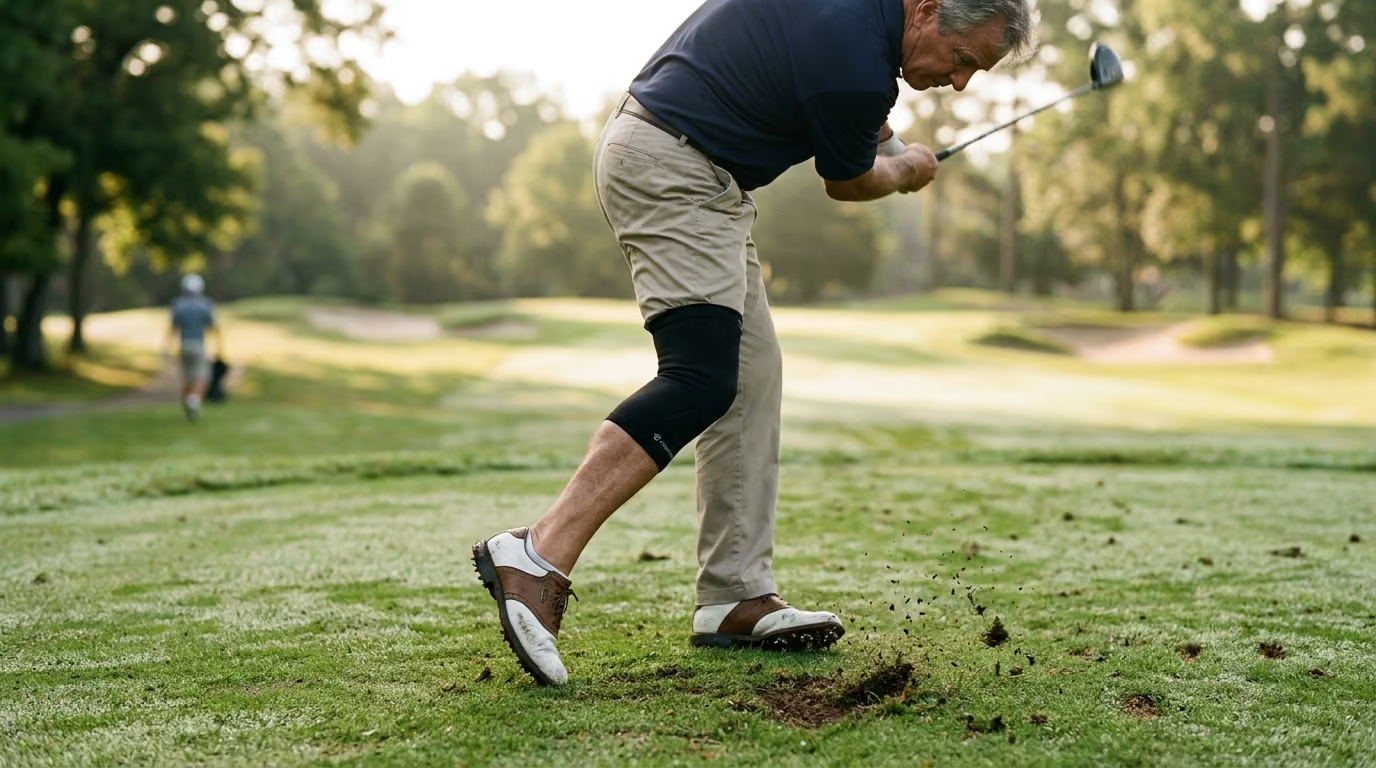
It is Saturday afternoon, and you are standing on the fourteenth tee. You started the round with a smooth, flowing tempo. Now, your lower back feels like a tight band of concrete. Your lead elbow has a dull, nagging ache. You try to turn your shoulders, but your body resists.
This stiffness alters your mechanics. To compensate for your tight back, you begin swinging with your arms. Your club head speed drops. Your tee shots start leaking to the right. You feel fatigued, and the enjoyment of the game fades.
This is a common issue for mature players. According to data from the National Golf Foundation, approximately 60% of golfers report experiencing a golf-related injury. The most common trouble spots are the lower back, which accounts for 36% of complaints. The elbow and shoulder follow closely at 18% and 17% respectively.
These issues are not just signs of getting older. They are indicators of how your body responds to repetitive rotation. Without a systematic recovery plan, this tightness accumulates from one round to the next.
To fix these physical limits, we must look at the cellular level. Aging brings a process known as inflammaging. This is a state of chronic, low-grade systemic inflammation.
With age, your body shows higher baseline levels of inflammatory markers. Two main markers are C-reactive protein (CRP) and Interleukin-6 (IL-6). These proteins keep your joints in a constant state of mild irritation. This irritation makes you feel stiff even before you arrive at the first tee.
[Inflammaging / High Baseline CRP]
│
▼ (Golf Swing Stress)
[Acute Local Muscle Damage]
│
├─► Cold Therapy ──► Vasoconstriction (Reduces acute swelling & DOMS)
│
└─► Heat Therapy ──► Vasodilation (Delivers O2, flushes waste, lowers CRP)
Heat therapy acts as a natural booster for your circulatory system. When you sit in a sauna, your blood vessels widen. This process is called vasodilation.
Vasodilation allows blood to flow freely to your tired muscles. It delivers oxygen and vital nutrients to micro-tears in your muscle fibers. It also increases the elasticity of your tendons and ligaments. Research shows that regular sauna use is linked to lower baseline CRP levels. This means you can actively lower your systemic inflammation over time.
Cold therapy works in the opposite direction. Immersing yourself in cold water triggers rapid vasoconstriction. Your blood vessels contract, pushing blood away from your extremities and toward your core.
This process limits the accumulation of metabolic waste in your muscles. It dampens the acute inflammatory response that occurs after hard exercise. According to clinical studies published in the Journal of Science and Medicine in Sport, cold therapy ranks very high for relieving Delayed Onset Muscle Soreness, often called DOMS. It also helps recover neuromuscular function. This means your muscles can fire efficiently again.
Alternating between heat and cold creates a pumping action in your blood vessels. This technique is often called vascular gymnastics.
The blood vessels expand with heat and contract with cold. This natural pump flushes out waste products faster than rest alone. It combines the oxygen-rich healing of heat with the pain-relieving power of cold. For golfers looking to maintain their physical condition, this is an excellent tool. You can find more detail on these active recovery methods by reading about tailored muscle recovery protocols.
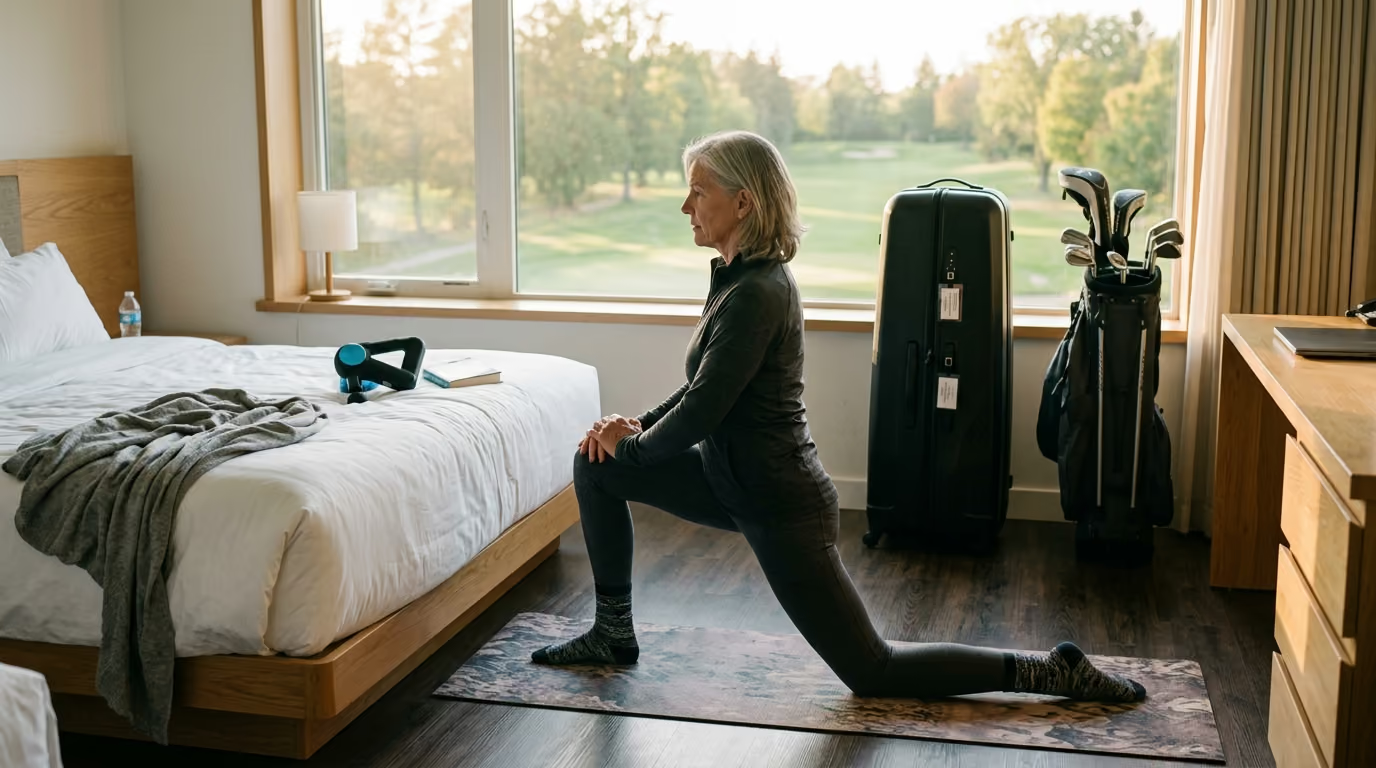
When stiffness strikes during a round, you cannot hop into a sauna. You need an immediate solution on the tee box.
Keep two air-activated heat patches in your golf bag. If you feel your lower back tightening on the eighth hole, apply one directly to the skin.
Continuous mild heat helps prevent muscles from locking up. It maintains local blood flow while you walk between shots. It also keeps your sensory nerves busy, which reduces the pain signals sent to your brain.
You can also use a simple physical movement to restore your turn. Stand next to your golf cart and hold the grab bar with your lead hand.
Focus entirely on turning your trail hip backward. Do not swing your arms or twist your neck. Simply rotate your trail hip open, hold for three seconds, and return to center. Repeat this movement five times before you hit your next shot. This small focus helps restore your pelvic rotation and unloads your lower back. You can learn more about managing these physical patterns by reading about preventing golf injuries before they start.
To achieve lasting relief, you must build a structured habit. This routine targets the root cause of your stiffness.
Your recovery begins before you hit your first tee shot. A short pre-round heat session can prepare your joints for action.
If you struggle with chronic lower back stiffness, heat is your primary tool. Studies show that continuous low-level heat therapy provides better pain relief than cold therapy for sub-acute back issues.
For a complete recovery session, use the Nordic contrast protocol. This method combines both temperatures for maximum vascular benefits.
[Sauna: 12-15 Mins] ──► [Rest: 2-3 Mins] ──► [Cold Plunge: 1-3 Mins] ──► [Slow Warmup]
(80-90°C) (Normalize BP) (60-68°F) (Air Dry)
Using heat and cold can be highly beneficial, but doing it incorrectly can cause harm. Seniors must be particularly careful when using these therapies.
Many golfers make the mistake of jumping into an ice bath right after a workout. Emerging research shows that immediate icing can hinder your progress.
Cold water dampens the natural inflammatory response. This initial inflammation is actually what tells your body to rebuild muscle fibers. Icing too quickly can blunt your long-term muscle adaptations. This delay makes it harder to build the physical strength needed for a powerful swing. Wait at least four hours after strength training before using cold therapy.
Seniors are at a higher risk for fainting when exiting a sauna. The wide blood vessels cause blood to pool in your legs.
This pooling can lead to a sudden drop in blood pressure when you stand up. To prevent this, always sit on the lower bench for your last two minutes. Rise very slowly from the bench. Hold onto the handrails as you step out of the sauna room.
Do not jump directly from a hot sauna into freezing water if you have heart concerns. This sudden change can shock your cardiovascular system.
According to Harvard Health publications, sauna use is contraindicated for those with unstable angina or severe heart issues. A recent heart attack within the last two to six weeks is a strict reason to avoid saunas. Uncontrolled high blood pressure also means you should skip the hot room. Always consult your doctor before starting a thermal recovery program.
+-----------------------------------------------------------------+
| CRITICAL SAFETY CHECKLIST |
+-----------------------------------------------------------------+
| Do NOT use sauna if you have: |
| • Unstable angina |
| • Recent heart attack (within 2-6 weeks) |
| • Uncontrolled hypertension (>160/100 mmHg) |
| • Severe aortic stenosis |
+-----------------------------------------------------------------+
| Safe Contrast Parameters: |
| • Sauna temp: 80-90°C (176-194°F) |
| • Mid-rest: 2-3 minutes (essential for blood pressure) |
| • Cold plunge: 60-68°F (avoid freezing temps initially) |
+-----------------------------------------------------------------+
Drinking a cold beer in the clubhouse is a classic golf tradition. However, combining alcohol with heat therapy is dangerous.
Alcohol dehydrates your body and dilates your blood vessels further. This combination significantly increases your risk of abnormal heart rhythms. It can also cause a dangerous drop in blood pressure. Save your social drinks for after your recovery session is complete.
Your physical recovery can be supported by the gear you use on the course. Simple changes to your equipment can prevent irritation from starting in the first place.
If you suffer from elbow pain, your golf grips may be too small. Small grips force you to squeeze the club tightly.
This extra tension stresses the tendons in your forearm. Try switching to midsize or oversized grips. These larger sizes allow your hands to remain relaxed. This simple adjustment reduces the vibration transferred to your joints during impact.
Your feet are your only connection to the ground. If your shoes are too stiff, your knees and hips must absorb the shock of your swing.
Select shoes that offer flexible support. Look for models that allow your foot to bend naturally as you walk. This flexibility helps maintain your balance. It also keeps your joints aligned, which reduces post-round knee soreness.
For lingering joint issues, light compression can assist your recovery. Wear a compression sleeve on your lead elbow during your round.
The sleeve provides mild warmth and increases your body awareness. This awareness helps you avoid overextending the joint. After your round, keep the sleeve on for an hour to keep fluid from pooling in the joint. You can find more information about supporting your body during play by looking into improving your rotational mobility.
Not all aches are the same. You must choose the therapy that matches your specific physical needs.
If you twist your ankle or pull a muscle during a swing, use cold therapy. The first 72 hours are the acute phase.
During this window, your goal is to limit swelling and ease sharp pain. Apply an ice pack wrapped in a thin towel for 15 minutes. Repeat this application every four hours. Do not apply heat during this initial phase, as heat can increase swelling.
If you suffer from long-term joint stiffness, heat is your best option. This phase begins after the first 72 hours have passed.
Use heat to relax your muscles and increase tissue elasticity. This is especially helpful for morning stiffness before you play. A warm shower or a heating pad can prepare your body for movement. For additional advice on building the strength needed for a durable swing, see our resources on building full-body golf strength.
The choice between heat and cold depends on your recovery goal. Use this simple breakdown to guide your decisions:
To get the most out of your recovery, remember that consistency is more important than extreme temperatures.
Listen to your body and adjust these protocols to keep your swing fluid and your rounds pain-free.
Follow Golfergy for practical insights on performance, mobility, recovery and healthy ageing. Stay connected for new articles, research-led guidance and ideas to help you play better for longer.


Explore practical resources on performance, recovery, mobility and golf longevity.
Read the Blog