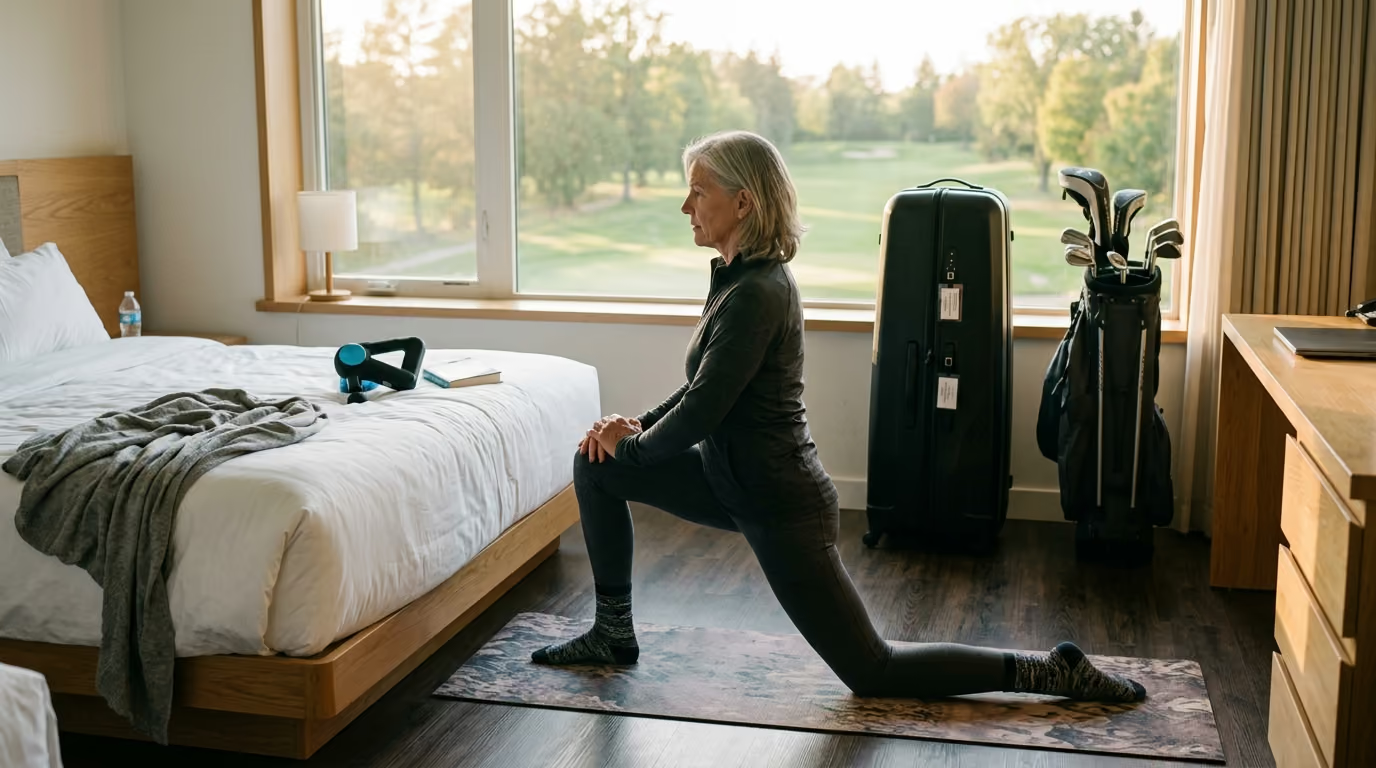

Frosty morning tee times often cause stiff swings, but proven mobility routines and warm-up strategies help you maintain full swing speed and distance.




Cold weather golf is the physical act of playing this sport when temperatures drop below sixty degrees. It is not simply a matter of putting on a heavy jacket and swinging harder. True cold weather golf is a physiological battle to maintain joint movement, muscle speed, and nerve sensation.
To play well in the winter, you must understand how your body reacts to the cold. This guide explores the science of muscle tightness, joint stiffness, and distance loss in cold weather. It offers practical routines and equipment advice to keep you moving well. If you want to protect your physical health as you age, look at our resources on healthy ageing.
By learning these strategies, you can play pain-free golf all year round. We will look at real data and scientific studies to explain these changes. This knowledge will help you prepare for your next winter round.
Imagine an eight o'clock tee time in late November. The thermometer in your car reads forty-two degrees. A thin layer of frost sits on the grass of the practice green.
You step up to the first tee wearing a thick sweater and a heavy windbreaker. Your body is shivering slightly as you pull your driver from the bag. You try to make a normal practice swing, but your shoulders feel locked. Your hips refuse to turn fully.
When you swing at the ball, your backswing stops short. You try to force speed by casting your arms at the ball. The strike is thin, sending a harsh vibration up the shaft into your hands. Your ball travels twenty yards shorter than your normal summer distance.
This scenario is common for mature golfers in winter. Tight muscles cause your backswing to shorten naturally. To make up for this, you might over-swing with your upper body. This movement pattern ruins your timing and puts intense pressure on your lower back. You can find more tips on keeping your body fit on the Golfergy blog.
The human body reacts to cold temperatures with several defense mechanisms. These changes protect your core organs, but they limit your athletic performance.
Your muscles are made of microscopic units called sarcomeres. These units must slide past each other to stretch and contract. In cold weather, your internal muscle temperature drops.
This drop in temperature makes muscle fibers less pliable. They behave like cold, stiff rubber bands. If you pull a cold rubber band quickly, it can tear.
Your joints are lubricated by a substance called synovial fluid. This fluid keeps your hips, knees, and wrists moving smoothly. In low temperatures, the viscosity of this fluid increases.
Viscosity means the thickness of a liquid. Cold synovial fluid becomes thick like grease. This creates mechanical resistance inside your joints, making every turn feel heavy.
When you get cold, your body redirects blood flow. It moves blood away from your skin and limbs toward your internal organs. This process is called vasoconstriction.
As blood leaves your hands, your nerve conduction velocity slows down. This delay reduces your ability to feel the club. It also disrupts the timing of your swing transition.
This physiological principle states that keeping your chest warm is the best way to keep your hands warm. If your core temperature drops, your brain stops blood flow to your fingers. Wearing heavy gloves will not help if your chest is cold.
A study by Gatterer and colleagues found that athletic performance drops at temperatures as mild as sixty-eight degrees. This drop accelerates as the weather gets colder. Another classic study by Bergh and Ekblom shows that physical power drops by 4.2 percent for every single degree Celsius drop in muscle temperature.
Playing in the cold presents a double threat to your game. Your body moves slower, and the physical environment works against your golf ball.
As a rule, golfers lose about two yards of carry distance for every ten-degree drop in temperature. If you play in fifty-degree weather instead of ninety-degree weather, you will lose eight yards of carry.
Data from Shotlink shows that a drop from ninety-five degrees to fifty-five degrees results in a 4.6 percent reduction in total driving distance. This means a 250-yard drive in July becomes a 238-yard drive in January.
Stiff muscles directly reduce your swing speed. Cold air can cause you to lose up to five miles per hour of clubhead speed.
For a mature golfer, this speed loss translates to ten or thirteen yards of lost carry with a driver. You cannot fix this loss by swinging harder. Trying to force speed with tight muscles only leads to injury.
Cold air is much denser than warm air. This dense air creates more aerodynamic drag on your ball.
The ball experience about 1.5 percent more drag in the cold. This drag shortens your ball flight and makes the ball curve more in the wind. At the same time, the cold hardens the rubber core of the ball, which reduces how much it compresses against the clubface.
To play well in the winter, you must change how you prepare. Static stretching involves holding a position for thirty seconds.
Doing this on cold muscles can cause small tears in the muscle fibers. Instead, you need a dynamic routine that raises your internal temperature.
To start your warmup, walk at a brisk pace for five minutes. This gets your heart pumping blood to your muscles.
Next, focus on one small movement at a time. Do not try to stretch your whole body at once.
Stand with your feet shoulder-width apart. Hold a mid-iron across your upper back.
Focus entirely on turning your trail hip backward. Keep your chest stable as you turn.
Return to the center, then repeat. Do this ten times on each side to lubricate your hip joints.
Hold your club across your collarbones. Bend forward into your golf posture.
Focus entirely on turning your lead shoulder down toward the ground. Do not let your hips slide sideways.
Hold the turn for one second, then return to the start. Perform ten slow repetitions to free up your upper back.
Hold a short iron in your lead hand. Swing the club gently back and forth using only your wrist.
Focus entirely on the hinge of your wrist joint. Do not move your arm or shoulder.
Repeat this fifteen times with each hand to loosen the cold synovial fluid. To learn more about protecting your body from strains, visit our injury prevention category.
Maintaining your mobility requires a consistent off-course routine. You should perform these exercises three times a week at home. This habit protects your joints and builds lasting strength. To learn more about this approach, see our golf performance page.
Kneel on your left knee on a soft exercise mat. Place your right foot flat on the floor in front of you.
Keep your spine straight and your hands on your hips. Focus entirely on turning your trail hip inward and outward.
Slowly rotate your hips toward your right knee. Hold this position for three seconds, then return.
Do ten repetitions, then switch legs. This exercise improves hip rotation for a better backswing.
Stand facing the back of a sturdy kitchen chair. Place both hands on top of the chair for balance.
Bend your knees slightly and lean forward from your hips. Focus entirely on turning your chest to the right.
Keep your hips pointing forward toward the chair. Hold the stretch for two seconds, then return.
Repeat this turn to the left side. Perform fifteen repetitions on each side to build thoracic mobility.
Lie on your back with your knees bent and feet flat on the floor. Keep your arms relaxed at your sides.
Focus entirely on squeezing your glute muscles. Lift your hips until your body forms a straight line from knees to shoulders.
Hold this top position for three seconds. Lower your hips slowly back to the mat.
Do three sets of twelve repetitions to keep your pelvic muscles active. If you need recovery advice after these sessions, check out our recovery page.
Many golfers make simple errors when trying to stay warm on the course. These mistakes can hurt your swing and increase your risk of injury.
Wearing cotton undershirts is a common error. Cotton fibers absorb sweat and hold onto moisture.
Once your shirt is wet, it loses its ability to insulate. The damp fabric stays cold against your skin, which lowers your core temperature.
Many golfers arrive at the course and immediately bend over to touch their toes. Doing this static stretch with cold hamstring muscles is dangerous.
The cold muscle fibers cannot stretch easily, which can lead to micro-tears. Always use active, gentle movements to warm up your muscles first.
Golfers often stop drinking water when the temperature drops. Because you do not feel hot, you do not notice that you are sweating.
However, breathing cold air actually causes your body to lose water. Dehydration lowers your blood volume, which makes it harder to stay warm. To build a stronger body that resists these issues, look at our strength resources.
Your physical movement is only part of the equation. Cold weather also changes how your equipment behaves during the swing.
Rubber golf grips harden when exposed to cold air. This hardness makes the grips feel slick and slippery.
As a result, you will tend to hold the club with a very tight grip. This tight grip tension travels up your forearms, which prevents a proper wrist release.
Cold temperatures can make graphite shafts feel stiffer. This change alters the bend profile of the shaft.
If your shaft feels too stiff, your swing timing will feel off. You might need to swing with a smoother tempo to let the club work correctly.
Tour-caliber golf balls are designed to compress at high swing speeds in warm weather. In the cold, these balls feel like rocks.
Try switching to a lower compression ball during the winter months. A softer ball is easier to compress with a cold, slower swing.
Avoid bulky coats that restrict your arm movement. Instead, wear a thin base layer made of merino wool.
Merino wool keeps you warm even when it gets wet. Add a windproof middle layer and a lightweight vest to protect your core. This combination keeps your arms free to swing.
As we age, cold weather can trigger specific medical joint issues. Knowing how to handle these conditions will help you play comfortably.
Cold weather increases periarticular tissue tone. This means the tissues surrounding your joints become tighter and stiffer.
To help with this, apply a warm topical cream to your hands and knees before you play. Keep these joints moving with gentle circles while you wait to hit.
This condition causes the blood vessels in your fingers to spasm in the cold. Your fingers can turn white or blue and lose all feeling.
To manage Raynaud's, you must focus on your core temperature. Wear a battery-heated vest to keep your chest warm.
Keep reusable hand warmers in your pockets. Put your hands back in your pockets between every shot to keep blood flowing to your fingertips.
Breathing cold, dry air can cause your bronchial tubes to tighten. This makes breathing more difficult and lowers your core heat.
Wear a soft neck gaiter over your mouth and nose. This fabric warms and humidifies the air before it reaches your lungs.
Your body temperature will drop quickly if you stand still on the golf course. You must use active strategies to maintain your mobility.
Do not stand still while your playing partners are hitting their shots. Walk at a moderate pace instead of riding in a cart.
While walking, perform gentle shoulder rolls. These small movements keep your upper body loose and warm.
While waiting on the tee box, place your hands on your hips. Focus entirely on rotating your pelvis in a slow circle.
Do five circles in a clockwise direction, then five counterclockwise. This simple movement keeps your hip joints lubricated.
Your body needs fuel to generate internal heat in the cold. Eat snacks that are rich in carbohydrates during your round.
Bananas, oatmeal bars, or dried fruit are excellent choices. Bring a thermos filled with warm tea or broth to sip throughout the day.
Do not try to make your normal long swing when you are cold. Instead, use a wider stance and play for a shorter backswing. Focus entirely on turning your trail hip back smoothly, and accept that your shots will travel shorter distances.
If you begin to shiver, your core temperature is dropping. Shivering is your body's way of trying to generate heat. When this happens, your fine motor skills and swing coordination will quickly decline.
Yes, keeping a spare golf ball in your pocket with a hand warmer is a smart strategy. Switch balls on every tee so you are always hitting a warm, compliant ball.
Your dynamic warmup should last at least ten minutes in cold weather. This is double the time you would spend on a warm summer day.
To maintain your swing mobility in the cold, you must keep your core warm, use dynamic movement patterns, and accept that the ball will travel shorter distances.
Follow Golfergy for practical insights on performance, mobility, recovery and healthy ageing. Stay connected for new articles, research-led guidance and ideas to help you play better for longer.


Explore practical resources on performance, recovery, mobility and golf longevity.
Read the Blog