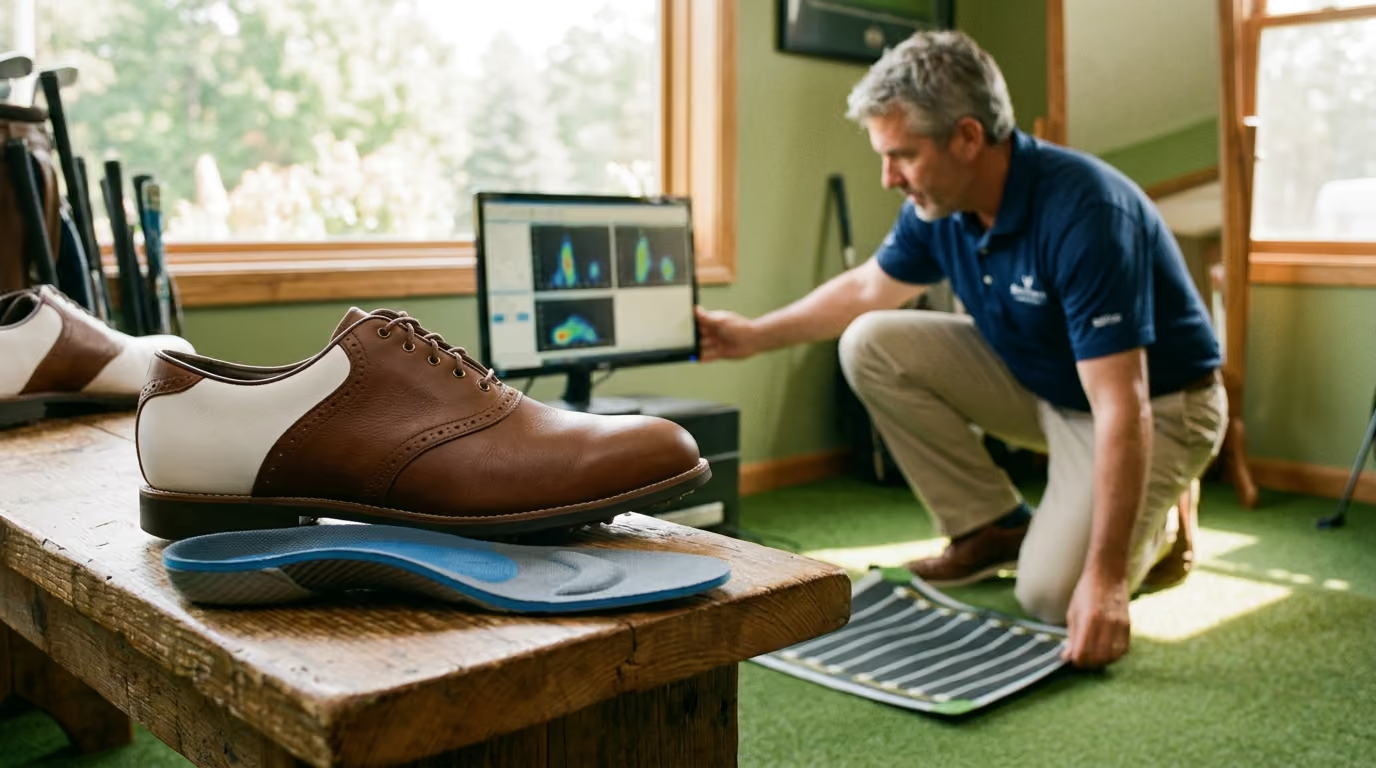

Better swing stability and extra carry distance come from choosing the right golf footwear and orthotics to support your foot health.




Proper golf footwear and orthotics are not fashion accessories. They are not simply about matching your shirt or wearing the lightest running shoe style on the grass. Instead, golf footwear is the structural foundation of your entire swing. It is the only point of contact you have with the earth during a round.
Many players over forty think that lower back pain or loss of distance comes from age. Often, the real issue starts in the feet. Without a stable base, your body makes poor adjustments. These adjustments lead to joint pain, fatigue, and missed shots.
This guide is an in-depth resource on golf footwear and orthotics. We will look at how your feet interact with the turf. We will analyze the biomechanical forces of the swing. You will learn how the right shoe construction can protect your body and add yards to your game.
We will cover real swing data, injury prevention tips, and practical exercises. This is not a quick list of top-selling shoes. It is a guide to help you play pain-free for decades.
The golf swing is a dynamic movement that starts from the ground. When you swing, your feet act as the anchor. They generate what sports scientists call Ground Reaction Force. This is the force the ground sends back up through your body when you push down.
According to research from Swing Catalyst, this force has three main parts. First, there is vertical force. This is how hard you push down into the ground. Professional players often reach a vertical force of two hundred percent of their body weight during the early downswing.
Second, there is horizontal force. This includes side-to-side force and toe-to-heel force. It helps you shift your weight smoothly. Third, there is torque. Torque is the rotational force created when your feet push in opposite directions.
These forces travel up your legs. They move through your hips and your core. Finally, they reach the clubhead. This path is called the ground-up kinetic chain.
If your shoes slip, the chain breaks. You lose power instantly. Your body has to work harder to stay balanced. This extra effort stresses your knees and your lower back.
A strong kinetic chain requires stable footwear. Your feet must remain secure. Any slide or roll reduces your swing speed. Improving this interface is a vital part of healthy ageing for active golfers.
Golfers often wonder if the type of shoe really affects their scorecard. The short answer is yes. Scientific testing shows a clear difference between spiked and spikeless designs.
A study on different handicaps showed that spiked shoes increased carry distance by an average of 4.35 yards. This difference is even larger for recreational players. High handicappers gained six yards of carry when they wore spiked shoes.
This gain comes from a better smash factor. Smash factor is the measurement of energy transfer from the club to the ball. When your feet are locked into the turf, you transfer energy more efficiently.
Low handicappers also see improvements. They gained between 2.6 and 3.7 yards of carry with spikes. Spiked shoes also showed a one percent increase in clubhead speed. They showed a two percent increase in ball speed compared to spikeless options.
Spikes grip the turf during the high-stress parts of the swing. They prevent micro-slips that you might not even feel. These tiny slips waste energy.
Spikeless shoes are great for dry, flat days. They offer comfort and convenience. However, they do not offer the same grip under high force. If you want to improve your distance, spikes are the clear choice.
Walking a golf course is a great way to stay active. A typical eighteen-hole round requires walking five to seven kilometers. This is roughly ten thousand steps on uneven ground.
This walking places a lot of stress on your feet and ankles. Musculoskeletal injuries are very common in golf. Research shows that over fifty-six percent of amateurs will suffer a golf injury in their lifetime.
For professionals, that number rises to over seventy-three percent. The foot and ankle area represents about thirteen percent of these injuries. Ankle sprains make up a significant portion of this total.
Plantar fasciitis is another frequent problem for mature players. This condition causes sharp heel pain. It happens when the thick band of tissue under your foot gets inflamed.
The repetitive weight shifting of the swing makes this tissue work overtime. If your shoes do not support your arches, the tissue stretches too much. This leads to micro-tears and chronic pain.
Ignoring these issues can ruin your playing years. Protecting your feet is a critical part of injury prevention on the course. The right shoes keep you walking pain-free for eighteen holes and beyond.
It is Saturday afternoon, and you are on the fourteenth hole. The fairway slopes severely from right to left. You face a downhill, sidehill lie with a mid-iron in your hand. The grass is still damp from an afternoon shower.
You take your stance and feel your feet slightly slide. You swing anyway, trying to make a clean strike. As you transition into your downswing, your lead foot loses its grip. It slides two inches toward the target.
Your body instantly reacts to prevent a fall. Your hips stop rotating. Your lower back arches to compensate for the loss of balance.
The result is a weak block slice into the right bunker. More importantly, you feel a sharp pinch in your lower back. Your lead ankle feels sore and strained.
This scenario happens on every golf course. It shows what happens when your footwear fails to hold the ground. Your swing path is ruined, and your body gets hurt.
The slip was not a swing flaw. It was an equipment failure. Your shoes could not handle the side-hill forces on wet grass.
Let us break down the science of the swing. When you swing, your lead foot does most of the heavy lifting at impact. Many golfers think the back foot is the power source.
In reality, the lead foot experiences higher vertical forces. Research shows the lead foot carries up to 1.1 times your body weight at impact. It also handles massive rotational torque.
If your lead shoe lacks lateral stability, your foot will roll over. This is called spinning out. It forces your knee to twist outward.
This twisting motion damages the joints. It puts lateral pressure on the ankle ligaments. Over time, this leads to chronic instability.
A good golf shoe acts like a rigid platform. It holds your foot flat against the ground. This allows your ankle to pivot safely.
The outsole must resist twisting. The upper material must support the side of your foot. This support keeps your leg aligned and protects your knee.
By securing the lead foot, you allow your hips to turn. This creates a smooth transfer of power. Your joints stay happy, and your shots stay straight.
If you feel your feet slipping during a round, you need an immediate fix. First, check your shoe laces. Many golfers tie their shoes too loosely.
Untie them and pull the laces tight from the bottom up. Secure the heel counter against the back of your foot. This simple adjustment stops your foot from sliding inside the shoe.
Second, focus entirely on turning your trail hip. Do not try to push off the ground with extra force. A smooth hip turn reduces the shear forces on your feet.
This adjustment keeps you balanced even in slick conditions. It prevents your lead foot from spinning out.
Third, use a golf ball to release tension in your feet between holes. Place a golf ball on the cart path or tee box. Press the arch of your foot onto the ball.
Roll it back and forth for thirty seconds. This quick massage releases the plantar fascia. It improves blood flow and reduces fatigue instantly.
These small steps can save your round. They keep your feet active and your swing stable.
To protect your feet long-term, you must build foot strength. Many players make the mistake of using static stretches before a round. They stand on the tee box and pull their toes upward.
Our team has analyzed many golf swings. In our experience, many players ignore their feet. I used to stand on the first tee doing long, static hamstring stretches because I thought it was the right way to warm up. I would actually feel weaker on my first drive.
Research later showed me that dynamic movements, like leg swings and torso twists, prime the nervous system much better. Changing my five minute warmup completely transformed my opening tee shots.
To build foot strength, you should practice toe splays. Sit in a chair with your bare feet on the floor. Spread your toes as wide as you can.
Hold this stretch for five seconds. Repeat this movement ten times per foot. This exercise builds the small muscles that support your arch.
Next, practice calf raises to strengthen your ankles. Stand near a wall for balance. Slowly rise onto your tiptoes.
Hold for two seconds, then lower your heels. Perform three sets of fifteen repetitions daily. This builds ankle stability for your strength routine.
Finally, consider custom orthotics. Studies show that wearing custom orthotics for six weeks increases clubhead speed by three to five miles per hour. They provide symmetrical support and reduce muscle fatigue.
These habits build a strong foundation. They make sure you can walk eighteen holes without pain. Your feet will stay strong, and your swing will stay consistent. Focus on improving your foot mobility to unlock more power.
The first common mistake is thinking spikeless shoes are always more comfortable. Spikeless shoes are often light and soft. However, they usually lack a firm heel counter.
They do not support the arch of your foot during high-stress movements. For golfers with flat feet, this lack of support leads to severe arch pain. You might feel fine on the first tee, but your feet will ache by the twelfth hole.
The second mistake is ignoring the wear on your outsoles. Spikeless shoes wear down like running shoes. Once the rubber lugs lose their edge, they lose traction.
Using worn-out shoes on wet grass is a recipe for injury. Inspect your soles every ten rounds. If the traction pattern looks smooth, replace them.
The third mistake is using cheap, store-bought shoe inserts. These generic inserts are soft and cushioned. They feel nice when you first stand up.
However, they do not correct your foot alignment. They do not address issues like lateral ankle instability or metatarsalgia. Custom orthotics are molded to your specific foot shape.
They balance your weight across your entire foot. This balance improves your proprioception, which is your body's sense of balance. Generic inserts cannot match these results.
When shopping for golf shoes, look for specific design features. First, examine the heel counter. This is the stiff cup at the back of the shoe.
Squeeze the heel counter with your hand. It should feel firm and resist collapsing. A strong heel counter keeps your heel locked in place.
Second, look for a lateral TPU wrap. This is a plastic reinforcement on the outer edge of the shoe. It stops your foot from rolling outward during the downswing.
This feature is critical for players who swing fast and generate high torque. It keeps your lead foot stable during the finish.
Third, choose the right midsole material. Look for responsive foam like Adidas Boost or New Balance Fresh Foam. These materials absorb shock while you walk.
They do not collapse under the high forces of your swing. This balance keeps your feet comfortable without losing stability.
Finally, make sure the shoe has a removable insole. This allows you to insert custom orthotics easily. It makes sure your orthotics fit perfectly without making the shoe too tight.
Your swing is only as stable as your connection to the turf, so invest in structured footwear and custom support to protect your joints and preserve your power.
No, running shoes are not designed for the lateral forces of a golf swing. Running shoes are built for forward movement. They have soft, flexible sides that offer no lateral support. During a swing, your feet will slide and roll inside the shoe. This slide reduces your power and increases your risk of ankle sprains. Running outsoles also lack the grip needed for wet grass and hilly lies.
In our experience, custom golf orthotics last between two to three years. This timeline depends on how often you play and walk the course. If you walk eighteen holes twice a week, they will wear out faster. Inspect your orthotics regularly for cracks or worn spots. If you start feeling foot fatigue or lower back pain again, it is time to visit your podiatrist.
Spiked shoes are actually beneficial because they prevent slipping. Slipping is what causes sudden, sharp twisting of the knee joint. However, you should choose a spiked shoe with good midsole cushioning. This cushioning absorbs the shock of walking on hard paths. A stiff shoe with no cushioning can transfer too much vibration to your joints. Look for a balance of solid grip and soft underfoot foam.
If you have flat feet, avoid minimalist or highly flexible spikeless shoes. Look for a structured shoe with a stiff outsole and a firm heel counter. The shoe should have excellent built-in arch support. It must have a removable insole so you can use custom orthotics. Brands that offer wide sizing are often best. This extra width allows your foot to expand naturally during the swing without pinching.
Follow Golfergy for practical insights on performance, mobility, recovery and healthy ageing. Stay connected for new articles, research-led guidance and ideas to help you play better for longer.


Explore practical resources on performance, recovery, mobility and golf longevity.
Read the Blog