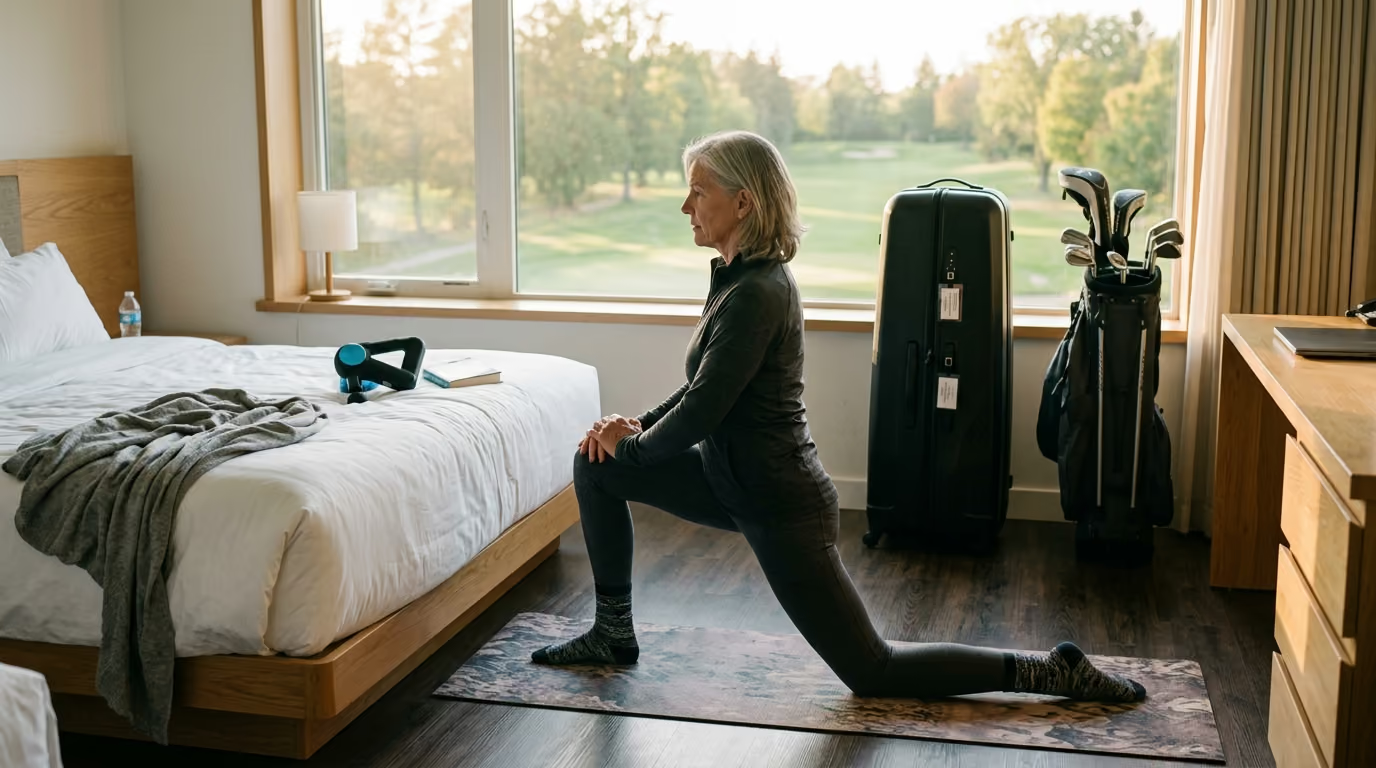
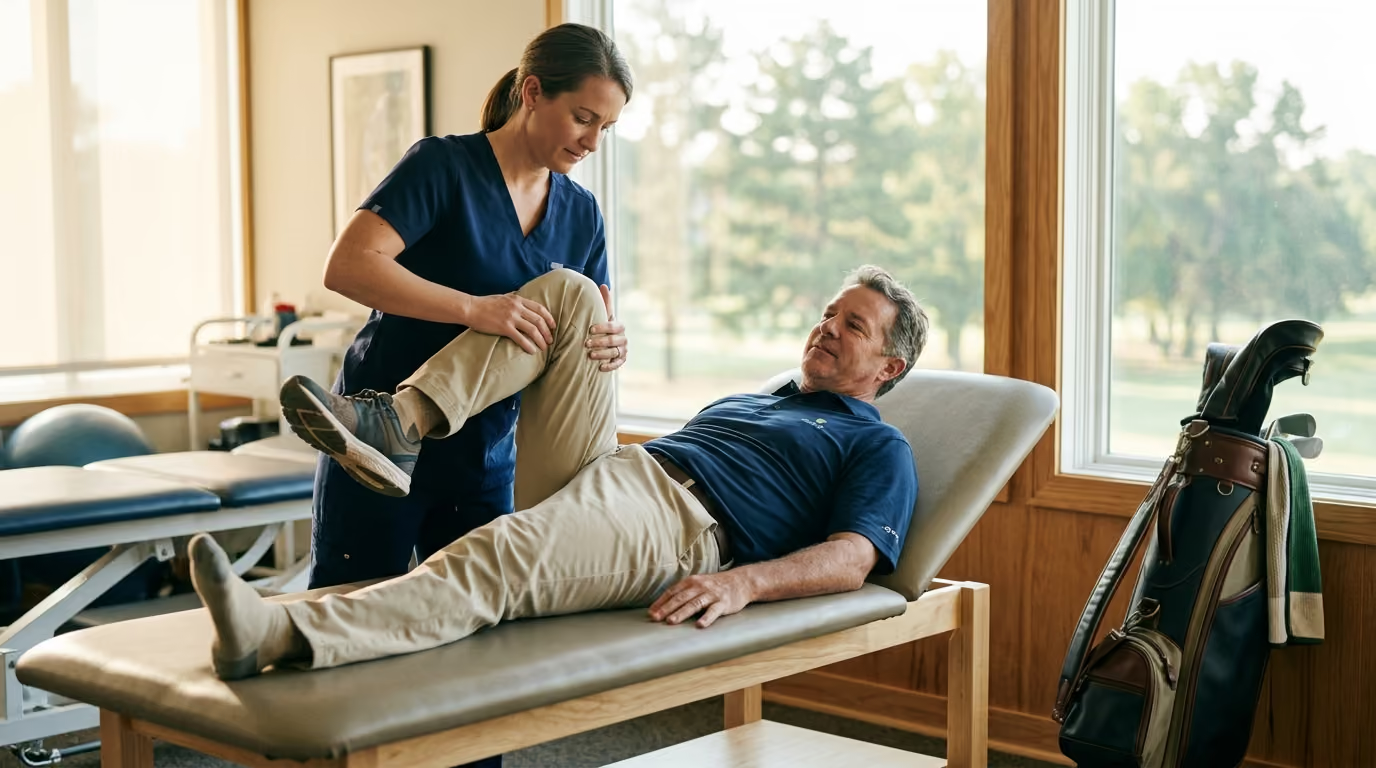
Hours of sitting at an office desk create tight hips and rounded shoulders that restrict your backswing and ruin your drives.




The sun is beginning to dip as you step onto the fourteenth tee box. You are facing a tight, narrow fairway that requires a straight, accurate drive. You reach into your bag and pull out your driver. As you address the ball, you notice a familiar, dull ache in your lower back. Your shoulders feel heavy and rounded. Your mid-back feels like a solid block of concrete.
You try to make a full backswing, but your body resists. You feel tight and restricted. To compensate, you lift your arms up quickly to get the club to the top. Your downswing is a sudden, jerky motion. The ball slices weakly into the right trees.
This scenario is common for many players. A few years ago, I noticed my swing falling apart around the 14th hole. My lower back would tighten up, and I started compensating with my arms. I spent months thinking it was a swing flaw. It was not until I started a simple evening hip mobility routine that I realized my glutes were just turning off from fatigue. Fixing that one physical limitation brought my back nine scores down drastically.
If you spend your week sitting at a desk, your body adapts to that position. This sedentary posture does not stay at your office. It follows you directly to the first tee. Understanding this physical connection is the first step to protecting your body and playing better golf.
To fix your posture, you must understand what happens to your body during a long workday. Sitting in a chair for hours creates a very specific pattern of muscle imbalances. Physical therapists call this pattern Upper Crossed Syndrome.
[Tight Muscles: Upper Back & Chest] <---- (Cross Pattern) ----> [Weak Muscles: Neck Flexors]
[Weak Muscles: Lower Mid-Back] <---- (Cross Pattern) ----> [Tight Muscles: Back of Neck]
This syndrome is defined by a cross-like pattern of tight and weak muscles in your upper body. The muscles in your chest and the back of your neck become highly active and tight. The pectoralis muscles pull your shoulders forward and roll them inward. At the same time, the muscles at the base of your skull shorten to keep your eyes looking at your computer screen.
Opposite these tight areas, other critical muscles become weak and inactive. Your deep neck flexors, which support your chin, become weak. The muscles that stabilize your shoulder blades also turn off. These include your rhomboids and your lower trapezius muscles. This imbalance forces your upper spine into a permanent, rounded shape.
In medical terms, this rounded shape is called thoracic kyphosis. In golf terms, we call it C-posture. When you sit all day, your brain stops communicating effectively with these weakened back muscles. Your nervous system simply forgets how to turn them on. This lack of muscle activation makes it nearly impossible to set up to a golf ball with athletic posture.
Sedentary habits do not stop at your middle back. The damage travels down your spine to your pelvis and hips. This lower body pattern is known as Lower Crossed Syndrome.
[Weak Muscles: Abdominals] <---- (Cross Pattern) ----> [Tight Muscles: Lower Back]
[Tight Muscles: Hip Flexors] <---- (Cross Pattern) ----> [Weak Muscles: Gluteals]
When you sit, your hips are bent at a ninety-degree angle for hours. This constant bending causes your hip flexors to shorten and tighten. Your hip flexors run from your lower spine to the top of your thigh bones. As they tighten, they pull forward on your pelvis.
This forward pull creates an anterior pelvic tilt. Your pelvis tilts forward like a bucket spilling water out of the front. This tilt arches your lower back excessively and stretches your abdominal muscles. Your core muscles lose their ability to contract and protect your spine.
At the same time, your glute muscles go completely quiet. Sitting on your glutes for eight hours cuts off blood flow and neurological activity. This is often called gluteal amnesia or the dead butt phenomenon. Your glutes are the primary power generators in the golf swing. When they do not fire, your lower back has to do all the heavy lifting during your rotation.
This lack of hip support is a primary cause of lower back pain in recreational players. By focusing on injury prevention, you can stop this chain reaction before it ruins your playing season.
A rounded upper back changes how your joints move during a swing. The thoracic spine is designed to rotate and extend. When you have C-posture, your mid-back is locked in a bent position.
Try to turn your upper body while slouching in your chair. You will find that you can barely rotate. Now, sit up tall and try to turn. Your range of motion increases instantly.
According to research from the Titleist Performance Institute, over seventy percent of amateur golfers lose their posture during their swing. When you cannot rotate your thoracic spine, your brain searches for other ways to turn. You will likely lift your torso up during the backswing. This is called a loss of posture.
To get the club back down to the ball, you must make a secondary compensation. You will slide your hips toward the ball on the downswing. This swing fault is called early extension. Early extension robs you of power and causes inconsistent ball striking.
Furthermore, a locked thoracic spine forces your shoulders to do extra work. The shoulder joint is the most common site of upper body injuries in golf. It accounts for nearly twenty-five percent of all upper extremity golf injuries. When your upper back does not rotate, your shoulder joint is pinched and strained. This leads to painful issues like rotator cuff tears and shoulder impingement.
Your lower back also suffers. Research shows that lower back pain is the most common overall golf injury. It occurs at a rate of almost ten injuries per one thousand hours of play. Your lower back is designed for stability, not rotation. When your mid-back and hips are locked, your lower back is forced to twist. This twisting under load causes disk herniations and muscle spasms.
You cannot perform a full exercise routine while standing on the first tee. You can, however, use a simple physical cue to prepare your body. This quick adjustment helps reset your nervous system before you tee off.
Start by standing with your feet shoulder-width apart. Avoid the urge to simply pull your shoulders backward. Pulling your shoulders back creates artificial tension in your upper back and arches your lower spine. Instead, focus entirely on turning your trail hip slightly backward.
Step 1: Stand tall with feet shoulder-width apart.
Step 2: Turn your trail hip slightly back to open the pelvis.
Step 3: Perform a gentle chin tuck, pulling your ears back.
Step 4: Take three slow, deep breaths into your lower ribs.
Next, perform a gentle chin tuck. Imagine you are making a slight double chin by pulling your ears straight back over your shoulders. This movement aligns your neck and releases tension at the base of your skull.
Finally, take three slow, deep breaths into your lower ribs. Let your shoulders drop naturally with each exhale. This simple sequence helps realign your pelvis and spine. It prepares your body to rotate around a stable center. Perform this quick reset before every practice shot and tee shot to build consistency.
To make lasting changes, you need a regular habit. This routine targets the root causes of desk posture. It focuses on mobility for your joints and activation for your muscles. Perform these five movements before you play or after a long day of sitting.
This movement mobilizes your entire spine and breaks up tension in your back muscles. It teaches your brain how to flex and extend your spine under control.
Movement: Cat-Cow
Setup: All fours on a soft mat. Hands under shoulders, knees under hips.
Action: Inhale and arch your back, letting your belly sink. Exhale and round your spine, tucking your chin.
Duration: 60 seconds of slow, controlled movement.
Begin on your hands and knees on a comfortable mat. Place your hands directly under your shoulders and your knees under your hips. Inhale deeply as you let your belly sink toward the floor. Gently lift your chest and look forward, arching your spine.
As you exhale, reverse the movement. Round your spine toward the ceiling like an angry cat. Tuck your chin toward your chest and pull your belly button upward. Focus on moving one vertebra at a time. Repeat this continuous motion for sixty seconds.
This dynamic movement opens your hips and your thoracic spine at the same time. It is an excellent way to prepare your body for a round of golf.
Movement: World's Greatest Stretch
Setup: Push-up position.
Action: Step left foot outside left hand. Lift left hand and rotate chest to the sky. Repeat on the other side.
Duration: 5 slow repetitions per side.
Start in a standard push-up position with your body in a straight line. Step your left foot forward and place it outside your left hand. Keep your back knee off the ground and push your back heel away from you. This stretches your back hip flexor.
Next, lift your left hand off the floor. Reach your left hand toward the ceiling, rotating your chest as far to the left as possible. Keep your right hand firmly planted on the ground. Look up at your left hand to rotate your neck. Hold this position for two seconds, then return to the start. Complete five repetitions on each side.
This exercise wakes up your sleeping glute muscles and stretches your tight hip flexors. It is crucial for restoring pelvic stability.
Movement: Glute Bridge
Setup: Lie on your back, knees bent, feet flat on the floor.
Action: Press through your heels and squeeze your glutes to lift your hips.
Duration: 15 controlled repetitions.
Lie flat on your back with your knees bent and your feet flat on the floor. Place your feet hip-width apart, about six inches from your hips. Keep your arms relaxed at your sides.
Press firmly through your heels and squeeze your glutes to lift your hips toward the ceiling. Raise your hips until your body forms a straight line from your knees to your shoulders. Do not arch your lower back at the top. Hold the squeeze for two seconds, then slowly lower your hips back down. Perform fifteen controlled repetitions.
This stretch opens your tight chest muscles, allowing your shoulders to sit in a better position.
Movement: Doorway Chest Stretch
Setup: Stand in a open doorway. Place your forearms on the door frame.
Action: Step one foot forward until you feel a gentle stretch in your chest.
Duration: Hold for 30 seconds, switch forward foot and repeat.
Stand in the middle of an open doorway. Raise your elbows to shoulder height and bend them to ninety degrees. Place your forearms and elbows flat against the door frame on each side.
Slowly step one foot forward through the doorway. Keep your chest up and your head tall. Lean your weight forward slightly until you feel a comfortable stretch across your chest and front shoulders. Hold this position for thirty seconds while breathing deeply. Step back to release the stretch, then repeat with the opposite foot forward.
This exercise builds rotational stability and core strength. It teaches your core to resist unwanted movement, protecting your lower back.
Movement: Pallof Press
Setup: Attach a resistance band to a door frame at chest height. Stand sideways to the anchor point.
Action: Hold the band at your chest, press it straight out, and resist being pulled back.
Duration: 10 slow presses per side.
Attach a resistance band to a stable post or doorway at chest height. Stand sideways to the anchor point and hold the handle with both hands. Step away from the anchor until you feel tension on the band. Hold your hands close to the center of your chest.
Keep your feet wide and squeeze your glutes. Press the band straight out in front of your chest. The band will try to pull your torso toward the anchor point. Resist this pull using your core muscles. Hold your arms straight for two seconds, then slowly return your hands to your chest. Perform ten slow repetitions, then turn around and repeat on the other side.
Using these movements regularly is an effective way to maintain your physical performance. You can read more about building physical longevity on our healthy ageing resource page.
Many golfers realize they have poor posture and try to fix it. Unfortunately, they often use methods that make the problem worse. Avoiding these mistakes will save you from pain and frustration.
The most common mistake is trying to correct rounded shoulders by pinching the shoulder blades together. Golfers often pull their shoulders back with force. This action does not fix the underlying thoracic stiffness.
Instead, it forces your lower back to arch excessively. This movement creates massive tension in your lower back before you even swing. The correct solution is to mobilize the thoracic spine so your shoulders can rest naturally.
Another error is ignoring the position of your neck and head. Many players focus entirely on their mid-back. They leave their head hanging forward over the ball.
This forward head posture limits your neck rotation. During your backswing, your shoulder must turn under your chin. If your neck is stiff and forward, your shoulder will push your head out of position. This makes it impossible to keep your eyes on the ball. Keeping your chin tucked is essential for a clean shoulder turn.
Many golfers arrive at the course, walk to the tee, and perform long, static stretches. They hold deep side bends or try to touch their toes.
Research shows that holding static stretches on cold muscles reduces power. It temporarily weakens your muscles and reduces your clubhead speed. You must use dynamic movements to prepare your body for golf. Save the long, static holds for the evening after your round.
Your physical limitations are not the only things that affect your posture. Your golf equipment can either help or hurt your setup. Working with a professional club fitter can help you identify these issues.
Equipment Feature | Postural Impact
--------------------+---------------------------------------------
Shaft Length | Too short forces a deep, rounded C-posture.
Grip Size | Too small causes hand tension and tight shoulders.
Shoe Support | Worn-out shoes cause early hip extension.
Carry Bag | Single strap causes uneven spine alignment.
If your clubs are too short, you will be forced into a deep C-posture to reach the ball. This roundness locks your spine before you even start your swing. Ensuring your clubs are the correct length allows you to stand taller and rotate more freely.
Grip size also plays a major role in upper body tension. If your grips are too small, you must squeeze the club tightly. This grip tension travels up your forearms, into your elbows, and straight into your shoulders. Tight shoulders cannot rotate. Larger grips can reduce this tension instantly.
Your golf shoes are your connection to the ground. If your shoes lack support, your feet will roll inward. This rolling motion causes your knees to collapse and your hips to slide. A stable pair of shoes helps you maintain your spine angle throughout the swing.
Finally, think about how you carry your clubs. Using a single strap bag forces one shoulder to carry all the weight. This habit creates a severe lateral tilt in your spine over eighteen holes. If you prefer to walk, use a push cart or a dual-strap bag to distribute the weight evenly. Maintaining your physical health is a key part of golf performance over a lifetime of play.
Reversing years of desk posture takes time and patience. You cannot fix a sedentary lifestyle with a quick stretch before your round. It requires consistent, daily habits.
Start by setting a timer on your computer. Every fifty minutes, stand up and stretch your chest for thirty seconds. Walk around the room and do five bodyweight squats. These small breaks keep your nervous system active. They prevent your muscles from locking into the desk position.
When you practice, focus on quality over quantity. Do not hit hundreds of balls with a tired, rounded back. Hit ten balls, then step back and perform your posture reset. This mindful practice teaches your brain how to hold an athletic position under fatigue.
Over time, these habits will change how your body feels. You will find that you have more energy on the back nine. Your swing will feel smoother, and your lower back will stop aching after your round. You can learn more about our philosophy on our about page.
Bookmark this page and return to it whenever you feel your swing getting short and tense. If you notice a sudden drop in your driving distance, check your posture first. If you experience persistent lower back or shoulder soreness after playing, review these exercises. Use this guide as a reference to keep your body moving freely and pain-free.
Your posture at your desk is the exact posture you will bring to the tee unless you actively work to reverse it.
Follow Golfergy for practical insights on performance, mobility, recovery and healthy ageing. Stay connected for new articles, research-led guidance and ideas to help you play better for longer.


Explore practical resources on performance, recovery, mobility and golf longevity.
Read the Blog