Spa massage offers simple relaxation, but clinical manual therapy targets the deep tissue restrictions that cause swing stiffness and chronic golf pain.




If you have ever typed "how to fix stiff lower back golf swing" or "golfers elbow relief" into a search engine, you are not alone. Many golfers over forty face these exact issues. You want a clear, proven path to regain your movement. This guide provides a detailed look at clinical manual therapy to help you play without pain.
Most players think of massage as a luxury. They book a session at a spa to relax after a tough weekend tournament. This is a mistake if your goal is better movement. Spa massages relax your nervous system but do not address tissue restrictions.
To play your best, you need clinical manual therapy. This is a highly targeted approach that treats your body as a system of levers. It addresses the real causes of pain and stiffness. Let us look at how professional manual therapy can keep you on the course for years.
A cold Saturday morning is the perfect place to see how your body handles physical strain. You are standing on the tee box of a long par four. The wind is blowing directly into your face. You decide to swing a little harder to carry the fairway bunker.
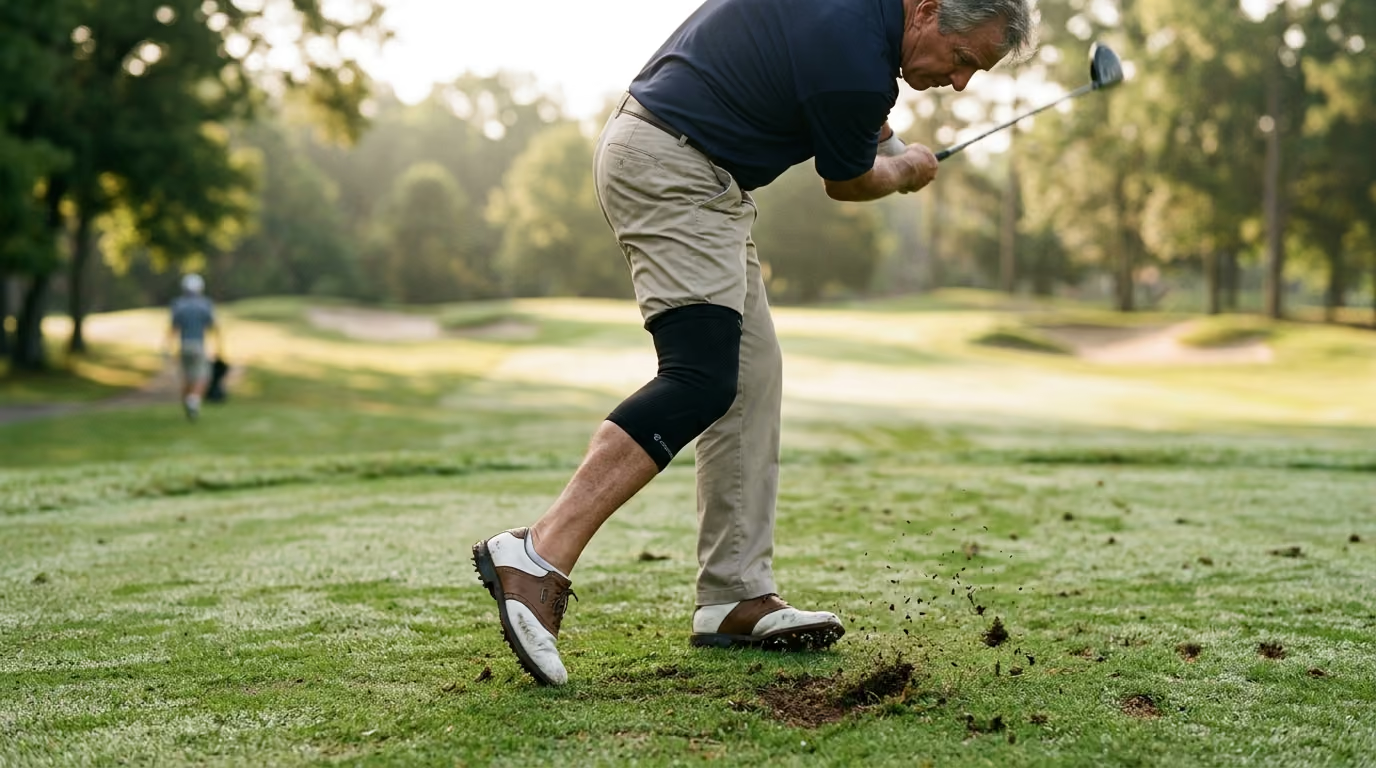
You take the club back and try to turn your shoulders fully. Instead of a smooth pivot, you feel a sharp catch in your mid back. Your lead shoulder stops short of your chin. To make up for this, your arms lift the club too high.
This mechanical break causes a major slice into the deep rough. Your trail hip feels locked. Your lower back hurts before you even reach the green. This is not a swing flaw that a simple lesson can fix.
It is a physical limitation in your body. We call this process the kinetic chain. The golf swing transfers force from your feet up to the club. If one link in this chain is stiff, other parts must work twice as hard.
This extra workload often leads to pain in the lower back or joints. You can find more about managing these swing changes in our resources on golf performance. Clinical massage does not just look at where you feel pain.
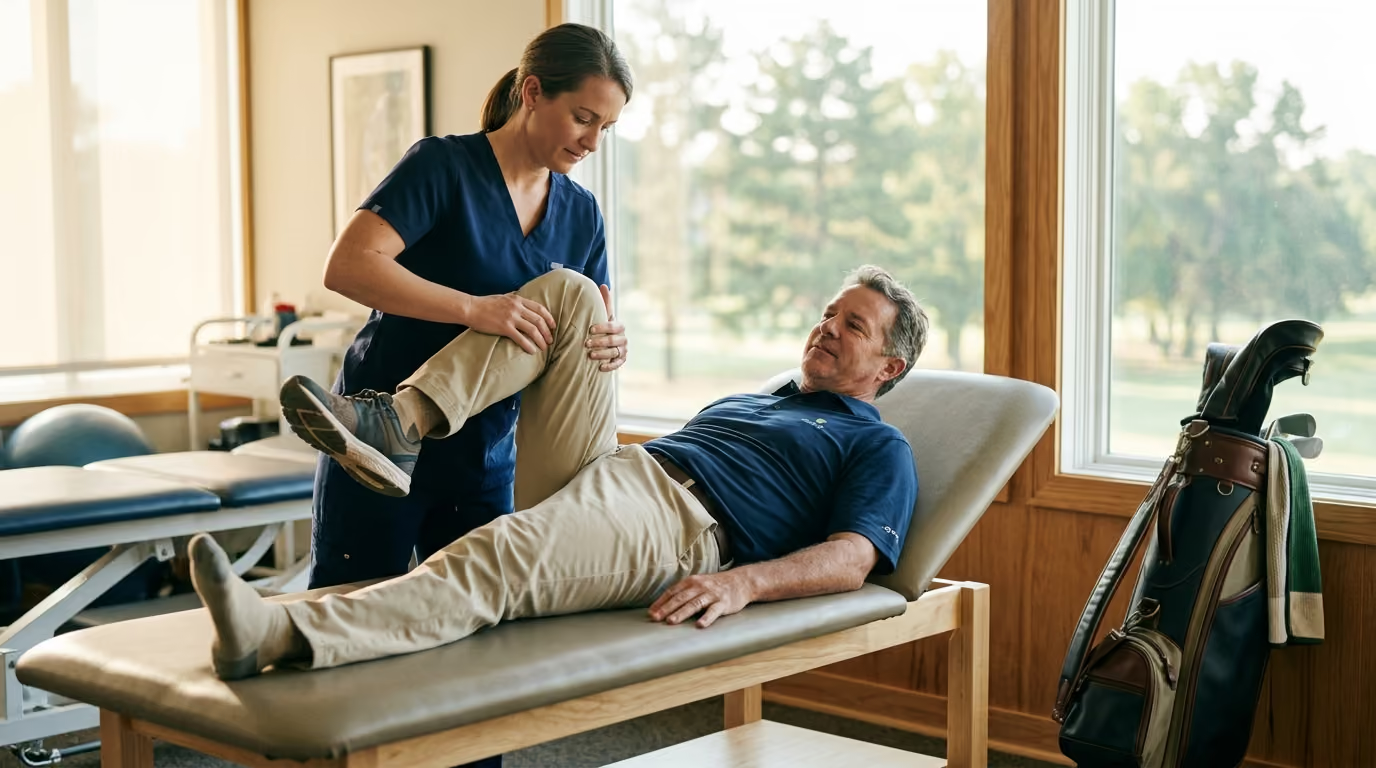
A therapist examines your entire upper quadrant from your neck to your hand. They also check your lower quadrant from your hips to your spine. A restriction in your foot can cause pain in your shoulder. A tight hip can cause your elbow to flare. Clinical manual therapy looks at the whole body to find these hidden blocks.
To swing a golf club well, your body needs three main movements. These are lateral bending, rotation, and extension. The Titleist Performance Institute calls these the three pillars of swing mobility. If you lack movement in any of these areas, your swing will suffer.
Your mid back is called the thoracic spine. It is built to turn and twist. Your lower back is called the lumbar spine. It has five large vertebrae designed for stability.
If your thoracic spine cannot turn, your lower back tries to make up for it. The lumbar spine twists too far. This causes wear and tear on your spinal discs. Over time, this leads to chronic lower back pain.
Fascia is a thin layer of connective tissue that wraps around your muscles. When you repeat the same golf swing thousands of times, this tissue can thicken. It forms sticky spots called adhesions. These adhesions glue your muscles together.
Your latissimus dorsi, subscapularis, and thoracolumbar fascia get tight. Releasing these tissues allows your shoulders to turn freely. This prevents your body from arching the lower back to cheat for swing depth. To keep your joints moving well, look at our section on mobility.
The latissimus dorsi is the largest muscle in your upper body. It connects your upper arm to your spine and pelvis. When this muscle is tight, it acts like a strap that holds your arm down. You cannot lift your club to the proper height without tilting your spine.
The subscapularis is a deep rotator cuff muscle on the front of your shoulder blade. It gets tight from sitting at a desk or driving. This tightness locks your shoulder in an internal rotation. It prevents you from achieving a proper follow through. Clinical massage targets these deep tissues to restore your natural movement.
Active Release Technique is a patented manual therapy for soft tissues. Practitioners use their hands to find tight spots in your muscles and ligaments. They apply deep tension to these specific areas with their fingers or thumbs.
While holding this tension, they ask you to move your muscle. This is called a pin and stretch method. It breaks up sticky scar tissue underneath the skin. It allows muscles to slide past each other without friction.
For example, a therapist might pin your trail hip muscle. They will then have you slowly rotate your hip outward. Focus entirely on turning your trail hip during this movement. This targeted work restores sliding motion between muscle groups.
It is very different from a standard spa massage. It targets the exact tissues that block your backswing pivot. If you want to study injury avoidance, look at our guides on injury prevention.
During an Active Release Technique session, you are an active participant. You do not just lie on a table and fall asleep. You move your joints through their natural pathways under the guidance of the therapist.
This active movement retrains your brain to use the newly released muscle. It builds a stronger connection between your mind and your body. This connection is vital for maintaining a consistent swing path. It helps you feel the correct position at the top of your backswing.
The therapy also targets the nerves that travel through your muscles. Tight muscles can pinch these nerves, causing numbness or weakness. Active Release Technique frees these nerves from surrounding tissue.
This helps restore full strength and feeling to your hands and fingers. You will notice a lighter grip on the club. This lighter grip leads to a smoother release through the ball.
Another effective clinical tool is the Graston Technique. This method uses specially designed stainless steel instruments. These tools have rounded edges to slide over your skin.
The therapist uses the tools to feel for tissue rough spots. It works like a metal detector for scar tissue. When the tool passes over an adhesion, it feels bumpy to the therapist.
Once found, the therapist applies cross fiber strokes. This transverse friction massage stimulates blood flow to the area. It helps align the collagen fibers in your muscles.
This process is excellent for older, dense scar tissue. It is commonly used on the forearms and the bottoms of the feet. It helps restore the elastic glide needed for high club head speed.
The stainless steel material allows the therapist to feel deep into the tissue. The vibrations from the tool tell the therapist exactly where the tissue is unhealthy. You might feel a slight scraping sensation during the treatment.
This is normal as the tool breaks down the rigid fibers. The body responds by sending healing cells to the area. This process turns old, stiff tissue back into healthy, flexible muscle.
It is highly effective for chronic issues that have lasted for years. Many golfers find relief after just a few sessions. This therapy is a key part of our focus on recovery.
By clearing out old scar tissue, you allow your muscles to stretch fully. This flexibility is what gives you a wider swing arc. A wider swing arc naturally leads to more distance off the tee.
Clinical massage is not just for pain relief. It also improves your performance on the course. Research shows clear benefits for swing speed and distance.
A study published by NMT Midwest looked at targeted massage on the mid back. Golfers who received this treatment saw their thoracic rotation improve by an average of 12.02 degrees. This extra turn led to a swing speed increase of 4.34 miles per hour.
Other research in the Journal of Strength and Conditioning Research confirms these findings. Specialized manual therapy led to significant improvements in ball speed and club head speed.
Golfers also gained notable yards in carry distance and total distance. Even short massage sessions can show rapid results. Research indicates that brief sessions of five to twelve minutes can offer immediate recovery benefits.
These short sessions are much better for recovery than long, deep sessions. Long sessions can make your muscles feel too relaxed or weak. A short, focused session keeps your muscles active and ready to perform.
It helps reduce Delayed Onset Muscle Soreness after a long weekend of golf. This means you can practice more often without getting hurt. Consistent practice is the fastest way to lower your handicap.
Improved mobility also means you use less effort to swing the club. You will feel less tired when you reach the back nine. This extra energy helps you focus on your shots.
Many matches are won or lost on the final three holes. Keeping your body fresh helps you finish your round strong. It makes the game much more enjoyable.
Medial epicondylalgia is commonly known as golfer's elbow. It involves the tendons on the inside of your forearm. These tendons connect the muscles that flex your wrist to your elbow bone.
This issue often starts from hitting the ground fat or gripping the club too tightly. To treat this, a clinical therapist uses a precise four step protocol. First, they use broad strokes across the forearm to spread the fascia.
Second, they apply deep cross fiber work directly to the tendon. Graston tools are highly useful for this phase to break down scar tissue. Third, they perform pin and stretch work on the muscle belly.
Finally, they check the ulnar nerve. If you feel tingling in your ring or pinky finger, the nerve might be trapped. The therapist will guide you through nerve sliding movements to free the tissue.
This protocol is much better than just resting your arm. Rest does not break up the scar tissue that has formed on the tendon. When you start playing again, the pain usually returns.
Clinical manual therapy addresses the root cause of the tendon irritation. It restores the proper length of your forearm muscles. This reduces the pull on your elbow joint when you swing.
You can read more about managing joint health in our articles on healthy ageing. Keeping these tendons healthy is crucial for your long term enjoyment of the game.
It also helps to look at how you grip the golf club. A tight grip forces your forearm muscles to work constantly. This constant tension starves the tissue of oxygen.
It leads to micro tears in the tendon. A clinical therapist can show you how to relax your hands. This simple change can prevent the elbow pain from coming back.
Many golfers make mistakes when using manual therapy. The first error is the relaxation misconception. You should not get a soft relaxation massage right before you play.
These gentle strokes lower your muscle tone and nervous system drive. This leaves your muscles too soft to generate power. Your body needs active muscle tension to swing fast.
Another error is believing that massage flushes lactic acid. Modern research shows that manual therapy does not change lactate levels in muscles. Light walking is far more effective for clearing waste products after a round.
Timing is also critical. Avoid deep tissue massage within forty eight hours of a tee time. This deep work can leave you sore or alter your body awareness on the course.
If you get a deep massage on a Thursday, your swing might feel off on Saturday. Your brain needs time to adjust to your new range of motion. Schedule deep work for your longer breaks from the game.
Lastly, watch for serious warning signs. Never massage a fresh muscle bruise, as this can cause bone to grow inside the muscle. This condition is called Myositis Ossificans.
Avoid deep massage on a sore calf that might be a blood clot. Do not massage newly torn muscles or tendons during the first three days of injury. Always consult a medical professional if you have sudden, severe pain.
If you feel tight during a round, you can use a quick on course fix. Place your golf club across your upper back. Stand with your feet shoulder width apart and gently turn your shoulders. Focus entirely on turning your trail hip as you twist.
This simple movement helps activate your deep rotational muscles. It alerts your nervous system to use your hips instead of your lower back. Perform this stretch before every drive to keep your swing smooth.
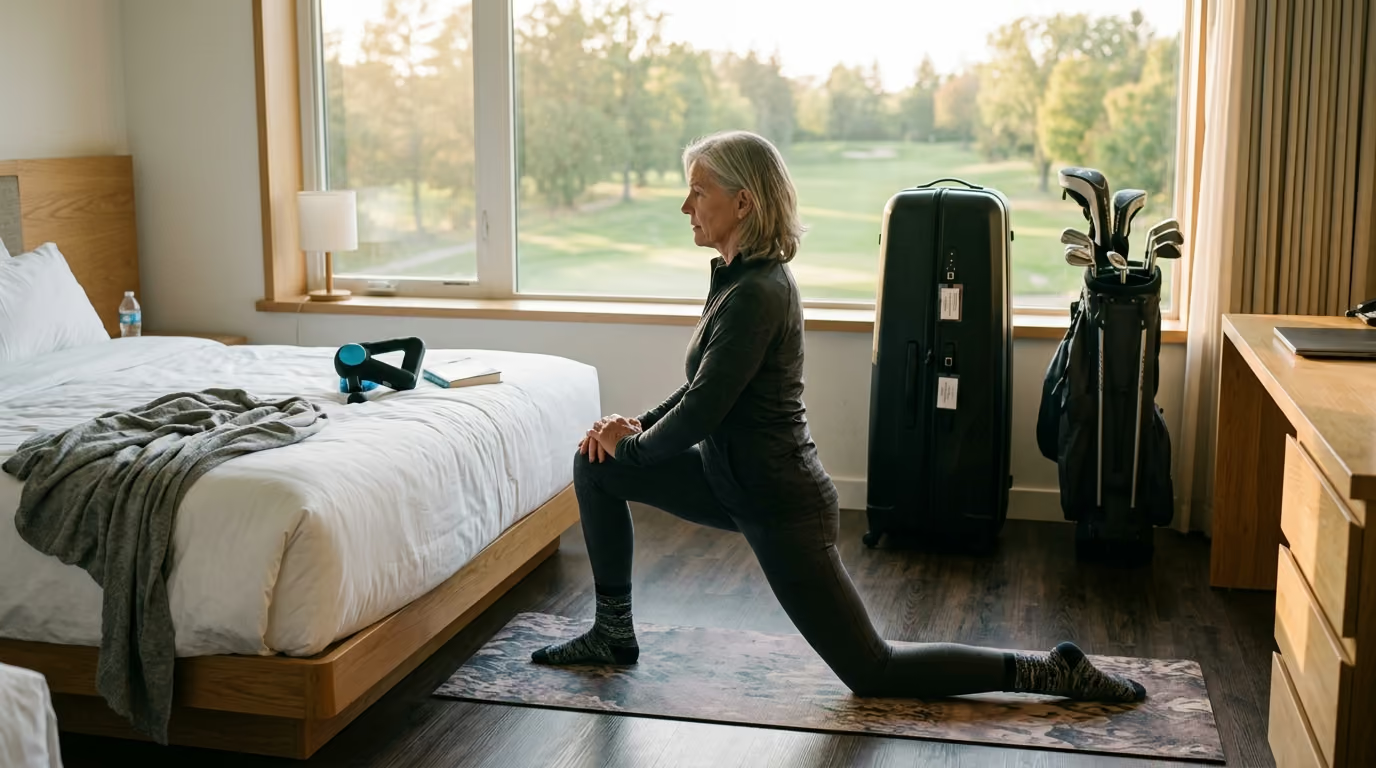
For long term health, you need a daily routine. Focus on your strength and flexibility every morning. A simple half kneeling hip flexor stretch works wonders. Hold the stretch for thirty seconds on each side without bouncing.
You should also check your equipment. Grips that are too small make you squeeze the club harder. This extra tension strains your forearms and leads to elbow pain.
Stiff shafts can also transmit more vibration to your joints. Consider lighter graphite shafts if you struggle with joint fatigue. Proper golf shoes with good arch support keep your ankles stable.
Your shoes are the foundation of your swing. If your feet slide or roll, your knees and hips must compensate. This extra movement ruins your swing path and causes joint pain.
Make sure your cleats are in good condition. Replace them regularly to maintain a solid grip on the ground. This stability allows you to transfer power efficiently through your body.
To get the most out of clinical massage, you must coordinate your therapy with your playing schedule. Use deep manual therapy during your off days to rebuild tissue health. Save light movement and active stretching for the morning of your round.
You can learn more about managing your body as you age on our about page. We are dedicated to helping mature golfers stay active and competitive.
Our team provides research backed advice that you can trust. If you have questions about specific therapies, feel free to visit our contact page. We are always happy to help you find the right path for your health.
You can also read our latest articles on our blog. We cover everything from strength training to recovery tools. For more detailed guides, check out our resources page.
Here is your checklist for this week:
Remember that clinical manual therapy should restore functional movement to your golf swing rather than just make you feel relaxed.
Follow Golfergy for practical insights on performance, mobility, recovery and healthy ageing. Stay connected for new articles, research-led guidance and ideas to help you play better for longer.


Explore practical resources on performance, recovery, mobility and golf longevity.
Read the Blog