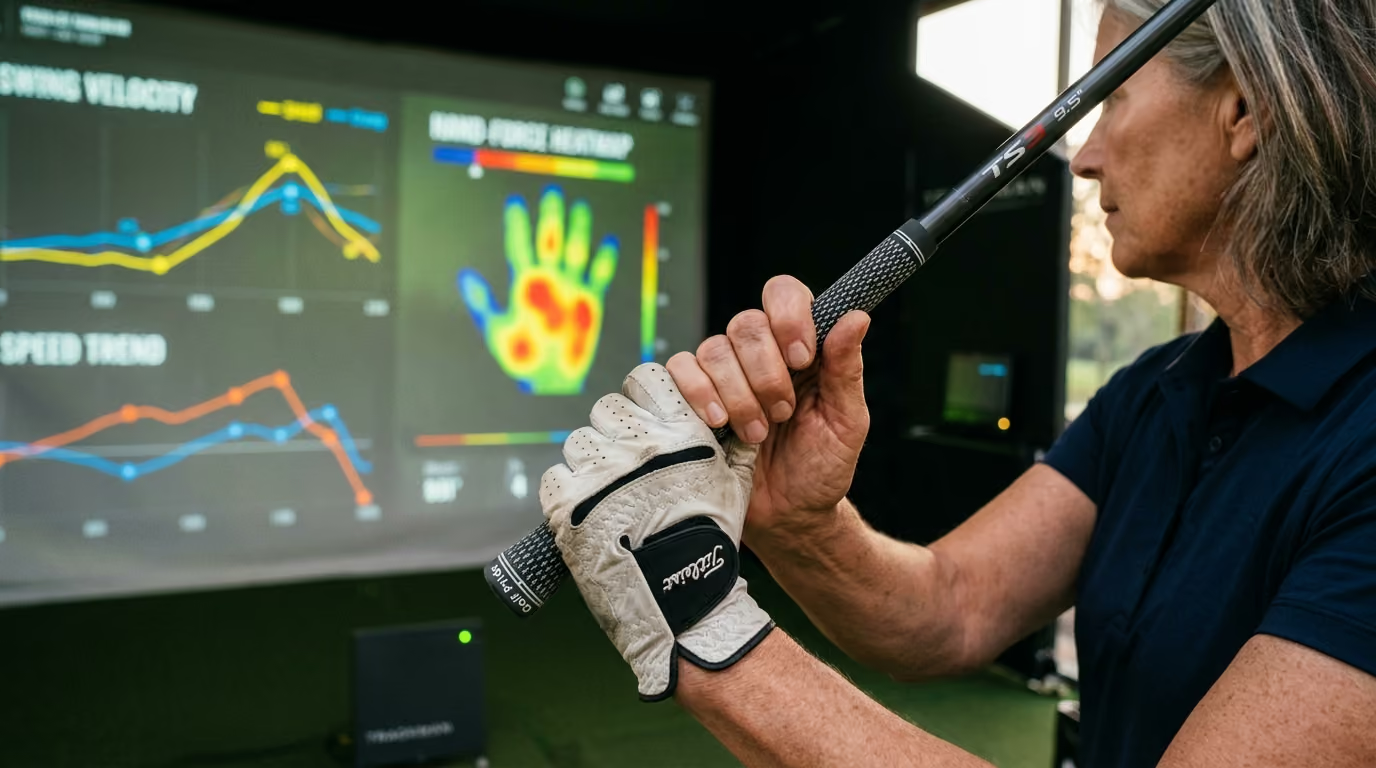

Six millimeters of spinal height loss can occur during nine holes of carrying a golf bag, which alters posture and limits swing rotation.




This guide is not a debate about golf etiquette or speed of play. It is a detailed physical comparison of how you transport your clubs. We will look at the load you put on your spine, your joints, and your heart during a round of golf.
How you move across the turf is not a minor detail. Golfers over 40 face unique demands during a four-hour round of golf. The way you navigate the course directly impacts your swing, your recovery, and your playing years.
This article presents the science of carrying, pushing, and riding. You will understand how each choice changes your movement patterns. By looking at the biomechanical facts, you can make the best choices to preserve your body for long-term health. Using smart strategies for golf longevity can make a massive difference in how your joints feel after 18 holes.
You are standing on the 14th tee box. You feel a dull, nagging ache in your lower back. Your shoulders feel heavy, and your posture has slumped forward. You try to turn your hips, but your spine feels stiff. Your drive slices into the right trees because your body could not rotate.
This situation is incredibly common for golfers who carry their clubs. You have lifted your heavy bag over fifty times today. Your back muscles are exhausted, and your spine is compressed.
Carrying a golf bag places a constant vertical load on your spine. Research published in the British Journal of Sports Medicine shows that carrying an 8 kg bag, which is about 17.6 pounds, causes the spine to shrink. Over a simulated 9-hole round, golfers who carried their bags lost an average of 6 millimeters of height.
This shrinkage happens because of vertical spinal compression. The vertebrae in your back squeeze together under the weight of the bag. This pressure forces water out of the soft, gel-like intervertebral discs.
When these discs lose water, they become thinner and less flexible. This loss of cushion puts more pressure on the facet joints in your spine. Your back becomes stiff, and your ability to rotate your torso drops significantly.
To balance a heavy weight on your back, your body must adjust its center of gravity. You naturally lean your torso forward. This creates a rounded posture in your upper back.
This rounded posture places intense strain on your primary golf muscles. The muscles in your lower back and neck must contract constantly to keep your head up. This static contraction limits blood flow to those tissues.
Lactic acid builds up quickly in your lower back. When you reach your ball, your muscles are too tired to support a proper golf swing. Your kinetic chain, which relies on a strong and flexible spine, loses its solid foundation.
The physical strain of carrying is not just about walking with weight. It is also about the repetitive lifting cycle. During an 18-hole round, you lift and lower your bag sixty to eighty times.
Each time you pick up your bag, you bend forward and twist your torso. This movement combination is highly dangerous for your lumbar spine. It applies rotational shear force to your compressed discs.
Over time, this cumulative stress can lead to chronic disc issues or severe nerve pinching. Focusing on proactive injury prevention keeps you on the fairway instead of resting on the couch.
Many golfers believe that push carts are only for players who cannot carry. Biomechanical studies show that pushing a cart is far better for your joints. It helps maintain the integrity of your kinetic chain from tee to green.
The human body is built for symmetrical movement. Symmetrical pushing keeps your pelvis neutral and your spine aligned. When you push a cart in front of you, both arms work together to share the load.
This balanced effort keeps your chest open and your shoulders relaxed. Your walk remains natural, and your stride stays long. Symmetrical walking distributes ground reaction forces evenly across both legs.
This even distribution protects your knees and hips from uneven wear. It helps in preserving mobility throughout your entire swing. Your hips can turn freely because they have not been subjected to uneven loads.
Many golfers use a push cart but pull it behind them with one hand. This pulling motion is a dangerous habit for your joints. It creates a twisting effect on your spine while you walk.
Pulling forces your torso to rotate to one side. It subjects your leading shoulder and elbow to constant, asymmetrical tension. This single-sided pull can trigger rotator cuff strain or golfer's elbow.
It also causes muscle imbalances across your lower back. One side of your lower back tightens to resist the pull, while the other side stretches. This imbalance makes your spine highly vulnerable to injury during the rotational forces of your swing.
Pushing a cart reduces the downward force on your lower joints. When you carry a bag, your knees and ankles absorb your body weight plus the bag's weight. Over a five-mile walk, this extra weight adds up to thousands of pounds of cumulative pressure.
Pushing a cart transfers the weight of your clubs to the wheels of the cart. Your knees and ankles only have to support your own body weight. This reduction in joint pressure is critical for golfers with mild knee arthritis or ankle instability.
There is a common belief that carrying a bag provides a better workout. Golfers often choose to carry because they want to burn more calories. Science reveals a very different story about energy expenditure on the golf course.
A study published in the European Journal of Sport Science analyzed energy expenditure during golf. Researchers measured the actual calorie burn of golfers using different transit methods over 18 holes.
The results surprised many traditional golfers. Walking with a manual push cart actually burned the most energy, totaling 756 calories. Carrying the bag burned 688 calories, while using an electric cart burned 663 calories.
This calorie burn paradox happens because of rolling resistance. Pushing a cart across thick grass requires constant, steady muscle engagement. This effort keeps your metabolism elevated without putting high vertical stress on your skeleton.
The way you transport your clubs changes how your body uses oxygen. Pushing a cart reduces your oxygen consumption, known as VO2, by 10.4 percent compared to carrying.
When you carry a bag, your upper body muscles must work constantly to hold the straps. These muscles squeeze the blood vessels in your shoulders and chest. Your heart has to pump harder to push blood through these squeezed vessels.
This extra cardiovascular work increases your overall heart rate. Pushing a cart allows your upper body to remain relaxed, keeping your heart rate more stable. Your cardiovascular system operates with much greater efficiency.
Carrying a bag produces the highest overall heart rate fluctuations. Climbing a steep hill with an 18-pound bag can push your heart rate past 130 beats per minute. This spike can push you past your anaerobic threshold.
When you reach the green, your body is producing lactic acid faster than it can clear it. Your fine motor skills degrade when your heart rate is highly elevated. Your hands may shake slightly, and your touch on the putter becomes inconsistent.
Using a push cart prevents these extreme heart rate spikes. It keeps your heart rate in a steady, aerobic zone. When you step onto the green, your breathing is calm, and your nervous system is relaxed. This physical stability is vital for precise shots and consistent putting.
Riding in a motorized golf cart seems like the most relaxing choice. It is often recommended for older golfers or those recovering from injury. Riding presents its own unique physical challenges that you must manage.
The biggest physical risk of riding in a cart is the lack of consistent movement. A round of golf takes four to five hours. If you ride, you spend a large portion of that time sitting on a vinyl seat.
Sitting for long periods causes your hip flexors to shorten and tighten. The psoas muscle, which connects your spine to your femur, becomes highly restricted.
When you step out of the cart, you immediately try to swing a club at high speed. A tight psoas muscle pulls your pelvis forward during your swing. This pelvic tilt restricts your hip rotation and forces your lower back to arch excessively. This movement pattern can trigger sharp back pain during your follow-through.
Motorized golf carts do not have advanced suspension systems. When you drive over bumpy fairways and concrete paths, the cart shakes violently.
These vibrations travel directly up your spine while you are sitting down. In a seated position, your spine cannot absorb shocks as well as it does when you stand. Your legs and hips are bypassed, leaving your lower back discs to absorb the impact.
This micro-trauma can cause inflammation in your spinal joints. By the end of 18 holes, you may feel stiff and sore, even though you did not walk.
Riding in a cart creates an unhealthy physical cycle. You sit in a cold, inactive state for several minutes while the cart travels. Then, you step out and immediately perform an explosive, rotational athletic movement.
This transition from cold to explosive is highly dangerous for your muscles. Cold muscles lack elasticity and are prone to micro-tears.
If you choose to ride, you must find ways to stay warm. Walk from the cart path to your ball instead of driving directly to it. Stand up and move your joints while you wait for your partners to hit.
If you must carry your bag, or if you feel tension building during a round, you need an immediate solution. You cannot perform a full gym routine on the tee box. You can use simple, targeted movements to reset your spine.
This movement helps relieve vertical pressure on your spinal discs. It encourages your tight lower back muscles to release. Perform this stretch on the tee box while waiting to hit.
First, stand with your feet slightly wider than shoulder-width apart. Let your arms hang loosely by your sides.
Focus entirely on turning your trail hip backward while keeping your chest tall. Place your hands on the back of your pelvis for support.
Gently push your hips forward while arching your upper back slightly. Hold this position for five seconds while exhaling deeply. Repeat this movement three times to help decompress your lower spine.
If you use a push cart, your chest and front shoulders can tighten over time. This tension restricts your shoulder turn during your backswing. You can use your cart to open up these muscles.
Stand facing your push cart. Place both hands firmly on the handlebar.
Slowly step backward until your arms are fully extended. Bend at your hips and lower your chest toward the ground.
Keep your spine straight and your knees slightly bent. Focus on letting your chest sink down between your shoulders. Hold this stretch for ten seconds, breathing deeply into your upper back.
You can reset your posture while walking between shots. This is especially helpful if you carry a bag.
Let your arms hang straight down at your sides. Turn your palms outward so they face away from your thighs.
This simple hand rotation forces your shoulder blades to slide back and down. It lifts your chest and pulls your head back into alignment over your spine. Walk this way for thirty yards to break the forward-hunching pattern.
To navigate the course without pain, you must build balanced strength in your core and legs. You do not need to lift massive weights. You need to focus on stability, endurance, and resisting rotational forces. Incorporating targeted strength work into your weekly routine will protect your joints.
This exercise builds the deep core strength required to carry a bag or push a cart up steep hills. It trains your oblique muscles to resist sideways bending.
Step 1: Hold a dumbbell in your right hand.
Step 2: Stand tall with your shoulders pulled back.
Step 3: Walk slowly in a straight line for 30 steps.
Step 4: Keep your torso perfectly upright.
Step 5: Swap hands and repeat the walk.
Focus entirely on keeping your pelvis level as you walk. Do not let the weight pull your torso to the side. Perform three sets of this exercise on each side twice a week.
This movement strengthens your hamstrings, glutes, and lower back. These muscles act as the anchor for your spine during your walk and your swing.
First, stand with your feet hip-width apart. Hold a golf club across your thighs.
Push your hips straight back as if you are trying to touch a wall behind you. Let your knees bend slightly as your torso leans forward.
Keep your spine long and straight throughout the movement. Slide the golf club down your thighs toward your knees.
Squeeze your glutes to stand back up to the starting position. Perform three sets of twelve repetitions to build endurance in your lower back.
This exercise mimics the exact forces required to push a heavy cart. It builds strength in your chest, shoulder, and core simultaneously.
Attach a resistance band to a door frame at chest height. Stand facing away from the door, holding the band in your right hand.
Step forward until you feel tension in the band. Keep your feet in a staggered stance for stability.
Press the band straight out in front of your chest. Focus entirely on keeping your torso quiet and resisting any twisting motion.
Slowly return to the starting position. Perform three sets of ten repetitions on each arm to build symmetrical pushing strength.
Many golfers make simple errors when trying to reduce physical strain on the course. These mistakes often end up causing more harm than good.
Many golfers who carry a bag use a single strap. They do this because it is faster to lift and drop between shots.
This is a major biomechanical error. Carrying a bag on one shoulder forces that shoulder to rise to keep the bag from sliding off. Your spine must bend laterally to balance the uneven load.
This uneven posture puts intense pressure on one side of your lower back. It can quickly cause muscle spasms and joint inflammation. Always use double straps and adjust them so the bag sits high on your back.
Even when golfers use double straps, they often let the bag hang too low. The bag bounce against their lower back or buttocks while they walk.
A low-riding bag increases the leverage of the weight on your spine. It pulls your shoulders backward, forcing you to lean forward excessively to compensate.
This posture increases the shear force on your lumbar vertebrae. Adjust your shoulder straps so the main weight of the bag rests on your mid-back. The bottom of the bag should sit above your belt line.
When using a push cart, many golfers push with their arms fully extended. They keep their torso upright and use their shoulder muscles to propel the cart.
This technique quickly fatigues the rotator cuff and upper back muscles. It also reduces your control over the cart on uneven slopes.
Instead, keep your elbows bent and close to your ribs. Lean your torso forward slightly from your hips. Use your body weight and your large leg muscles to push the cart forward, keeping your shoulders relaxed.
Your choice of gear directly affects how your body feels after 18 holes. Making small changes to your equipment can prevent chronic pain and improve your energy levels.
If you prefer to carry, you must select the right bag. Look for a ultra-lightweight stand bag that weighs less than four pounds empty.
Choose a bag with a thick, padded hip pad. This pad cushions your pelvis from the impact of the bag as you walk.
Make sure the dual shoulder straps are thick and contoured. They should distribute the weight evenly across your collarbones and upper back.
Clean out your bag regularly. Remove extra golf balls, heavy training aids, and wet towels. Keeping your total bag weight under 18 pounds is vital for spinal health.
Walking 18 holes is equivalent to walking five to six miles. Your feet must absorb the impact of every step on hard, uneven ground. Making proper gear choices will improve your recovery time after the round.
Select golf shoes with thick, supportive cushioning in the midsole. This cushioning helps absorb ground reaction forces before they reach your knees and lower back.
Avoid shoes with extremely stiff, rigid soles. Your feet need to flex naturally as you walk to keep your calf muscles active.
Look for shoes with a wide toe box. This allows your toes to splay naturally, providing a wider, more stable base during your golf swing.
If you use a push cart, its design and maintenance matter. Choose a cart with large, wide wheels. Large wheels roll much easier over thick rough and soft turf, reducing the effort required to push.
Check the alignment of your front wheel regularly. If the cart veers to one side, you must constantly fight to keep it straight.
This constant correction creates asymmetrical strain on your shoulders and wrists. Lubricate the wheel bearings once a season to reduce rolling resistance. A smooth-rolling cart preserves your energy for your shots.
Yes. Electric trolleys require almost no physical effort to move across the turf. They allow you to walk with an upright, natural gait. This keeps your heart rate low and preserves your energy for your swing. They are highly beneficial for golfers with back pain or heart conditions.
A pencil bag reduces the total weight, but it does not eliminate spinal compression. You still have to bend down to pick up the bag dozens of times. A lightweight stand bag with dual straps is a better choice if you must carry. The stand prevents you from having to bend all the way to the ground to retrieve your clubs.
If you have severe knee arthritis, walking five miles can cause excessive joint wear and inflammation. Riding in a cart is often the best choice to avoid overloading your knees. Just remember to stand up and do light stretches between shots to prevent your hips and lower back from stiffening.
Using an electric trolley burns approximately 663 calories over 18 holes. This is only slightly less than carrying. You still get the immense cardiovascular benefits of walking five miles without the spinal strain.
Protect your spine and joints by pushing your clubs symmetrically or using an electric trolley to keep your posture upright and your heart rate steady for better golf longevity.
Follow Golfergy for practical insights on performance, mobility, recovery and healthy ageing. Stay connected for new articles, research-led guidance and ideas to help you play better for longer.


Explore practical resources on performance, recovery, mobility and golf longevity.
Read the Blog