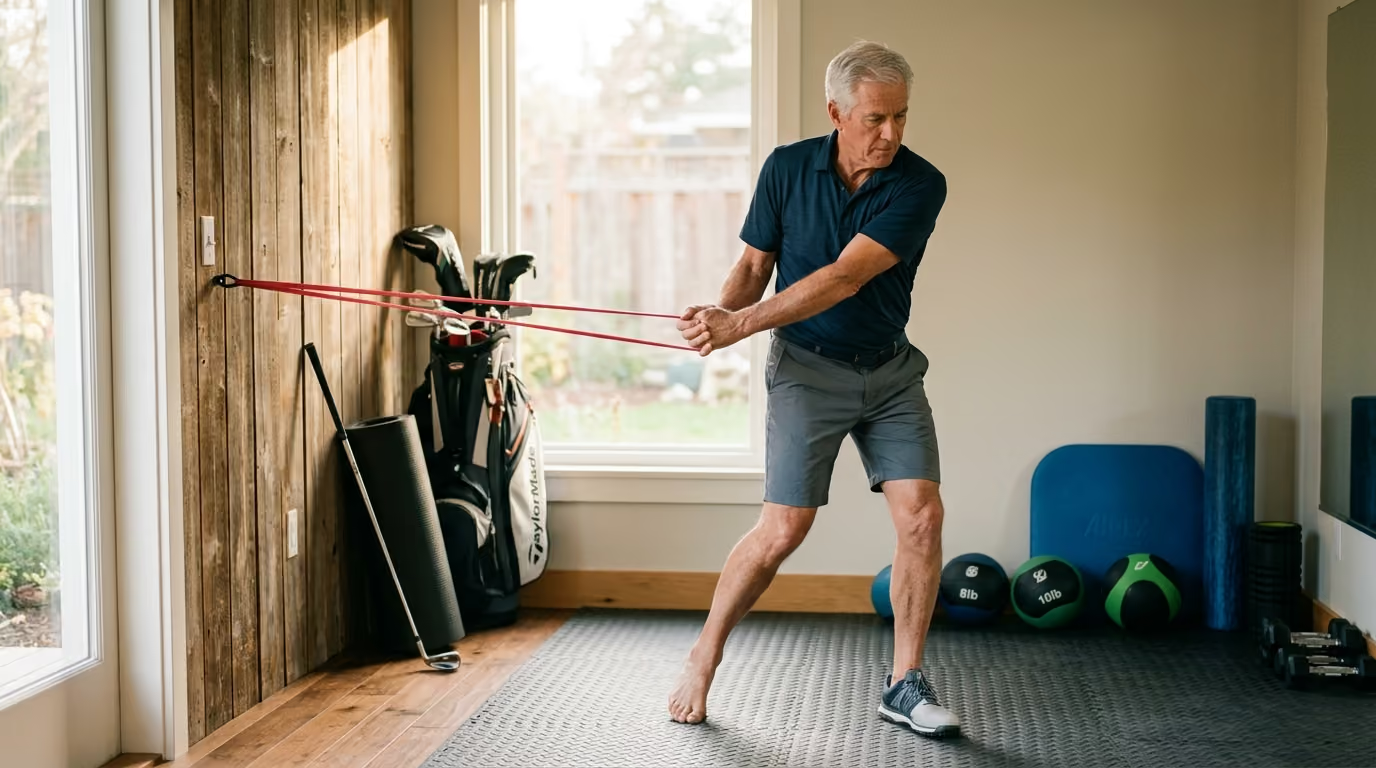

Bulky gym machines promise strength, but mature golfers actually need dedicated mobility tools and rotational equipment to preserve swing health at home.




Most golfers think they need a classic fitness room to stay in shape. They buy heavy weights and bench presses. This traditional approach often fails the mature player who wants to preserve their joint health. Standard gym machines isolate single muscle groups in straight lines.
The golf swing is asymmetrical and highly rotational. It requires a body that can transfer force from the ground up. You do not need a room full of heavy steel. You need a space designed for movement quality.
This comprehensive guide provides a blueprint to build a golf-focused training space at home. We focus on tools that build capacity, preserve your joints, and keep you on the course. By building a dedicated space, you are prioritizing your overall golf longevity.
Imagine standing on the fourteenth tee box during a warm afternoon. You have walked several miles over rolling terrain. Your lower back is starting to feel stiff. Your trail hip refuses to turn fully.
You try to compensate by swinging harder with your chest and arms. This leads to a fat shot that lands short of the green. This common situation is not a simple swing flaw. It is a physical limitation showing up on the back nine.
As we age, our joints naturally lose their elastic qualities. Our balance becomes less reliable. When fatigue sets in, our movement patterns break down. This is why a golf-specific home gym is so valuable.
The golf swing is a linked chain of physical movements. The process begins when your feet apply force into the ground. Your ankles and knees must accept and control this energy. Next, your hips load and rotate to create movement.
Your pelvis must shift while maintaining a stable posture. Finally, your thoracic spine turns over your pelvis to swing the club. If one link in this chain is weak, other joints must work harder. This compensation often causes pain in neighboring areas.
Research shows that hip forces during a golf swing are very high. These forces can exceed those seen during normal walking. A study on older golfers found that the hips play a vital role. The lead hip contributes about 41 percent of the support force.
The trail hip contributes about 50 percent of the support force. The knees and ankles handle the remaining workload. If your hips are stiff, your lower back must twist too much. The lumbar spine is not built for excessive twisting.
Lower back problems are the most common complaint among recreational players. Epidemiological studies show that the lower back accounts for 15 to 34 percent of all golf injuries. Some reviews report that back pain represents up to 54 percent of all golf-related ailments. This wide range exists because researchers use different definitions of injury.
In a 2023 study, over 37 percent of recreational golfers reported back pain in the previous week. This study also noted that many players only start preventive exercise after pain appears. Waiting for symptoms to start is a risky strategy. A 2025 study in the United Kingdom found that a typical back injury causes a player to lose 54 days of golf.
A home gym allows you to address these risks before they stop you from playing. It builds your bodily capacity to handle the physical exposure of the game.
You do not need a massive budget to build a safe home gym. The first step is setting up an area for safety and movement tracking. You must have a clear space free of household clutter. Tripping hazards like loose rugs or exposed power cords must be removed.
Your floor should provide excellent traction. Polished wood or slick concrete can cause your feet to slide during dynamic movements. Place a high-quality rubber mat down to secure your footing. This mat will protect your joints during standing exercises.
A wall-mounted handrail is a vital addition to your training space. This rail is not a sign of weakness. It is a safety tool that allows you to train your balance safely. You can also use a heavy wooden chair or a stable bench.
Having a solid handhold allows you to perform single-leg movements without fear of falling. This support helps you focus entirely on your target muscles. If you are constantly trying not to fall, your muscles cannot work properly. The handrail allows you to push your limits while staying safe.
Your safety zone should also include a simple assessment station. Place a mobile phone tripod or a mirror on one wall. This setup helps you watch your posture during exercises. You can record your movements to check your form over time.
Keep a notebook or a digital log in this area. Track simple markers like your single-leg stance time. Write down how many times you can stand up from a chair in thirty seconds. Record any joint pain you feel after your workouts.
When you are on the course, you can perform a quick physical reset between holes. Hold onto your golf cart or a long iron for support. Keep your spine perfectly straight and tall. Push your hips back slowly until you feel a light stretch in your glutes.
Hold this position for three deep breaths. This simple movement helps reset your pelvic alignment. It takes the pressure off your lower back after a long walk.
Your lower body is the foundation of swing power and walking endurance. You do not need massive weight machines to build strong legs. Adjustable dumbbells are the perfect solution for a home space. They allow you to change the resistance in small steps.
This helps you progress safely without buying dozens of individual weights. A single pair of high-quality adjustable dumbbells can fit in a small corner. You should also purchase a solid kettlebell. A kettlebell is excellent for building hip strength and power.
A low step platform is another crucial tool for your lower body. Choose a platform that is four to six inches high. This low height is safe for aging knees. It still provides enough resistance to build single-leg strength.
Walking a golf course requires you to step over uneven mounds and steep bunkers. Training on a step platform prepares your legs for these real-world challenges. You can also use this platform to train your calves and ankles. Strong calves help you maintain your footing on wet grass.
Single-leg strength is highly important for the mature golfer. The golf swing requires a major weight shift from one side to the other. Research shows that older players load their legs differently depending on the club they use. A driver swing requires a different force pattern than a six-iron swing.
Unilateral exercises train each leg to handle these specific forces. This helps balance out any strength differences between your sides. If one leg is much weaker, your body will compensate by twisting your spine. This unilateral approach is a core part of proper golf strength work.
The box squat is a fantastic starting exercise. Place your sturdy chair behind you. Hold a light dumbbell close to your chest. Slowly lower your hips until you touch the seat.
Stand back up by pushing through your heels. Focus entirely on turning your trail hip outward slightly as you stand. This small adjustment activates your glutes. It keeps your knees in a safe position.
The kettlebell Romanian deadlift is perfect for your hamstrings and glutes. Stand with your feet shoulder-width apart. Hold the kettlebell in front of your thighs. Keep your back flat and your shoulder blades back.
Push your hips back toward the wall behind you. Soften your knees slightly as you lean forward. Squeeze your glutes to return to a standing position. This movement teaches you to hinge from your hips instead of bending your back.
Many golfers focus purely on twisting movements to improve their swing. They perform fast rotations with heavy weights. This approach can be very dangerous for an aging spine. Your trunk muscles are designed to stop movement.
They act as stabilizers that transfer power from your legs to your arms. If your trunk cannot resist unwanted movement, your lower back will twist too much. This excessive twisting often leads to painful muscle strains. Your home gym should focus on rotational control instead of extreme twisting.
A wall-mounted cable column is the best tool for this training. A cable machine provides smooth, constant resistance throughout the entire movement. If space or budget is limited, resistance bands are a wonderful alternative. Buy a set of long resistance bands with different thicknesses.
Secure a heavy-duty anchor to your wall or door frame. This anchor should be adjustable so you can place bands at different heights. Bands are lightweight and highly portable. They allow you to train rotational control in many directions.
A light medicine ball is another helpful tool for this zone. Choose a ball that weighs between two and six pounds. Do not buy a heavy medicine ball. Heavy balls force you to use slow, sluggish movements.
They can also strain your shoulders and elbows. A light ball allows you to train at a realistic speed. This helps you build the power you need for a faster swing. You can throw the ball against a solid wall or simply hold it during rotational holds.
The anti-rotation press is the foundation of trunk training. Stand sideways to your band anchor. Hold the band handle with both hands at your chest. Step away until you feel a moderate pull.
Press your hands straight out in front of your body. Do not let your torso turn toward the wall. Hold this position for three seconds, then return your hands to your chest. This simple exercise trains your deep abdominal muscles to stabilize your spine.
The cable chop is another vital exercise for golfers. Secure your band or cable high on the wall. Stand sideways to the anchor with a wide stance. Pull the handle down and across your body toward your opposite hip.
Keep your arms straight and your trunk tall. Focus entirely on turning your trail hip toward your target. This teaches your hips and core to work together during the downswing. It protects your lower back by distributing the rotational force safely.
We must understand the difference between passive flexibility and active mobility. Flexibility is the static length of your muscles. Mobility is your ability to actively control your joints through a full range of motion. Having flexible muscles is useless if you cannot control them during a fast swing.
Research shows that pure flexibility has a very small relationship with clubhead speed. Strength and power are much more important. However, you still need enough movement to reach your swing positions. This is where targeted mobility training becomes valuable.
Your mobility zone does not require expensive gear. A high-quality exercise mat is the first item you need. A firm foam roller is excellent for rolling out tight leg muscles. A simple wooden dowel or a golf club is perfect for shoulder exercises.
You should also buy a pair of yoga blocks. These blocks support your body during stretches. They allow you to maintain good posture without straining. This zone should be a quiet space where you can focus on gentle, controlled movements.
Ankle mobility is often overlooked by golfers. If your ankles are stiff, you cannot bend your knees properly during the swing. This can cause you to lose your balance. To train this, perform ankle dorsiflexion rocks.
Stand facing a wall with one foot forward. Keep your heel flat on the floor. Slowly push your knee forward to touch the wall. Repeat this ten times on each side to improve your ankle bend.
Hip mobility is another major priority for the mature player. Tight hips can limit your backswing turn. This forces your lower back to twist to compensate. To improve this, perform the ninety-ninety hip transition.
Sit on your mat with your knees bent at ninety degrees. Keep your feet flat on the floor. Slowly lower both knees to the right side. Return to the center, then lower them to the left. This movement opens up your hip joints.
Thoracic spine mobility is crucial for a full shoulder turn. Your upper back is built to rotate, but it often gets stiff from daily sitting. To address this, perform the side-lying open book stretch. Lie on your side with your knees bent at ninety degrees.
Reach your top arm straight out in front of you. Slowly sweep your arm up and over to the opposite side. Keep your knees pinned together on the floor. This rotates your upper back while keeping your lower spine safe.
Balance is a vital skill that naturally declines as we age. The golf swing places high demands on your balance system. You must transfer your weight while swinging a club at high speeds. You must also walk on sloping fairways and uneven tee boxes.
Research shows that older adults who play golf have better balance than those who do not. Golfers show longer single-leg stance times and better dynamic balance. This is because the game constantly challenges your body to stay upright. A balance station in your home gym helps you maintain this edge.
Your balance station should be simple and safe. Use your wall rail or a sturdy countertop for support. You can use a firm foam balance pad for advanced exercises. Do not use extremely soft or unstable surfaces.
Unstable surfaces can reduce the force your muscles can produce. They also increase your risk of falling. Simple tape lines on the floor are often more effective. They allow you to train your balance while standing on a stable surface.
Start your balance training with a simple tandem stance. Place one foot directly in front of the other. Your front heel should touch your back toes. Try to hold this position for thirty seconds without moving.
Keep your hands close to your support rail. If you feel unsteady, touch the rail with one finger. This exercise trains your brain to control a narrow base of support. It is highly useful for tight lies on the course.
Next, progress to a single-leg stance. Lift one foot off the floor. Keep your standing knee slightly bent. Try to hold this balance for twenty seconds on each leg.
Focus entirely on turning your trail hip slightly inward to engage your glutes. This muscle activation is vital for stabilizing your pelvis. Once this becomes easy, you can add a gentle head turn. Look to the left, then to the right. This simulates the visual changes that occur during your swing.
To get the most out of your home gym, you need a structured plan. We use a model called the five capacities. This framework helps you train all the physical skills needed for golf. It prevents you from overworking one area.
The five capacities are move, support, transfer, stabilize, and express. You should train these capacities in this exact order. This structure makes sure you build a safe foundation before trying to swing fast.
Let us look at a simple two-day strength program. This routine is designed for mature players who want to build capacity safely. On Day A, focus on your lower body and anti-rotation.
Start with the supported box squat for three sets of eight repetitions. Follow this with the dumbbell Romanian deadlift for three sets of ten repetitions. Next, perform the low step-up for two sets of eight repetitions per leg.
Finish the session with three sets of thirty-second single-leg balance holds. Perform the anti-rotation band press for three sets of eight repetitions to target your trunk.
On Day B, focus on your hip hinge and rotational transfer. Start with the kettlebell deadlift for three sets of eight repetitions. Perform the supported split squat for three sets of six repetitions on each leg.
Follow this with the floor hip bridge for three sets of twelve repetitions to strengthen your glutes. Perform the band chop for three sets of eight repetitions per side to train rotational control. Add the suitcase carry for three sets of thirty-foot walks per side.
Finish the session with the thoracic open-book stretch to restore upper back mobility.
This two-day program fits easily into a busy schedule. You should space these workouts out during the week. This allows your muscles and joints time to recover. For example, you can perform Day A on Monday.
Perform Day B on Thursday. On the other days, focus on active walking and gentle mobility. This balance of work and rest is the secret to long-term success. It is a critical part of active golf recovery.
Many mature golfers make predictable mistakes when setting up their home gym. The first common mistake is building a core-only training space. Players buy endless abdominal rollers and twisting machines. They ignore their legs and hips.
Your legs are the true source of your swing power. Without strong legs, you cannot use your core effectively. Make sure your gym prioritizes leg strength before you buy specialized rotational gear.
The second mistake is using too much instability. Some golfers think standing on a giant rubber ball is the best way to train. This actually reduces the amount of force your muscles can produce. It also increases your risk of falling.
You should train your balance on a solid floor first. Use foam pads sparingly. They should only be used when you have a solid handhold nearby.
The third mistake is chasing extreme flexibility. Some players spend hours stretching their muscles until they are completely limp. This can actually reduce your joint stability. You need strength within your range of motion.
If you stretch without building strength, your joints are more vulnerable to injury. Always pair your mobility exercises with light resistance work to stay strong.
The fourth mistake is training with maximum speed every day. High-speed swings are very hard on your joints. If you are always practicing with heavy speed sticks, your body will get fatigued. This fatigue can lead to poor swing mechanics and injury.
Save your speed training for short, high-quality sessions. Always warm up thoroughly before you try to swing fast.
Your home gym tools are not the only things that affect your physical health. Your actual golf gear also plays a major role. Take a close look at your golf shoes. They should offer excellent arch support.
They must have a non-slip sole to keep you stable. Worn-out shoes can cause your feet to slip during rotation. This slipping action can ruin your balance and cause injury.
If you suffer from joint pain in your hands, check your club grips. Thick, oversized grips can be very helpful. They reduce the amount of finger pressure needed to hold the club. This protects your wrists and forearms from strain.
Also, look at the weight of your club shafts. Lightweight graphite shafts can reduce overall joint fatigue. They allow you to swing faster with much less effort. This simple equipment change can protect your shoulders and elbows.
Your physical posture during training is also critical. Always maintain a neutral spine during exercises. Do not let your lower back arch excessively. Keep your chest tall and your shoulders relaxed.
If you notice your form breaking down, reduce the weight immediately. It is always better to perform an exercise correctly with light weight than poorly with heavy weight.
We must recognize that every mature golfer has a unique physical history. A healthy sixty-year-old has different needs than an eighty-year-old with joint issues. If you have osteoarthritis in your knees or hips, do not stop exercising.
Joint movement helps lubricate the joint surfaces. You simply need to modify your movements. Use a higher chair for box squats to protect your knees. Slower movements can also help reduce joint irritation.
If you have osteoporosis, you must protect your spine. Avoid high-velocity rotation and loaded bending exercises like crunches. Focus on standing exercises that put a safe load on your bones.
Loaded carries and gentle step-ups are excellent choices. Always obtain clinical guidance before starting a new program. Your doctor can help you understand which movements are safe for your bones.
If you have had a hip or knee replacement, always follow your doctor's instructions. Do not perform deep squats that bend your new joint past ninety degrees. Never twist your replaced leg under heavy load.
Use your support rail for all balance exercises to prevent falls. A generic golf program should never override your postoperative instructions. Focus on gentle mobility and light strength to support your new joint.
If you suffer from chronic lower back pain, be very careful with rotation. The golf swing already places high rotational demands on your spine. Your home gym should focus on protecting this area.
Perform exercises that build hip mobility and trunk endurance. When your hips move better, your lower back does not have to twist as much. This approach is vital for focusing on injury prevention.
A proper warm-up is crucial before you play a round of golf. Never walk straight from your car to the first tee. This sudden physical effort can strain cold muscles. It also increases your risk of lower back pain.
A dynamic warm-up raises your body temperature and prepares your nervous system. It is much better than static stretching before you play. Start your pre-round warm-up with a five-minute brisk walk.
This gets your heart rate up and warms your muscles. Next, perform ten gentle hip hinges to prepare your lower back. Do ten supported bodyweight squats using your golf cart for balance.
Hold a club across your chest and rotate your shoulders slowly. Finally, take a few easy practice swings and gradually increase your speed.
Recovery is just as important as your training sessions. Pay attention to how your body feels the day after a round. Muscle soreness is a normal sign of exercise. Persistent joint pain or swelling is a warning sign.
If your knees or back hurt for days, your training volume is too high. You must reduce your weights or your playing time to allow your body to heal.
Sleep quality is another excellent indicator of physical recovery. If you are struggling to sleep, your body may be overloaded. Make sure you get eight hours of restful sleep each night.
Hydrate well before, during, and after your rounds of golf. Proper nutrition also supports muscle repair. These simple recovery habits will help you play better for longer.
The ultimate goal of a golf-specific home gym is to build a body that can safely absorb, control, and transfer forces on the course so you can play without pain for decades.
With a smart training space and the right habits, you can extend your playing years and enjoy the game you love.
Follow Golfergy for practical insights on performance, mobility, recovery and healthy ageing. Stay connected for new articles, research-led guidance and ideas to help you play better for longer.


Explore practical resources on performance, recovery, mobility and golf longevity.
Read the Blog


