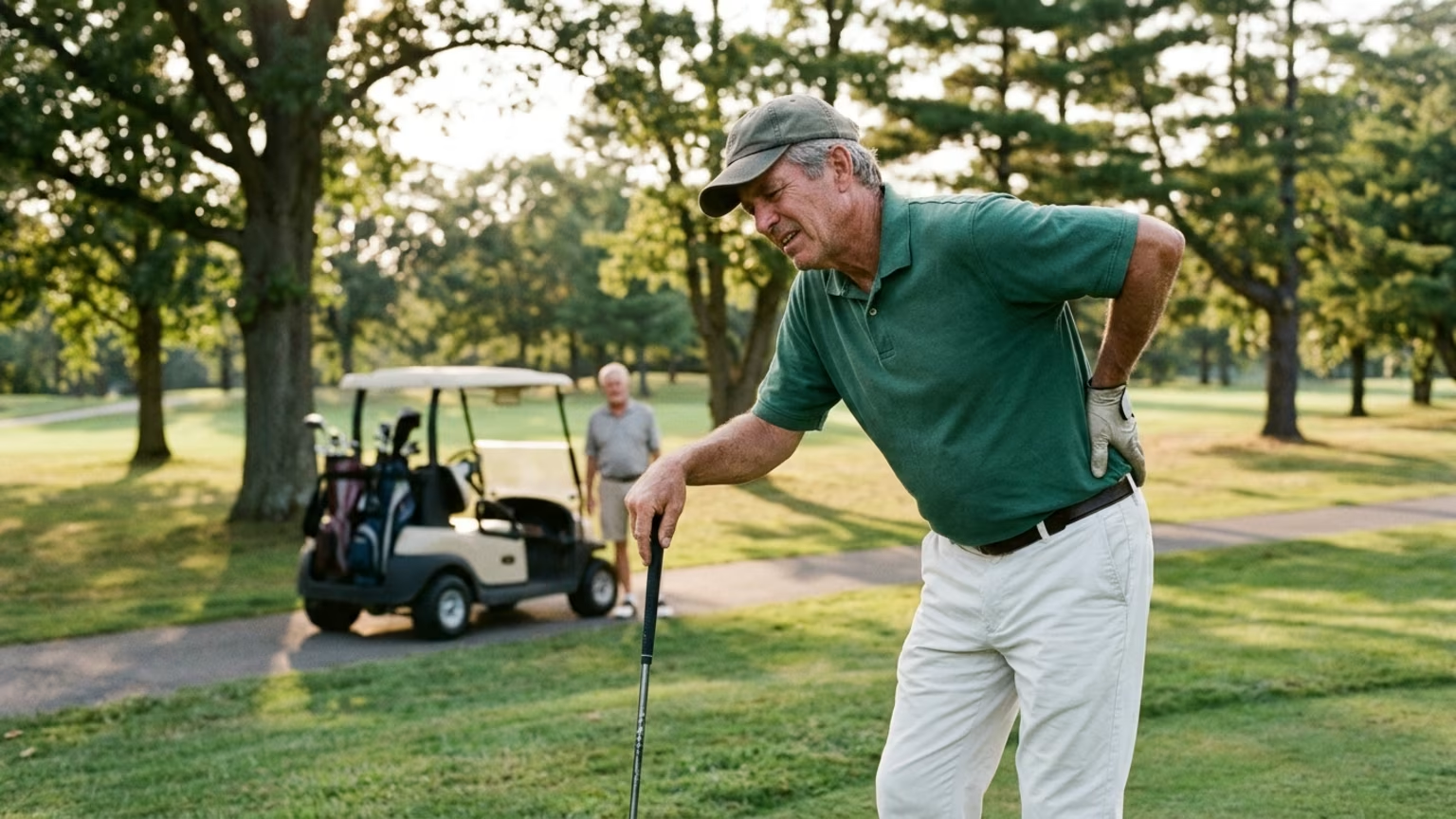
A research-led strength framework for golfers over 40, connecting lower-body, upper-body and trunk capacity with the demands of a full round.




Whole-body strength is your muscles’ ability to produce force. For a golfer, that means looking beyond the muscles you associate with hitting the ball. Your lower body, upper body and trunk all belong in the discussion.
A round includes more than swings. There is the bag to handle and the ground between shots. There are also the everyday movements around the course that rarely appear in a lesson about club delivery.
Golfergy’s approach is to connect physical preparation with the golf you actually play. Looking at strength through these body regions gives that conversation a practical shape. The aim is broader preparation rather than a promise of extra distance.
During a standard 18 holes, the demands change from one moment to the next. You might walk a slope before setting up for an iron shot. Later you might lift your bag into the car after the final green.
Those situations offer useful ways to think about strength. They are familiar course tasks rather than laboratory tests.
Think about your legs and hips when reviewing the walking parts of a round. Then think about the position you take before swinging and the turn that follows.
The practical question is broader than whether your legs feel strong in an exercise session. It is whether your preparation accounts for both moving around the course and making a golf swing.
Your hands hold the club. They also hold a bag handle when you lift equipment. That gives grip and upper-body strength a place in a whole-round discussion without making them the sole focus of training.
Bag handling is a useful goal to raise when discussing exercise choices. It gives the conversation a clear task instead of the vague aim of getting stronger everywhere.
Your trunk is your torso. Think of it as another area to include when discussing how your body turns through a swing.
A swing-centered conversation can quickly become a discussion only about the trunk. A whole-round framework keeps it alongside the lower and upper body. These are headings for organizing your needs rather than competing claims about which body part matters most.
For a related planning discussion, our article on building strength around a repeatable swing keeps the focus on golf movements rather than isolated exercise goals.
For golfers moving through their 40s and 50s, the useful question is what their present capacity calls for. A birthday alone does not provide an individual training plan.
The clearest golf-specific findings here come from older groups. Sports Medicine Weekly summarizes a 2023 study that found higher grip strength and better static and dynamic balance among recreational golfers aged 65 to 79 than among sedentary peers.
The same source describes an eight-week randomized trial involving golfers aged 55 to 79. A combined strength-and-flexibility program improved strength, range of motion and clubhead speed.
The boundaries belong together. The comparison with sedentary peers shows an association rather than proof that golf caused the differences. The combined exercise trial cannot isolate the contribution of each body region. These findings do not explain how quickly strength changes through the 40s and 50s or the biological reasons for those changes.
Neither study establishes injury prevention or better performance at lifting bags and walking uneven ground. They also do not establish an ideal lower-body, upper-body and trunk split or a universal progression schedule. The framework in this article is an editorial way to organize those questions rather than a tested program.
The useful takeaway is still practical: playing golf and doing strength work are separate considerations. Sports Medicine Weekly also summarizes evidence linking golf, particularly walking play, with cardiovascular and metabolic benefits. Those associations are not a reason to treat golf as a replacement for strength training.
A secondary summary of WHO guidance describes muscle-strengthening activity involving major muscle groups. It also describes balance-and-strength activity for adults aged 65 and older. That age-specific guidance should remain distinct from advice aimed at everyone over 40.
The most useful starting habits here concern planning. They help organize an appropriate exercise discussion without turning a small golf study into a routine for every reader.
A practical first habit is to distinguish the activity you get from golf from any muscle-strengthening activity you do alongside it. A busy playing calendar answers the question of how often you play. It does not describe the content of your strength work.
Use the body regions as a simple review framework:
Take one area at a time. The purpose is to make the coverage visible rather than assign equal time or equal numbers of exercises to each region.
This is also a useful way to keep walking in its proper place. Walking golf has value in the research summary. Strengthening the major muscle groups remains a separate part of the public-health guidance.
Our discussion of physical preparation across a full round offers another way to frame that broader conversation.
A second habit is to name one task you would like your preparation to address. Bag handling is one example. Feeling more capable during the walking parts of a round is another.
Keep the goal specific when discussing it with a qualified exercise professional. That gives exercise selection and progression a clearer purpose than simply asking for a harder workout.
Different starting points call for different conversations:
These are planning options rather than separate workout prescriptions. Exercise choice and progression belong in the conversation about your circumstances. The goal is a plan that connects to your golf instead of copying a schedule solely because its participants were older golfers.
If discomfort is part of that conversation, our guide to thinking through soreness and warning signs provides related reading without replacing individual care.
Whole-body strength belongs beside golf, with preparation shaped around the whole round and the goal of Playing Better for Longer.
Follow Golfergy for practical insights on performance, mobility, recovery and healthy ageing. Stay connected for new articles, research-led guidance and ideas to help you play better for longer.


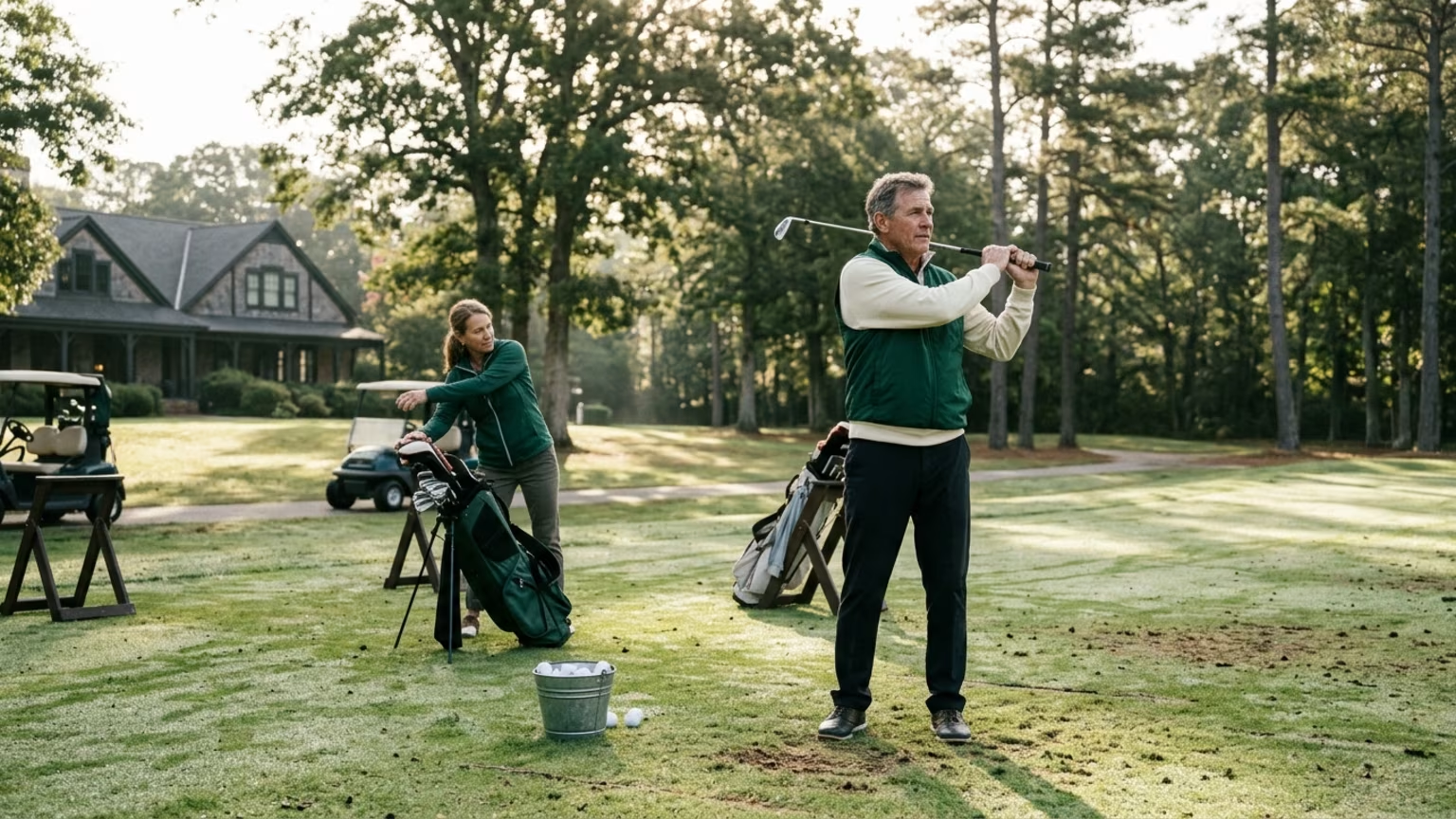
A movement-led golf warm-up for golfers over 40, with a flexible example, practical adaptations and clear limits on injury-prevention claims.

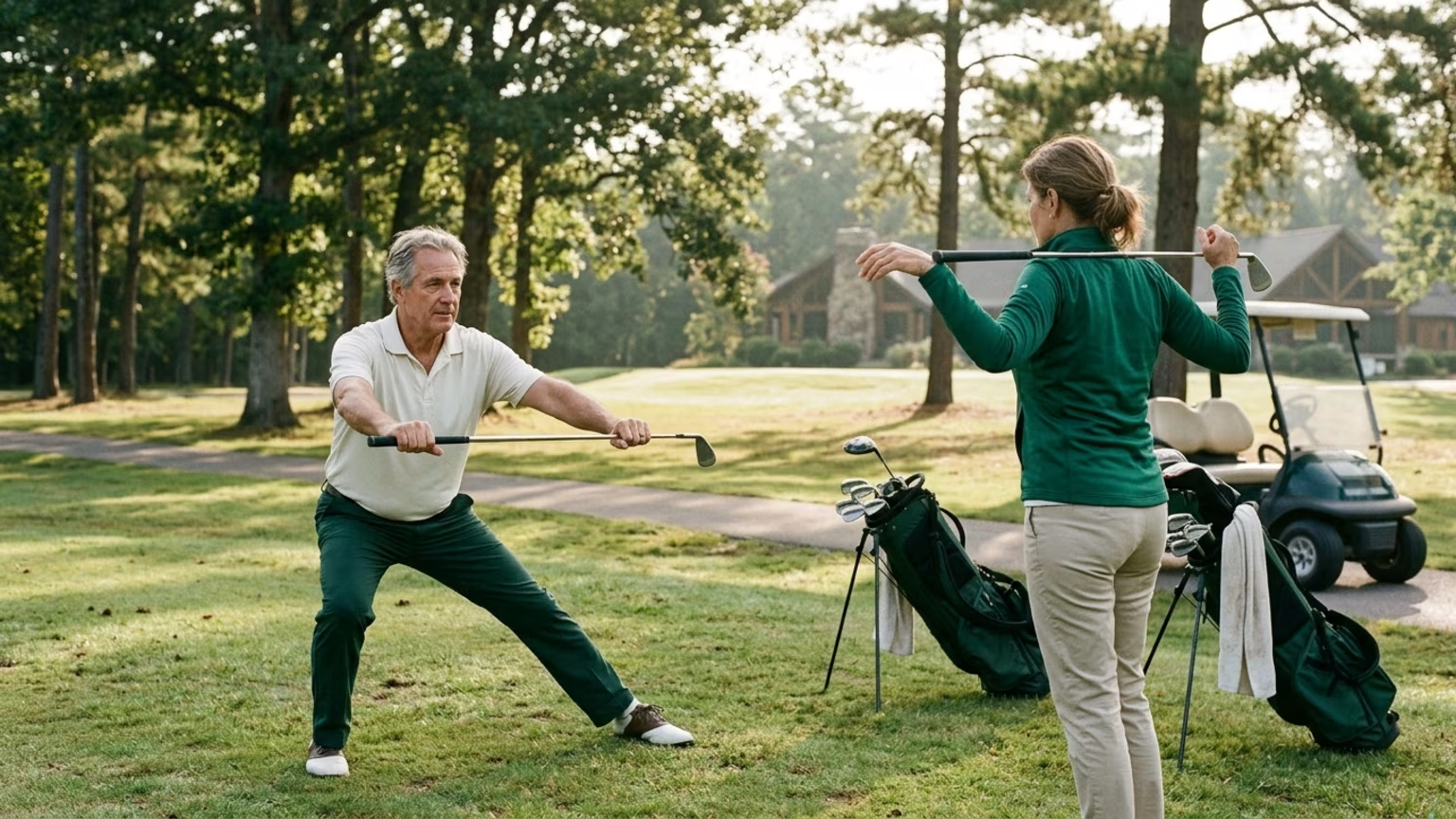
A flexible training framework for golfers over 40 that makes room for strength, balance, mobility and aerobic activity alongside play.

See how balance fits alongside strength and coordination in golf, with a supported practice example and a clear look at the evidence.
Explore practical resources on performance, recovery, mobility and golf longevity.
Read the Blog