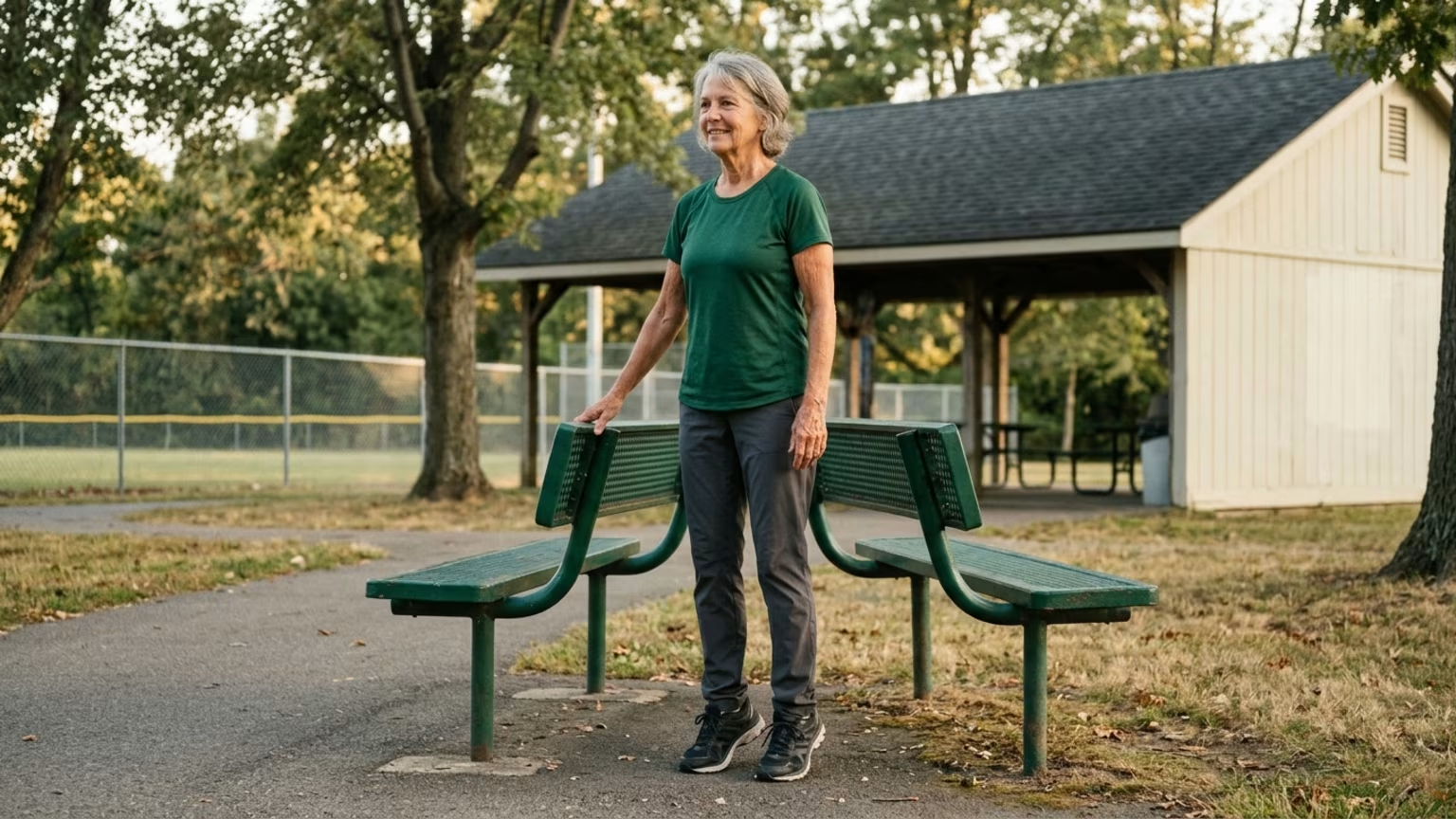

Learn how to tell normal post-round soreness from a serious warning sign. This practical pain-check guide helps golfers over 40 play safely and avoid injury.




Post-round soreness is your body's natural response to an unfamiliar physical load, while sharp pain is a distinctly different signal demanding immediate attention. John stood on the 14th tee feeling a severe catch in his lower spine. He had been chalking it up to normal aging for three weeks. Now, he could barely rotate enough to make a backswing.
A standard round of golf demands continuous, explosive rotation. It involves swinging repeatedly at high speeds, often from awkward lies. Players also endure prolonged walking on uneven, sloping terrain. This repetitive workload naturally fatigues the muscles controlling your hips, spine, and shoulders over four hours.
Hitting from thick rough places a massive deceleration force on your wrists and elbows. Pushing a heavy cart up steep inclines strains your calves and lower back. By the time you reach the back nine, your primary muscle groups are thoroughly exhausted. This fatigue forces smaller stabilizing muscles to compensate, which often leads to widespread achiness the following morning.
Ordinary stiffness feels like a diffuse ache across large muscle groups. It usually improves as you warm up with gentle practice swings. The discomfort is widely spread out rather than isolated to one tiny, pinpointed spot. Moving around lightly throughout the day often makes this type of typical soreness feel better.
Conversely, sharp symptoms or sudden severe pain during a swing require immediate attention. Pain after a fall on a steep bunker face or a slippery cart path also falls into this urgent category. If you experience sudden severe pain, deformity, or major swelling, this requires urgent evaluation according to NHS shoulder guidance. A joint that suddenly gives out is a clear red flag.
As golfers pass age 40, cellular recovery slows down and tissue elasticity changes. The joints and tendons take longer to adapt to the stress of a powerful golf swing. Muscle fibers lose some of their natural resilience, making them more susceptible to micro-tears. The recovery buffer is much smaller for older players, requiring more proactive physical care.
Walking an 18-hole course easily covers five miles, demanding massive endurance from your lower body. The repetitive impact of walking down steep cart paths creates a cumulative stress load on aging knees and ankles. When your legs lose their fresh bounce, your upper body swings harder to generate clubhead speed. This dangerous chain reaction often leads to strained obliques or sore shoulders.
Many mature players assume that chronic aches are just a permanent tax on playing the game. However, increasing stiffness or a sudden inability to move a limb normally should not be attributed automatically to aging. A progressive loss of range of motion is a specific warning sign. Ignoring a shrinking shoulder turn will only force other joints to overwork, leading to compounding physical problems.
Your spine and hips bear the brunt of these dangerous compensations. When the mid-back stops rotating smoothly, the lower back takes on shearing forces it was never designed to handle. This creates a destructive cycle of joint inflammation and restricted movement. Breaking this cycle requires an honest physical assessment rather than blind perseverance.
Not every post-round ache requires a trip to the doctor or physical therapist. NHS shoulder guidance advises people to remain gently active while avoiding activities that make symptoms worse. This means skipping self-prescribed strenuous exercises or heavy equipment until your symptoms clear. Movement is medicine, provided the dosage and intensity are correct for your current condition.
However, specific red flags mean you need immediate clinical advice. NHS and AAOS guidance identifies numbness, tingling, or persistent pins and needles as symptoms requiring medical attention in relevant body regions. Nerve symptoms indicate that the underlying physical issue extends beyond basic muscle fatigue. You cannot stretch away a nerve compression problem on the driving range.
Significant or increasing swelling around a joint also requires prompt assessment from a qualified professional. Seek immediate help if that swelling features warmth, redness, or a sudden fever. Ignoring these specific warning signs can turn a minor, treatable issue into a season-ending injury.
Sleep disruption is another crucial metric to monitor during your recovery phase. NHS guidance lists night-worsening back pain as a specific reason to consult a GP. Other conditions can also cause night symptoms, so getting a proper medical assessment is always the smartest move. Waking up in pain repeatedly is your nervous system demanding a professional evaluation.
Finding the right balance between rest and activity takes patience and practice. When I developed medial epicondylitis, commonly known as golfer's elbow, I thought I needed complete rest. Six weeks off the course did nothing to help. I finally learned that active recovery with a flexbar was the actual solution. It taught me that treating golf injuries requires loading the tissue properly, not just sitting on the couch and hoping for the best.
You can apply this active approach to your own daily routine. Instead of complete rest, focus entirely on turning your trail hip through a slow and controlled range of motion without a club. If this small movement increases pain, stop immediately and assess your physical limits. Controlled, pain-free movement helps flush out metabolic waste from tired tissues and promotes blood flow.
Incorporating gentle tissue work is another highly effective strategy for older players. Many players find lasting relief by learning how to perform proper self-myofascial release to keep their muscles supple between rounds. You should also establish a consistent pre-round and post-round stretching routine to keep stiffness at bay. Consistent, low-intensity physical maintenance is far better than aggressive, infrequent stretching sessions.
Knowing when to escalate your care is equally vital for long-term health. If your symptoms linger or mildly restrict your daily movement, it helps to review the professional recovery options available to keep you playing safely. Our team at golfergy always suggests erring on the side of physical caution. Professional physical therapists can spot mechanical flaws before they become severe, debilitating injuries.
Taking a proactive approach to your physical health yields massive dividends on the scorecard. Modifying your practice routine temporarily is a small price to pay for a full season of golf. Pushing through sharp pain only guarantees a longer, more difficult rehabilitation process down the road. Treat your body with the respect a rotational athlete deserves.
Start a simple post-round log today to track your symptoms, noting which specific swings cause physical discomfort. Monitoring your body's signals accurately is the ultimate key to playing better for longer.
Follow Golfergy for practical insights on performance, mobility, recovery and healthy ageing. Stay connected for new articles, research-led guidance and ideas to help you play better for longer.



New clinical guidance urges older golfers to delay returning to the course after cervical nerve compression. Learn the physical markers that signal recovery.


Learn how osteoporosis changes tennis elbow management for older golfers. We share practical practice and recovery adjustments to protect your tendons and bones.

Learn how older golfers can use Pilates Reformer training to manage physical stress, build rotational strength, and protect their lower back from injury.
Explore practical resources on performance, recovery, mobility and golf longevity.
Read the Blog