
A BMJ study shows brisk walking helps older golfers maintain bone mineral density. Learn how two to three weekly hours of walking protects your playing longevity.




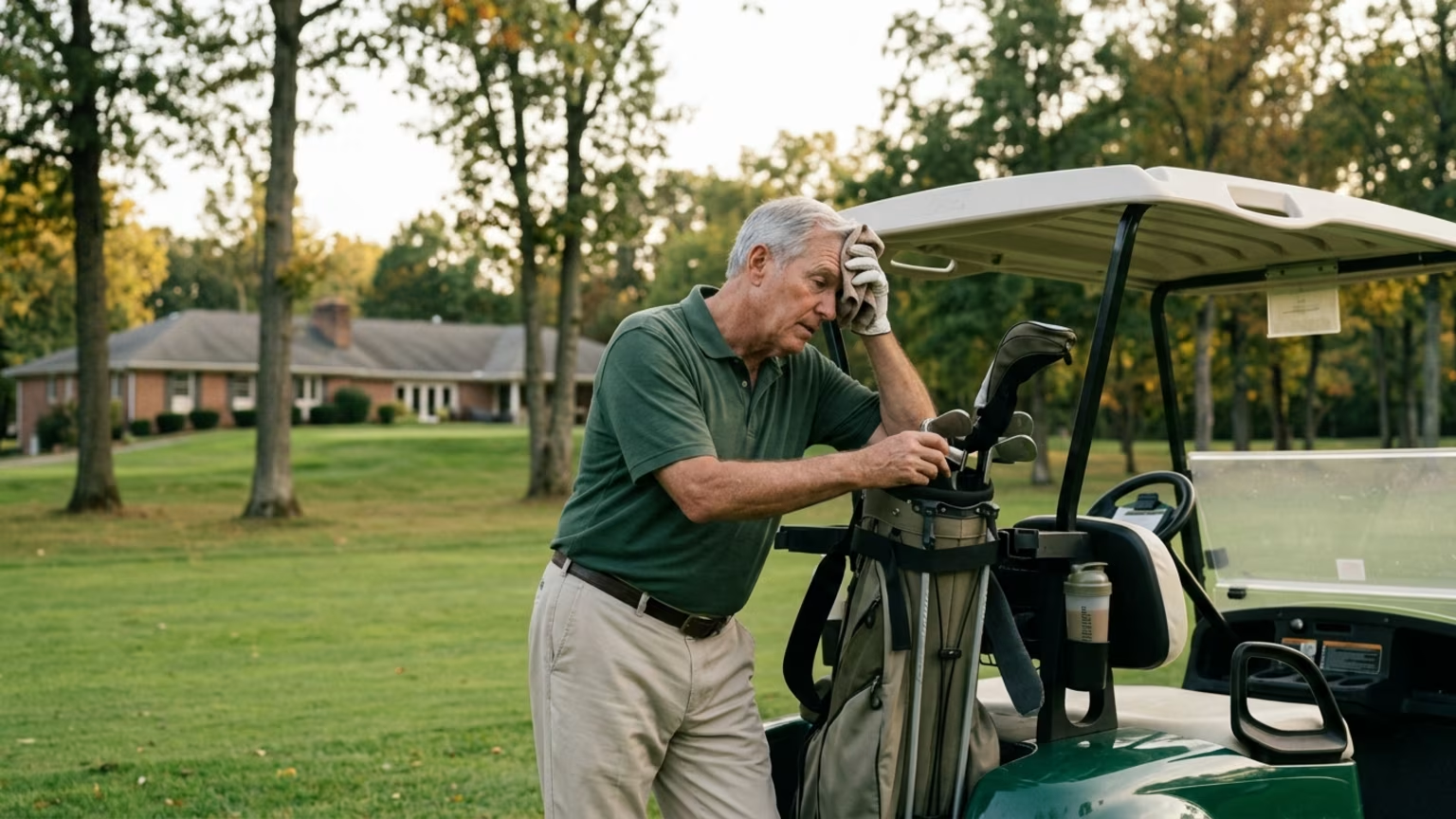
On September 9, 2026, The BMJ published a major study on bone mineral density decline. This silent physical issue forces many older players to quietly withdraw from their weekend groups every season. The saddest thing I have seen in golf is watching lifelong playing partners slowly drop out of our weekend group. It usually starts with a nagging shoulder or knee issue they ignore until it requires surgery.
That pattern is exactly why I became obsessed with golf longevity. We do not have to stop playing as we age, provided we do the right maintenance work between rounds. The new research pooled 124 randomized trials involving 18,429 participants. The researchers conducted a hierarchical Bayesian network meta-analysis and a dose-response analysis of randomized controlled trials identified in PubMed, Embase, the Cochrane Library and Web of Science through January 2026.
The study assessed bone mineral density at the lumbar spine, femoral neck and total hip. Fracture incidence served as a secondary outcome for the researchers. The authors described the overall evidence as low to moderate confidence. They offered cautious support for dose-specific, modality-tailored exercise prescriptions.
The golf swing places massive rotational stress on your skeleton over the course of a normal round. Bone is a living tissue that constantly rebuilds itself in response to these mechanical forces. When you walk briskly or jog, the impact of your feet hitting the ground sends structural signals through your legs and hips. These physical signals tell your body to reinforce the bone matrix in those specific weight-bearing areas.
Without regular mechanical stress, the human body naturally allows bone density to fade over time. During the downswing, your leading hip absorbs tremendous compressive force before impact. If the femoral neck lacks sufficient density, that extreme force creates deep micro-trauma in the joint. Many players struggle with lower back pain after a round because their spinal structures lack structural reinforcement.
Aging players often experience a loss of rotational flexibility, making the spine handle more torque than it should. When bone density drops, the vertebrae become highly susceptible to stress fractures. A consistent walking routine provides the repeated mild impacts needed to maintain skeletal health. This biological process is fundamental to keeping your body resilient enough for a lifetime of golf.
The BMJ study examined structured exercise and bone health outcomes in adults aged 40 and older. Brisk walking or jogging was associated with favorable estimates at the lumbar spine, femoral neck and total hip. For total hip density, brisk walking or jogging produced an estimated mean improvement of 0.021 g/cm² compared with control groups. This specific improvement estimate was based on low-certainty evidence.
For the lumbar spine, brisk walking or jogging was associated with a 0.013 g/cm² mean improvement. The analysis also found favorable lumbar-spine estimates for combined aerobic-resistance exercise, which showed a 0.013 g/cm² improvement. At the femoral neck, brisk walking or jogging was associated with a 0.009 g/cm² improvement. Mind-body exercise was associated with a 0.007 g/cm² improvement at the same femoral neck site.
The researchers estimated that a clinically meaningful difference might be reached at around 600 MET-minutes per week for the femoral neck and total hip. For the lumbar spine, this minimal clinically important difference might occur at approximately 400 MET-minutes per week. The authors translated approximately 600 MET-minutes per week into roughly two to three hours of brisk walking or jogging. These reported differences are group-level estimates and should not be interpreted as a guaranteed individual response.
Golfers over 40 face a growing risk of skeletal issues as their natural bone mineral density declines. You might swing with less speed than a touring professional, but aging bones become highly vulnerable to the repetitive forces of the game. A solid physical foundation is critical when managing consecutive rounds on demanding terrain. Older amateurs face these risks because they often sit at desks all week before demanding maximum effort from their bodies on Saturday morning.
This abrupt transition from sedentary behavior to explosive rotational swinging puts immense strain on unconditioned bones. Many recreational players falsely assume that simply playing occasional golf provides enough physical activity to protect their skeleton. A slow stroll between golf carts does not provide the consistent impact needed to trigger bone reinforcement. The risk of injury is compounded for players who carry extra weight or have existing joint conditions.
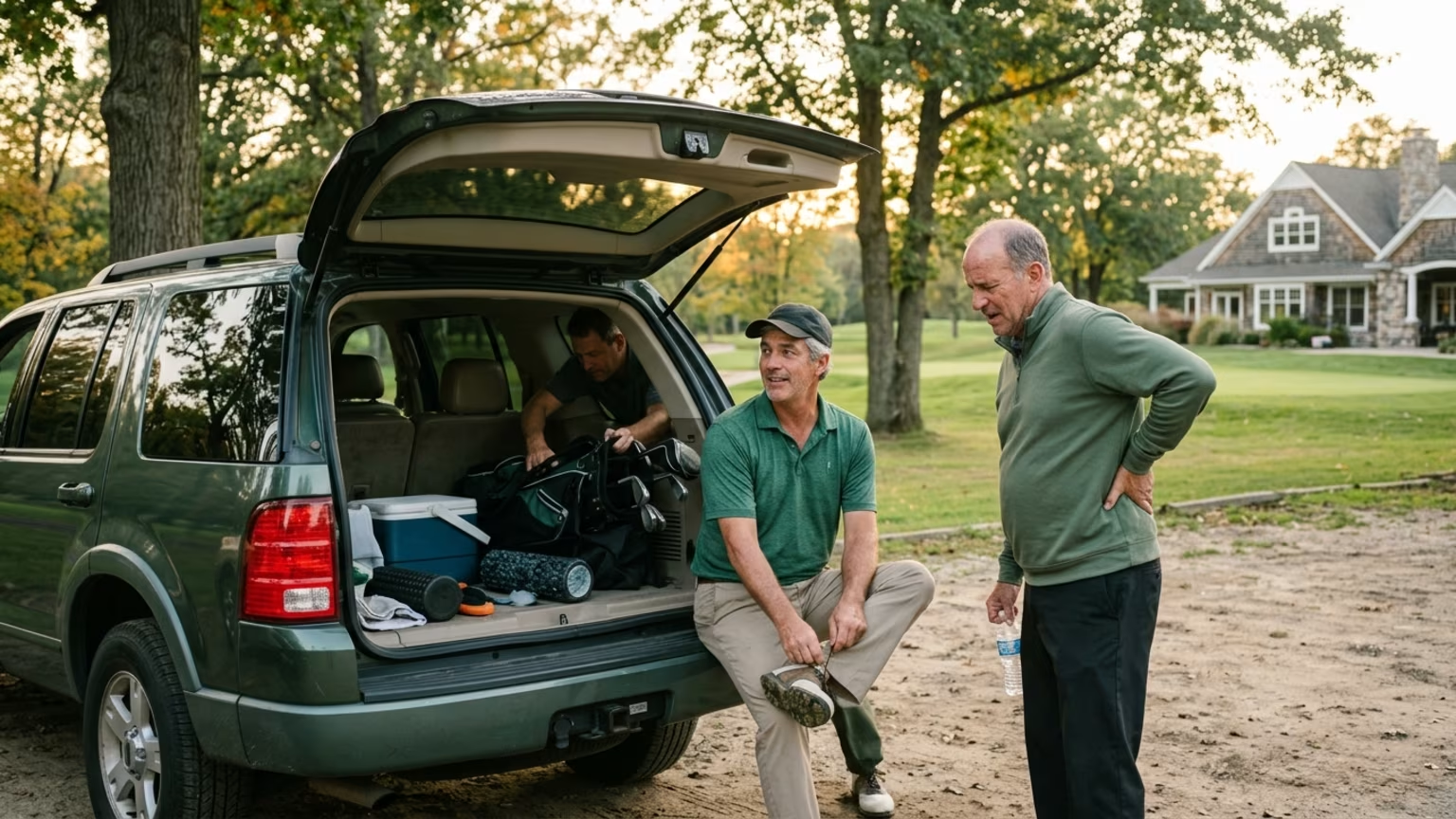
Touring professionals undergo extensive physical screening to monitor their skeletal health. Amateurs typically only discover a bone density issue after a painful fracture occurs. The fracture analysis in the new review included 26 trials and 11,132 participants. Low-certainty evidence suggested that mixed aerobic exercise may reduce fracture odds with an odds ratio of 0.29.
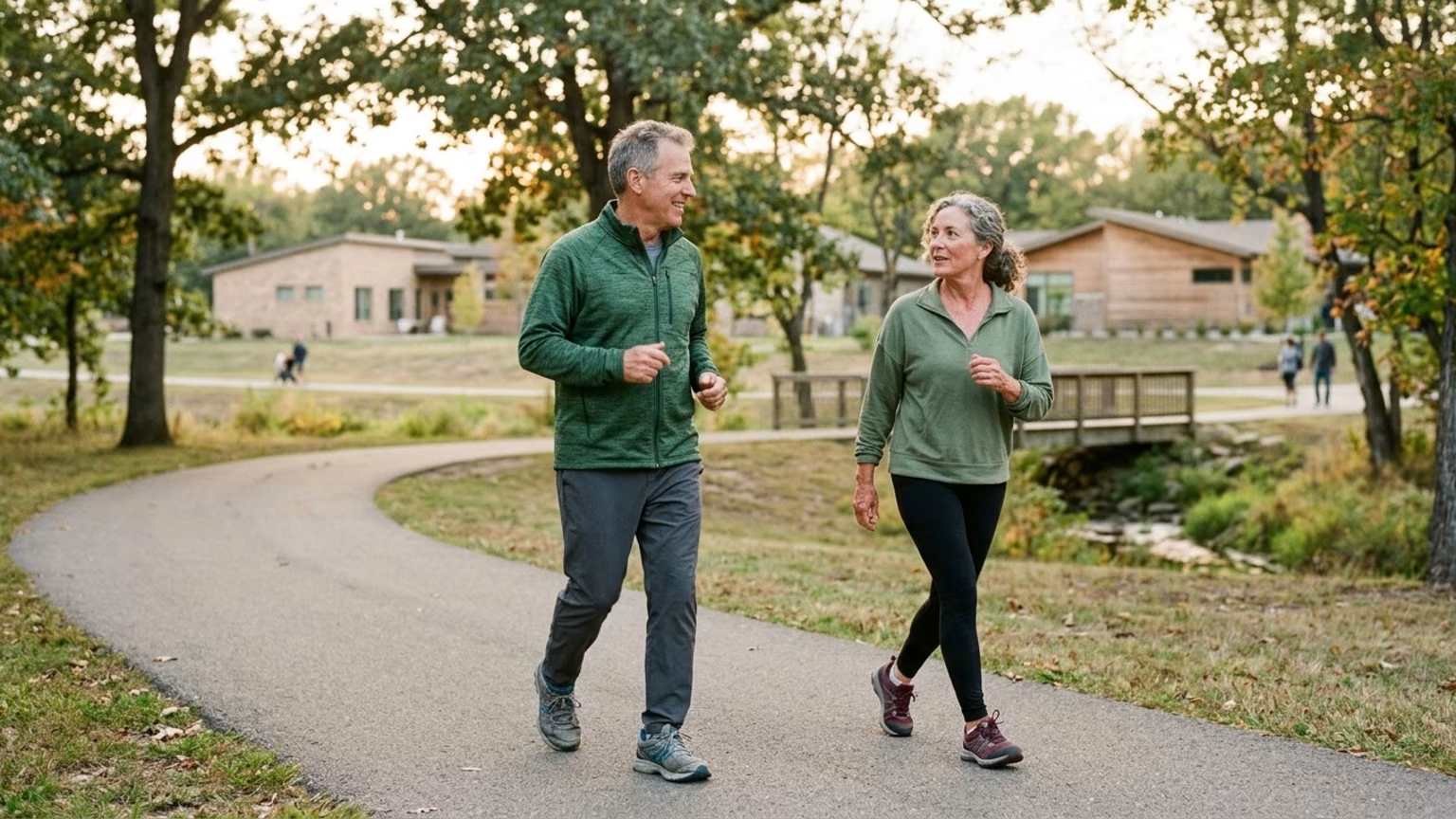
You can use brisk walking as a realistic baseline to support your skeletal health this season. The study authors translated the 600 MET-minute weekly target into roughly two to three hours of brisk walking or jogging. You should break this volume down into smaller sessions throughout your week. When you are out on your walk, focus entirely on maintaining a brisk pace.
Keep your form instructions focused on one small movement at a time. For example, focus entirely on pushing off firmly from your trail foot with each step. This deliberate push helps increase the mechanical force traveling up your leg. A steady walking round of golf can certainly contribute to your weekly movement goal.
Progress gradually when you implement this walking adjustment. A golfer returning from injury should increase walking duration, terrain difficulty and pace progressively rather than abruptly adding several hours of activity. Walking the course is not a complete strategy if your pace is simply too slow. You must keep a lively pace between shots to see the biological benefits.
A common misconception is that more exercise always creates proportionally denser bones. The BMJ research found that the dose-response relationship was generally nonlinear. The data appeared to follow an inverted-U pattern instead. This pattern means endlessly increasing your exercise volume does not guarantee proportionally greater bone density gains.
Another major mistake is thinking that walking alone is a complete medical solution for your skeletal system. The study highlighted that combined aerobic-resistance exercise also produced favorable results for the lumbar spine. You should pair your walking routine with strength training for senior golfers to build true physical resilience. Golfers with diagnosed osteoporosis should consult a clinician before starting a new routine.
The study was a network meta-analysis, meaning some comparisons between exercise categories were indirect rather than head-to-head trials. Both fracture estimates were based on low-certainty evidence, so they should be described as possible risk reductions rather than proof that a particular exercise prevents fractures. Bone mineral density is an important marker, but an increase in density is not identical to proof of fewer fractures or reduced injury risk.
At Golfergy, we know maintaining your bone mineral density requires steady habits rather than extreme fitness overhauls. Brisk walking offers a highly accessible way to apply healthy stress to your skeleton without overwhelming your joints. You can easily integrate a few brisk walks into your regular weekly schedule. What adjustments will you make to your mobility routine this season to steer clear of this hazard?
Follow Golfergy for practical insights on performance, mobility, recovery and healthy ageing. Stay connected for new articles, research-led guidance and ideas to help you play better for longer.


A 2026 analysis shows how a lifestyle intervention preserves mobility in older adults. Learn how experienced golfers can apply these lessons to their game.

Learn how recreational golfers over 50 can use the glute bridge, cat-cow, and chair squat to maintain mobility and build lower back capacity between rounds.

A recent analysis reveals older adults see greater absolute health benefits from increased physical activity. Learn how to protect your golf longevity.
Explore practical resources on performance, recovery, mobility and golf longevity.
Read the Blog