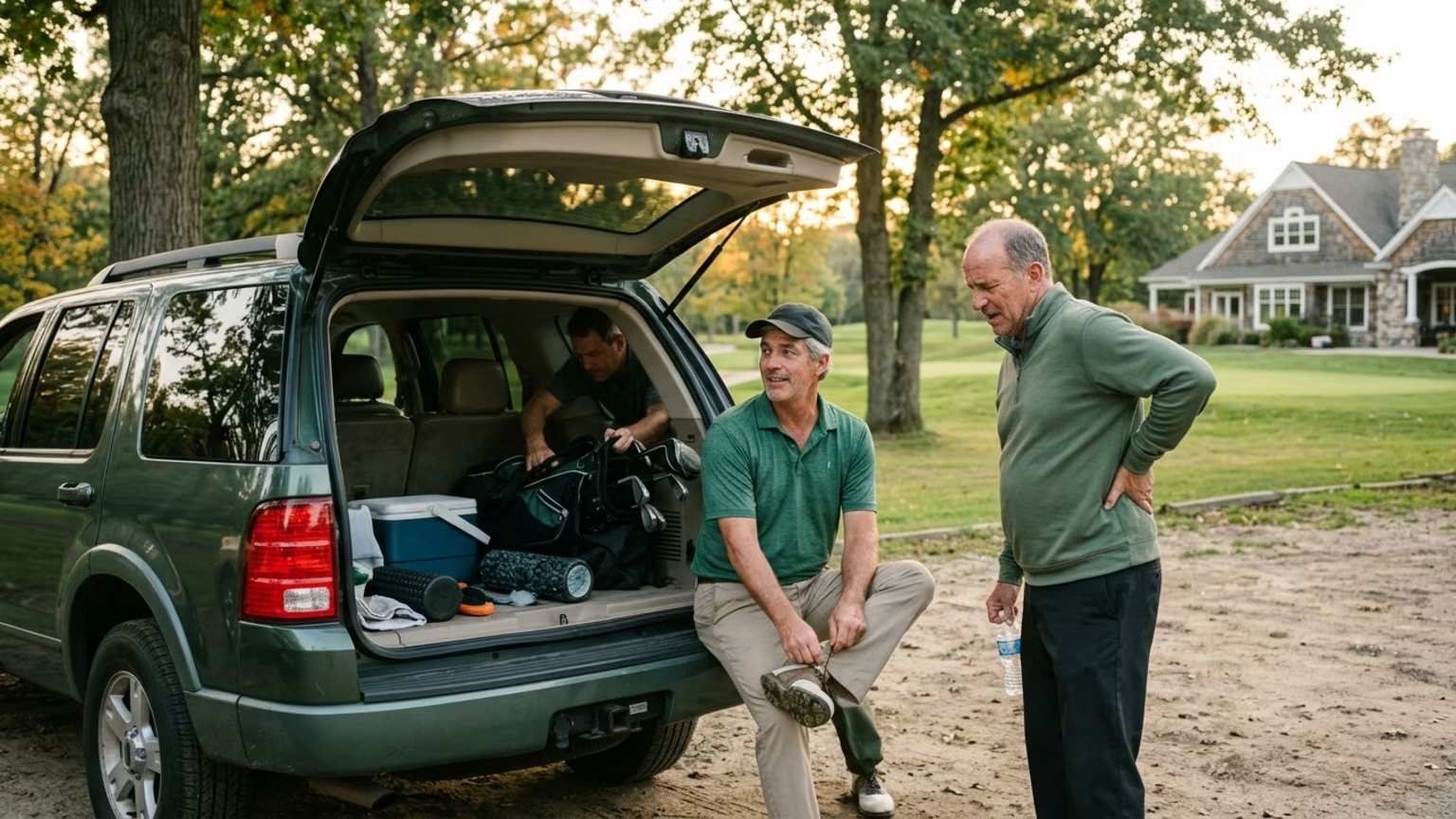

Recent research shows creatine offers modest strength benefits for older adults when paired with resistance training, but true swing speed requires gym work.




On September 18, 2026, when Muscle & Fitness reported on a new systematic review of creatine and exercise, the findings caught the attention of older athletes. The report analyzed studies focusing on strength improvements for active individuals. This massive dataset clarified a long-standing debate in fitness circles. Many older players wonder if simple supplements can restore their youthful swing speed without putting in gym time.
The aging process slowly strips away our natural athletic ability. Many amateurs search for an easy solution to stop this steady physical decline. The fitness industry often promises quick results through aggressive marketing campaigns. This new research provides a much more grounded perspective on athletic preservation. We now have clearer data on what actually works for mature players.
A powerful golf swing requires rapid force production from the ground up. Your muscles must contract quickly to transfer energy through your legs and torso. Without adequate muscular strength, this kinetic chain breaks down before the clubhead reaches the ball. Your body compensates by overusing the smaller muscles in your arms and hands.
As we age, our muscle fibers naturally lose their peak force capacity. This gradual loss of power is a normal biological process for mature adults. The decline forces your joints to absorb the violent rotational stress of the swing. The lower back and shoulders often take the brunt of this poor force transfer.
Over time, this biomechanical breakdown leads to stiffness and chronic pain. When the kinetic chain fails, the arms must forcefully pull the club down from the top. This upper-body dominance creates a steep downswing path and terrible contact. Your elbows and wrists are forced to absorb the shock of hitting the turf.
Building a foundation of leg and core strength prevents this destructive sequence. By maintaining strong glutes and hamstrings, you protect your vulnerable spinal segments. The force generated by your legs travels safely through a braced core. This efficient transfer of energy allows the club to accelerate naturally through the impact zone.
The recent research points to modest but measurable improvements from supplementation. The Muscle & Fitness review reported small pooled effects for performance, approximately 0.30 standardized units, and body composition, approximately 0.24 standardized units. The overall certainty of this evidence was rated as very low, and the certainty for performance outcomes was specifically rated as low.
The researchers screened more than 13,000 records, included 34 studies involving 692 female or female-eligible participants, and used data from 21 studies in the primary statistical analysis. A separate meta-analysis discussed in the article examined seven randomized trials involving 608 postmenopausal women. It reported a small average increase in lean mass and improved leg-press strength, with the clearest benefits appearing when creatine at at least 5 grams per day was combined with resistance training.
A 2026 meta-analysis in PubMed of 11 randomized controlled trials evaluated healthy adults aged 60 and older. This older-adult analysis found a small strength effect size of g = 0.31 with a 95% confidence interval of 0.18 to 0.45. The analysis did not find statistically significant additional effects on muscle mass, which had a pooled effect of g = 0.35 with a 95% confidence interval of -0.09 to 0.78.
Recreational players over 40 face a massive risk of strength loss on the course. We swing with far less speed than touring professionals. Our bodies lack the conditioning required to protect our joints from repetitive rotational stress. This physical vulnerability makes us highly susceptible to overuse injuries over a long season.
The saddest thing I have seen in golf is watching lifelong playing partners slowly drop out of our weekend group. It usually starts with a nagging shoulder or knee issue they ignore until it requires surgery. That pattern is exactly why I became obsessed with golf longevity. We do not have to stop playing as we age, provided we do the right maintenance work between rounds.
The weekend warrior often works at a desk all week before walking to the first tee. This sedentary lifestyle causes the hip flexors to tighten and the glutes to weaken. When Saturday morning arrives, the nervous system is completely unprepared for explosive athletic movement. The combination of seated jobs and weekend golf is a perfect recipe for back spasms.
Many mature players mistakenly believe that walking the course provides enough exercise. Walking is excellent for cardiovascular health and endurance. It does absolutely nothing to preserve the explosive muscle fibers needed for a safe golf swing. Without a targeted approach to preserving power, the aging golfer will slowly lose distance and mobility.
The most effective preventative measure is starting a dedicated strength protocol. True physical resilience on the golf course comes from consistent gym work, not from taking a pill. To build safe muscle for senior players, you must lift weights with proper form. When performing any rotational exercise in the gym, focus entirely on turning your trail hip.
This small mechanical focus helps build usable stability safely without overloading your lower back. Building an effective regimen does not require heavy powerlifting or dangerous gym movements. A smart program utilizes moderate weights and controlled repetitions. The goal is to stimulate the muscle tissue without causing excessive soreness.
This careful balance keeps you fresh enough to practice your short game and play on the weekends. Creatine can serve as a helpful adjunct to this hard work. The evidence supports modest strength benefits when paired with a good lifting routine. You should view the powder as a small bonus on top of your physical effort.
The weights provide the primary stimulus for your body, and the supplement simply supports the muscular recovery process. Adding basic resistance bands to your daily routine builds a great foundation. You can easily perform these movements at home before heading to the golf course. Consistent daily habits always outperform random bursts of intense exercise.
A common misconception is that sports supplements will directly increase your clubhead speed. The cited creatine studies did not measure golf outcomes like swing speed or ball flight. They also did not track injury rates among older players. The current evidence does not directly show that this supplement prevents golf injuries or improves your handicap.
Another mistake is assuming that dietary supplements can replace physical effort. The PubMed review specifically noted that muscle mass changes were not statistically significant in older adults. You cannot skip your gym sessions and expect a powder to keep your swing intact. True longevity comes from stressing the muscles and allowing them to adapt over time.
The older-adult review focused on healthy adults and warned against extending its conclusions to frail populations. If you have significant health conditions, a supplement might not be appropriate at all. Always speak with your doctor before adding new products to your diet. The safest bet is always putting your time and energy into lifting weights safely.
Many players chase quick fixes instead of building a sustainable plan for physical resilience. The golf industry constantly sells the idea of effortless power through unproven supplements. The science tells a much more reliable story. Consistent physical training is the only proven method to protect your body and maintain your speed.
What adjustments will you make to your strength routine this season to stay resilient on the course?
Follow Golfergy for practical insights on performance, mobility, recovery and healthy ageing. Stay connected for new articles, research-led guidance and ideas to help you play better for longer.



Learn how assessing physical deficits like hip strength and muscle power can help golfers over 40 build a joint-safe swing and prevent injury.

A 2026 report examined links between grip strength and longevity. Learn why hand endurance is a critical health marker for club control in older golfers.

Bob Toski's 100th birthday reminds golfers over 40 that hand control and efficient movement outlast brute force. Learn how to protect your swing today.
Explore practical resources on performance, recovery, mobility and golf longevity.
Read the Blog