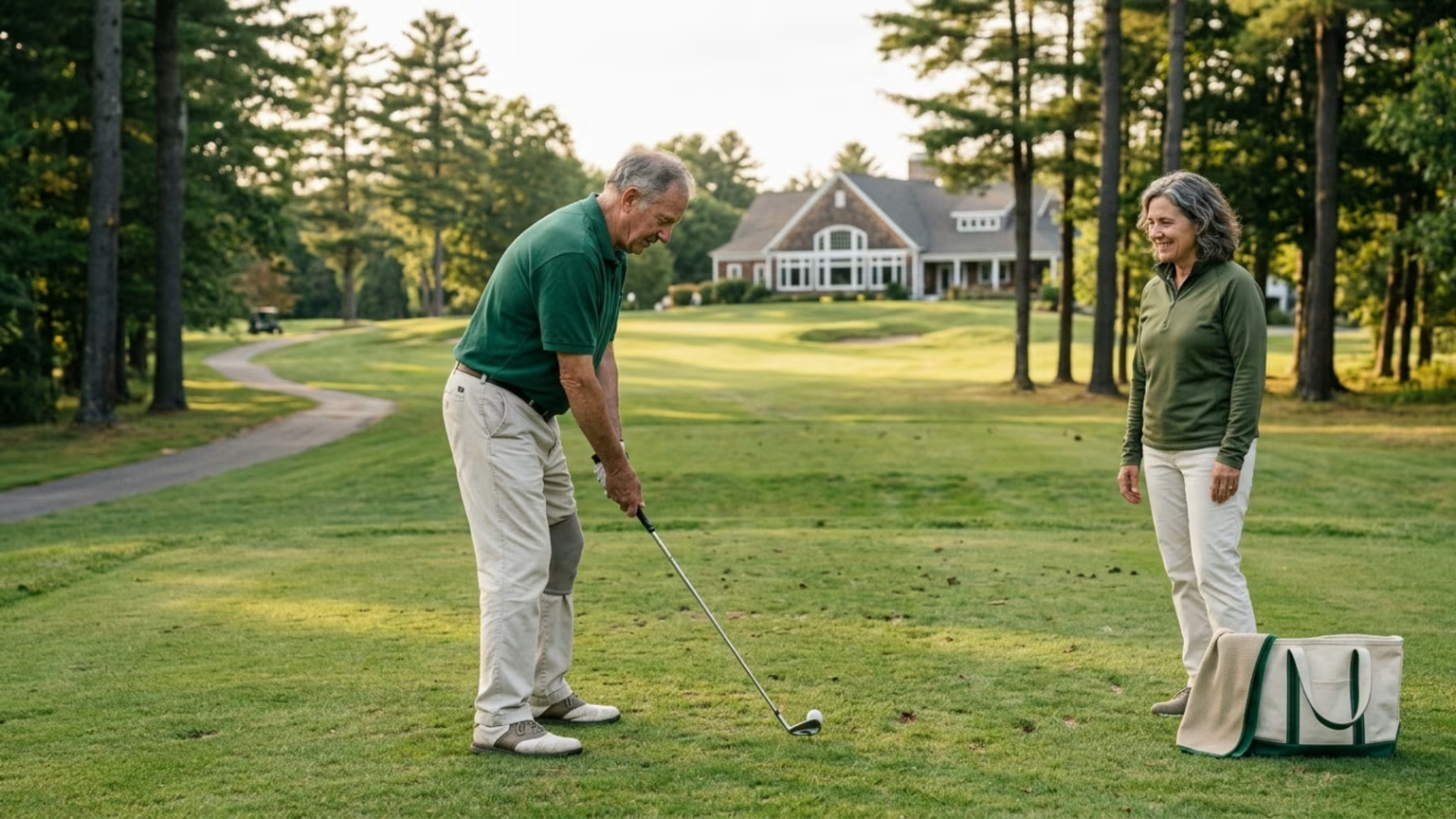

A recent analysis reveals older adults see greater absolute health benefits from increased physical activity. Learn how to protect your golf longevity.




On September 19, 2026, researchers at Leiden University Medical Centre released a major observational study on physical activity. They analysed 87,975 adults from the UK Biobank who did not have diabetes at baseline. The participants wore wrist accelerometers for seven consecutive days. Researchers then followed their health outcomes for a median of approximately 7.7 years.
During that follow-up window, 2,140 participants developed type 2 diabetes. This represented approximately 2.4 percent of the observed cohort. The study compared participants with lower and higher volumes of moderate-to-vigorous physical activity. For older recreational players, these findings offer clear evidence about the value of staying active off the course.
When players reduce their weekly movement, the body loses its ability to handle the physical stress of a golf swing. The golf swing places sudden rotational force on your spine, hips and knees. Muscles that sit dormant during the week struggle to fire correctly on the weekend. This lack of conditioning leaves the joints vulnerable to excess strain and early fatigue.
Metabolic health plays a direct role in how well your tissues recover from those forces. Poor metabolic function slows down nutrient delivery to your working muscles. It also makes it harder for your body to repair small tissue tears after a long round. Over time, this leads to stiffness, nagging pain and a noticeable drop in late-round stamina.
In our experience, the saddest thing about the game is watching lifelong playing partners slowly drop out of the weekend group. It frequently starts with a nagging shoulder or knee issue they ignore until it requires surgery, but poor baseline conditioning often complicates their recovery. That pattern is exactly why our team became obsessed with golf longevity. We do not have to stop playing as we age, provided we do the right maintenance work between rounds.
The Leiden University Medical Centre analysis revealed a massive difference between activity levels. The lower-activity group recorded a median of 121 minutes of moderate-to-vigorous physical activity per week. In comparison, the higher-activity group recorded 409 minutes per week. Across the entire cohort, the lower-activity group faced roughly twice the relative risk of developing type 2 diabetes.
Age played a fascinating role in these outcomes. Among adults younger than 63, lower activity was associated with more than double the relative risk. For adults aged 63 and older, the lower-activity group faced a 65 percent higher relative risk. The relative-risk difference between lower and higher activity levels became smaller with increasing age.
But the absolute benefit of physical activity was greater in older age groups. Study author Qiuyu Feng pointed out that relative risk and absolute risk answer completely different questions. Relative risk describes the proportional difference between groups. Absolute risk better indicates how many actual cases might potentially be prevented in a population.
Older adults tend to have more underlying disease risk to begin with. Because of that higher baseline risk, a similar proportional improvement translates into a larger absolute health gain. Leiden researcher Diana van Heemst noted that the greatest population-level reduction in new diabetes cases may occur among older adults. This makes a strong case for consistent weekly movement.
Many players over 40 face an elevated risk for metabolic issues and joint pain. Modern professional life involves hours of sitting, which limits daily movement. This sedentary routine directly contrasts with the physical demands of an 18-hole round. Tracking your daily wellness markers becomes incredibly useful for identifying these physical deficits early on.
Amateurs often fall into the trap of using golf as their only form of exercise. The study noted that the lower-activity group fell below the commonly cited public-health target. That target asks for 150 minutes of moderate-intensity activity per week. Playing one round of golf in a cart rarely meets this threshold for sustained moderate-to-vigorous exertion.
Furthermore, the cohort in this study was drawn from the UK Biobank. These participants tend to be healthier, wealthier and better educated than the wider UK population. This limits the generalizability of the findings somewhat. It suggests the risks for the average older adult could potentially be even more pronounced in reality.
We must recognize that the analysis was observational. It identified an association between activity and diabetes risk but could not prove causation. The prediabetes status of participants had also been assessed several years before the accelerometer measurements. Participants’ metabolic status may have shifted before researchers recorded their activity exposure.
Diana van Heemst recommended that all adults should be encouraged to be as active as they can. More physical activity was clearly linked with a lower risk of type 2 diabetes. For the ageing golfer, a realistic longevity plan requires more than just weekend play. You should add structured walking, resistance training and targeted mobility work to your weekly routine.
Start by integrating a consistent weekly fitness routine into your schedule. Focus entirely on turning your trail hip during mobility exercises to build sustainable rotational flexibility. The goal is not to immediately hit 409 minutes of intense exercise. The findings support a practical message of starting where you are and adding activity gradually.
If you have joint pain or existing medical conditions, always seek individualized professional guidance. The study examined several metabolic conditions as potential confounders but did not prescribe specific treatment plans. You might also read our longevity manual for spinal health to protect your lower back. Every additional session of moderate movement counts toward building a more resilient body.
Many fitness programs claim you must work out at specific times for maximum benefit. The researchers did examine exercise timing during this analysis. Overall, exercising mainly between 1 p.m. and midnight showed an association with about a 10 percent lower relative risk. This was compared to exercising mainly between 5 a.m. and before 1 p.m.
But this timing association was noticeably weaker in older adults. Later-day activity was associated with just a 4 percent lower relative risk in the older group. This compares to a much larger 23 percent lower risk among younger adults. The authors reported no clear evidence that exercise timing changed the relationship between activity and diabetes risk across age groups.
Van Heemst cautioned that the findings do not support different timing recommendations for different population groups. Consistency matters far more than chasing a supposedly perfect workout window. For golfers approaching retirement, you should exercise whenever it best fits your daily schedule. This approach will help you recover properly between rounds without stressing over the clock.
The evidence shows that increasing your physical activity brings significant absolute health gains as you age. Protecting your metabolic health helps protect your swing, your joints and your stamina on the back nine. We want to see you enjoying the fairways for decades to come. What adjustments will you make to your mobility routine this season to steer clear of this hazard?
Follow Golfergy for practical insights on performance, mobility, recovery and healthy ageing. Stay connected for new articles, research-led guidance and ideas to help you play better for longer.



A new study of over 64,000 adults shows that brisk walking can improve longevity. Learn how golfers over 40 can use stepping intensity to build endurance.


A clinical trial examines how HMB and whey protein impact muscle turnover in adults over 65. Read why older golfers need a multi-component recovery plan.

Life Time's ARORA program expansion highlights the value of multi-component fitness. Learn how older golfers can adapt this format for mobility and longevity.
Explore practical resources on performance, recovery, mobility and golf longevity.
Read the Blog