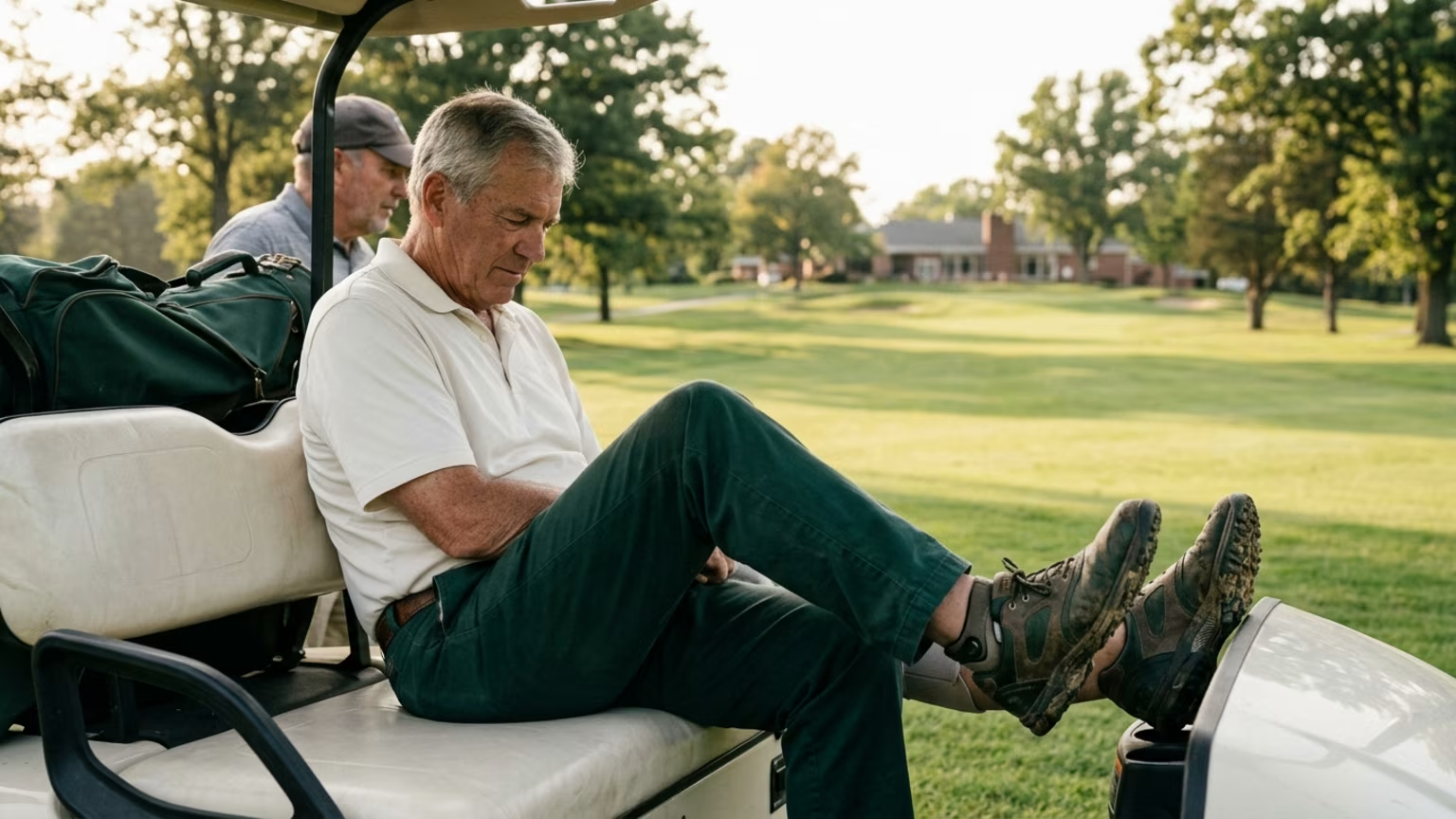

A new study of over 64,000 adults shows that brisk walking can improve longevity. Learn how golfers over 40 can use stepping intensity to build endurance.




On September 8, 2026, the British Journal of Sports Medicine published new research on walking intensity. The paper by Le Wei, Mohammad N. Ahmadi, Niels A. Koemel and colleagues analyzed activity data from 64,743 UK Biobank participants aged 40 to 69. The researchers looked at how daily step volume combined with peak walking cadence relates to mortality. The study suggests that walking pace matters just as much as your total step count.
This research does not detail the biomechanics of a specific tour professional's injury. It focuses entirely on general population activity data. However, the mechanical demands of walking faster require noticeable physical effort. A brisker pace forces the cardiovascular system to deliver oxygen rapidly.
The leg muscles must contract with more force to push the body forward. The nervous system also adapts to maintain balance at this higher speed. Walking at a brisk pace places a healthy demand on the heart and lungs. The muscle fibers in the legs are recruited more heavily to maintain the faster cadence.
Over time, this consistent physical demand trains the body to process oxygen more effectively. The nervous system becomes more efficient at sending signals to the active muscles. These internal changes translate directly to improved physical resilience on the course.
The saddest thing I have seen in golf is watching lifelong playing partners slowly drop out of our weekend group. It usually starts with a nagging shoulder or knee issue they ignore until it requires surgery. That pattern is exactly why I became obsessed with golf longevity. We do not have to stop playing as we age, provided we do the right maintenance work between rounds.
Recreational golfers over 40 face unique longevity challenges. A touring professional trains constantly to handle the physiological load of walking miles every day. The recreational player often lacks that deep well of stamina. When exhaustion sets in on the back nine, the amateur's posture begins to fail.
The lower back takes on stress that the tired legs can no longer support. This cascading physical failure makes the amateur highly susceptible to chronic aches. The new UK Biobank study provides a helpful benchmark for building basic endurance. The researchers tracked participants taking fewer than 5,000 steps per day.
In this low-step group, reaching a peak cadence of approximately 80 steps per minute was associated with a 28% lower risk of all-cause mortality. This was compared to a low-step and low-cadence reference group. The lowest overall risk appeared among participants taking 7,500 to 10,000 steps per day. In that specific group, the most favorable point occurred at approximately 100 steps per minute.
Across multiple categories, a peak cadence of approximately 90 to 100 steps per minute was tied to lower mortality risk. This metric was based on the average cadence across a participant's 30 most active walking minutes of the day. It was not a measurement of their all-day walking speed.
We can apply these pacing concepts to our own pre-round preparation. I used to stand on the first tee doing long, static hamstring stretches because I thought it was the right way to warm up. I would actually feel weaker on my first drive. Research later showed me that dynamic movements, like leg swings and torso twists, prime the nervous system much better.
Changing my five minute warmup completely transformed my opening tee shots. You can adopt a similar approach to your walking habits. Treat walking cadence as an optional training signal. Do not force yourself to walk 100 steps per minute over a full eighteen holes.
The uneven terrain and heavy equipment make a strict pace impractical. Instead, add brief brisk intervals during your off-course walks. Focus entirely on maintaining a steady rhythm for just a few minutes. This purposeful movement is a practical step for protecting your cardiovascular system.
Combine these brisk walks with a proper routine for swing longevity and joint health. You can start by picking one day a week for a focused walking session. Find a flat and safe path in your neighborhood. Walk at a comfortable pace for five minutes, and then increase your cadence slightly for one minute.
Return to your normal pace until you catch your breath. Build your pace gradually, especially if you manage arthritis or balance issues. A physical therapist can help individualize this approach to fit your specific needs. When you feel fresh on the final few holes, it becomes much easier to protect your late-round swing.
The researchers noted several practical limitations in their findings. The study was observational rather than a randomized walking intervention. This means the data shows an association but does not prove causation. Harvard professor Daniel Lieberman cautioned that healthier and fitter people may simply have been more capable of walking faster.
Pre-existing health conditions could partly explain the favorable association. The research team attempted to reduce reverse causation by excluding people with previous cancer or cardiovascular disease. They also accounted for various participant characteristics. Still, residual confounding could not be eliminated from the final data.
The data collection methods also had practical limits. Physical activity was recorded for approximately seven days. This short window may not accurately reflect a person's habits over several decades. Wrist-worn trackers can miss some steps when the wrist remains relatively still.
This frequently happens while pushing a shopping cart or steering a golf trolley. The UK Biobank sample may not perfectly represent every older adult. The findings might not apply equally to people with different socioeconomic circumstances or severe disabilities.
Building your cardiovascular base does not require running marathons. Small periods of purposeful walking can make a noticeable difference in your stamina. What adjustments will you make to your mobility routine this season to steer clear of this hazard?
Follow Golfergy for practical insights on performance, mobility, recovery and healthy ageing. Stay connected for new articles, research-led guidance and ideas to help you play better for longer.



A clinical trial examines how HMB and whey protein impact muscle turnover in adults over 65. Read why older golfers need a multi-component recovery plan.

Life Time's ARORA program expansion highlights the value of multi-component fitness. Learn how older golfers can adapt this format for mobility and longevity.
Learn how a simple heel raise routine can help older golfers improve lower leg strength, maintain course stability, and support a strong foundation for the swing.
Explore practical resources on performance, recovery, mobility and golf longevity.
Read the Blog