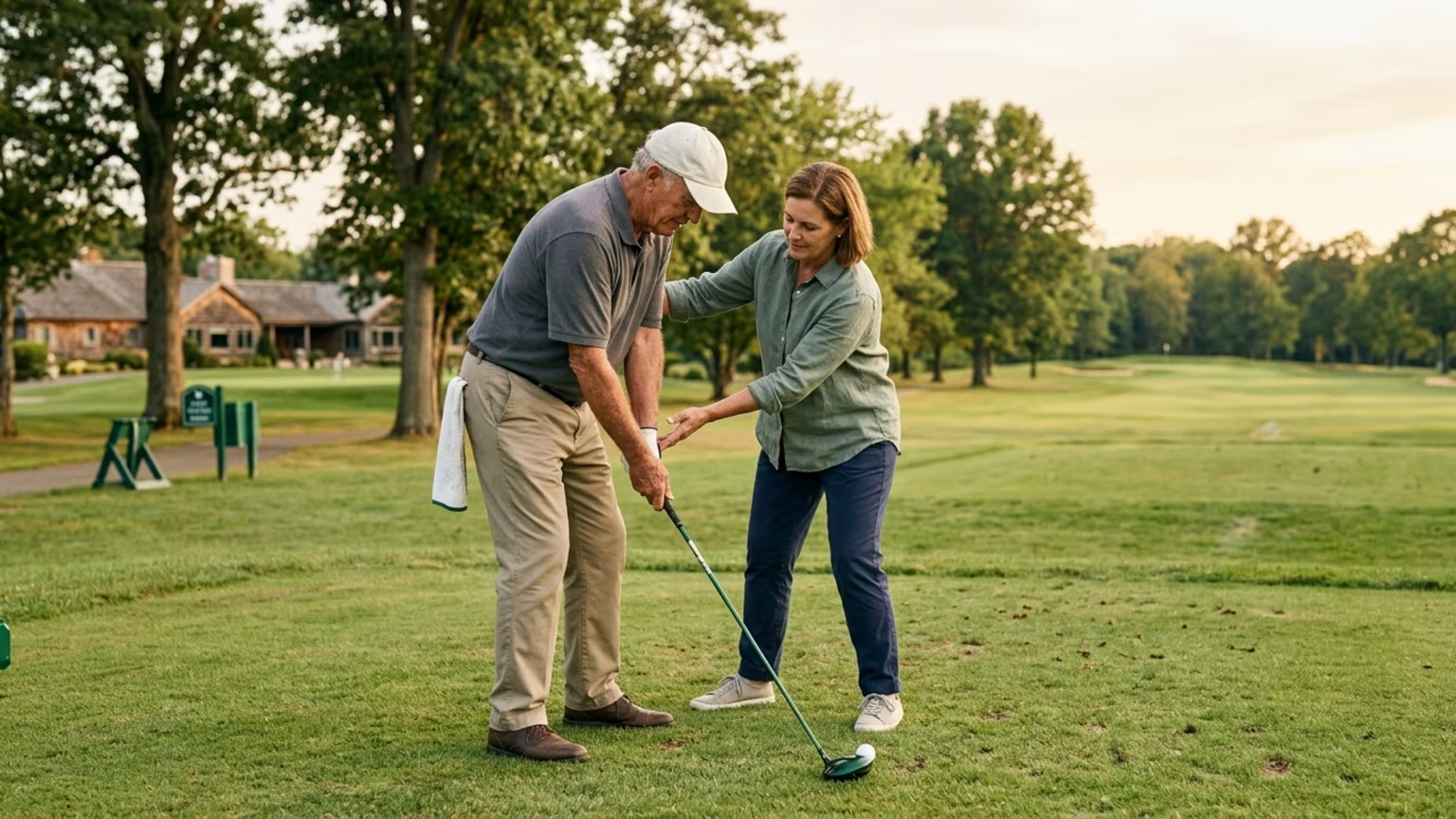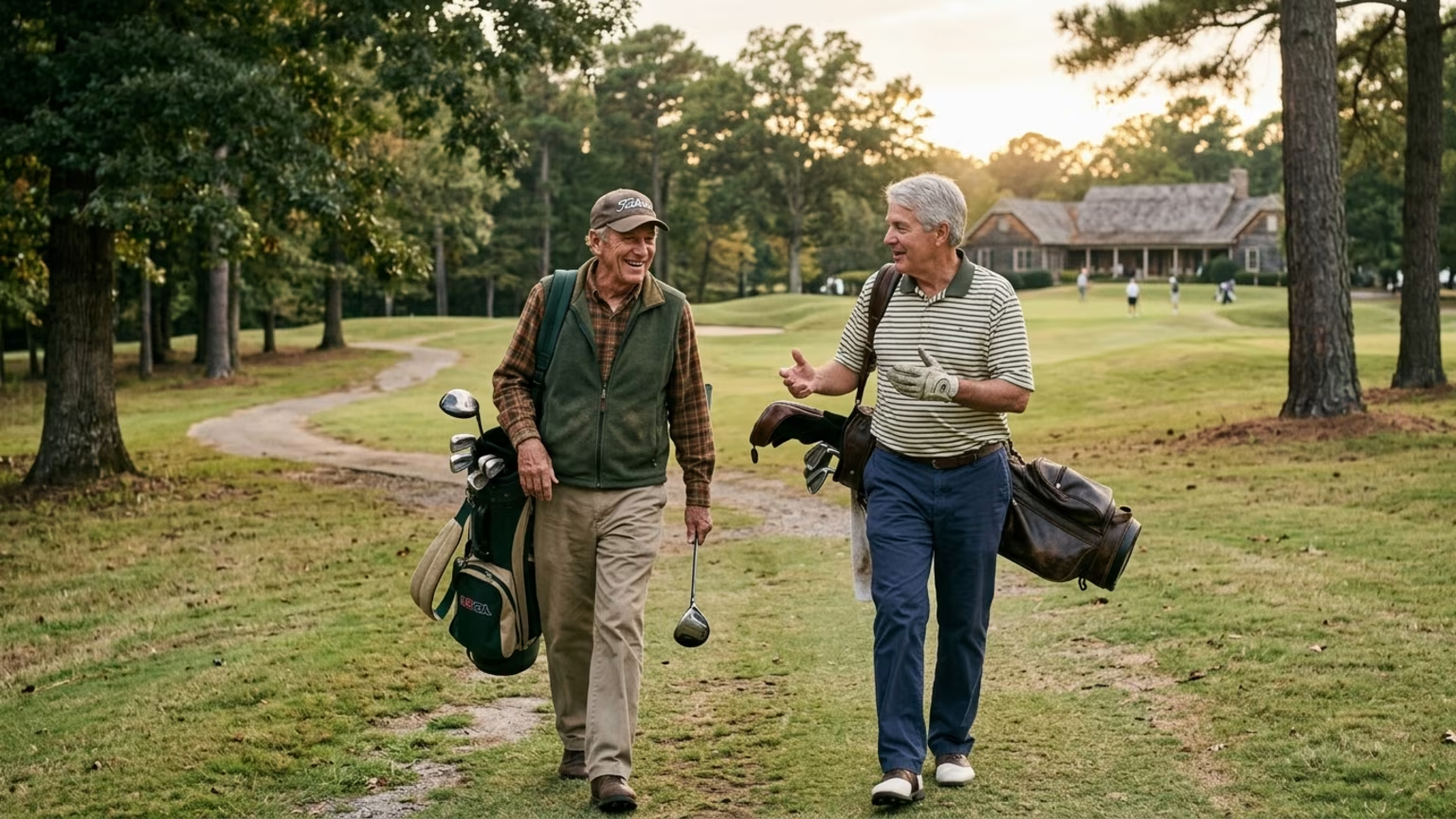

A local news feature on two senior golfers highlights the value of physical consistency. Learn how aging players can protect joints and maintain swing mobility.




On September 24, 2026, when KQ2 profiled 86-year-old Vernon Maggart and 83-year-old Robert Lock, the broadcast highlighted a quiet triumph in recreational sports. The two seniors regularly play at Copper Hill Golf Course in St. Joseph, Missouri. Their routine stands in sharp contrast to the typical sports headlines we read. We usually see reports about professional athletes withdrawing from major tournaments because of sudden back spasms or wrist fractures.
Maggart and Lock show us a different reality about the physical demands of a lifelong game. Maggart has played at Copper Hill for approximately 20 years. Lock has played there for about six years. The two men became friends roughly five years ago after Maggart joined Lock.
Lock was looking for a golf ball while playing alone when they first met. Their shared rounds have since become a regular weekly activity. They usually play their matches on Tuesday and Thursday mornings. This consistency forms the foundation of their continued physical activity.
Maggart lives with Parkinson’s disease and told KQ2 that being outdoors and exercising are important to him. Lock cited the challenge of reaching the green, chipping, and putting as reasons he loves the sport. Lock recalled an eagle on Copper Hill’s eighth hole as one of his favorite memories. The game gives them a compelling reason to keep moving.
The local news feature does not detail a specific mechanical injury or a professional tour withdrawal. We must plainly state that the source material does not provide a single acute injury to analyze. Instead, the real physical threat to an older golfer is the gradual loss of joint mobility. This slow decline changes how your body moves through the swing.
During a normal swing, the hips and thoracic spine rotate to generate power. If those joints become rigid, the lower back is forced to absorb the twisting force. The lumbar spine is designed for stability rather than deep rotation. Forcing it to twist aggressively creates friction and inflammation in the surrounding tissues.
Over time, this mechanical compensation leads to severe pain. Without proper mobility, the shoulders also take on too much strain during the downswing. The rotator cuff muscles must work harder to pull the club through the impact zone. This places immense stress on the delicate tendons in your shoulder.
When the core stops turning, the hands flip the clubhead to generate speed. This poor mechanic strains the ligaments in the wrists and elbows. Your body will always look for the easiest way to swing the club. It takes disciplined practice to maintain proper form when your muscles are tired.
Older players often develop nagging aches because their joints compensate for a lack of core rotation. Recognizing these early body signals after a round helps you address the stiffness before it ruins your season. When your hips lose their rotational capacity, your body finds a different way to complete the motion.
While aging brings physical challenges, staying active offers measurable benefits. A Society of Behavioral Medicine discussion cited a U.S. study of nearly 275,000 older adults regarding physical activity. The researchers found that golf participation was associated with a 7% lower risk of death compared to participation in other activities. This is an observational finding rather than a clinical guarantee.
The data simply shows a positive association between the sport and longer lifespans. We cannot view this statistic as a promise that hitting range balls will cure medical conditions. Still, the numbers validate the idea that consistent physical hobbies support a healthy lifestyle. Committing to a twice-weekly routine gives older adults a reliable source of movement.
Maggart and Lock prove that you can maintain a playing schedule well into your eighties. The key is finding a sustainable pace that matches your physical capacity. Mike Habermehl, a teaching professional at Copper Hill, said seeing them at the course has become “almost like clockwork.”
You might assume that golfers over 40 face a lower risk of injury because they swing the club with less speed than tour professionals. The opposite is true. Amateur players are highly vulnerable to mobility loss precisely because they spend decades sitting at desks or driving cars. A slower swing speed is often the direct result of a compromised musculoskeletal system.
Trying to hit the ball far with rigid joints causes serious internal damage. Amateurs often try to force their swings to match their younger years. When you lack the flexibility to turn your shoulders fully, you end up lifting your arms to manufacture speed. This jerky motion places the elbow and wrist joints in dangerous positions.
Our bodies change over time, and our approach to the game must evolve alongside those physical shifts. Slower swing speeds do not protect you from the physical toll of poor mechanics. The stress simply moves to different joints. You cannot cheat the kinetic chain without paying a physical price later.
In our experience, the saddest thing we see in golf is watching lifelong playing partners slowly drop out of our weekend group. It usually starts with a nagging shoulder or knee issue they ignore until it requires surgery. That pattern is exactly why Golfergy became dedicated to golf longevity. We do not have to stop playing as we age, provided we do the right maintenance work between rounds.
Smart preparation completely beats swinging harder when your goal is to play for another twenty years. You must listen to your body and adjust your mechanics accordingly. Ignoring the early signs of joint restriction is the fastest way to lose your swing entirely.
To avoid the fate of dropping out of your regular group, you need a grounded adjustment to your physical routine. You cannot rely on playing rounds to keep your muscles strong. You must incorporate targeted resistance training into your weekly schedule to protect your joints. Simple movements can restore the stability your swing requires.
When you start your warm-up routine, focus entirely on turning your trail hip. Keep your upper body quiet and isolate the movement in your lower half. Building strength around the hip joint creates a sturdy foundation for the rest of your swing. This single focus helps prevent your lower back from taking over the rotational workload.
I used to stand on the first tee doing long, static hamstring stretches because I thought it was the right way to warm up. I would actually feel weaker on my first drive. Research later showed me that dynamic movements, like leg swings and torso twists, prime the nervous system much better. Changing my five-minute warmup completely transformed my opening tee shots.
Seniors need proper golf exercises to maintain this functional movement. Spending just ten minutes on hip mobility before your round can save you from weeks of back pain. Learning how to preserve clubhead speed without swinging harder allows you to enjoy the sport without risking injury.
Many recreational players mistakenly believe that walking the course provides a complete physical conditioning program. Our sources indicate that aerobic activity alone is not the whole mobility picture. You should not treat a round of golf as a substitute for dedicated resistance training. The game simply does not deliver the muscular overload needed to prevent mobility disability.
Another common misconception is that the sport acts as a medical treatment. While Maggart notes that being outdoors and exercising are beneficial to him, golf does not treat Parkinson’s disease. Claims that hitting the links prevents injury or treats disease go far beyond the assembled evidence.
Habermehl accurately described the sport as a game of a lifetime. The sport is a wonderful reason to stay active, but it is not a cure for structural decline. You must take responsibility for your physical health outside the boundaries of the course.
A weekly tee time provides a steady anchor for social connection and physical effort. Lock told the station that the sport keeps him outside and moving around. You can play it completely alone or enjoy the company of good friends. What adjustments will you make to your mobility routine this season to steer clear of this hazard?
Follow Golfergy for practical insights on performance, mobility, recovery and healthy ageing. Stay connected for new articles, research-led guidance and ideas to help you play better for longer.


A recent VA study suggests that older men with prediabetes preserved more lean mass and physical function during weight loss by increasing their protein intake.


Learn how older golfers can safely rebuild leg speed and balance using adapted plyometrics. We review CNA's guidance on supported hops and firm stomping.

Learn why golfers over 40 recover more slowly after a round and how to adjust your weekly routine. Read practical, science-backed tips to protect your mobility.
Explore practical resources on performance, recovery, mobility and golf longevity.
Read the Blog