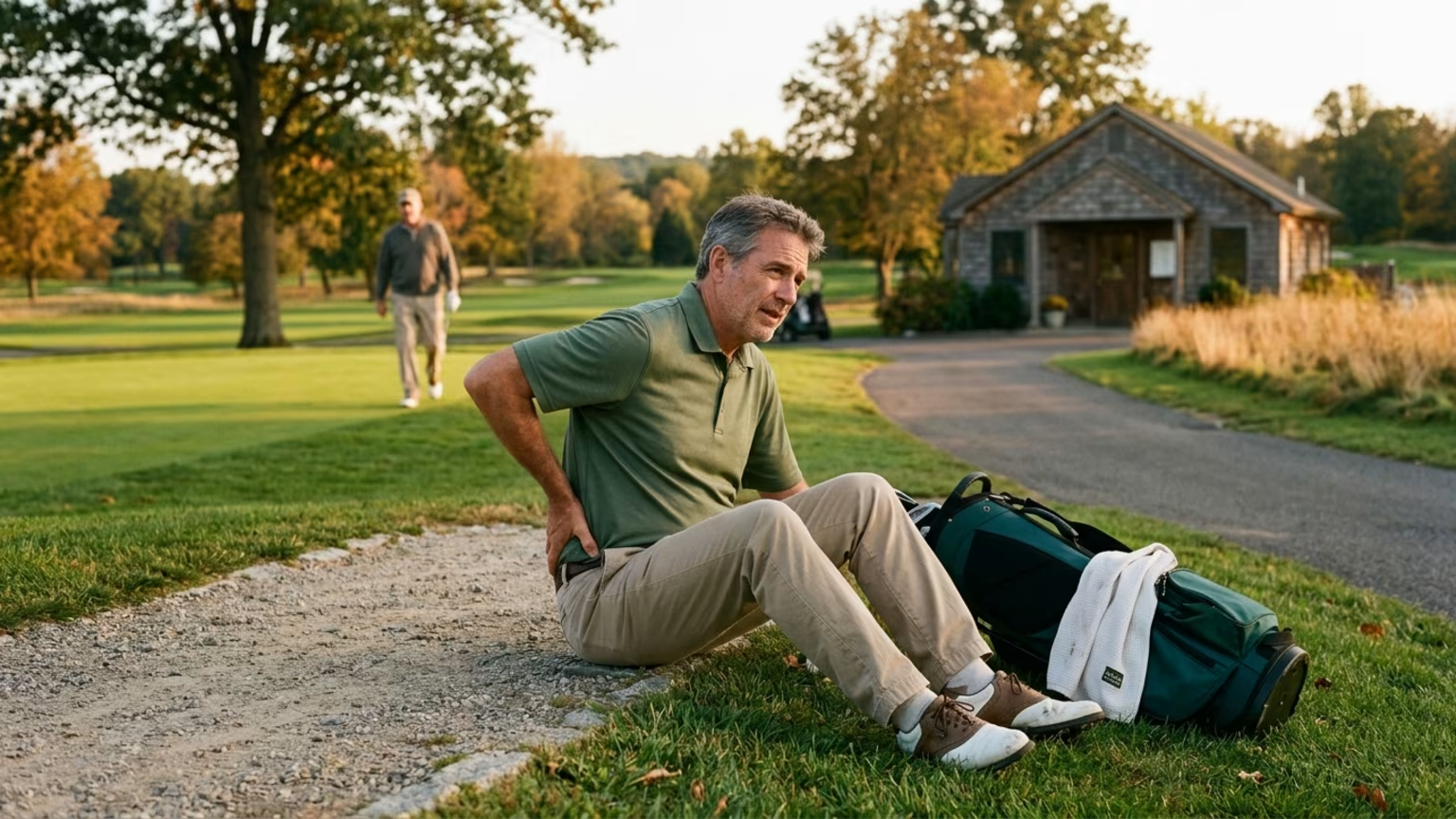
Learn how older golfers can safely rebuild leg speed and balance using adapted plyometrics. We review CNA's guidance on supported hops and firm stomping.




On September 27, 2026, when CNA published its report on adapted plyometrics for older adults, it sparked a quiet shift in how we view lower-body training. The article highlighted guidance from sports-medicine physician Dr Chiam Tut Fu and personal trainer Joshua Tan. They discussed how older adults can safely use small jumping movements to stay active and capable. Their findings offer a practical roadmap for recreational players wanting to maintain power on the course.
For years, golf fitness advice has favoured elite athletes and ignored the realities of aging. The physical demands of the sport do not simply vanish when we turn 50 or 60. Older players still need to generate ground force to hit crisp iron shots and drive the ball effectively. The CNA report provides a helpful framework for older adults to train speed safely.
As we get older, our bodies gradually lose the ability to react quickly and generate sudden force. Dr Chiam notes that this age-related decline impacts reaction time, speed and balance. During a golf swing, your legs must fire rapidly to transfer energy up to the club. Adapted plyometrics train your nervous system to move quickly again without requiring heavy weights.
A powerful golf swing relies on your legs pushing against the ground to create rotational speed. When fast-twitch muscle fibers weaken, golfers often try to compensate by swinging harder with their arms and shoulders. This upper-body dominance leads to poor ball striking and increased stress on the lower back. By practicing explosive movements, you remind your leg muscles how to activate quickly and efficiently.
Plyometrics are simply exercises designed to produce fast and powerful movements. Elite athletes use massive box jumps to build their jumping capacity, but older adults need a different approach. The goal is not maximum vertical height, but rather training the brain to send rapid signals to the leg muscles. This improved nerve firing translates directly to better stability when swinging a golf club on an uneven lie.
The CNA report provides a structured timeline for building this fast-twitch capacity. The article recommends completing three to five sets per exercise during training sessions. These sessions should last about 10 minutes and happen three times a week. The routine aims to eventually build toward 50 to 100 repetitions per movement over time.
Keep in mind that these targets are general expert recommendations rather than a golf-specific prescription. You should not expect to hit 100 repetitions during your first week of training. Building tendon strength takes time, and rushing the process will only lead to sore joints. Consistency over a period of months will yield much better functional results than a single intense week.
Recreational golfers over 40 face a high risk when it comes to power loss and physical stability. Older players swing with less speed than touring professionals, yet the physical demands on our aging joints remain high. We often see lifelong playing partners struggle with sudden balance shifts on uneven lies. This loss of stability is exactly why our team focuses so heavily on golf longevity and injury prevention.
Many amateur players assume that losing swing speed is an unavoidable part of getting older. They stop training for power and focus exclusively on slow stretching or light walking. While walking is excellent for cardiovascular health, it does nothing to preserve fast-twitch muscle fibers or rapid balance recovery. When you lose the ability to catch yourself quickly, a simple slip in a wet bunker can become a serious problem.
Professional golfers spend hours in the gym maintaining their lower-body explosiveness under the watchful eyes of trainers. A weekend player over 50 does not have that luxury, but they still face the exact same physical forces during impact. Swinging a golf club aggressively requires your lead leg to brace against massive rotational energy. If your leg muscles cannot fire fast enough to stabilize that force, your knees and hips take the brunt of the impact.
You can safely introduce adapted jumping movements into your weekly routine to protect your lower body. Tan suggests that quick movements do not need to involve large or dangerous jumps. CNA outlines safe examples like small hops while holding a rail, repeated step-ups and firm stomping. Dr Chiam advises starting with less speed, less impact and a smaller joint range of motion.
Focus entirely on small hops or skips while keeping a firm grip on a sturdy rail. The rail removes the fear of falling and reduces the load on your joints as you land. You are not trying to jump high, but rather trying to spend as little time on the ground as possible. This quick rebound effect is what trains your nervous system to fire rapidly during your golf swing.
CNA also describes slightly more demanding options for those who are ready to progress. Exercises like one-legged hops and jump squats are mentioned as advanced movements in the routine. You should only attempt these variations after mastering the supported movements and consulting with a medical professional. Building a solid foundation of supported step-ups will naturally prepare your legs for these tougher challenges over time.
Safety is the primary rule when trying these explosive exercises at home. The CNA article highlights the need for proper medical screening before starting any new jumping routine. You must adapt the exercises for your individual joint conditions and stop immediately if you feel sharp, sudden pain. The report suggests learning these movements with a qualified trainer who has experience working with older people.
Many older players still rely on long, held stretches to prepare their legs for golf. I used to spend my mornings holding deep hamstring stretches before realizing it made my legs feel sluggish on the course. Replacing those static holds with quick, supported movements primes your nervous system much better. Those who invest in dynamic balance training often find they have much better control over their lower body during the round.
Real progress is possible when you start small and remain consistent with your adapted training. The CNA article shares the experience of 63-year-old Choo Bee Khim, who has osteopenia and a history of an ankle fracture. She reported feeling more confident and having more energy after beginning the jumping exercises. While this is a personal report rather than a guaranteed outcome, it highlights the potential benefits of careful physical conditioning.
Adapting these small plyometric movements gives you a clear path to rebuilding lower-body strength. The goal is to move quickly and securely without putting unnecessary stress on your joints. Older players who understand that balance is a trainable capability can safely retain their athleticism for years to come. What small jumping movements will you add to your home routine this season to stay sharp on the course?
Follow Golfergy for practical insights on performance, mobility, recovery and healthy ageing. Stay connected for new articles, research-led guidance and ideas to help you play better for longer.


Learn why golfers over 40 recover more slowly after a round and how to adjust your weekly routine. Read practical, science-backed tips to protect your mobility.

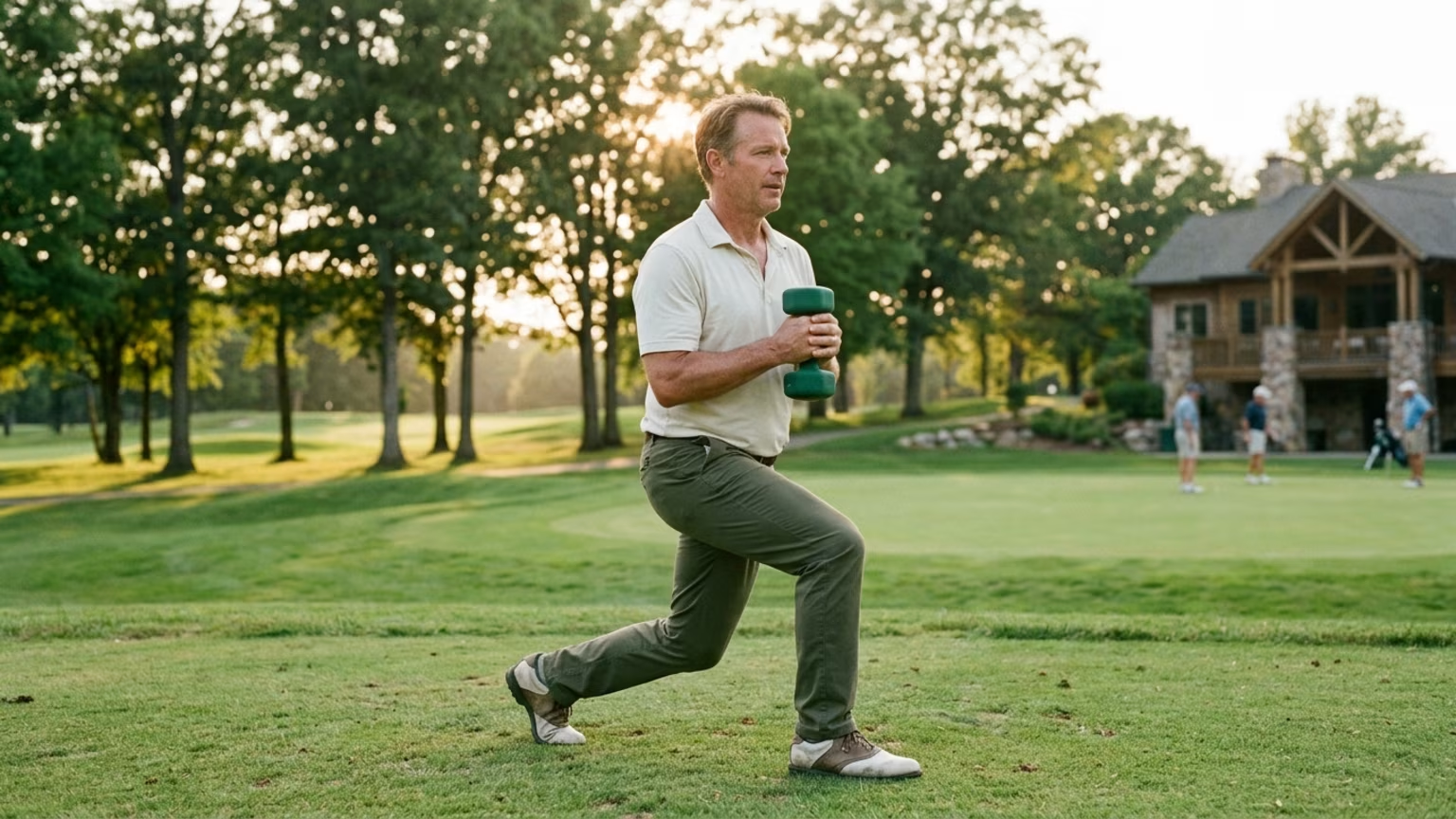
A practical guide translating TIME's recommended strength exercises for older adults into actionable fitness habits for golfers over 40.

Learn why the Samsung Galaxy Walkathon's 6,100 daily step target is a practical habit for older golfers to build baseline stamina and protect joint health.
Explore practical resources on performance, recovery, mobility and golf longevity.
Read the Blog