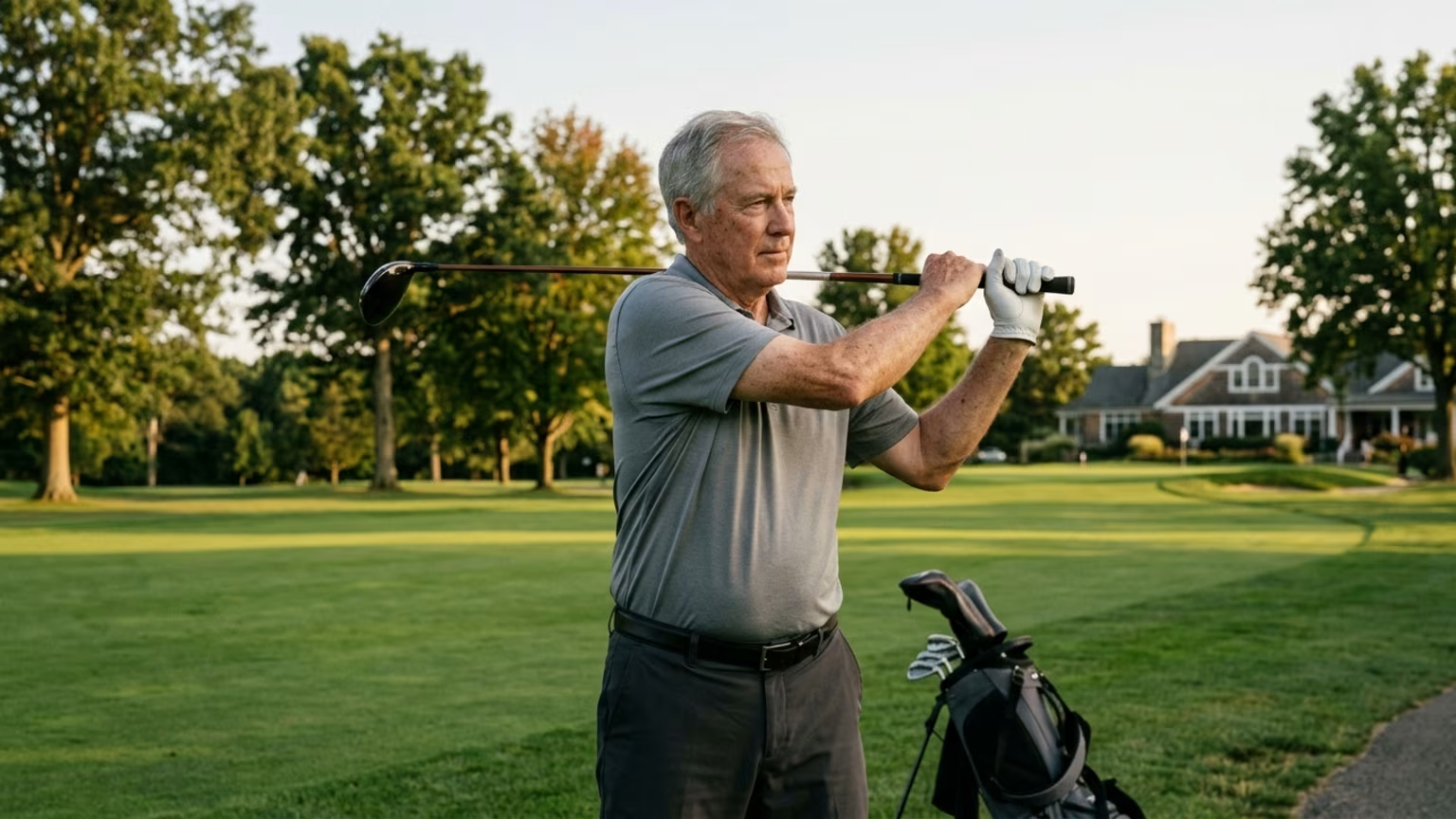

Discover a practical mobility and strength routine for older golfers to protect joints, prevent injuries and keep playing comfortably after 65.




A full 72% of older adults rarely check with a doctor before beginning a new physical activity. This habit matters because guessing often leads to recurring joint pain on the golf course. On August 31, 2026, Mutual of Omaha published "How to Keep Playing Golf After 65 Without Overdoing It." Medically reviewed by chief medical officer Dr. Manoj Pawar, the article offers a clear blueprint for aging players. The guide outlines how older golfers can protect their bodies while maintaining their regular tee times.
The golf swing requires a massive amount of coordinated rotation to generate power safely. Older players frequently develop tightness in their hips, upper back or shoulders over time. When these areas lose their natural range of motion, the body looks for a way to compensate. This forces the lower back, knees or wrists to twist far beyond their safe limits.
Those compensating joints are designed primarily for stability rather than deep rotation. Forcing them to twist under heavy loads creates a clear path to intense discomfort. A rigid upper back will always ask the lower back to do extra work during the swing. Over time, this repetitive mechanical stress breaks down the surrounding soft tissue.
Understanding this compensation chain is critical for understanding why your lower back aches after a round. The lower back simply cannot tolerate the sheer force of a modern golf swing on its own. Maintaining rotation in the correct areas is the best way to keep your spine safe. A fluid swing requires the hips and shoulders to handle the majority of the turning load.
Understanding how older adults view exercise helps explain these movement challenges. Mutual of Omaha ran its Aging Well Survey between June 17–21, 2026. The online questionnaire gathered responses from 400 respondents aged 50 and older. All participants reported an annual household income of at least $50,000.
The survey found that 87% of adults aged 50 and older wanted to continue walking or hiking. However, only 37% identified strength training as an activity they wanted to maintain. Furthermore, 16% of respondents admitted that balance concerns actively limited their daily activity. This gap in strength and balance focus directly impacts a player's physical durability on the course.
Recreational golfers face a different set of physical challenges than professional athletes do. Pros swing the club at extreme speeds, but older amateurs often lack a structured physical foundation. Many recreational players spend their workdays sitting in chairs or driving in cars. This seated posture creates stiff hips and rigid shoulders long before they reach the first tee.
Trying to replicate a massive shoulder turn with cold muscles puts tremendous pressure on aging joints. Golfers over 40 face a high risk of injury because they often ignore their changing mobility limits. When stiffness takes over, the swing path gets shorter, steeper and more violent. Without proper physical preparation, building the strength you need to play for decades becomes impossible to maintain.
The decline in fast twitch muscle fibers also plays a role in amateur vulnerability. As players age, their bodies naturally lose the ability to generate explosive power efficiently. Swinging harder to chase lost distance usually leads to poor contact and increased strain. Golfers must learn to rely on smooth mechanics and proper sequencing rather than sheer effort.
A structured approach is required to reverse this trend and protect your joints. Mutual of Omaha suggests a specific pre-round warm up lasting roughly 10 minutes. Begin the routine by walking easily for two to three minutes to elevate your heart rate. Next, move gently into shoulder rolls, torso rotations and slow hip circles.
Finish the warm up with light stretches for your calves and hamstrings. From there, take five to 10 slow half swings to feel the proper movement pattern. It is critical to hit short shots before ever swinging a driver. Rushing to the tee box and immediately making hard swings is a terrible idea. Cold muscles and stiff joints make the opening holes much more demanding on an aging body.
Away from the course, basic strength work provides the ultimate armor for your joints. The article recommends at least 150 minutes of moderate-intensity aerobic activity per week for older adults. Players should also perform muscle-strengthening activity on at least two days per week. Simple exercises like sit to stands, wall push ups and glute bridges are fantastic starting points. Focus entirely on controlling your form rather than rushing through the movements.
A 2026 systematic review of 41 randomized controlled trials supports this consistent approach. The review analyzed data from 3,141 participants and found very clear benefits. Resistance exercise significantly improved muscle-specific strength in older adults. Maintaining this muscle mass is essential for maintaining fast twitch power as you age.
Balance is another critical pillar for older players navigating uneven lies and bunker shots. The Mutual of Omaha guide proposes balance exercises like supported single leg stands and heel to toe walking. You can also incorporate slow side steps, standing marches and controlled weight shifts. Players with existing balance problems should consult a doctor before attempting these movements alone.
For basic walking endurance, Dr. Lovette advises inactive golfers to start small and build up slowly. The suggested starting point is 10-minute walks three days per week. Walk on flat and even surfaces to begin your fitness journey safely. Only introduce gentle hills when your body feels fully ready for the challenge.
Many players believe that playing 18 holes provides all the exercise they will ever need. The Mutual of Omaha guide strongly cautions against treating golf as a complete fitness program. Golf should not be a substitute for dedicated aerobic, strength and balance training. Riding in a cart or playing short rounds simply does not provide enough continuous cardiovascular effort.
Some players also mistakenly believe they need heavy weights to build useful strength. Dr. Lovette notes that people can begin with relatively simple tools or body weight movements. You do not need specialized equipment to protect your swing and build resilience. Progressive consistency is far more valuable than lifting massive amounts of weight once a week.
Pushing through sharp pain is another common trap that older players fall into frequently. A little soreness is normal, but sharp pain is a clear warning sign from your nervous system. Always stop if an exercise causes joint pain, dizziness or numbness in your extremities. Rest, recover and consult a medical professional if the discomfort persists for several days.
Building a resilient golf body takes time, patience and a willingness to do the small things right. The 72% of adults who skip a medical check often end up sidelined by preventable injuries. Taking a proactive approach to your physical health ensures you will enjoy the game for years. The fairways are waiting for those who prepare their bodies properly. What adjustments will you make to your mobility routine this season to steer clear of this hazard?
Follow Golfergy for practical insights on performance, mobility, recovery and healthy ageing. Stay connected for new articles, research-led guidance and ideas to help you play better for longer.


Understand how your hips and mid-back contribute to a golf turn, with practical habits that put comfort ahead of extra backswing length.


A progressive golf warm-up for players over 40, moving from easy activity to fuller practice swings without treating preparation as a flexibility test.
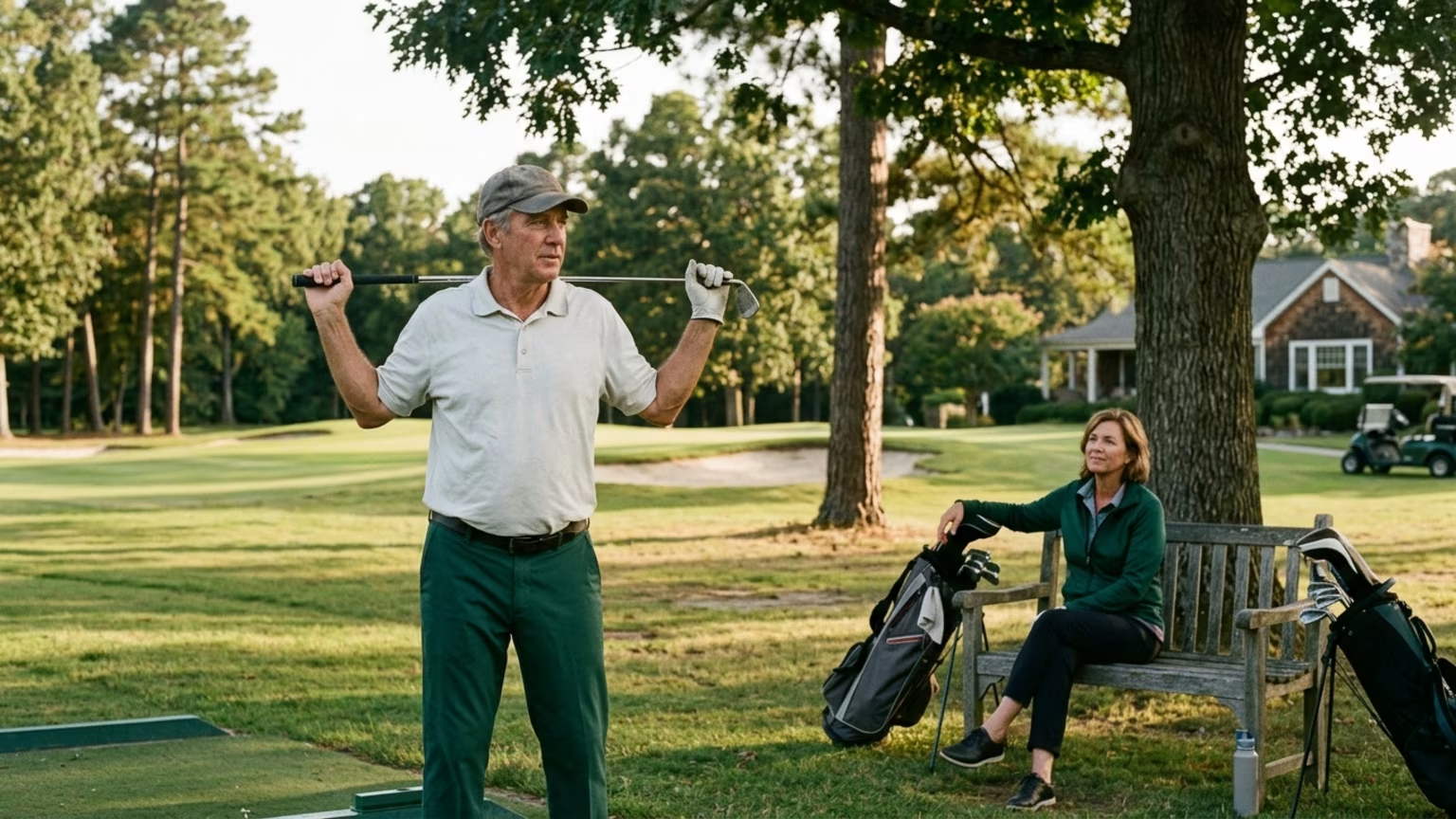
Observe comfortable movement and control to frame better questions about your golf swing, with guidance on when pain needs professional assessment.
Explore practical resources on performance, recovery, mobility and golf longevity.
Read the Blog