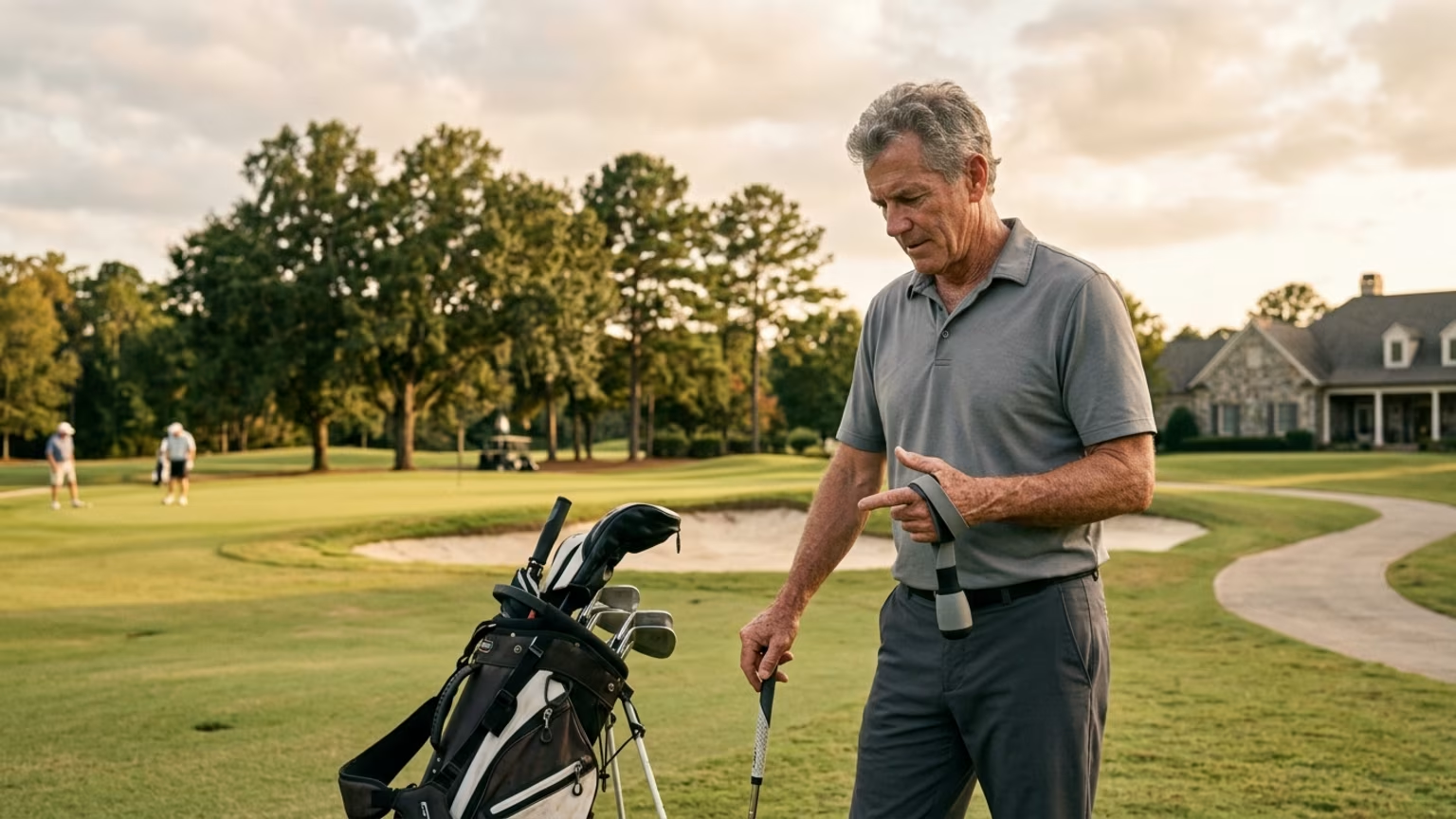

Learn why clinicians urge adults over 50 to prioritize strength training, and how building a resilient lower body prevents late-round golf fatigue.




Walking 18 holes does not count as a complete fitness program for older players. Many golfers assume carrying a bag provides enough physical conditioning for a lifetime of play. The reality is that preserving your physical capacity requires dedicated time under tension.
"Why do my legs and lower back tighten up rigidly around the 14th hole?" It is the most common question we hear from golfers over 40. This tightness often ruins a good scorecard and makes the post-round drive home miserable. Relying purely on golf swings for exercise leaves massive gaps in your physical armor. Aging muscles require a different stimulus to remain resilient on the course.
The short answer is muscle fatigue and a lack of foundational strength. When your legs and hips lose muscle mass, your lower back takes on the strain of walking and swinging. The Irish Times reports that clinicians encourage adults over 50 to make resistance training part of their health strategy. This dedicated training links directly with the preservation of muscle strength, mobility, and independence.
Alan Doyle, a former CrossFit gym operator, points out a crucial fact. He notes that bone density declines with age, particularly after 50. This physical decline increases risks such as osteoporosis for aging players. Doyle recommends combining weight training with impact activities like running or jumping to support bone density.
Maintaining your strength helps you continue to lift luggage, carry shopping, or stand from a chair. These everyday actions translate perfectly to lifting a golf bag or walking a hilly course. Without this baseline capacity, fatigue sets in quickly during the final few holes. Your lower back simply tries to compensate for weak glutes and tired hamstrings.
When those primary leg muscles give out, the smaller muscles in your back work overtime. This compensation pattern is the true source of your late-round stiffness. Building lower body strength is the only reliable way to break this painful cycle. A stronger foundation keeps the workload where it belongs.
As your legs weaken late in a round, your body stops turning effectively. You will likely begin to sway or slide off the golf ball. This physical breakdown forces your arms and hands to take over the golf swing entirely. The inevitable result is a steep swing path and poor contact with the ball.
Golf alone is rarely enough to maintain the required muscle mass for a powerful swing. A golf-focused guide summarizing research associated with the R&A offers some positive news. It states that golfers under 80 showed better strength and balance than sedentary non-golfers. The same guide reports that a 10-week instructional golf program improved strength, power, endurance, balance, and flexibility.
While playing the game offers undeniable physical benefits, it cannot replace structured resistance work. A lack of targeted training leaves older players vulnerable to mechanical swing flaws. When your core cannot stabilize your torso, you lose the ability to compress the ball. Building a resilient physical foundation takes time, but it protects your swing mechanics from late-round breakdown.
Fatigue also drastically reduces your clubhead speed on the back nine. You might notice that your drives fall short of bunkers you normally carry with ease. Your swing sequence relies entirely on the ground forces generated by your legs. If those legs are tired, your power vanishes completely.
When that mid-round tightness hits, you need a safe intervention immediately. Avoid aggressive twisting or bending over to touch your toes. Those common moves can actually aggravate a stiff lower back. Instead, try a standing hip hinge using your golf club for light support.
Hold a mid-iron vertically in front of you with both hands resting on the grip. Push your hips back slightly while keeping your spine straight and neutral. Focus entirely on turning your trail hip inward gently. Hold this position for a few seconds before returning to a standing posture.
This small movement helps mobilize the hip joint without straining your lower back. Repeat this motion several times on each side. A proper first-tee preparation routine can help prevent this tightness from occurring in the first place. Small, controlled movements are always safer than forced stretches on the golf course.
If you feel sharp pain during this movement, stop immediately and rest. Do not try to crack your back or perform forceful rotational stretches. Your goal is simply to create a little bit of space in the hip joint. Maintaining basic mobility is all you need to finish the round safely.
Not every physical ache is a harmless sign of aging on the golf course. You should seek guidance from a doctor or physiotherapist if you experience persistent joint pain. Those with osteoporosis, a history of falls, or recent surgery must exercise extreme caution. A professional assessment is critical before you introduce jumping or heavy lifting.
The Irish Times article points out that connective tissue and bone adapt slowly. Older golfers should avoid increasing load, impact, and golf practice all at once. Pushing through sharp pain is never a smart strategy for recreational players. Seeking professional help allows you to continue playing for years to come.
If you have had recent surgery, you must follow your doctor's exact clearance timeline. Do not rush back to the course or the gym prematurely. Ignoring these medical red flags can lead to severe setbacks. A cautious approach preserves your long-term health and your golf game.
Caroline Rice, a 65-year-old strength-training instructor, tells the Irish Times that resistance training became increasingly valuable with age. She used this training to remain active and recover from injuries affecting her knees and hips. Rice argues that less is more when it comes to lifting weights. She believes that quality, consistency, and appropriate progression matter more than long workouts.
A practical program should fit easily around your golf schedule and recovery days. Plan for two weekly strength sessions that target your hips, legs, and trunk. Adding targeted balance routines will further protect you from slips on uneven ground. You do not need a high-volume bodybuilding routine to see real benefits.
Recovery is just as important as the physical training itself. Doyle specifically suggests aiming for at least seven hours of quality sleep per night. This rest allows your muscles, tendons, and bones to adapt properly to new stress. Good nutrition and adequate protein also play a huge role in tissue repair.
When building your weekly habits, progress slowly to avoid sudden injury. Your connective tissues simply need more time to strengthen than your muscles do. Treating resistance training as a tool for longevity will keep you walking the course for decades. Consistency will always yield better long-term results than occasional gym sessions.
Take the time to master basic movement patterns before adding heavy weights. A simple bodyweight squat or a controlled lunge provides an excellent starting point. You can slowly introduce dumbbells or kettlebells as your joints become accustomed to the work. Patience is your greatest asset in this process.
During your next range session, pay close attention to how your body responds to repeated swings. Notice if your legs feel stable or if your balance begins to waver. Make a mental note of any tightness that creeps into your lower back after a long series of shots. These physical clues will tell you exactly where your foundation is weak.
Do not ignore the signals your joints are sending you. Use this feedback to shape your new weekly exercise habits. The game slowly reveals what we neglect to strengthen over time.
Follow Golfergy for practical insights on performance, mobility, recovery and healthy ageing. Stay connected for new articles, research-led guidance and ideas to help you play better for longer.


A practical strength framework for golfers over 40, built around everyday goals, sensible progression and a careful look at limited golf research.


A research-led look at strength, balance, mobility and trunk control, with a flexible planning framework for golfers over 40.
Understand golf mobility after 40 with a comfortable-turn self-check, hip and shoulder guidance, and a clear look at flexibility and swing speed.
Explore practical resources on performance, recovery, mobility and golf longevity.
Read the Blog


