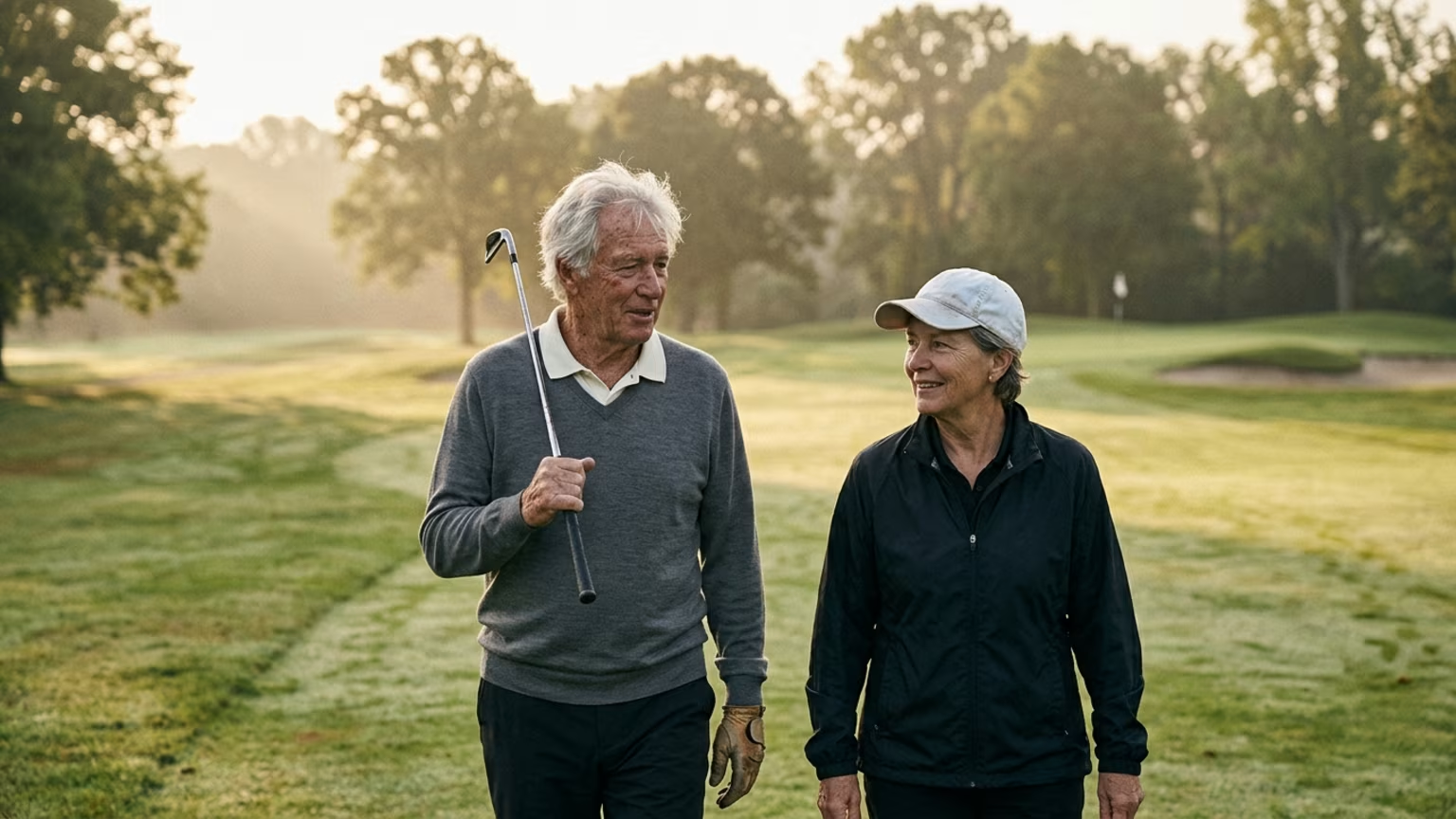

Practical strength training guidance for older golfers. Build a simple weekly routine to preserve your mobility, protect your joints and keep playing for decades.




A 2021 systematic review of 20 eligible golf studies found that combined strength and golf training increased clubhead speed by an average of 4.1%. That specific metric grabs attention because every player wants to hit the ball farther. The true value of resistance work actually lies in preserving your ability to play the game comfortably for decades. We need to reframe how older players view time in the gym. Lifting weights is not about chasing the physique of a tour professional, but rather about building a body that can handle walking a course and swinging a club.
What does physical capacity look like for a mature player? A meta-analysis of 25 randomized studies involving 2,267 older adults closely examined this exact question. Researchers found that resistance training generated an effect size of 0.93 for lower-limb strength. It also produced an effect size of 0.76 for overall functional performance.
These figures represent real capabilities on the golf course. Lower-limb strength dictates your ability to climb out of deep bunkers or walk up steep fairways. Functional performance translates directly to swinging a club repeatedly without losing your footing. Maintaining these basic human movements is the secret to extending your playing years.
Golf demands a surprising amount of physical exertion from the body. One scoping review estimated the average intensity of walking a golf course at approximately 4.5 METs. Your body must be ready to handle that sustained effort over several hours. Building a foundation of strength makes this physical effort feel significantly easier.
Many players assume that getting stronger will automatically cure their distance loss. The data paints a nuanced picture regarding swing speed and lifting weights. The 2021 systematic review noted a 4.8% average improvement in hitting distance from nonspecific resistance training. That number grew to 5.2% when players used a combined training approach.
These averages highlight a clear connection between physical preparation and ball flight. Stronger legs and a more stable torso help you transfer energy into the clubhead. A stronger grip directly improves your control over the clubface through the impact zone. This connection is why hand and grip strength remains a major focus for older players trying to maintain control.
Adding muscle mass does not instantly produce a faster golf swing. A six-week study in highly skilled college-aged golfers found strength improvements did not create a significant clubhead speed gain compared to a control group. Getting stronger gives you the physical potential for speed. You still have to apply that force efficiently through proper swing technique.
The saddest thing I have seen in golf is watching lifelong playing partners slowly drop out of our weekend group. It usually starts with a nagging shoulder or knee issue they ignore until it requires surgery. That pattern is exactly why I became obsessed with golf longevity. We do not have to stop playing as we age, provided we do the right maintenance work between rounds.
Players over 40 cannot rely on the natural elasticity they had in their twenties. A young athlete might swing aggressively on the first tee without a warm-up routine. An older player who tries that same approach risks severe discomfort and a ruined weekend. We must proactively build physical resilience to protect our aging joints from repetitive stress.
The lower back and spine remain incredibly common problem areas for older players. The scoping review noted these regions account for 18.3% to 36.4% of injuries in amateur golfers. Building armor around these vulnerable spots becomes a non-negotiable part of your weekly routine. Proper strength training for the senior golfer can help fortify the spine and protect your back.
The Centers for Disease Control and Prevention recommends that adults aged 65 and older perform muscle-strengthening activity on at least two days per week. They also recommend adding aerobic activity and specific balance work. You do not need complicated machines or a gym membership to meet these guidelines. A practical program can be built entirely around basic human movement patterns.
Start with a squat pattern to build the leg power needed to produce force through the ground. Follow this with a hinge movement to develop your glutes and hamstrings safely. You can then add push and pull exercises to support your posture and maintain healthy shoulders. These basic categories form a solid foundation for any older adult looking to improve their physical capacity.
Loaded carries represent a highly practical way to connect gym work to the golf course. Pick up a heavy dumbbell in each hand and walk for 20 to 40 meters. This simple exercise challenges your grip while forcing your trunk to brace against unwanted movement. Carries build the exact type of stability you need for walking 18 holes.
Your routine should also prioritize ankle strength and single-leg balance. Calf raises will improve your walking stamina and help you push off the ground during your swing. The CDC explicitly lists balance activities as a necessary part of a weekly routine for older adults. These small additions will keep you grounded on uneven terrain during your round.
A golfer returning after a long layoff should begin very conservatively with their workouts. Start with bodyweight movements like sit-to-stands from a chair and incline push-ups against a wall. The first four to six weeks should emphasize joint tolerance rather than ambitious loading. One or two sets of each exercise will provide plenty of stimulus for a beginner to see progress.
Once these movements feel comfortable, you can slowly increase the difficulty level. A recreational trainee can progress to goblet squats and dumbbell presses for two or three sets. Always increase only one variable at a time, such as the weight or the number of repetitions. This gradual approach protects your joints while forcing your muscles to adapt steadily.
Your goal is not to match the squat numbers of a college athlete. Success for a mature player is measured by physical capacity and pain-free movement. A healthy benchmark is the ability to rise from a low chair without using your arms. Another great marker is the ability to hinge forward and pick up your bag without hesitation.
We can track progress by monitoring how you move outside the gym. The meta-analysis of older adults showed an effect size of 0.75 for gait speed after resistance training. Moving comfortably across the fairway indicates that your strength program is actually working. You should also monitor how you feel the morning after a long round of golf.
If you can practice consistently without excessive soreness, your body is handling the stress well. Active movement on your off days can actually speed up this repair process. Understanding the myth of total rest helps older players recover much faster between tee times. Gentle walks and light stretching keep your joints feeling lubricated and ready for action.
When you perform your exercises, focus entirely on turning your trail hip or maintaining balance. Keep instructions focused on one small movement at a time to avoid feeling overwhelmed. Small improvements in your technique yield much better long-term results than lifting heavier weights poorly. Master the basic mechanics before you ever try to add resistance to your routine.
Postural stability is another critical benchmark for the aging golfer. The meta-analysis found resistance training produced an effect size of 0.68 for postural stability in older adults. A practical test for this is a supported single-leg stand or a heel-to-toe walk. If you can maintain your balance during these tests, your swing will be much more consistent.
The numbers clearly show that resistance training improves strength and physical function in older adults. The 0.93 effect size for lower-limb strength proves that your body can adapt at any age. We do not have to accept physical decline as an unavoidable part of getting older. You have the power to change your physical trajectory right now by starting a simple routine.
Returning to those empty tee times in our weekend group, the core message is clear. We lose our favorite playing partners to preventable physical issues far too often. Taking thirty minutes twice a week to lift weights can stop this familiar cycle. Your future self will thank you for making the effort today.
Numbers do not lie: preserving your mobility and strength is the ultimate equipment upgrade. You can keep playing the game you love for decades by committing to these simple habits. A resilient body will always outperform a brand new driver on the back nine. Start building your foundation this week and watch your on-course stamina soar.
Follow Golfergy for practical insights on performance, mobility, recovery and healthy ageing. Stay connected for new articles, research-led guidance and ideas to help you play better for longer.


A 2026 study highlights four key fitness capacities linked to lower mortality risk in older adults. Learn how to train these pillars for better golf longevity.

Learn how short bursts of brisk walking on the golf course can improve cardiovascular health and lower mortality risks for older players.
New research highlights VO2 max as a key longevity marker. Read how golfers over 40 can build a consistent aerobic base to play comfortably and recover faster.
Explore practical resources on performance, recovery, mobility and golf longevity.
Read the Blog


