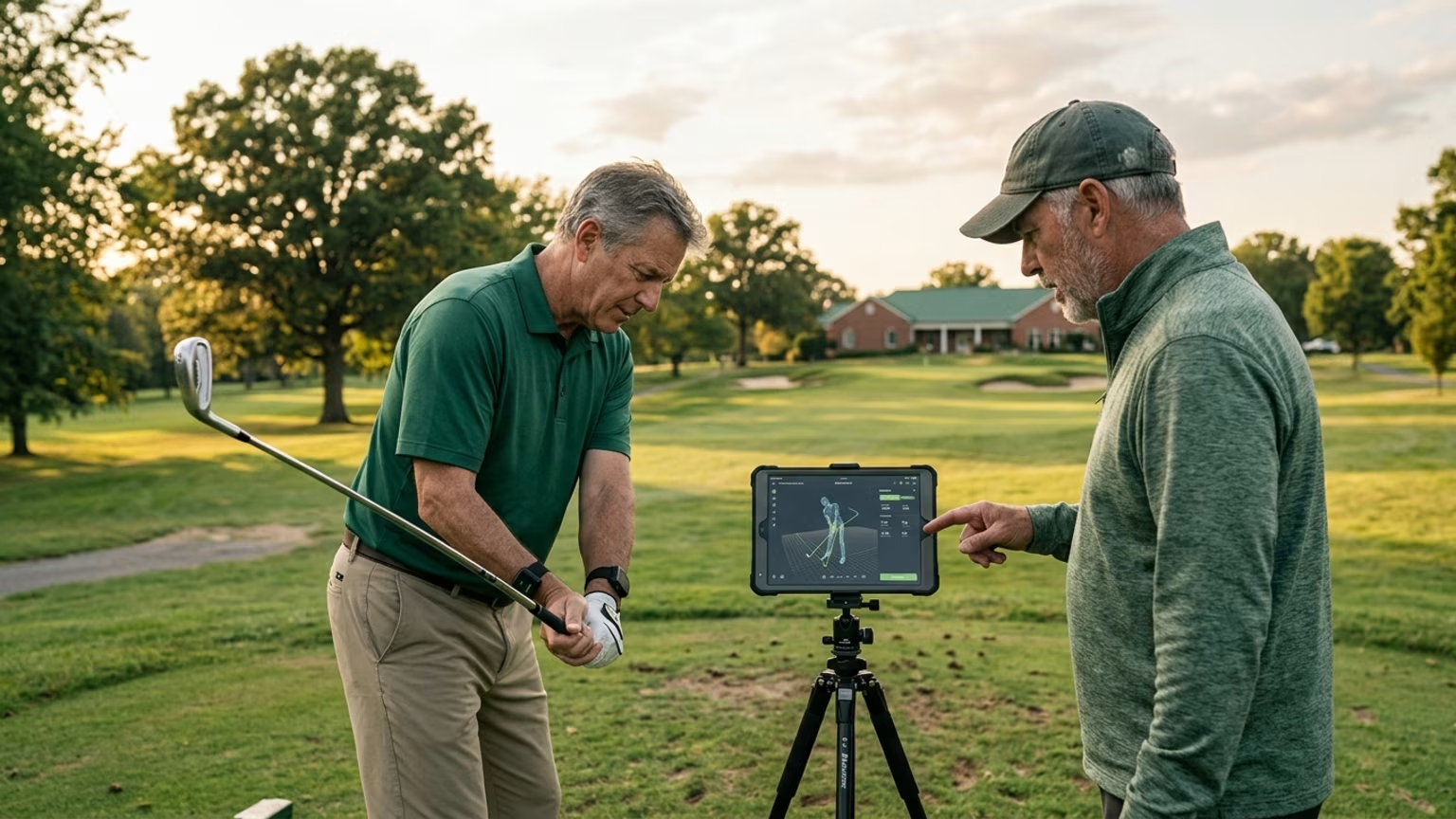
Golf Digest recently published a five-part single-leg fitness challenge. Learn what this movement reveals about your balance, strength, and golf longevity.




On September 11, 2026, Golf Digest published a new lower-body fitness challenge for its readers. The publication asked golfers to test their balance, hip control, and leg strength through a five-part single-leg exercise. Golf Digest fitness trainer Andrea Doddato suggested the movement can be performed anywhere. The simple setup requires no special gym equipment.
The challenge asks players to complete one repetition on each leg without losing their balance. This movement serves as an informal check of physical function. It aims to reveal how well a golfer can control body weight on one leg. The sequence forces the lower body to manage stability and strength simultaneously.
The physical test begins with a single-leg balance hold. A soft box or cushioned chair must sit directly behind the non-weight-bearing leg. This stable platform serves as the target for the first phase of the movement. The participant then lowers their body into the platform until the opposite glute makes contact.
After touching the platform, the golfer must stand back up to the starting position. From there, they raise the free leg until the shin is approximately parallel to the floor. The participant then hinges forward at the hips until the torso is approximately parallel to the ground. Finally, the player returns to the upright starting stance to complete the repetition.
This sequence demands a high level of joint coordination. Golf Digest notes that the legs, hips, and glutes contribute substantially to producing golf-swing power. Doddato argues that improvements in lower-body mobility, stability, strength, and power can increase the force applied to the golf ball. The exercise exposes a player's ability to maintain a strong base during dynamic movements.
Doddato notes that some clients report hitting the ball farther after training without feeling as though they are swinging harder. A stronger lower body creates a stable platform for the upper body to rotate against. When the legs and hips can fully support the swing, players do not need to rely on excessive upper-body effort. This allows golfers to generate clubhead speed with better control and less physical strain.
The golf swing is inherently an asymmetrical movement that shifts weight from one leg to the other. Testing the legs independently reveals how well each side manages that load. When standing on two legs, a stronger side can easily mask a weaker side. The single-leg stance isolates the working joints and forces them to stabilize body weight without assistance.
Recreational golfers over 40 face a unique physical challenge when it comes to stability. While they might not swing with the raw speed of touring professionals, their joints still endure significant stress. Older adults naturally lose physical strength, mobility, and postural control over time. A PMC-hosted research protocol notes that older populations benefit greatly from targeted physical interventions.
The protocol describes multicomponent exercise programs as highly relevant for these older populations. These specific programs combine aerobic, strength, balance, and flexibility work into a cohesive routine. Engaging in these four areas helps preserve postural control and general cardiorespiratory capacity. Relying on just one physical quality is rarely enough to protect an aging golf swing.
The PMC protocol notes that physical frailty often begins with subtle declines in muscle function and postural control. For a golfer, this gradual loss can manifest as a slight sway during the backswing or early extension through impact. These mechanical shifts might not be noticeable immediately, but they slowly erode ball striking over time. Addressing these physical declines early helps maintain swing mechanics as players age.
Golf Digest claims that amateurs often start from a larger performance deficit than professional players. This means recreational golfers usually have more room to improve their physical foundations. Tour professionals might only gain a few miles per hour of swing speed after dedicated lower-body training. Amateurs, however, can see broader benefits in their balance and daily course comfort.
A lack of lower-body control directly threatens an older amateur's swing mechanics. Without adequate stability, the body will instinctively restrict rotation to prevent a fall. This restriction limits the ability to turn fully and transfer weight smoothly. Building a strong foundation helps maintain proper posture from the first tee to the final green.
Safe execution requires performing this single-leg movement in a clear area with a stable, soft platform positioned behind the non-weight-bearing leg. The platform acts as a safety net during the downward phase. Using a wall, a countertop, or a qualified spotter for support is a sensible precaution for anyone with uncertain balance. Taking these basic steps helps prevent unnecessary falls while testing physical control.
Golf Digest suggests starting with body weight and completing one controlled repetition per side. The focus should remain entirely on the quality of the movement rather than rushing through the sequence. The publication recommends adding a light weight only if the bodyweight movement feels too easy. Most players find the unweighted version challenging enough for a standard daily routine.
Golfers who cannot control their descent or the forward hip hinge should regress the task immediately. Practical coaching adaptations include using more hand support, raising the platform, or shortening the range of motion. Practicing a supported single-leg balance hold can also build the necessary physical foundation. Mastering these smaller steps is the best approach before attempting the full five-part sequence again.
Breaking the movement into isolated parts is a reliable strategy for those struggling with the full sequence. Players can practice the sit-to-stand motion from a chair using both legs before transitioning to a single leg. Practicing the forward hip hinge while holding a golf club provides light balance assistance. These regressions allow golfers to train the necessary muscle patterns safely and effectively.
This specific challenge is best viewed as just one part of comprehensive physical preparation. Building a broader routine around strength, balance, mobility, and aerobic activity yields better long-term results. This approach directly aligns with the multicomponent exercise protocols recommended for older adults. Consistent daily habits provide more robust protection than passing a single fitness test once.
Golf Digest explicitly states that this challenge is not a perfect test of lower-body strength and function. It is not intended as a medical diagnosis or a strict measure of golf potential. Failing the movement does not automatically prove that a golfer's legs are fundamentally weak. Poor balance, unfamiliarity with the sequence, or ankle mobility limitations could all affect performance on a given day.
Passing the challenge also does not guarantee adequate physical capacity for every task on the course. A successful repetition simply shows that a player can coordinate their joints through this specific pattern. A golfer might still struggle with the rotational demands of an actual golf swing. The movement serves best as a simple self-check rather than a comprehensive physical exam.
Some golfers believe that a poor performance on a fitness test means their playing days are numbered. This pessimistic mindset ignores the reality that physical stability responds very well to consistent training. The human body adapts to physical demands even later in life. Using this challenge as motivation to start a gentle training routine is highly productive.
Significant differences in control between the left and right legs are common. These side-to-side differences are helpful pieces of information to discuss with a qualified trainer. They should not be used to diagnose an injury without professional guidance. A fitness professional can help design a targeted routine to address any physical gaps safely.
The exercise must be stopped immediately if it causes joint pain, dizziness, or physical instability. No fitness challenge is worth risking an injury that prevents future rounds. Seeking individualized advice from a medical professional is necessary when experiencing neurological symptoms or significant balance problems. Prioritizing physical safety is the smartest way to extend a playing career.
Maintaining balance and leg strength is a daily requirement for adapting your game to physical changes. A solid physical foundation allows golfers to swing with confidence and walk the course comfortably. What adjustments will you make to your mobility routine this season to steer clear of this hazard?
Follow Golfergy for practical insights on performance, mobility, recovery and healthy ageing. Stay connected for new articles, research-led guidance and ideas to help you play better for longer.


Elite tournament recovery relies on sleep hygiene and structured training. Golfers over 40 can use these exact methods to prevent late-round fatigue.

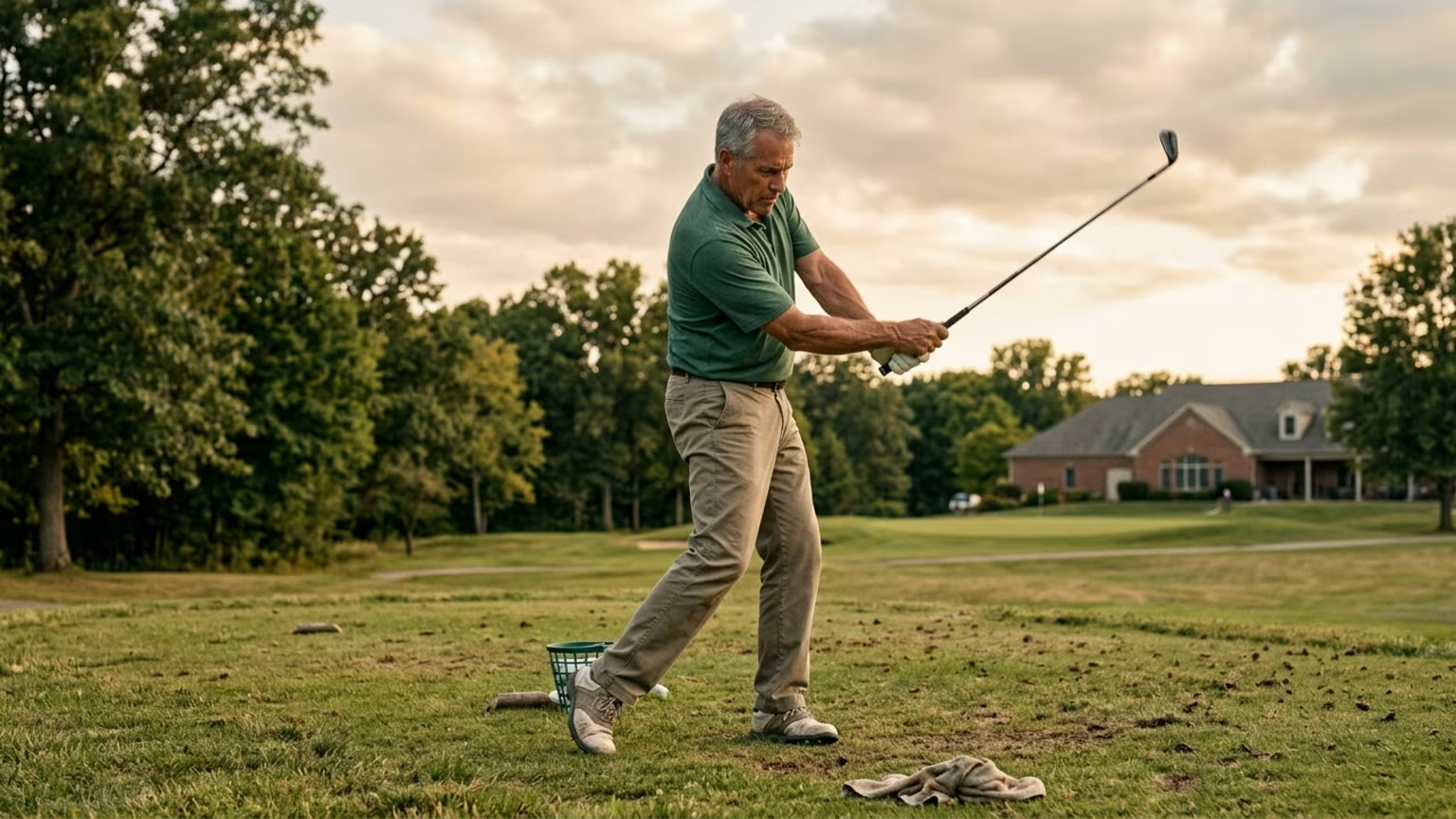
Force transfer in the golf swing starts from the ground up. Learn how leg strength, hip hinges, and trunk control help older golfers play better for longer.
Heavy lifting alone will not save your driving distance after 40. Learn how separating basic strength from fast power safely rebuilds your clubhead speed.
Explore practical resources on performance, recovery, mobility and golf longevity.
Read the Blog