
Learn how strength differs from power in the golf swing, what older-golfer studies show, and why controlled training matters more than chasing effort.




Strength is your ability to produce force. Power is your ability to produce force quickly. In golf, that difference matters because clubhead speed reflects both the force you can produce and how quickly you can apply it during the swing.
Think of these as different jobs for your muscles. Strength describes the force available. Power brings the speed of movement into the picture. A useful training plan gives both qualities attention rather than treating a harder swing as the answer to every lost yard.
A golf-focused article about ageing and performance explains this distinction and summarizes research relevant to older players. The practical message is to build physical capacity while keeping faster movement controlled and suited to the individual.
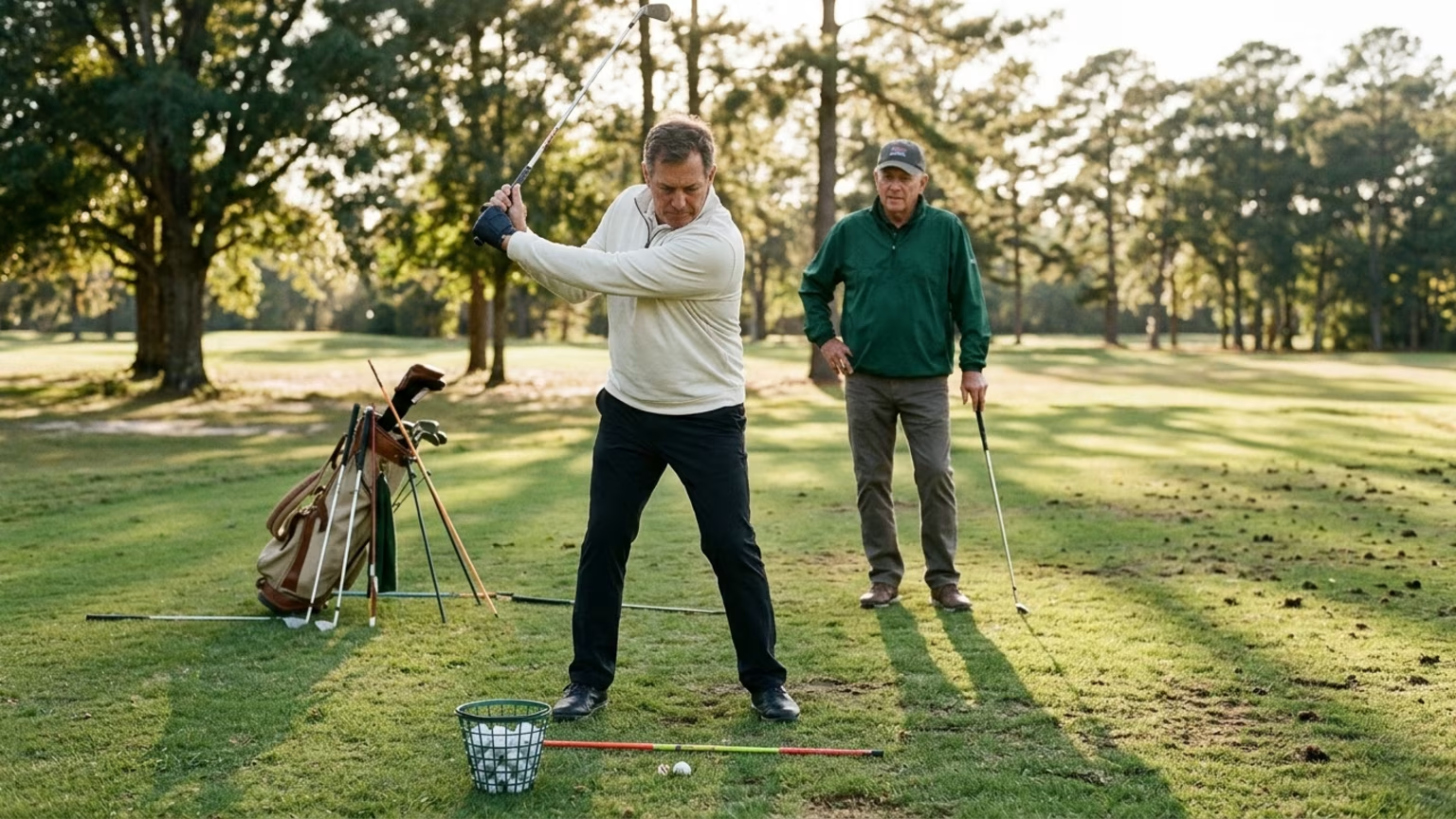
A full swing from the tee gives the distinction a clear setting. The task is not simply to produce force. It is to apply that force during a moving swing. That is why strength and power belong in the same conversation without becoming interchangeable terms.
On the course, you might describe a swing as strong because it feels forceful. That feeling is different from knowing how quickly the club is moving. Treat effort and speed as separate questions rather than assuming that more of one always means more of the other.
Consider two questions before chasing a faster swing:
Those questions point toward different training priorities. They also help separate physical preparation from the urge to hit the next drive harder.
Across a standard 18 holes, the aim is not to turn every full shot into a test of maximum effort. It is to bring usable physical capacity to the shots the round asks you to play. That is a broader goal than recording one fast swing during practice.
If a late-round swing feels slower, use that observation to frame a question rather than label the problem. Note whether the concern is effort or comfort, then discuss it alongside speed. Our guide to preparing for the demands of a whole round keeps that wider playing context in view.
For golfers moving through their 40s and 50s, strength and power offer useful ways to think about changing performance. Rather than treating age as the explanation for every shorter drive, ask which physical quality the training is meant to address. Producing force and applying it quickly are related goals, but they are not the same goal.
The golf-focused article reports a 2004 study of 31 older male golfers. Of those participants, 19 completed an eight-week strength-and-flexibility program while 12 formed a control group. Average clubhead speed in the training group rose from 85.0 to 87.1 mph.
That is an encouraging example of improved performance after structured training. It gives older recreational players a reason to take physical preparation seriously rather than viewing age as the end of progress.
The older-golfer studies were small and involved only men using programs with several parts. They do not isolate strength or power as the cause of the improvement or predict an individual speed gain. They also do not establish the biological reasons or timing of natural changes after 40 or 50. Nor do they establish that a power-training plan prevents injury or extends playing years.
The practical response is to use training history, balance and comfort to guide movement choices. A birthday is context for that discussion, not an exercise prescription. A qualified professional can help turn those individual factors into a suitable plan.
Our discussion of using age as training context follows the same principle: focus on the person doing the movement rather than an age-based formula.
Two accessible habits can bring the strength-versus-power distinction into your training decisions. Neither requires treating distance as the promised result.
Make general strength and balance part of the discussion before placing the main emphasis on faster movement. The purpose of strength work is to develop force-producing capacity. It does not have to imitate the golf swing to have a place in that plan.
Keep the focus narrow when reviewing an exercise with a qualified professional. Ask what physical quality it is intended to train. If the answer is strength, judge it as strength work rather than expecting every movement to look quick or rotational.
This also keeps stretching in context. The review summarized in the golf-focused article did not find a significant association between flexibility alone and clubhead speed. That finding is not a reason to discard mobility work. It is a reason not to ask stretching to do the job of strength or power training.
For a closer look at that distinction, read about building control through available movement.
When faster movement becomes part of the plan, keep the question simple: does the movement suit the person performing it? Training history, balance and comfort should shape the choice rather than the appeal of a dramatic exercise.
Focus on one movement at a time. The objective is to practice applying force quickly while retaining control, not to collect exercises that look athletic. Faster work should have a clear purpose beyond making a session feel harder.
For personal decisions about exercise selection or progression, seek qualified guidance when health or movement history warrants it. Bring a clear goal to that conversation: developing faster movement that fits your current capacity.
Keep distance as a possible outcome rather than the standard every session must meet. Strength work has a force-producing purpose. Power work has a rapid-force purpose. Giving each its own role makes the training conversation more useful than simply asking how to swing harder.
Build the force you can control and give speed its own place: that is the aim of Playing Better for Longer.
Follow Golfergy for practical insights on performance, mobility, recovery and healthy ageing. Stay connected for new articles, research-led guidance and ideas to help you play better for longer.


Understand how strength relates to swing speed, what older-golfer studies show, and why lifting alone is not a distance shortcut.


An elite golf study linked 16 weeks of strength training with faster clubhead speed. Here is the evidence-bounded takeaway for golfers over 40.

How the legs, hips and trunk contribute to the golf swing, plus a research-led look at strength training and foundational movement patterns after 40.
Explore practical resources on performance, recovery, mobility and golf longevity.
Read the Blog