
Rebuild physical capacity for golf after a layoff by following a step-by-step progression that safely integrates strength, balance and volume.




"Why do I feel so exhausted and tight on the back nine after a long layoff?" It is a common question from golfers returning to the game after a long break. Getting back to the course after winter inactivity, illness or an injury can feel incredibly frustrating. You might feel perfectly fine walking around your house, but the golf course is an entirely different environment. Return-to-play decisions are best understood as multifactorial, incorporating healing, function, readiness and tolerance of load.
The most direct cause of mid-round tightness is a lack of physical capacity for the specific demands of golf. A round of golf requires prolonged walking, navigating uneven terrain, repeated bending and significant rotational loading. When your body lacks the endurance to handle these unique stressors, your muscles fatigue rapidly. You can easily pass a basic test of feeling fine at home while still lacking the endurance for four hours on a course. Your mid-round tightness is simply a warning that you have reached your current physical limit.
A sensible rule is to increase one major stressor at a time. The principal stressors are walking duration, hills and carrying equipment. Other key factors include swing volume, swing speed, club length and recovery time between sessions. Adding distance, full-speed drivers and 18 holes simultaneously is a reliable way to trigger severe muscle tightness. A golf-rehabilitation guide recommends rebuilding walking tolerance first, then adding short swings, range work and holes progressively.
As fatigue sets in during a round, your technique inevitably changes to protect tired muscles. You might start using a guarded trunk, which limits your ability to rotate fully through the ball. This restricted rotation directly alters your swing path and reduces your clubhead speed. Consequently your distance drops and your ball contact becomes highly inconsistent.
If the fatigue worsens, you might even start compensating with a noticeable limp or protective movement pattern. A swing that becomes hurried or unbalanced is clear evidence that the session has exceeded your current physical capacity. Older golfers should remember that flexibility alone is not enough to maintain good swing mechanics under fatigue. You might have adequate range of motion, but you need sufficient strength and control to use it repeatedly.
Trying to force a fatigued body into extreme positions will only further alter your swing path. Recognizing these mechanical changes early is a key part of maintaining strength and endurance as you get older.
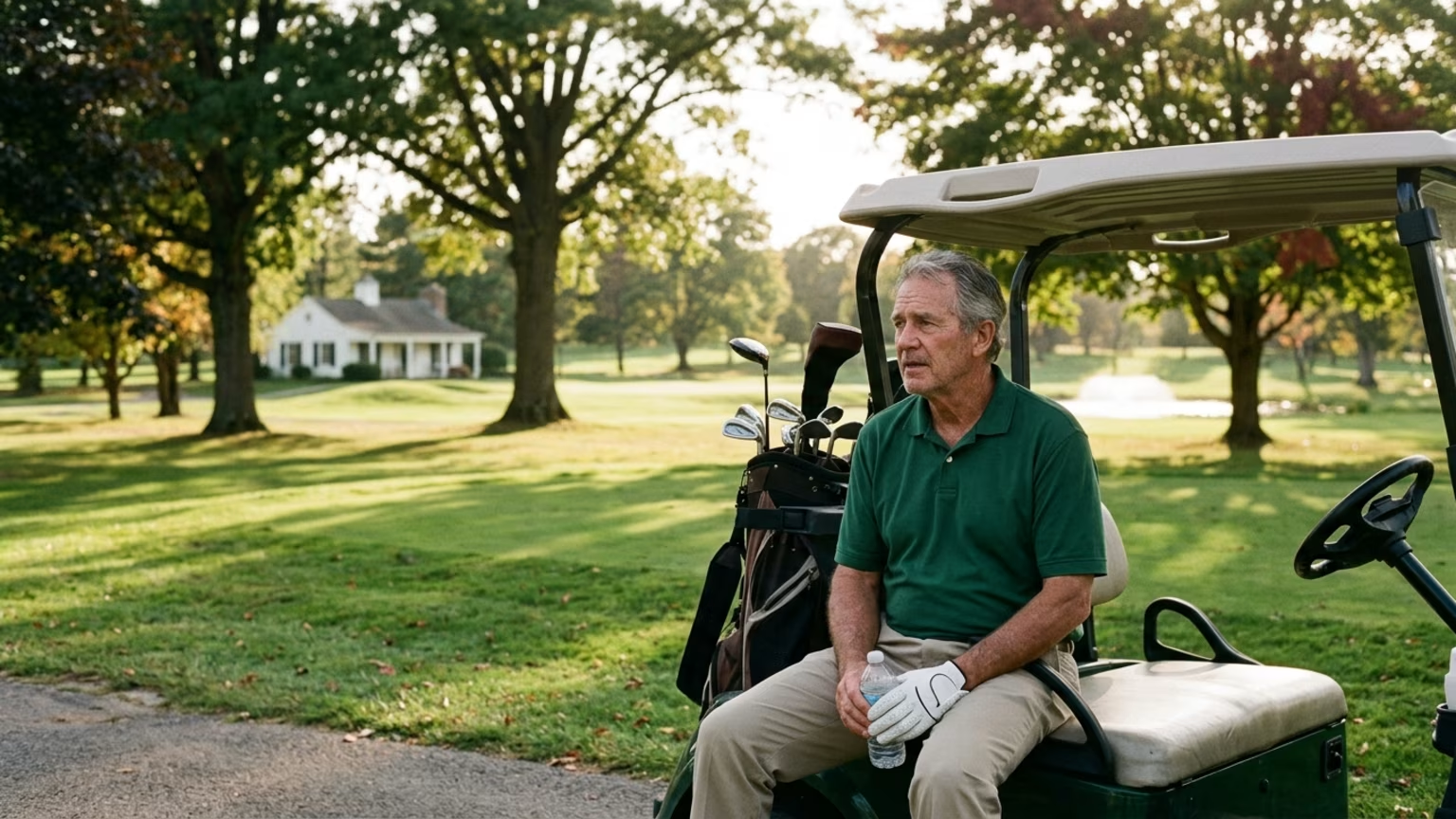
The safest adjustment you can make immediately is to reduce the physical load on your body. Do not try to stretch your way out of deep fatigue or force range of motion into a tired spine. Instead, use your equipment strategically to give your body a break right away. Switch to riding in a golf cart if walking or carrying your bag aggravates your symptoms.
You can also take relief from difficult uneven lies, or simply take partial swings with shorter clubs for the remaining holes. This is a crucial part of knowing when to rest and when to keep swinging to protect your body. If your balance becomes unreliable or your technique completely breaks down, the best immediate action is to stop playing for the day.
Pushing through severe tightness will only delay your recovery and ingrain poor swing habits. Leaving the course early is sometimes the smartest decision a golfer can make.
Muscle fatigue is expected during a return to golf, but some symptoms require immediate professional assessment. The guide advises golfers to stop for spreading pain, tingling, numbness or weakness and to assess the response later and the next morning. These specific signs mean you should step away from the course and seek help from a doctor or physiotherapist. You should also watch for sharp escalating pain, marked swelling or a sudden loss of balance.
Research commonly considers pain, strength symmetry and functional testing without a universally validated checklist. A return-to-play review found that published protocols commonly use pain status, strength symmetry and functional testing. The return-to-play review found that studies commonly reported a median of six criteria with a range of four to eight. It noted that pain absence, at least 90% strength symmetry and functional testing were among the most common criteria.
However, the review also found heterogeneity in study design and criteria, limited validation of models and rare reporting of re-injury outcomes. This means you should never ignore red flags in hopes that they will magically disappear overnight. A checklist can support your decision making, but it cannot guarantee a risk-free return.
To prevent recurring tightness, you need a structured approach to rebuild your physical capacity step by step. WHO guidance supports combining aerobic activity with strength and balance-focused activity as people age. You should treat this training as playing-year insurance to keep you on the course longer.
Start by establishing walking tolerance on flat ground before you touch a golf club. Once comfortable walking is repeatable, add controlled resistance work like sit-to-stand movements, step-ups and gentle hip hinge patterns. One clinician uses the ability to tolerate roughly 12,000 steps over four to five hours as an individual benchmark before walking 18 holes. Focus entirely on consistent technique and controlled breathing while building a dependable foundation of strength.
Next, train your balance deliberately as a distinct physical quality. A large 2026 review found improvements in overall balance across most exercise modalities studied. Practice supported single-leg stands near a stable object to prepare for weight transfer during your swing. Balance training should be selected according to the task, the golfer’s safety and what can be performed consistently.
When you reintroduce golf swings, separate your practice volume from intensity. Begin with rehearsals without a ball, putting, chipping and half-swings with wedges. Slowly progress to longer clubs, and save full-speed drivers for last. Alternate your shots with walking or rest instead of hitting rapidly to monitor your symptom response.
For short course exposure, choose a flat or familiar course and avoid competitive score targets. Keep the first nine-hole round deliberately conservative by playing fewer full-power shots. One surgeon’s cited knee-replacement data report that 81.5% of golfers returned to the course, averaging 5.3 months. While timelines vary, the goal is repeatable golf across a season, not one heroic round.
During your next practice session, use a simple traffic light system to accurately assess your physical recovery. Green means your symptoms remain stable during the session, and the next morning feels no worse than your baseline. If you stay in the green, you can repeat that same level of activity or progress one variable modestly.
Amber means mild symptoms rise during the session, or your technique deteriorates with fatigue. If this happens, hold your current level or temporarily reduce one stressor to allow your body to adapt. Measure your true recovery by how your body responds the following morning, not just by how you feel walking off the 18th green.
Treat fatigue as a technical issue, and never hesitate to end a practice session early if your movement quality drops. Earning your way back to 18 holes requires patience, consistent observation and a willingness to listen to your body. Assess your tolerance closely during your next session, and let your recovery dictate your progress.
Follow Golfergy for practical insights on performance, mobility, recovery and healthy ageing. Stay connected for new articles, research-led guidance and ideas to help you play better for longer.


A flexible training framework for golfers over 40 that makes room for strength, balance, mobility and aerobic activity alongside play.


See how balance fits alongside strength and coordination in golf, with a supported practice example and a clear look at the evidence.

A practical strength framework for golfers over 40, built around everyday goals, sensible progression and a careful look at limited golf research.
Explore practical resources on performance, recovery, mobility and golf longevity.
Read the Blog


