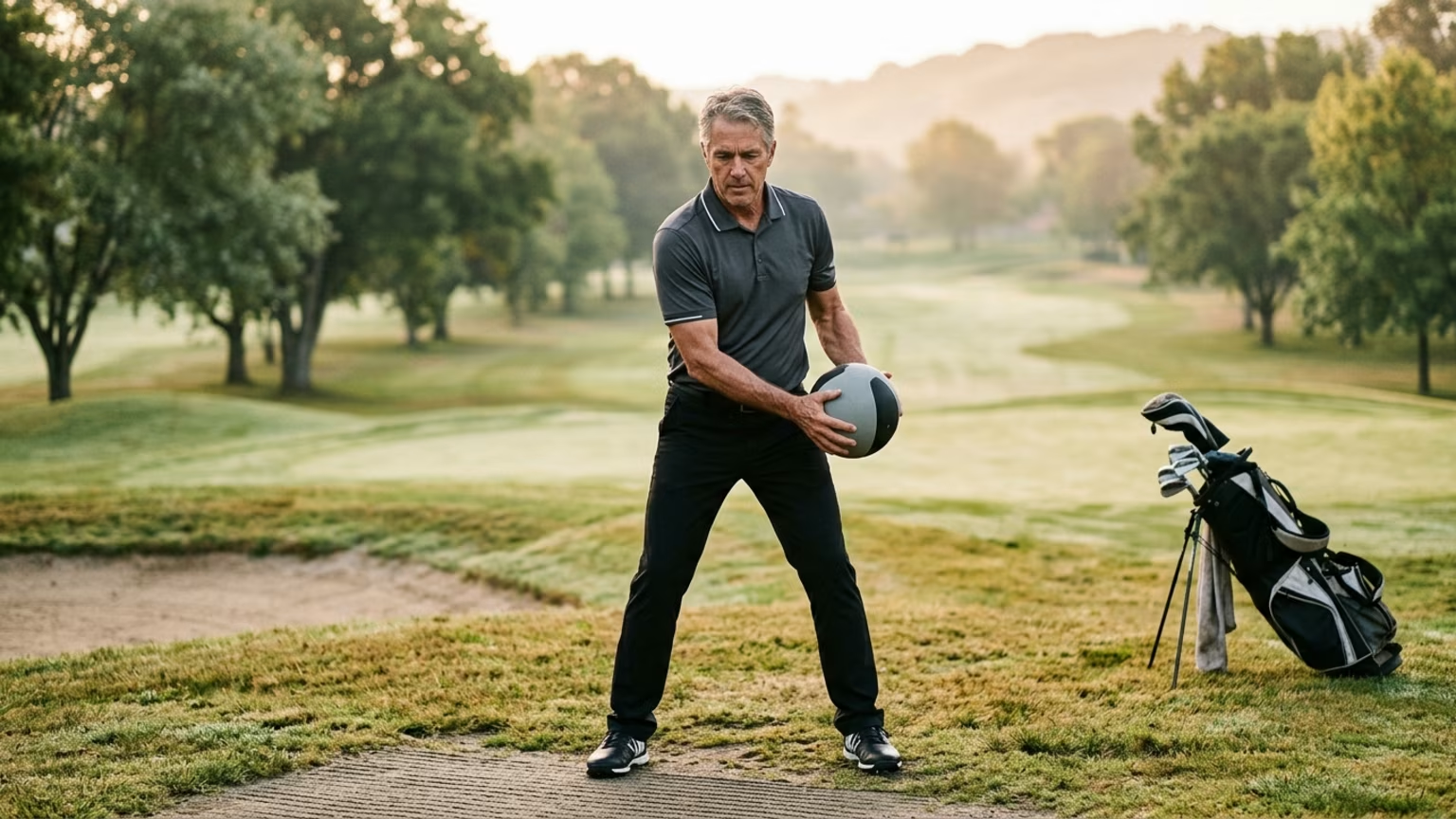

A practical strength plan for golfers over 40. Build leg capacity, protect your lower back, and maintain a reliable swing without maximal lifting.




In our experience at golfergy, a few years ago, I noticed my swing falling apart around the 14th hole. My lower back would tighten up, and I started compensating with my arms. I spent months thinking it was a swing flaw. It was not until I started a simple evening hip mobility routine that I realized my glutes were just turning off from fatigue.
Fixing that one physical limitation brought my back nine scores down drastically. This physical breakdown is a widespread issue for older players.
In 2025, the National Golf Foundation reported that the average age of U.S. on-course golfers was 44.1. This figure was down slightly from 44.6 in 2019. The same research noted that 48.1 million Americans aged six and older participated in golf in 2025. This included 29.1 million on-course golfers and 19 million participants in off-course formats.
Another report citing NGF data put the number of U.S. on-course golfers aged 65 and older at approximately 5.4 million. This massive group of experienced players requires a physical foundation that lasts. The focus must shift from raw power to sustainable physical capacity.
The physical mechanics of golf injuries are highly predictable. The golf swing places massive rotational force on the spine. When the large muscles in your hips and legs get tired, they stop stabilizing your pelvis. Your lower back then absorbs the stress of the swing.
The lumbar spine is not designed for excessive twisting. It functions best when supported by a strong lower body and a stable trunk. When your glutes turn off late in the round, your body naturally finds another way to rotate. This compensation leads directly to tissue strain, stiffness, and eventual pain.
Many players assume the sport is entirely safe because it lacks physical contact. A peer-reviewed scoping review reported annual injury incidence estimates of 15.8% to 40.9% among amateur golfers. The same review noted lifetime incidence estimates of 25.2% to 67.4%. Prospective studies reported approximately 0.28 to 0.60 injuries per 1,000 hours among amateurs.
These numbers show that cumulative physical stress takes a real toll. The wear and tear builds up over years of repeated rotation and extensive walking. A non-cart 18-hole round can involve roughly 6 to 8 kilometres of walking. Even players who use carts accumulate substantial walking during a round.
Recreational players over 40 swing with less speed than touring professionals. They might assume this lower clubhead speed protects them from joint damage. The reality is quite the opposite. Older adults naturally lose muscle capacity and joint stability without consistent strength training.
When baseline endurance drops, the amateur golfer loses good posture late in the round. They lack the structural armor needed to absorb the forces of a repetitive swing. This makes them highly vulnerable to mechanical breakdown. A tired body cannot maintain the precise angles required for a safe golf swing.
Learning what golf strength really means after 40 changes how you approach the game. It is about building enough capacity to perform well repeatedly.
To avoid late-round fatigue, focus entirely on turning your legs into a reliable foundation. Train your legs and hips to support walking, balance, and force transfer. You do not need to lift maximum weights to see benefits. Choose a load that allows clean movements with two or three good repetitions left in reserve.
Start with basic squat or sit-to-stand variations. Perform two or three sets of six to 12 controlled repetitions. This builds the capacity to maintain your spine angle through impact. Add lateral step-downs and single-leg balance exercises to improve stability.
Golfers who struggle with balance should use a nearby support at first. The goal is to build control before trying to increase speed. How to train golf power safely starts with this exact mindset. You must establish a grounded base before attempting any aggressive rotational drills.
The hips help the golfer rotate, shift pressure, and maintain posture. They also need to control movement in more than one direction. Prioritize hip hinges, glute bridges, and supported lateral lunges in your routine. When performing your hinges, focus entirely on pushing your hips backward.
Do not simply bend forward at the waist. Build enough strength and control to rotate through your available range. You want to avoid compensating excessively through the lumbar spine or losing balance. Back training should include the muscles that help maintain posture and control the shoulder blades.
Use supported rows, cable rows, and band pull-aparts to build this specific strength. The emphasis should be on a neutral, controlled posture. You need the ability to repeat that posture while walking, addressing the ball, and swinging. Persistent pain, radiating symptoms, numbness, or weakness requires clinical assessment rather than more exercise volume.
A capable golf trunk must transfer force while resisting unwanted movement. Rather than performing large numbers of fast twisting repetitions, focus on anti-rotation holds. Planks, side planks, and band holds teach your core to stay stable. Once you can maintain position under moderate resistance, you can add controlled rotational exercises.
This approach is a proven way to reduce rotation-related strain in the aging golfer's back. Your shoulders and upper back also need endurance to support posture and club control. Use chest-supported rows and light external rotation exercises to build pulling strength. The aim is a shoulder complex that remains controlled late in the round.
For many golfers, pulling volume deserves at least as much attention as pressing strength. Avoid physique-oriented programs built entirely around maximal chest and arm size.
Implementing a new routine does not require endless hours in a commercial gym. Two sessions per week should ideally be separated by at least one day. Walking, cycling, or other moderate aerobic activity can occupy your additional days. Short mobility and balance sessions can be performed for five to 10 minutes on non-lifting days.
On your first training day, focus on the lower body and anti-rotation movements. Combine goblet squats, Romanian deadlifts, and supported split squats. Add cable rows, anti-rotation presses, and calf raises to complete the session. This hits the major movement patterns required for a resilient swing.
On your second training day, target your hips, upper back, and carrying capacity. Incorporate step-ups, glute bridges, and incline push-ups. Finish with one-arm rows, suitcase carries, side planks, and controlled lateral step-downs. This routine provides enough stimulus to progress without leaving you too sore to play.
Progressing your workouts after 40 requires patience and a strategic mindset. Progress only one main variable at a time to keep your joints safe. First, establish consistent attendance before worrying about heavier weights. Next, focus on improving your technique and increasing your comfortable range of motion.
Only then should you add repetitions within your planned range or increase the physical resistance. This slow progression keeps you healthy and ready for the golf course.
Many players still rely on long static stretching immediately before they step onto the first tee. This traditional approach does not prepare the nervous system for a dynamic sport. A golf-focused physical-therapy guide recommends dynamic movement and progressive practice swings instead. Brisk walking, leg swings, and controlled lunges are much more effective.
Dynamic movements prepare your joints for motion without creating fatigue. You want to arrive at the first tee capable of playing well. Exhausting yourself with extreme stretching achieves the opposite. Save your deep stretching for post-round recovery or evening mobility sessions.
The main goal for golfers over 40 is to build daily physical resilience. You want a stable address position and a repeatable swing on the 18th hole. Combine two full-body strength sessions per week with regular walking and balance practice. Start light, prioritize perfect technique, and slowly increase your resistance over time.
What adjustments will you make to your mobility routine this season to steer clear of this hazard?
Follow Golfergy for practical insights on performance, mobility, recovery and healthy ageing. Stay connected for new articles, research-led guidance and ideas to help you play better for longer.


A practical strength framework for golfers over 40, built around everyday goals, sensible progression and a careful look at limited golf research.


A research-led look at strength, balance, mobility and trunk control, with a flexible planning framework for golfers over 40.

Understand golf mobility after 40 with a comfortable-turn self-check, hip and shoulder guidance, and a clear look at flexibility and swing speed.
Explore practical resources on performance, recovery, mobility and golf longevity.
Read the Blog