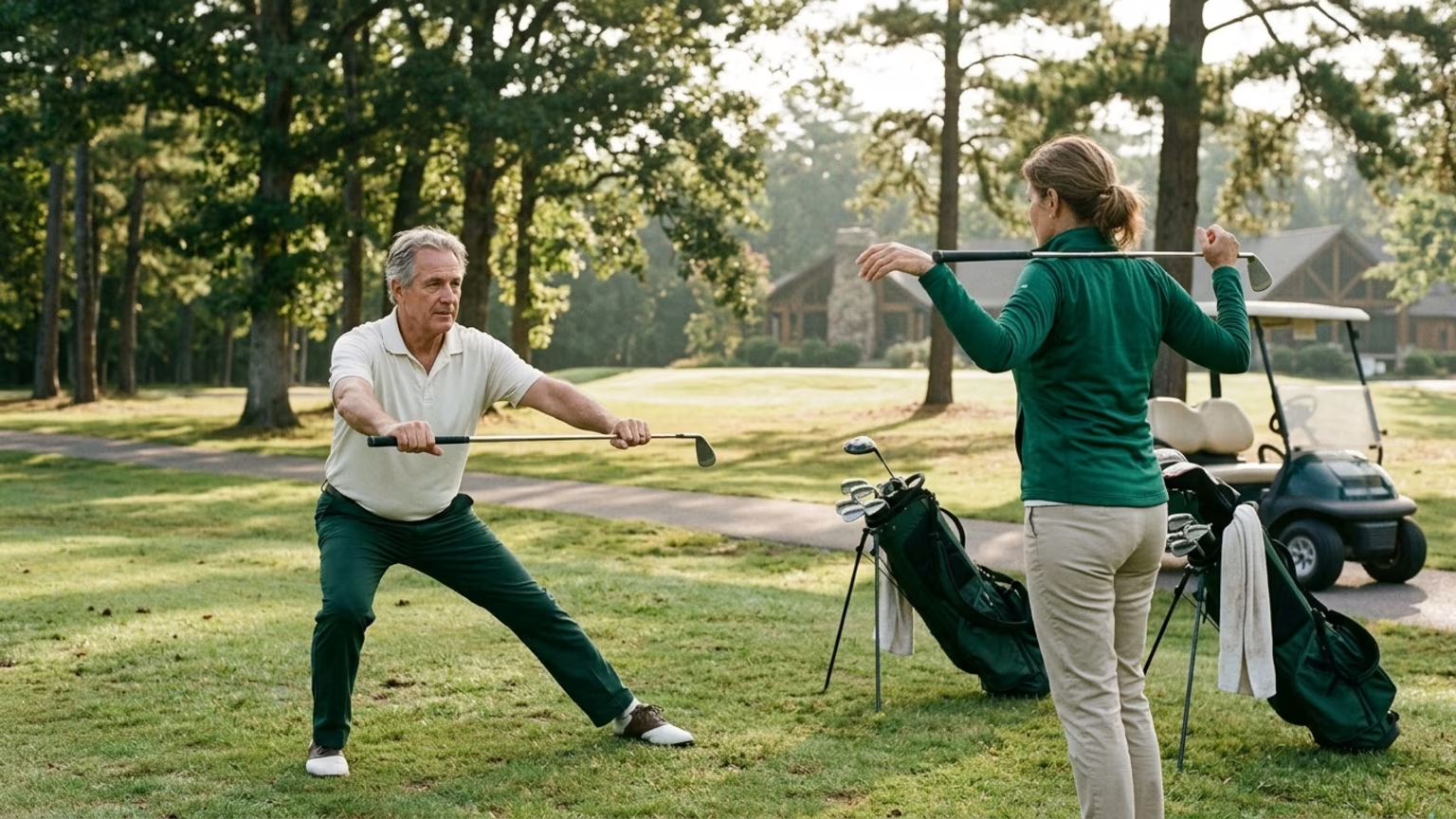

Weigh fatigue, soreness and your schedule when choosing rest, light activity or another golf round, with a practical look at the evidence.




Should I take a rest day after golf, or keep moving? If you finish a round feeling tired or sore, wanting a clear answer is understandable. You want to protect your playing time without turning every day between rounds into a recovery project.
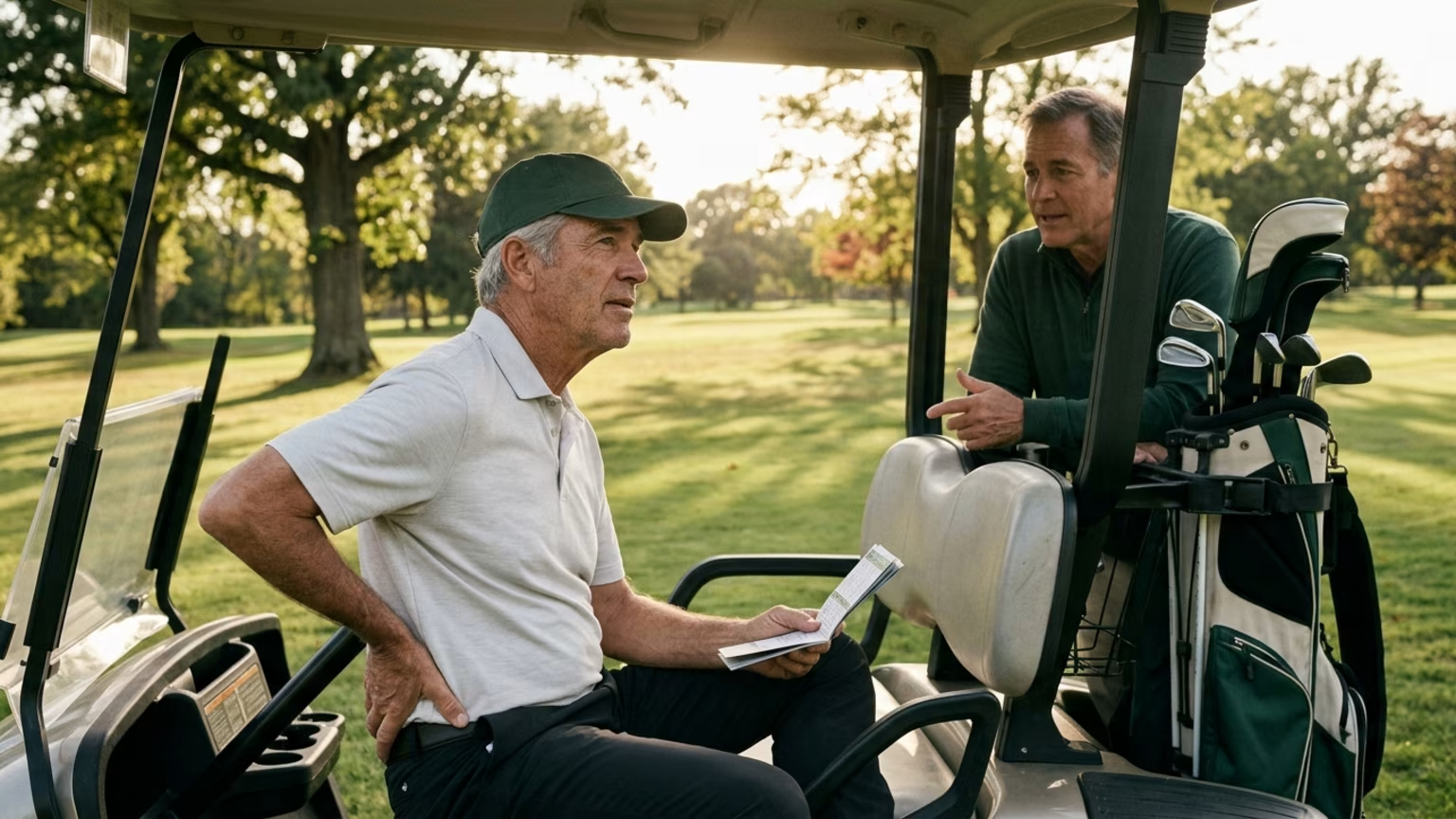
For golfers over 40, a useful starting point is a flexible planning decision rather than a fixed routine. Weigh your fatigue and soreness against what the next day requires. That conversation can begin on the course if tightness leaves you questioning your plans.
The available studies do not identify the cause of mid-round back tightness. They provide context about golf's physical demands rather than an explanation for an individual golfer's symptoms.
MyGolfMedia reports a study of 16 highly skilled male golfers averaging 20.9 years old. A caddie carried the clubs during the walking condition. Participants recorded an average of 17,007 steps while walking and 6,274 while using a cart. The report also describes higher heart rate and perceived effort while walking.
That finding gives some context to the workload behind a round. Walking and cart use involved different demands in that study. It does not make either option the right choice for every golfer.
Sports Medicine Weekly also describes a 2023 study that found higher grip strength and better static and dynamic balance among older recreational golfers than sedentary peers.
These findings have clear boundaries. The walking sample does not directly represent older recreational golfers carrying or pushing their own bags. The older-golfer study was cross-sectional, so it shows an association rather than proving that golf caused those differences. Neither study tested which recovery choice works best between rounds.
The practical takeaway is modest: give the round a place in your activity planning. Do not use a study's step count to decide how tired you should feel or how much rest you must take.
These sources do not establish how back tightness changes swing path, distance or contact. A feeling of tightness is not enough to explain a particular shot pattern.
For your own observations, keep the physical feeling separate from the golf result. “My back felt tight” describes a sensation. “My contact became less consistent” describes an outcome. Writing them together does not prove that one caused the other.
A simple practice note might record:
Treat this as a record for future planning rather than a swing diagnosis. The aim is not to build a new technical fix around every uncomfortable round. It is to describe what happened clearly enough to discuss it with a qualified professional when personal guidance is needed.
No particular on-course stretch is supported by these studies. The practical adjustment is to pause and reassess the day's golf plans rather than add an untested corrective exercise.
Keep that decision focused on one question at a time. What are you feeling now? Is it different from how you felt at the start? Does continuing with the original plan still reflect how you feel?
Changing the amount of golf planned or ending the round are options to weigh. They are not treatment instructions. There is no need to turn the decision into a contest between pushing through and finding a stretch that lets you continue.
For persistent or worsening pain, seek individualized medical guidance. A general recovery article cannot make that personal decision for you.
Once the immediate decision is made, separate it from tomorrow's plan. Stopping golf today does not by itself settle whether the next day should include ordinary light activity or another day without golf.
Make the repeatable habit a brief review of fatigue, soreness and your schedule. Use it when setting the next day's plans and when looking across a week of golf. This is an editorial planning framework rather than a tested recovery programme.
Golfergy's focus is practical guidance that supports playing for longer without quick-fix promises. Here, that means keeping several options available instead of treating complete inactivity as the only form of recovery.
A rest day can mean leaving golf off the calendar. It does not have to become a blanket rule against all ordinary movement.
Ask what you would be removing from the schedule. Is another round optional? Are there other commitments that already fill the day? Describe the day before deciding whether the word “rest” fits it.
Ordinary light activity is another option to weigh against how you feel and what your day permits. It need not become a formal workout or a list of recovery exercises.
Keep the distinction clear: choosing a lighter day is a planning choice, not proof that movement will restore your golf performance. Our guide to weighing a quieter day against light activity addresses that same decision.
Include the booking in your decision without letting it make the decision for you. Consider your current fatigue and soreness alongside your personal schedule.
Leave room to revise the plan. You do not need a rigid weekly pattern that assigns the same recovery day after every round. The useful maintenance habit is returning to the same planning questions rather than repeatedly searching for a new fix.
Bring a simple observation question to practice: does my body feel the way I expected today?
Keep any notes descriptive. Record how you felt before practice and whether that feeling changed during the session. If you also noticed a change in your shots, record it separately rather than assigning a cause.
Those observations can support a straightforward review between rounds. They are a starting point for planning or a conversation with a qualified professional, not a score that clears you to play.
At your next practice session, assess your body before focusing on your score or distance. Use what you notice to review the next day's plans rather than automatically repeating the same schedule.
Follow Golfergy for practical insights on performance, mobility, recovery and healthy ageing. Stay connected for new articles, research-led guidance and ideas to help you play better for longer.


Choose between easy movement, lighter practice and full rest after golf, with a clear look at walking-round demands and the limits of recovery research.


Rest or move the day after 18 holes? Use fatigue, soreness, symptoms and your playing schedule to guide a flexible recovery day.

Compare foam rolling, massage, compression, heat and cold for golfers, with comfort benefits kept separate from performance and injury claims.
Explore practical resources on performance, recovery, mobility and golf longevity.
Read the Blog