Learn how to use foam rolling and active recovery to temporarily improve range of motion, reduce soreness, and sustain your golf swing speed between rounds.




A mid-round withdrawal often begins with a subtle wince after an aggressive tee shot. The player steps away from the ball and rubs their lower back. They try to stretch away the sudden stiffness while walking down the fairway. By the next hole, their rotation is visibly restricted and their day is over.
These abrupt exits remind us how quickly mobility can fail under physical stress. When the body can no longer repeat a swing comfortably, the game stops entirely.
The golf swing requires the body to coil and uncoil rapidly. This action relies on the muscular system functioning with smooth coordination. The modern swing relies heavily on the thoracic spine and the hip joints for safe rotation. When these two hubs move freely, the swing feels effortless and powerful.
If tissue stiffness restricts either area, the body faces an immediate mechanical crisis. The nervous system senses this tension and restricts movement to protect the joints. This restriction creates a noticeable block in the swing path. A golfer might feel it as a sharp pinch in the lower back or a tight catch in the hips.
The muscles contract defensively against the sudden stretch. The player then tries to force the club through the ball anyway. This forced movement bypasses the natural turning mechanics of the body. Trying to swing past a physical restriction shifts stress to highly vulnerable areas.
If the hips refuse to turn freely, the lower back takes on the extra rotational load. The joints absorb forces they were not designed to handle. A single swing under these conditions can cause enough irritation to end a weekend of golf. A stiff muscle actively changes how you swing the club.
Recreational players over 40 often assume that a slower swing speed protects them from physical breakdowns. A tour professional swings the club with incredible violence. A weekend amateur swings at a much more manageable pace. Yet, the older golfer frequently arrives at the course with preexisting physical limitations.
Years of sitting at a desk and accumulated wear reduce the natural elasticity of the muscles. This lack of everyday movement creates a narrow window of usable flexibility. The modern golf swing demands significant rotation from the hips and the upper back. If those areas are tight, the body compensates by bending and shifting incorrectly.
A mature player is highly susceptible to this pattern. They often attempt to recreate the swing they had twenty years ago. Combining restricted joints with a forceful athletic movement is a recipe for sudden stiffness. The amateur might not generate tour-level speed, but they still generate enough torque to irritate stiff muscles.
In many ways, the weekend player is operating much closer to their physical limit than the professional. Many players spend all week sitting before demanding extreme rotation on Saturday morning. This habit makes combatting daily stiffness for better weekend rotation a critical part of longevity.
The most useful distinction for older players is the difference between passive flexibility and usable mobility. A golfer might have the passive flexibility to touch their toes during a static stretch. That same golfer might lack the strength to control their body during a rapid backswing. True mobility means having the capacity to reach and repeat a mechanical position under stress.
When a golfer feels stiff, they often turn to tools like foam rollers to fix the problem. A common belief is that a foam roller mechanically breaks down scar tissue. Many people think rolling physically stretches and permanently lengthens the fascia. Current practitioner explanations reject this literal view of structural change.
The National Academy of Sports Medicine notes that rolling does not physically break apart fascia. Instead, current explanations focus on the nervous system and how it regulates tension. Rolling introduces pressure that temporarily changes the sensation of tightness. It alters the pain perception and muscle tone of the affected area.
This sensory input tells the nervous system to lower its guard. The muscle relaxes slightly, and the golfer experiences a brief window of easier movement. Understanding this mechanism changes how we use recovery tools. Research reviews consistently find that brief foam rolling can temporarily improve range of motion.
It achieves this without the immediate strength reduction associated with prolonged static stretching. A review summary noted a pooled range-of-motion effect of d = 0.76 across 13 studies. This shows a meaningful short-term change, but it does not mean the tissue was permanently altered. Foam rolling makes movement feel easier temporarily, but it does not fix weak swing mechanics.
Foam rolling is also widely misunderstood as a cure for physical fatigue. Reviews routinely associate foam rolling with small-to-moderate reductions in perceived delayed-onset muscle soreness. It is not a tool for restoring maximal strength overnight. It simply helps the body feel less restricted before the next round.
The most effective way to sustain swing speed is to treat mobility as a continuous loop. Foam rolling is inexpensive and easy to perform, but its role is supportive rather than foundational. Golfers should use it to prepare the body for active movement before leaving for the course. Spend a few minutes rolling the calves, thighs, and upper back before a practice session.
Keep the pressure tolerable and avoid rolling directly over joints or the lower spine. Once the nervous system feels less restricted, transition immediately into active movement. Perform controlled hip rotations and thoracic twists to use the newly accessed range. Think of the foam roller as a way to open the door, while the active drills are how you walk through it.
This sequence creates a practical approach to self-myofascial release that translates directly to the course. After a round, active recovery helps maintain this physical loop. Walking gently and performing light mobility work keeps the joints moving comfortably as you cool down. Using a foam roller later that evening can reduce the feeling of tightness before bed.
This routine helps the body prepare for the next round without forcing painful static stretches. Maintain this cycle throughout the week to support your performance on the course. Focus entirely on turning your trail hip during slow practice swings to reinforce good movement. A consistent targeted recovery plan for the mature player helps manage the physical toll of the game.
A proactive audit of your hip and spine mobility can also identify specific areas to roll. When the body feels comfortable and recovered, repeating a fast swing becomes much easier. The goal is to build a reliable physical foundation for the weekend.
Sustaining a powerful swing over decades requires a realistic approach to bodily maintenance. The right combination of light tissue work and active movement keeps you ready for the first tee. What adjustments will you make to your mobility routine this season to steer clear of this hazard?
Stay moving, stay consistent, and keep playing the long game.
Follow Golfergy for practical insights on performance, mobility, recovery and healthy ageing. Stay connected for new articles, research-led guidance and ideas to help you play better for longer.



Compare static stretching against dynamic movement for older golfers. Learn why active motion prepares your golf swing while static holds belong post-round.


Learn how coordinating your hips, pelvis, thoracic spine and shoulders creates a safer golf rotation and protects your lower back as you age.
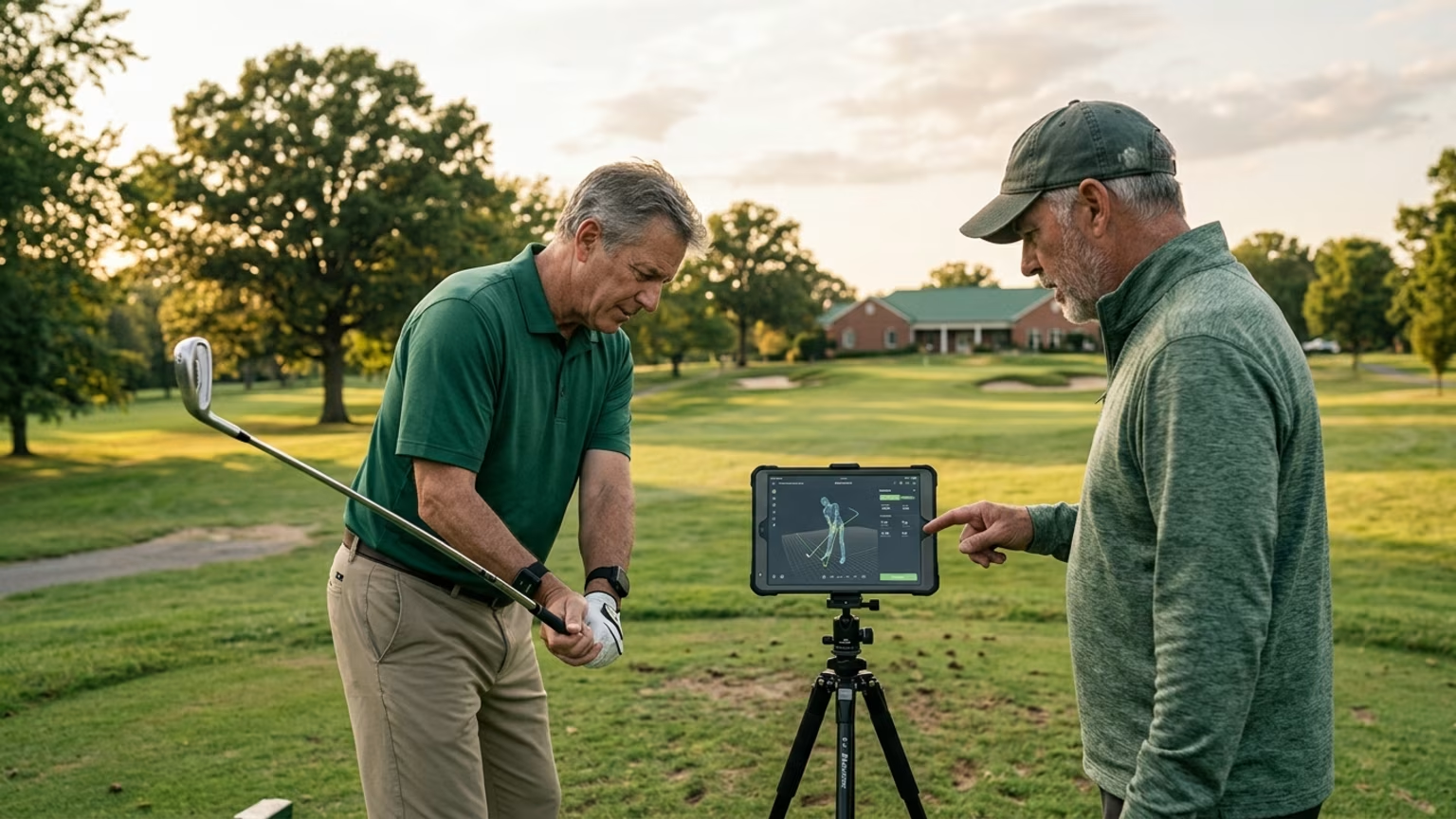
A new Alita and Fujitsu AI motion tracking system debuted at ISS 2026. Learn how camera-based analysis helps older golfers identify restricted swing mechanics.
Explore practical resources on performance, recovery, mobility and golf longevity.
Read the Blog