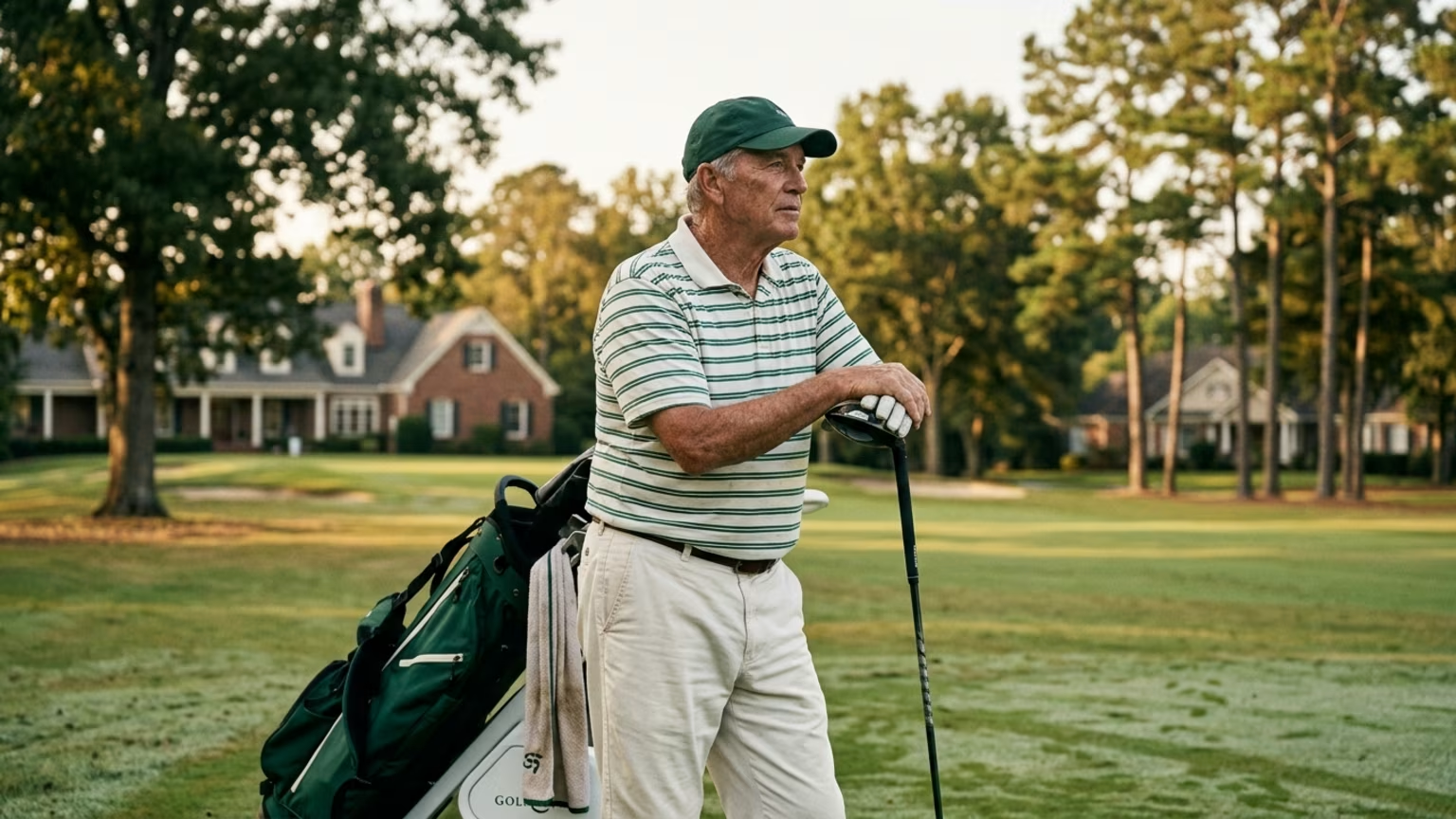

A major 2026 review finds collagen does not accelerate short-term recovery for athletes. Learn why complete proteins are better for post-round muscle soreness.




Usually, we open by discussing a specific verifiable event where a tour professional withdrew from a tournament because of a tendon or joint injury. The provided research does not name a specific player withdrawing this weekend, so we must state that plainly instead of inventing one. We rely strictly on verified facts to guide our analysis. The most relevant verifiable event for our physical longevity happened in September 2026.
The We Love Cycling report detailed a broad assessment by researchers affiliated with Anglia Ruskin University. These researchers evaluated 16 systematic reviews covering 113 randomized controlled trials and nearly 8,000 participants. The review sought to determine if collagen supplementation truly accelerates acute recovery after exercise. For older golfers managing minor aches, this massive data release provides much needed clarity. Many players spend heavily on supplements hoping for instant relief from fatigue. This new assessment forces us to evaluate those expectations against rigorous clinical data.
The golf swing places immense mechanical stress on your body. Connective tissues like tendons and ligaments are responsible for absorbing this force. These structures connect muscle to bone and guide your joints through rapid rotation. When you swing a golf club, your tendons stretch and recoil to transfer energy from the ground up to the clubhead. This dynamic movement happens hundreds of times during a practice session.
Walking 18 holes and swinging a club repeatedly causes microscopic damage to this tissue. Over a long season, this repetitive stretching leads to localized fatigue and stiffness. Your body must constantly rebuild this connective tissue to keep you on the course. Players routinely look for nutritional interventions to help these tissues recover faster. Collagen has emerged as a highly popular choice to support these biological mechanisms.
People hope it will rebuild tissue and stop joint degradation. The physical reality of tissue repair is much more complex than drinking a single supplement. The evidence requires a closer look at actual clinical outcomes.
Understanding the timeline for tissue repair is critical for planning your week. The Anglia Ruskin University team assessed physical outcomes at 24 and 48 hours after exercise. Their central conclusion was that collagen showed virtually no evidence of accelerating acute recovery. Across the reviewed studies, it did not produce a statistically significant reduction in post-workout muscle soreness.
The report also says collagen did not speed the recovery of strength or muscular power. Furthermore, the reported evidence found no meaningful short-term improvement in tendon mechanical properties or stiffness following workout sessions. Other individual trials have produced mixed results depending on the dosage. The same review noted that one trial using 3 grams per day reported reduced decline in muscle function and lower lactate dehydrogenase after intense exercise.
Another trial using 20 grams per day reported lower soreness at 48 hours. However, it did not produce statistically significant changes in inflammation and muscle-damage markers. Longer-term collagen use may support joint comfort and selected connective-tissue outcomes. It simply will not eliminate your overnight fatigue or provide an immediate performance boost for your next round.
Golfers over 40 face a significant risk of connective tissue strain. You might swing with less speed than the professionals on television, but your tissues are more vulnerable. Ageing naturally changes the elasticity and hydration of your tendons and ligaments. Your body takes longer to repair the micro-damage caused by repetitive rotation and walking.
A loss of rotational flexibility and lower back pain after a round are common complaints among mature players. These physical limitations can easily ruin a weekend golf trip or a local tournament. This vulnerability explains why older recreational golfers frequently turn to joint supplements. A separate 2026 review summarized 15 controlled trials focused on these exact issues. That review noted that joint functionality and joint pain were among the more consistent areas of benefit.
Another 2024 systematic review included 19 randomized trials and 768 healthy adults. These adults were taking collagen peptides for at least eight weeks alongside regular physical training. That review reportedly found statistically significant effects favoring collagen for tendon morphology and muscle architecture. It also noted benefits for the 48-hour recovery of reactive strength. However, it described the maximal-strength effect as small and rated certainty as low or very low for several outcomes. While short term muscle recovery findings were less universal, the joint comfort data remains highly relevant for older players.
To avoid prolonged soreness, you need a grounded and practical adjustment to your recovery protocol. The article advises treating complete proteins such as whey, soy, or pea protein as your primary post-exercise fuel. These complete proteins possess a balanced amino-acid profile better suited to supporting muscle repair than collagen. A solid nutritional strategy pairs perfectly with choosing between active recovery and a day off for your joints. You cannot simply drink a supplement and expect your muscles to rebuild themselves instantly.
Movement is also critical for priming your body. I used to stand on the first tee doing long, static hamstring stretches because I thought it was the right way to warm up. I would actually feel weaker on my first drive. Research later showed me that dynamic movements, like leg swings and torso twists, prime the nervous system much better.
Changing my five minute warmup completely transformed my opening tee shots. Focus entirely on turning your trail hip smoothly during these warmups to avoid early strain. This active preparation protects your joints far better than passive supplementation.
A major misconception is that one supplement can solve every physical complaint. Recent collagen research appears to be separating claims that are often bundled together in supplement marketing. The We Love Cycling report characterizes collagen's effect as not being acutely ergogenic. You cannot rely on it as a quick fix for next-day muscle soreness. Marketing campaigns often blur the lines between long term structural support and immediate performance benefits.
Professor Lee Smith, identified as a co-author and Professor of Public Health at Anglia Ruskin University, said collagen is not a cure-all. He noted it may have credible benefits when used consistently over time for conditions like osteoarthritis. It simply should not replace a conventional post-exercise recovery meal or drink based on carbohydrates and complete protein. A 2026 clinical review also described the evidence for tendon and ligament tears as sparse, heterogeneous, and low certainty. Prioritizing sleep and complete protein over trendy quick fixes is a much safer bet.
We promise to provide evidence-based, practical advice that helps you play the game you love for as long as possible without getting bogged down in medical jargon. The evidence suggests that mature athletes should view collagen as a longer-horizon experiment for joint comfort. It is not a reliable short-term soreness solution or a substitute for proper rehabilitation. You must manage your expectations and build a sustainable routine around complete nutrition and smart movement.
Professional golfers rely on consistent physical therapy rather than magic pills to stay competitive. Planning a strategic post-round physiological recovery protocol will serve your body much better than relying on unproven claims. What adjustments will you make to your mobility routine this season to steer clear of this hazard?
Follow Golfergy for practical insights on performance, mobility, recovery and healthy ageing. Stay connected for new articles, research-led guidance and ideas to help you play better for longer.


An American Heart Association case report offers older golfers a crucial reminder to monitor cardiovascular risks and recognize sudden neurological warning signs.


Learn how golfers over 40 can accelerate muscle recovery using exact protein timing, balanced meals, and sensible hydration based on new medical guidance.

A 2026 evidence review shows that sleep, nutrition, and planned rest days outperform popular golf recovery tools like ice baths and massage.
Explore practical resources on performance, recovery, mobility and golf longevity.
Read the Blog