Discover why complete rest is not always the best strategy between golf rounds. Learn how to balance light mobility, walking, and rest for better recovery.




You have probably heard a million times that complete inactivity is the only guaranteed way to heal an aching body between consecutive golf rounds. But the truth according to modern activity guidelines is completely different. Total bed rest can actually leave your joints feeling significantly stiffer when you finally step onto the first tee the next morning. Finding a smart balance between gentle movement and genuine rest is the real secret to playing consecutive days comfortably.
It is incredibly easy to understand why the total rest strategy remains so popular among experienced recreational golfers. You walk off the 18th green with heavy legs, an aching lower back and a profound sense of overall fatigue. The most natural instinct in the world is to collapse into a comfortable chair and avoid moving a single muscle. After swinging a club repeatedly and walking several miles, your physical battery feels entirely depleted.
Many players treat a single golf round as their absolute maximum physical limit for the week. Once that exhausting effort is officially over, they believe their system needs complete silence to repair the damage. This protective mindset is a completely logical response to the very real physical toll of the game. Golf places a unique asymmetrical strain on the mature body.
Unfortunately, locking your joints in a seated position for 24 hours often creates an entirely new set of problems. The human body is designed to move, and sudden stops can shock the system just as much as sudden sprints. When you freeze your physical activity completely, you are missing an opportunity to flush out minor stiffness. Believing the myth of total rest can inadvertently make your next round much harder.
Public health recommendations offer a much clearer picture of how older adults should manage their physical energy. For adults aged 65 and older, the CDC recommends at least 150 minutes of moderate-intensity aerobic activity per week. This guidance also suggests muscle-strengthening activity on at least two days per week alongside balance activities. [1] The primary goal is to maintain a consistent baseline of movement rather than relying on massive, isolated spikes of effort.
These public-health guidelines support maintaining regular movement across the week, but they do not prescribe walking, strength training or total rest specifically for the 24 hours between golf rounds. [1] This lack of a rigid between-round rule means players must adapt their movement based on their own daily symptoms. Sitting perfectly still for an entire day allows muscles to tighten, joint fluid to settle and hips to lose their temporary mobility. Gentle activity keeps blood circulating to tired tissues without demanding excessive energy from your central nervous system.
The mechanics of a powerful golf swing rely heavily on fluid rotation through the trunk and stable power from the legs. When a player remains completely inactive after a round, those specific rotational muscles can shorten and stiffen significantly. A light active recovery protocol counters this problem by gently encouraging your joints through their basic ranges of motion.
As golfers cross the age of 40, their physical tissues naturally lose a small degree of their youthful elasticity. Muscles and tendons require a bit more time and a bit more encouragement to return to their normal resting lengths after a demanding physical event. When you choose to sit motionless for a full day, those tissues tend to adapt to the shortened, seated position. This simple biological reality makes light movement a much more logical choice than absolute rest for the maturing player.
Your physical resilience is built by consistent loading rather than chaotic extremes of hard effort and total rest. If your only physical activity is an intense round of golf, the contrast with complete rest is simply too sharp for your muscles to handle smoothly. We want to smooth out those aggressive peaks and valleys. A moderate approach to continuous movement keeps your physical readiness primed for action.
Replacing the total rest myth requires a highly practical framework for the narrow window between rounds. You must evaluate your energy levels honestly and choose a reset method that matches your actual physical state. There is no single universal prescription for every golfer, so your decision process must remain flexible.
The first step is taking an accurate inventory of how your body actually feels the morning after a round. General, symmetrical muscle tiredness is completely normal and often responds beautifully to light movement. A sudden, sharp pain or severe joint swelling is not routine soreness. Severe pain always requires immediate medical attention rather than a home recovery experiment. Once you rule out genuine injury, you can choose from a few practical reset options.
An effortless walk is frequently the most accessible form of active recovery for a healthy recreational golfer. It encourages fresh blood flow through the legs and gently mobilizes the hips and spine. The pace should be slow enough that you can hold a normal conversation without losing your breath. This light aerobic movement helps you stay comfortably loose without adding new physical fatigue to your system.
You do not need to walk for hours to see a measurable benefit. A brief stroll around your neighborhood can successfully bridge the gap between heavy exertion and total rest. If walking causes a limp or increases your discomfort, you should stop immediately.
Keep your arms swinging naturally to involve your upper body in the exercise. This simple rhythmic motion acts as a mild release for the muscles of your upper back and shoulders. Those specific muscles often carry significant tension from the repetitive nature of your golf swing.
Sometimes you simply need to address targeted stiffness in your shoulders, hips or lower back. A brief session of comfortable range-of-motion drills can be highly effective in these specific situations. Focus entirely on turning your trunk gently or moving your shoulders in slow, controlled circles. You should never force a deep stretch or push into a painful position during these short routines.
Smooth, controlled motion is the only actual goal during this kind of active recovery. You are simply reminding your nervous system that these specific joints can still move freely. Try performing a few slow hip hinges to wake up your hamstrings. Add in some gentle ankle circles while sitting in a chair to maintain lower leg flexibility.
The golf literature describes strength work involving the legs, upper body, trunk, scapular stabilizers and rotator cuff. At the same time, the CDC recommends muscle-strengthening activity at least two days per week for older adults. [1] It is highly tempting to try and squeeze this valuable training in on your day off between consecutive rounds.
However, you should use strength training across the week. Strength work is valuable for golf longevity, but it should be planned around rounds rather than added indiscriminately between them. [1] A heavily loaded gym session the day after a grueling round is usually a profound mistake. Save your serious resistance training for periods when you have a longer gap before your next tee time.
Building your physical capacity pays huge dividends late in a long round. A stronger body resists fatigue much better on the back nine. You will notice this most when you need to execute a delicate chip shot under serious pressure. That lasting endurance is built in the gym over months rather than crammed into a single afternoon. Check out our recovery playbook for more scheduling ideas.
There are still specific moments when complete inactivity is the absolute smartest choice you can make. If you have played an unusually high volume of holes, you might truly need passive recovery. Total rest is completely valid when your overall energy reserves are profoundly depleted or you are managing soreness from poor sleep.
Total rest should never be viewed as a failure of discipline or a lack of physical toughness. It is simply one specific tool within your broader weekly plan. Recognizing exactly when to deploy that tool is a mark of true playing experience.
Just remember that true rest means stepping away from golf, but it still allows for normal, comfortable daily movement. You do not have to become a frozen statue to recover properly. You simply need to respect your body's request for a temporary break from structured exercise.
Next time your playing partner tells you to spend your entire off day frozen on the couch, trust your body's true mechanics instead. Matching your activity level to your specific fatigue will keep you swinging freely for many years to come. The quietest, most deliberate days off are often the absolute best preparation for the most enjoyable rounds.
Follow Golfergy for practical insights on performance, mobility, recovery and healthy ageing. Stay connected for new articles, research-led guidance and ideas to help you play better for longer.



A recent review explores how a daily creatine maintenance dose may help older golfers manage cognitive fatigue and physical impairment after poor sleep.

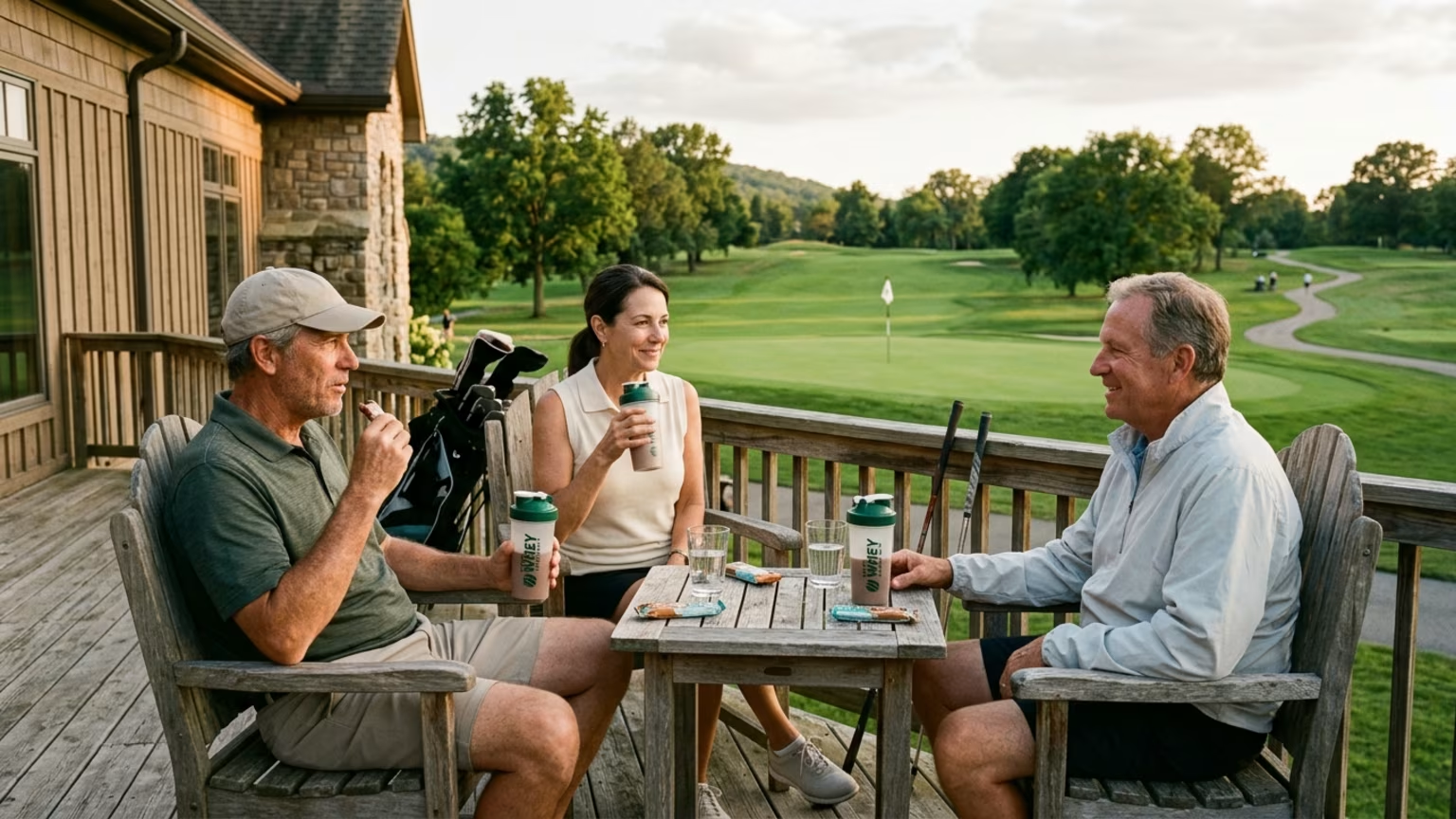
Learn practical whole-food protein targets to support your post-round golf recovery. See how balanced meals can help older players maintain muscle mass.
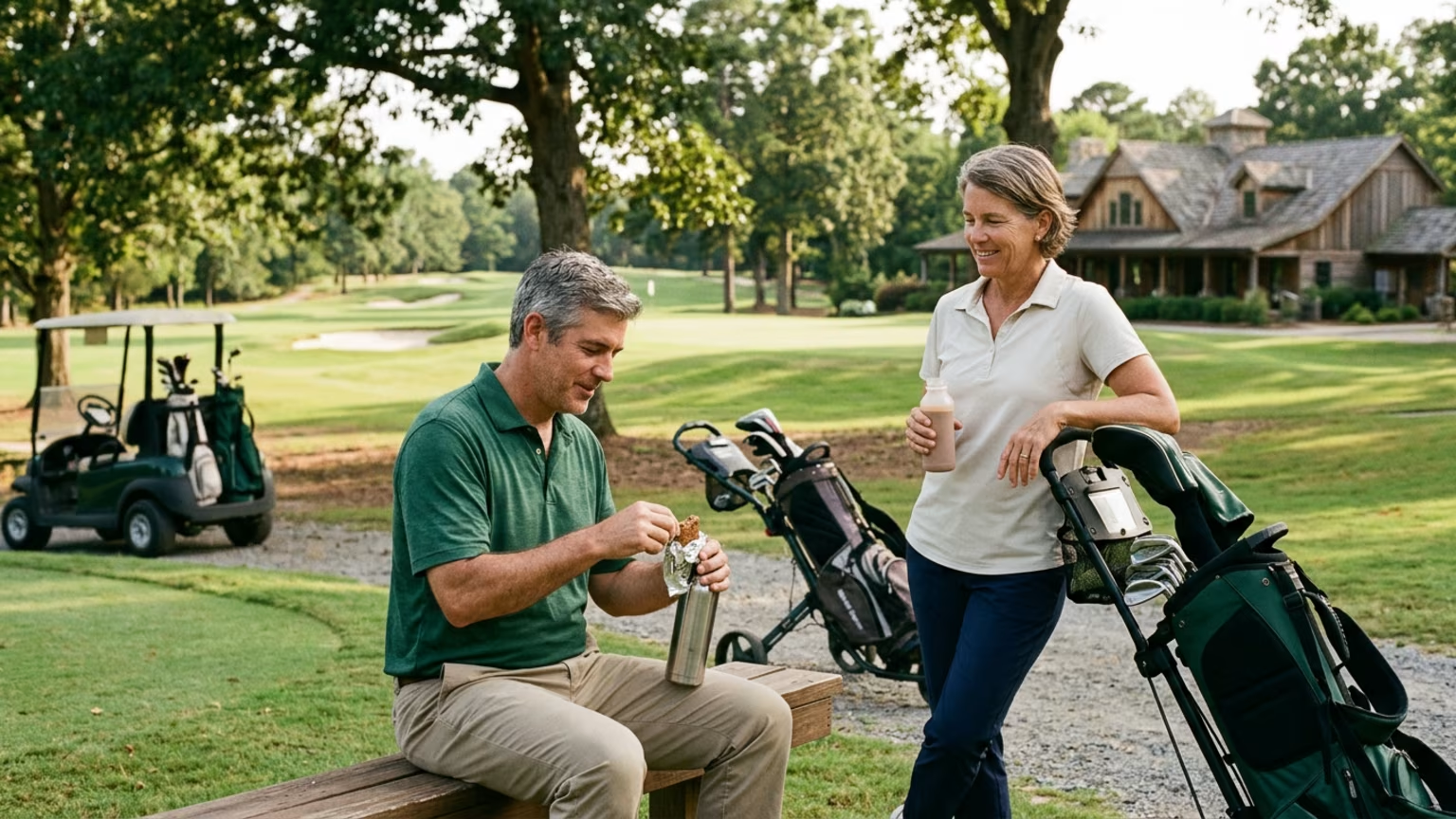
A September 2026 analysis reveals that golfers over 40 should prioritize total daily protein and complete amino acid profiles over traditional BCAA ratios.
Explore practical resources on performance, recovery, mobility and golf longevity.
Read the Blog