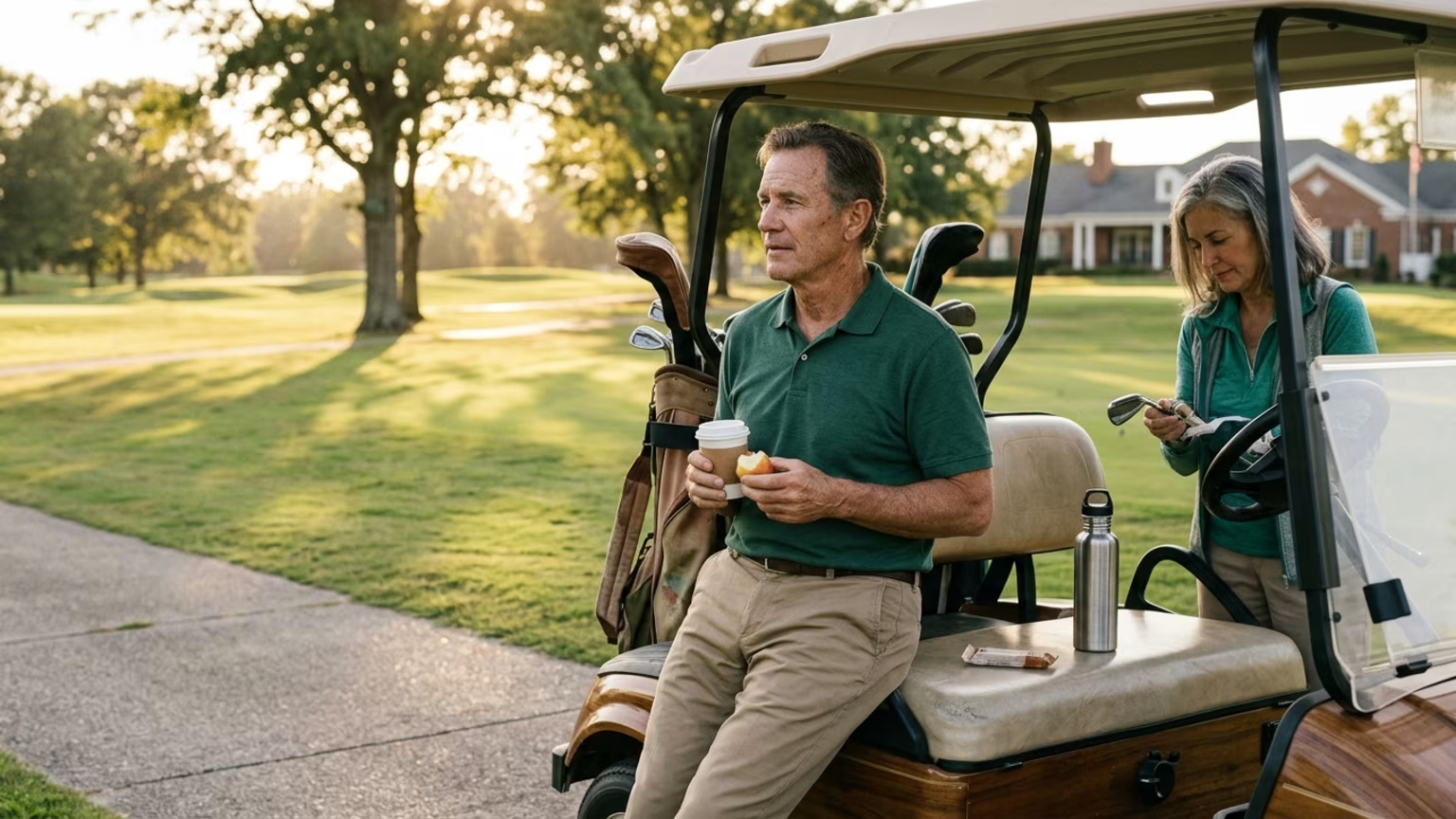

A 2026 evidence review shows that sleep, nutrition, and planned rest days outperform popular golf recovery tools like ice baths and massage.




On September 8, 2026, Bangalore Mirror published an evidence-based explainer that shifts the focus away from trendy physical hacks. Max Davis of the University of Bath and The Conversation authored the piece to evaluate common post-workout habits. The central argument states that basic recovery habits produce more consistent benefits than popular add-ons. Devices like massage guns and compression garments may make a player feel better, but they cannot replace foundational care.
This publication reflects a wider shift in sports coverage from quick fixes toward workload management. Social media and professional sports have heavily popularized recovery technologies among recreational exercisers. Amateur golfers increasingly encounter elite recovery practices today. However, they rarely have the massive training volume or medical support that might justify these interventions. Instead of buying new equipment, mature players need reliable ways to manage their physical stress.
To appreciate why basic habits matter most, we must look at how a round of golf affects the human body. Golf is physically demanding far beyond the swing itself. A full round can involve walking miles across uneven ground while navigating steep bunkers. Players repeatedly bend over to place or retrieve a ball over several hours.
Moving through wet grass or thick rough adds resistance to every step. This steady cardiovascular effort drains your energy before you even address the ball. Meanwhile, the golf swing requires immense strength and mobility throughout the entire body. When you swing a club, your hips and spine rotate violently while your legs anchor the movement.
This rapid rotation creates substantial mechanical stress on your tissues and joints. These structures sustain micro-damage during play, requiring time and biological resources to repair fully. Without proper recovery, these tissues remain fatigued and vulnerable during your next round. A weakened physical state changes how your body moves through the swing. This steady decline in physical readiness explains why many mature players struggle on the back nine.
Recreational golfers aged 40 and older deal with a unique set of physical variables. Many older players combine a walking round, repeated swings, practice sessions, and strength training within the same week. This high volume of activity places a massive demand on the body. Attempting to manage the golf load problem without a clear plan often leads to lingering soreness.
Beyond the golf course, mature players balance family commitments and demanding careers. Sitting at a desk for long periods stiffens the hips and restricts spinal mobility. When you take that stiff body straight to the first tee, the risk of injury rises. You are asking cold tissues to perform athletic movements at high speeds.
The physical toll is clearly documented in recent studies. A cross-sectional study of 1,170 male golfers in the United States looked at injury prevalence. These participants had a mean age of 55. The researchers found that 37.3 percent of them reported a lower-back complaint during the preceding seven days.
Because this finding came from a cross-sectional study, it simply identifies a prevalence snapshot. It does not prove that insufficient recovery directly caused the back symptoms. Still, the high rate of complaints shows how much stress older golfers carry. Mature players should seek medical assessment for persistent pain rather than trying to treat injuries with supplements.
Many players turn to modern recovery tools when stiffness sets in. The Bangalore Mirror article notes that ice baths, compression garments, and massage can produce small benefits. Ice baths are typically performed in water below 15 degrees Celsius. The explainer says they may reduce inflammation, lower muscle soreness, and restore muscle function within 24 hours.
However, the same inflammation reduced by the cold may also contribute to physical adaptation. Routine ice bath use could theoretically blunt some of your longer-term physical gains. Therefore, the article frames cold immersion as an occasional tool when rapid recovery is strictly necessary. It should not be treated as a mandatory ritual after every practice session.
Other popular tools face similar limitations regarding true physiological repair. Compression garments and massage reduce soreness and improve perceived recovery consistently. Yet, the evidence showing they directly restore objective muscle function remains modest and inconsistent. Feeling less sore does not guarantee that your strength or coordination has returned.
A 2026 systematic review and network meta-analysis examined these modalities directly. The review included 16 randomized controlled trials involving 273 participants. It found that no tested physical recovery modality robustly outperformed passive recovery for delayed-onset muscle soreness, creatine kinase, or sport-specific performance. The researchers cautioned that the evidence base was small and heterogeneous, noting that larger sham-controlled studies are needed.
Instead of relying on gadgets, players should focus their efforts on fundamental recovery methods like sleep and nutrition. The explainer recommends 7 to 9 hours of sleep per night as a foundation for physical adaptation. Golfers should protect this sleep target carefully, especially before a round or a demanding week. Sleep needs can vary based on medical conditions, work schedules, and age-related disruptions.
Protecting your sleep environment makes this goal much easier to reach. Keeping your bedroom cool and dark signals your brain that it is time to rest. Avoiding caffeine late in the day helps you fall asleep faster. These small lifestyle choices compound over time to keep your body resilient.
Dietary choices provide the physical building blocks for tissue repair. The article recommends consuming 20 to 40 grams of protein after exercise. Players should combine this complete protein with adequate carbohydrates to support muscle repair and replenish energy stores. Eating shortly after your round provides your body with immediate resources to begin healing. Optimizing physical recovery after 40 requires disciplined nutrition rather than random supplementation.
The article characterizes whey protein as a well-researched option with small-to-moderate benefits for muscle recovery. Complete protein sources are preferable to relying on branched-chain amino acids alone. Muscle repair requires all essential amino acids to function properly. Total daily protein needs will vary based on body size, dietary preferences, and medical conditions.
Finally, intelligent training design protects your body from cumulative damage. The article recommends planned rest days, gradual increases in training difficulty, and deliberately easier sessions. Choosing the right reset means you might follow a long walking round with a completely light day. You should never stack a hard practice session immediately after a strenuous 18 holes.
When returning to the game after a long break, you must progress slowly. A published rehabilitation progression for returning to golf after anterior cruciate ligament reconstruction provides a helpful framework. It recommends increasing only one primary workload variable at a time. This means you should alter your swing count, swing effort, practice frequency, or walking volume individually.
That same rehabilitation protocol sets specific limits for workload increases. It recommends at least one recovery day between golf exposures during the first two sessions of a new phase. It limits increases in total swing count to approximately 10 swings or 10 to 20 percent when a session is tolerated. Focus entirely on one small adjustment at a time to build tolerance safely.
Protecting your physical health on the golf course relies on discipline and consistency. You must treat rest and nutrition as your primary tools for bouncing back from a hard round. Occasional cold immersion or massage might help with short-term soreness, but they cannot replace a solid foundation. What adjustments will you make to your weekly routine to manage physical fatigue this season?
Follow Golfergy for practical insights on performance, mobility, recovery and healthy ageing. Stay connected for new articles, research-led guidance and ideas to help you play better for longer.


Learn when back discomfort after golf calls for scaling back, a routine assessment or emergency help, with NHS-based guidance.

Plan sleep around early tee times with consistent habits, realistic sleep opportunity and practical guidance for travel and changing golf schedules.

A practical guide to recurring golf pain, warning signs and when to pause for medical advice, without self-diagnosing or forcing a stretch.
Explore practical resources on performance, recovery, mobility and golf longevity.
Read the Blog

