
Recent Mass General Brigham research explains the biological link between moderate exercise and joint health to help older golfers stay on the course.




On September 29, 2026, researchers from Mass General Brigham published a study in Nature Aging about joint health. The researchers examined whether exercise changes the molecular cargo of circulating extracellular vesicles. These vesicles are tiny particles released by cells into the bloodstream. The research sought to determine if those changes could affect cartilage health.
Hirotaka Iijima, Ph.D., PT, served as the paper's lead author. Fabrisia Ambrosio, Ph.D., MPT, served as its senior author. Both experts are affiliated with Mass General Brigham's Discovery Center for Musculoskeletal Recovery. They wanted to understand why and how exercise works as a biological intervention. Their work offers an explanation for why staying physically active remains important.
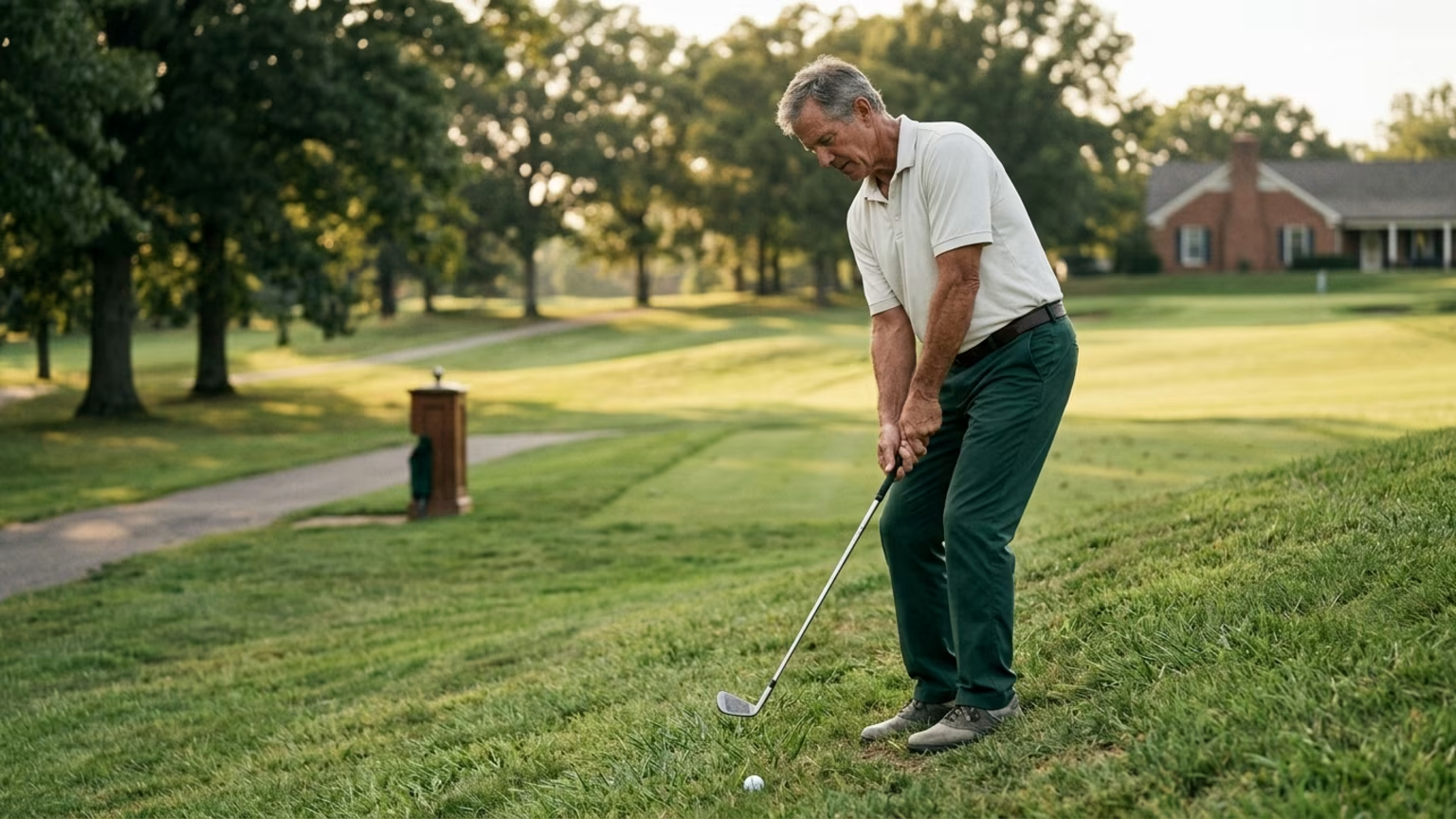
Golf requires repetitive rotational force across your entire body. This aggressive movement places heavy physical demands on your knees and hips. Over time, the smooth cartilage that cushions these joints can begin to wear down. This structural breakdown is a classic hallmark of age-associated osteoarthritis.
When cartilage thins, your bones can rub closer together during your downswing. This friction causes stiffness and pain after a long round of golf. The Mass General Brigham researchers investigated how physical activity might protect this vulnerable tissue. They reported that moderate-intensity exercise actually changed circulating extracellular vesicle cargo.
In their experimental work, these post-exercise vesicles improved measures of health in cartilage cells. They also improved health markers in knee-joint tissue. The vesicles act as messengers that deliver beneficial molecular cargo to the joints. This process helps explain how moderate physical exertion provides protection for aging cartilage.
The research team combined human exercise interventions with cell-culture experiments. They also utilized mouse studies of age-associated osteoarthritis. This comprehensive approach allowed them to map the biological pathways behind physical rehabilitation interventions.
In the human portion of the study, older adults completed a structured aerobic exercise program. The researchers collected blood samples before the aerobic program started. They took another set of samples after three months of training. The team then analyzed the contents of the extracellular vesicles from those blood draws.
The goal was to track how a three-month aerobic routine altered the cellular signals traveling through the body. The findings suggest that sustained moderate exercise fundamentally changes the chemical messages sent to our joints.
Golfers over the age of forty face a high risk of joint degeneration. Even if you swing with less speed than a professional player, your joints still absorb significant stress. Aging tissue naturally loses some of its resilience over the years. This physical reality makes mature players highly susceptible to osteoarthritis.
Professional players often rely on extensive medical teams to manage this wear and tear. Everyday golfers must rely on smart habits and consistent daily movement. The American College of Rheumatology recognizes this widespread challenge in joint health. In its 2026 update, the organization lists participating in exercise among its strong recommendations for osteoarthritis care.
The updated guidance focuses on tailoring care to an individual's symptoms and goals. Staying physically active remains a primary component of managing joint health as we age.
You can protect your joints by keeping them moving consistently. A University of Maryland health system explainer states that exercise helps strengthen the muscles that support your joints. Stronger supporting muscles reduce the physical burden on your cartilage during a golf swing.
The guidance also notes that regular exercise can improve flexibility and range of motion. This can reduce joint stiffness before you even step onto the first tee. When you prepare for your round, focus entirely on rotating your shoulders smoothly. Take small steps to build your range of motion gradually.
If you experience significant or persistent pain, you should discuss it with a physical therapist. You might need to modify your session length on the practice tee. Adapting your activity to your symptoms is completely consistent with general osteoarthritis guidance.
Establishing a consistent pre-round warm-up that protects your swing is an excellent starting point. Incorporating an aerobic maintenance routine can further support your joint resilience. Focusing on gentle hip mobility exercises provides another way to stay active safely.
You might read about this study and expect a quick medical fix for aching knees. The research team did identify a specific signal called microRNA-29 that was enriched after training. They found that delivering microRNA-29 to aged osteoarthritic joints in experimental work was associated with more youthful characteristics in cartilage cells. It also resulted in fewer features associated with joint degeneration.
However, this does not mean microRNA-based therapies or extracellular vesicle products are available today. The researchers stated their findings could inform future treatments for people who cannot exercise sufficiently. This remains a prospective research direction. It is not an established substitute for routine osteoarthritis care or regular aerobic exercise.
The human component of the study relied on blood sampling before and after training. The cartilage effects were observed entirely through experimental analyses rather than in human joints. These findings should not be presented as proof of a clinical benefit or guaranteed cartilage restoration for golfers.
We now have a better biological explanation for why staying active is so important. Exercise appears to send positive cellular signals directly to our aging joints. Moderate movement helps build resilience in the tissues we rely on for every golf shot.
The science strongly supports keeping up with a regular fitness habit. To continue protecting your back and hips, you might review our guide on how swing mobility protects the lower back. A proactive approach to movement can extend your playing years significantly. What adjustments will you make to your mobility routine this season to steer clear of this hazard?
Follow Golfergy for practical insights on performance, mobility, recovery and healthy ageing. Stay connected for new articles, research-led guidance and ideas to help you play better for longer.


A local news feature on two senior golfers highlights the value of physical consistency. Learn how aging players can protect joints and maintain swing mobility.

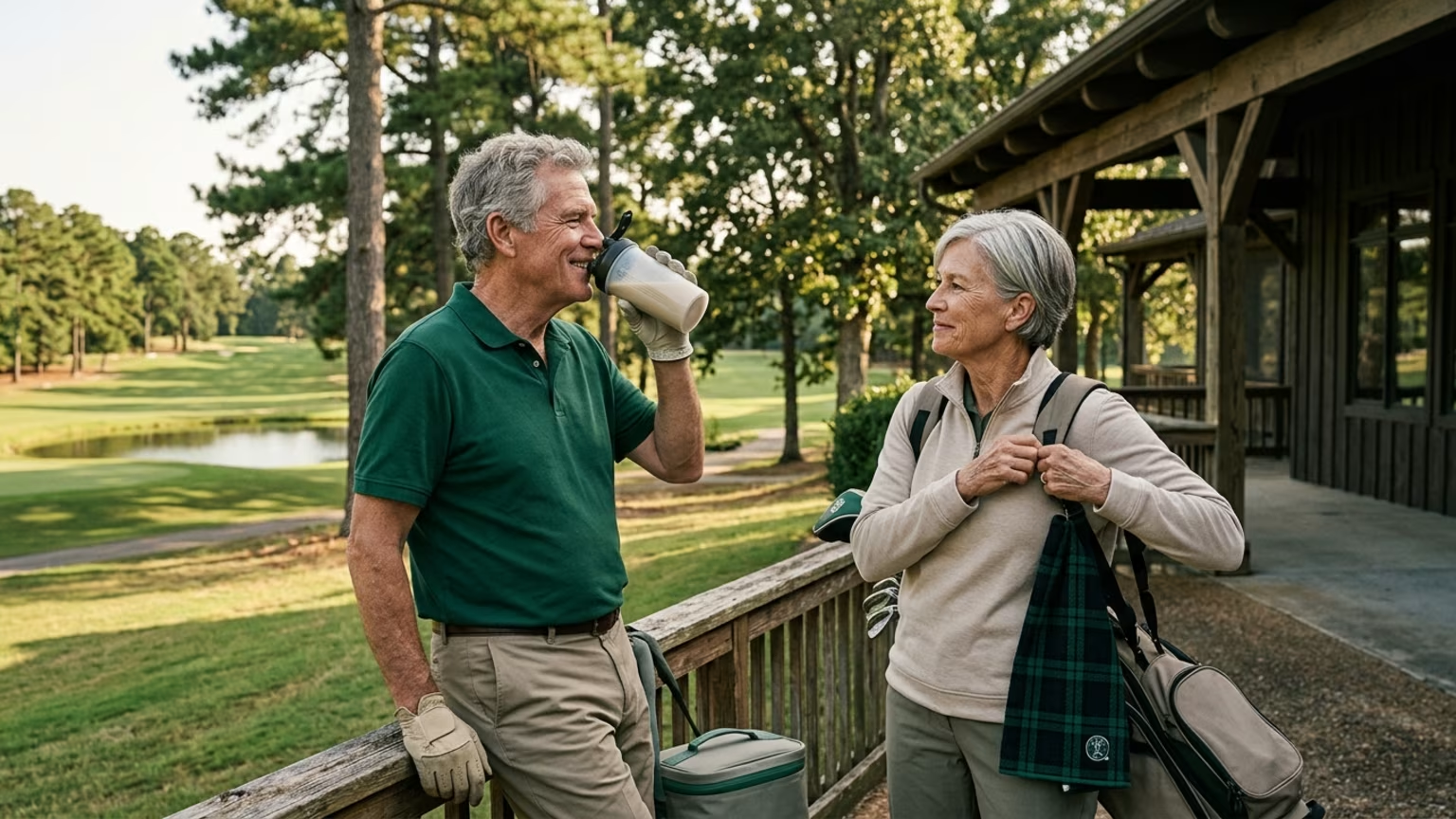
A recent VA study suggests that older men with prediabetes preserved more lean mass and physical function during weight loss by increasing their protein intake.

Learn how older golfers can safely rebuild leg speed and balance using adapted plyometrics. We review CNA's guidance on supported hops and firm stomping.
Explore practical resources on performance, recovery, mobility and golf longevity.
Read the Blog