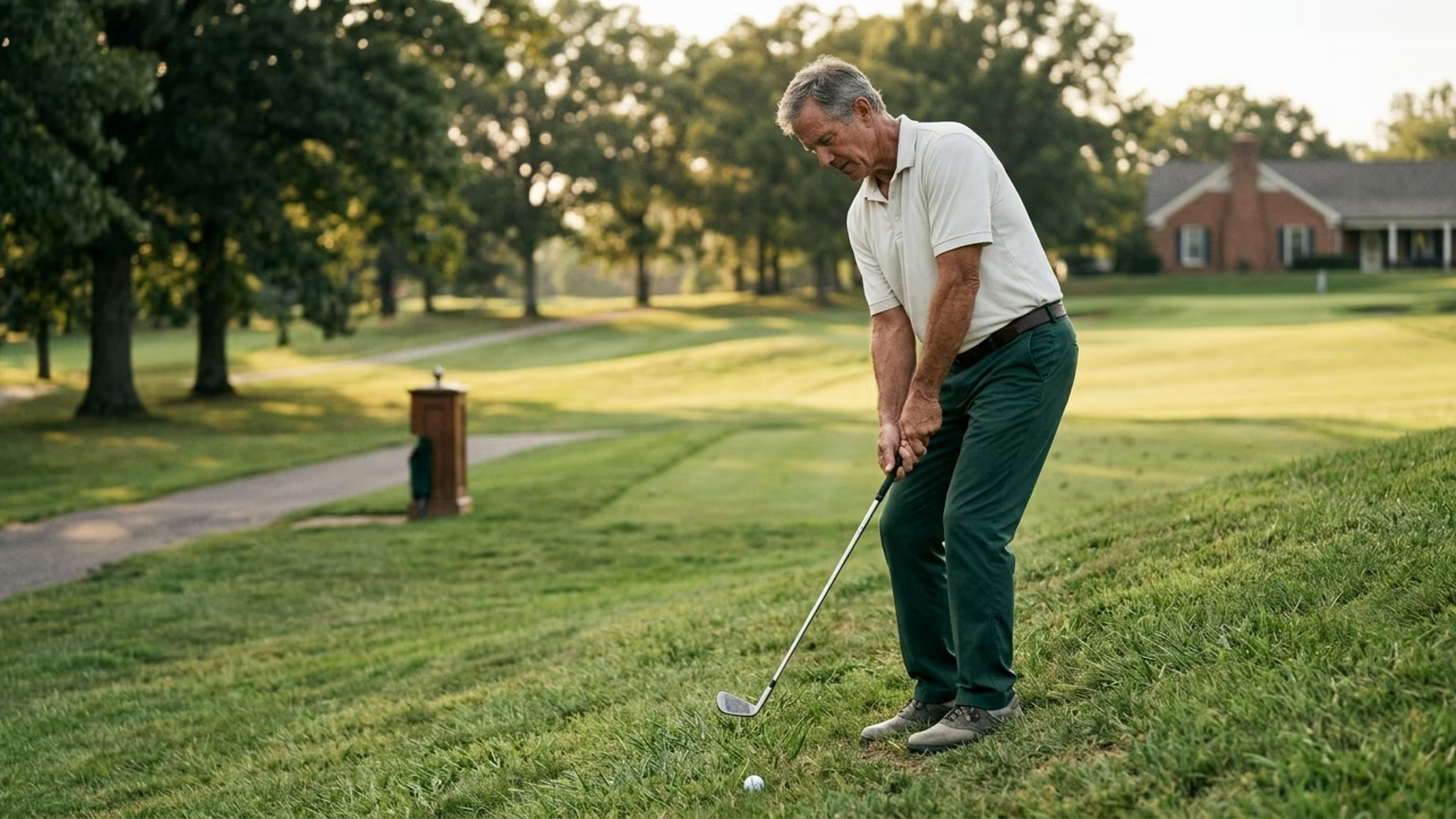

Learn why static balance routines fail older players on the course. Find practical ways to stay steady on uneven lies and protect your golf swing mechanics.




Practicing your balance by standing rigidly on one leg in a perfectly flat gym is a poor way to prepare for a real round of golf. The standard advice tells older players to hold static poses to improve their swing finish. This misses the actual demands of the sport entirely. Golf is played outdoors on unpredictable earth.
If you only train for flat surfaces, your stability will vanish the moment you step into a bunker or face a sidehill lie. Many recreational golfers spend hours working on their mechanics while ignoring the surface beneath them. They assume a perfect swing will save them on the course. A controlled finish is useless if your feet cannot grip angled turf.
Mainstream fitness routines treat balance as a stationary skill. They assume that if you can stand on a flat foam pad, you are ready to play 18 holes. An older recreational golfer reacts poorly to this approach because it ignores how we actually move during a round. The golf swing requires dynamic weight shifts on grass that is often wet or severely sloped.
The true challenge of the game lies in managing the environment around you. Early morning rounds often mean walking through thick, wet grass. Retrieving a ball from a deep trap requires stepping down steep, sandy banks. These are the moments when poor stability suddenly becomes a serious liability for players over 40.
When you limit your focus to flat ground, you leave yourself vulnerable to the real hazards of the game. Walking the course demands constant micro-adjustments from your ankles and knees. Every step across the fairway challenges your spatial awareness. Over time, a lack of confidence in these movements can completely ruin your round.
A Mutual of Omaha article reports that 16% of adults aged 50 and older said balance concerns had stopped them from being as active as they wanted. For golfers over 40, those concerns often surface far away from the tee box. Navigating these hazards is a physical skill that requires regular maintenance. Wet grass, steep bunker steps, and uneven lies ask entirely different questions of your body than a perfectly leveled gym floor.
Fear of slipping changes exactly how you swing the club. If your brain senses instability on a downhill slope, it will restrict your rotation to prevent a fall. You end up making a choppy arm swing just to stay upright. This instinct ruins your tempo and costs you significant distance on the course.
The actual root cause of unsteady play on the course is a lack of practical terrain conditioning. You are not losing your footing because your swing mechanics are flawed. You are losing it because your body is unaccustomed to managing variable terrain. Age naturally dulls our balance systems, making these minor adjustments more difficult over time.
We must actively remind our bodies how to handle slopes and shifting surfaces. Dr. Tammy Lovette notes that "strength, balance, flexibility and walking all play a role in maintaining independence." This concept applies directly to how we navigate a golf course. Walking 18 holes requires muscular stamina and joint stability.
If your legs are fatigued from simply walking up and down hills, your swing will fall apart on the back nine. A return-to-golf rehabilitation paper describes walking on variable terrain and controlling slopes or uneven stances as a critical phase after ACL reconstruction. This medical insight reveals exactly what the sport demands of healthy players as well.
Stability is an active requirement for every step you take between shots. When your balance foundation is weak, your entire game suffers from the ground up. You simply cannot execute a powerful swing if your brain is worried about your feet slipping. Restoring this confidence requires a shift in how you view your physical preparation.
Golfergy recommends building practical stability that translates directly to the situations you face on the course. You do not need extreme challenges to see real improvement in your balance. Begin with a supported baseline instead of risky drills. The goal is to build confidence safely without overtaxing your joints.
Mutual of Omaha suggests starting with supported single-leg standing near a counter. Keep a hand available to steady yourself. Stand on one leg for a few seconds while keeping your posture tall. This simple act wakes up the stabilizing muscles in your lower leg.
You can repeat this supported movement daily to build a reliable foundation. You can also practice heel-to-toe walking and standing marches to improve your coordination. Take slow steps forward while placing the heel of one foot directly in front of the toes of the other. Side steps and gentle weight shifts are also excellent ways to train lateral control.
If you have balance problems or a recent fall, seek medical advice before trying exercises on your own. Once you establish basic control, progress to slow practice swings focused entirely on your balance. Keep your movements controlled and deliberate. Start on flat walking surfaces in your yard.
Focus your attention on feeling the ground beneath your feet as you shift your weight. Add gentle hills to your routine only when your body feels ready. Take a few slow practice swings on a slight incline. Notice how your body must adjust its setup to remain stable.
This gradual progression respects the older body and builds confidence for those difficult sidehill lies. Never force a movement that causes discomfort or places you at risk of falling. Stop immediately if you experience sharp pain, dizziness, numbness, or tingling. Consistency and safety are the fundamental keys to longevity in golf.
Building your stability takes time, but the reward is a stronger game and a healthier body. The simplest habits often produce the most reliable results for recreational players. Taking time to respect your body’s need for practical stability will pay off during every round. You will find yourself walking the course with greater ease and addressing challenging lies with total confidence.
If you want to protect your swing mechanics as you age, focus on movements that respect the realities of the golf course. Improving your stability requires consistency rather than extreme intensity. A sensible routine will keep you steady on your feet and confident over every lie. Focus on steady progress.
To read more about maintaining a reliable swing foundation, check out our guide on how older golfers can improve balance and stay steady on the course. You can also review our thoughts on why targeted balance routines protect older golfers better than heavy lifting to refine your off-course habits further. For a deeper look at strength demands, read our thoughts on building better balance for every lie. Finally, read the single-leg golf fitness challenge for balance and strength to test your progress safely.
Follow Golfergy for practical insights on performance, mobility, recovery and healthy ageing. Stay connected for new articles, research-led guidance and ideas to help you play better for longer.



Learn how strength, power, and mobility form a linked system in the golf swing, and why older golfers should prioritize balance over isolated speed drills.


Learn how mature golfers can manage morning stiffness and prepare for the first tee with a practical warm-up sequence focused on controlled mobility.
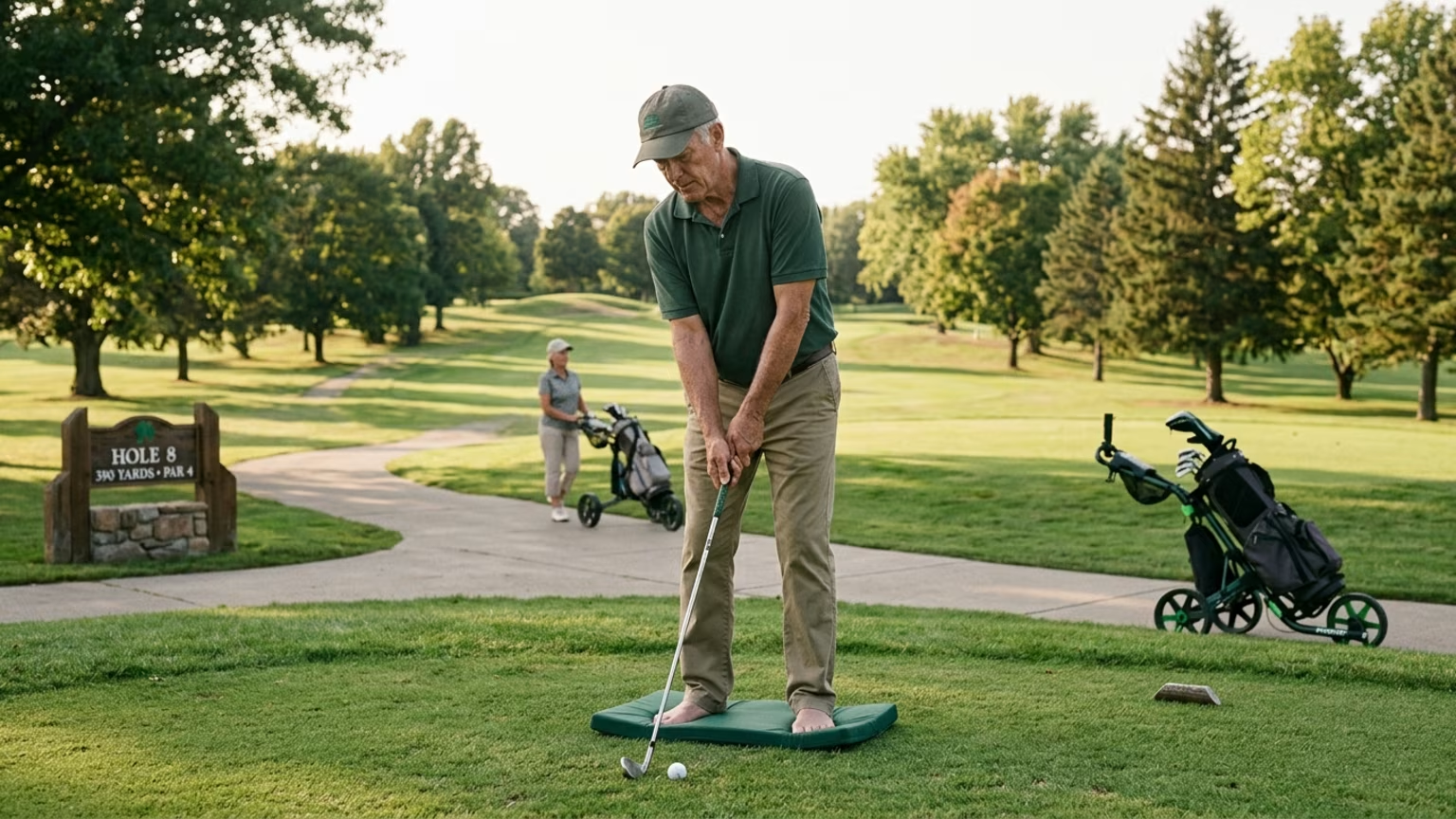
Discover a practical stability routine for older golfers. Build lower-body strength and trunk control with safe, supported exercises for a steadier golf swing.
Explore practical resources on performance, recovery, mobility and golf longevity.
Read the Blog