
Four Seasons Resort Peninsula Papagayo announced new golf longevity experiences. We examine how VO2 max testing and deep-pressure recovery affect older golfers.




On September 29, 2026, Four Seasons Resort Peninsula Papagayo announced new longevity experiences for golfers. The resort frames the offering as a golf getaway that combines performance assessment, recovery, outdoor activity and nature. The program takes place around the 18-hole, par-72 Ocean Course, which was designed by Arnold Palmer. Four Seasons says it has an exclusive partnership with human performance scientist Dr. Andy Galpin to support these efforts.
The announcement points to a growing intersection between traditional golf travel and structured physical assessment. Central to the offering is the PNOĒ VO₂ Max Active Test, which uses breath and VO₂ max testing. Four Seasons says this test provides insights into metabolism, endurance and recovery. Guests then receive an individualized plan covering nutrition, training and recovery strategies tailored to their personal goals.
The resort also focuses on restorative treatments alongside its physical testing. One named treatment is the Healing Bamboo Massage, which applies warm bamboo sticks and deep pressure. Four Seasons describes this therapy as a way to help alleviate muscle and tendon tension and stimulate circulation. Guests can also participate in yoga, breathwork and general wellness programs between their rounds.
The facility operates on a 1,400-acre peninsula that recently received environmental recognition. Four Seasons announced that the Ocean Course had received Certified Audubon Cooperative Sanctuary designation. Director of Golf Manuel Saragga described the Audubon designation as recognition of the team’s commitment to the local ecosystem. The location also promotes A Journey to the Costa Rican Blue Zone, involving visits to traditional villages in the Nicoya region.
The physical mechanics behind late-round fatigue often start with cellular metabolism and cardiovascular endurance. The golf swing is a violent, rotational movement that demands short bursts of maximum force. When your cardiovascular system lacks the capacity to supply oxygen efficiently, your muscles accumulate fatigue much faster. This drop in oxygen delivery directly impacts your baseline endurance on the back nine.
As endurance fades, your body naturally tries to compensate for the lack of stable energy. This compensation forces smaller muscles to take on the workload of larger, fatigued muscle groups. Over several holes, this repetitive strain creates significant muscle and tendon tension. The tissue becomes tight, which restricts your rotational flexibility and alters your swing mechanics.
Restricted tissue behaves poorly under the stress of a golf swing. When your muscles and tendons are tight, your joints cannot move through their full, required ranges of motion. This forces your lower back and elbows to absorb forces that your hips and shoulders should normally handle. Over time, this misdirection of force leads to acute pain and sustained physical decline.
This physiological chain reaction is the primary reason metabolic efficiency matters on the golf course. VO₂ max represents the maximum amount of oxygen your body can utilize during intense exercise. A higher VO₂ max indicates that your heart and lungs can sustain energy production over a longer period. When that capacity drops, your tissue tension increases and your swing breaks down.
Experienced recreational golfers over 40 face a significant risk of enduring muscle and tendon tension. Elite professionals maintain strict physical conditioning to support their high swing speeds and frequent tournament play. Older amateurs usually swing the club slower, but their baseline tissue elasticity and cardiovascular capacity naturally decline with age. This combination makes the aging amateur highly susceptible to late-round fatigue and lingering stiffness.
The loss of rotational flexibility is a primary driver of this physical vulnerability. As you age, your tendons lose moisture and your muscles require more time to recover from microtears. Repetitive strain from walking the course and swinging the club accumulates much faster than it did in your twenties. Without a strategic approach to post-round physical recovery, the resulting stiffness can persist for days.
Metabolic decline also plays a major role in how older golfers experience physical exhaustion. Your VO₂ max naturally decreases as you get older unless you actively train to maintain it. This reality means your body has to work harder just to walk an 18-hole course. The extra cardiovascular strain leaves you with far less energy to execute complex, coordinated golf swings.
Professional players rely on dedicated physical therapists to manage their tissue health and metabolic output. Older amateurs rarely have access to regular, objective testing or daily deep-tissue manipulation. This gap in monitoring means that many recreational players over 40 push through early warning signs of fatigue. Ignoring these signs eventually leads to more severe limitations that can cut a playing season short.
Using structured physical assessments can help you build a more sustainable approach to your golf game. Testing your baseline metrics gives you a clear picture of your current metabolic health and cardiovascular capacity. Four Seasons says its PNOĒ test uses breath analysis to track metabolism and endurance. You can seek out similar, accessible cardiovascular assessments in your own community to establish a starting point.
Once you understand your baseline, you must translate those numbers into actionable habits. An individualized plan covering nutrition, training and recovery strategies offers a targeted way to support your body. Structuring your diet to match your physical output helps delay the onset of late-round fatigue. Proper strategic on-course nutrition provides the fuel your muscles need to resist severe tension.
Physical manipulation techniques also play a role in managing tissue stiffness between rounds. Treatments that apply deep pressure can help stimulate circulation and clear metabolic waste from fatigued muscles. The Four Seasons program includes a Healing Bamboo Massage intended to help alleviate muscle and tendon tension. Applying targeted pressure to your tightest areas promotes better blood flow and restores some tissue elasticity.
You can replicate this concept at home by focusing entirely on active recovery habits. Dedicate time after your round to stretch your hip flexors, mid-back and shoulders gently. Using a foam roller or massage tool can mimic the effects of deep-pressure therapy to a helpful degree. Consistent, targeted pressure combined with a reliable post-round physiological reset will keep your body moving smoothly.
It is highly common to view luxury physical assessments and specialized massages as guaranteed solutions for golf performance. Many players assume that paying for a detailed VO₂ max test will automatically correct their endurance issues. However, the assessment itself is just an observation of your current physical state. The actual improvement comes from the consistent work you do after you receive the results.
You should treat testing as a possible starting point for a conversation about training, not as a stand-alone prescription. The Four Seasons announcement does not state clinical interpretation procedures or validation details for their specific test. Before relying entirely on a test to guide your training, ask who interprets the results. You should also discuss any underlying medical concerns with your primary healthcare professional first.
Similarly, do not assume that a single specialized massage will cure chronic joint restriction. The resort says the bamboo massage may help alleviate tension, but its announcement provides no treatment-specific clinical evidence. Deep-pressure therapies feel excellent and can temporarily stimulate circulation, but they are not permanent medical fixes. True injury prevention requires daily commitment to mobility exercises, proper nutrition and adequate sleep.
You should always ask for the actual contents of any follow-up plan before judging its value. The resort confirms that guests receive a plan covering nutrition and recovery, but it supplies no specific examples. A plan is only effective if it fits your schedule, physical limitations and personal goals. Taking a skeptical, steady approach to your health will yield much better long-term results than chasing fast trends.
Golf longevity requires a constant commitment to managing your physical resources. Assessing your cardiovascular health and tracking your metabolic output can provide a clear map for your training. Combining that data with targeted nutrition and deep-tissue recovery habits will help you maintain your rotational flexibility. The goal is to build a resilient foundation that allows you to play comfortably for decades.
You do not need a luxury resort to start taking your physical conditioning seriously. Simple baseline testing, grounded nutritional choices and consistent active recovery are available to everyone. Addressing muscle tension early prevents minor stiffness from becoming a major limitation later in the year. Small, daily choices regarding how you move and recover dictate how well you will perform tomorrow.
What adjustments will you make to your mobility routine this season to steer clear of this hazard?
Follow Golfergy for practical insights on performance, mobility, recovery and healthy ageing. Stay connected for new articles, research-led guidance and ideas to help you play better for longer.


Read how tour professionals manage physical recovery and learn practical, evidence-based habits older recreational golfers can use to protect their joints.

Learn why a bad night of sleep does not automatically ruin your next golf round. Discover a flexible, research-backed recovery routine for golfers over 40.
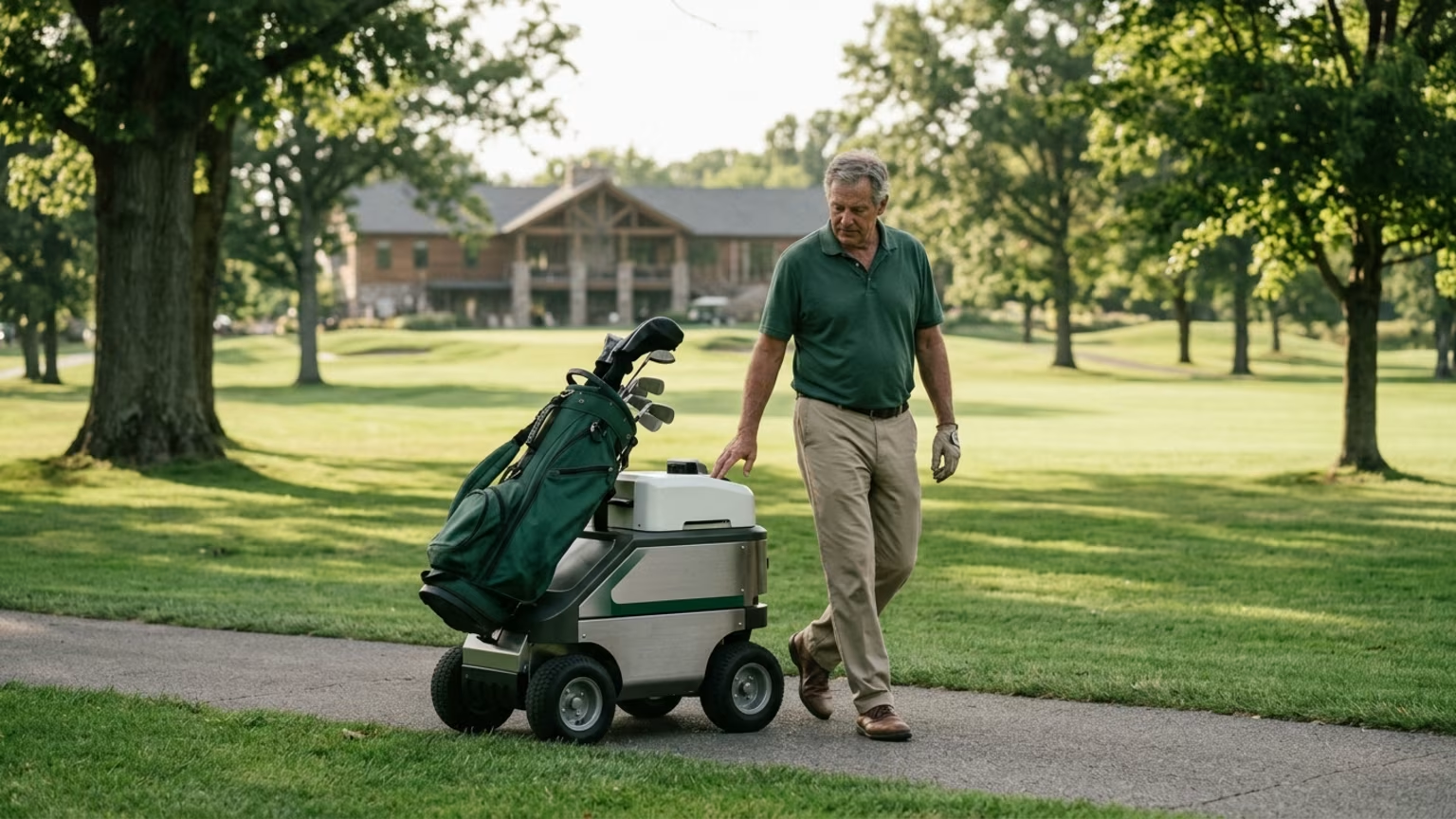
Goyang Country Club recently introduced Hello Caddy robots. Learn why walking six kilometers with AI support still requires older golfers to manage fatigue.
Explore practical resources on performance, recovery, mobility and golf longevity.
Read the Blog